
Black is the workhorse color of 3D printing. It hides layer lines, suits functional parts, and never clashes on a desk or a shelf. The catch is that not every black spool feeds the same way, and a bad one shows up as clogs, stringing, or warped corners halfway through a long job. This roundup walks through seven black PLA options across different budgets and formats, from single kilogram test spools to four-kilogram bulk packs, so you can match the filament to how often you actually print.
A Quick View Of The Lineup

ELEGOO Matte PLA 1.75mm Black Filament 4KG

ANYCUBIC PLA Filament 1.75mm Bundle 2KG Black

ELEGOO PLA Filament 1.75mm Black 4KG Cardboard Spools

SUNLU PLA Plus 1.75mm Black 4KG

SUNLU PLA 1.75mm Black 4KG
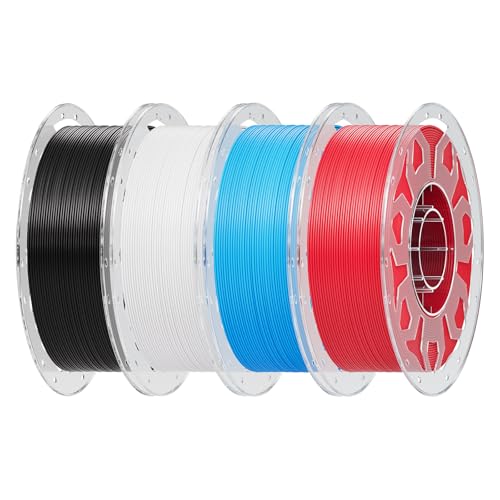
Creality PLA Filament Bundle 4 kg Multicolor

SUNLU PLA 1.75mm Black 1KG
More Details On Our Top Picks
Most black filaments leave your prints looking plasticky and shiny, which ruins the effect on helmets, figurines, and display pieces. ELEGOO’s matte formulation flips that script with a low-gloss surface texture that softens the appearance of layer lines right out of the nozzle. For anyone printing cosplay props or shelf pieces, the difference is visible from across the room.
The four-kilogram quantity also changes how you plan. You stop rationing spool weight before big jobs, and you spend less time reordering mid-project.
What Stands Out
- The matte surface diffuses light, so finished parts read as molded rather than printed.
- Four kilograms of black covers months of casual printing without repeat orders.
- Consistent 1.75mm diameter supports steady extrusion on most FDM machines.
- Quality control at the factory aims to keep diameter variation tight print to print.
- Fewer visible seams mean less post-processing time sanding or priming.
Things To Consider
- Matte blends can be slightly more brittle than standard PLA on thin snap-fit features, depending on your settings.
- Like all PLA, spools need dry storage since absorbed moisture causes popping and stringing over weeks on an open rack.
Key Specs
Who Will Love This
Props builders, miniature painters, and anyone whose black prints end up on display rather than inside a machine enclosure.
A Better Fit Elsewhere
Shoppers who need maximum strength for load-bearing brackets will get more mileage from the SUNLU PLA Plus 4KG further down this list.
Dimensional accuracy is the spec that separates reliable filament from frustrating filament. ANYCUBIC publishes a tolerance of plus or minus 0.02mm on this 1.75mm spool, which is tight enough that your slicer’s flow calibration stays valid across the whole reel. In practical terms, that translates to smoother extrusion and less fiddling between prints.
The two-kilogram twin-spool format sits nicely between a single test roll and a full bulk buy. Low shrinkage behavior helps layer fusion too, which matters on bridges and overhangs where weaker filaments sag.
The Good Stuff
- The published ±0.02mm tolerance keeps output diameter steady through the spool.
- Good bridging behavior thanks to stable dimensions and low shrinkage.
- Two spools give you a backup roll without committing to four kilograms.
- Works with the broad range of FDM printers that accept 1.75mm PLA.
Worth Noting
- Owners commonly report that any PLA left mounted for weeks picks up moisture, so a sealed container with desiccant preserves the first-print quality of the second spool.
- Both rolls are the same black, so there’s no variety if you like switching colors between jobs.
Right Fit For
Intermediate users printing functional clips, mounts, and enclosures who want predictable flow without paying premium-brand prices.
Swap It Out When
If display quality drives your projects, the matte ELEGOO at the top of this list will flatter finished parts more than this glossier standard blend.
Where the matte ELEGOO above chases looks, this sibling goes after pure utility. It’s a straightforward glossy PLA sold as four separate one-kilogram spools on cardboard cores, which cuts plastic waste and makes each roll light enough to handle comfortably. Schools, makerspaces, and anyone burning through black filament weekly will appreciate that format.
The same ±0.02mm accuracy claim carries over, and PLA’s naturally low melting point keeps it friendly on budget hotends. Odor during printing is minimal compared with ABS-style materials, a real perk in a spare bedroom or shared office.
What Earns Its Place
- Cardboard spools reduce plastic packaging and weigh less on the gantry.
- ±0.02mm dimensional accuracy supports consistent extrusion across all four rolls.
- Glossy finish gives functional parts a clean, slightly polished look.
- Low warp tendency makes unheated-bed printing far more forgiving.
- Near-odorless operation suits enclosed living spaces.
Small Caveats
- Glossy surfaces show fingerprints and layer texture more readily than the matte variant, so display pieces may need finishing.
- Cardboard rims can soften slightly in humid rooms unless stored off the floor in a bin.
Feature Snapshot
Made For
Classrooms, clubs, and high-volume hobbyists who treat black PLA as consumable stock rather than a specialty purchase.
Consider Something Else When
Anyone needing tougher finished parts should step up to SUNLU’s PLA Plus 4KG, which trades some ease of use for added durability.
Standard PLA snaps when you flex it. PLA Plus exists to fix exactly that, blending additives into the base polymer so finished parts bend a little instead of cracking. SUNLU positions this blend as meaning stronger than its regular PLA, which puts it in useful territory for brackets, handles, and tool holders that see actual force.
The company also leans hard on its winding process, claiming every spool leaves the factory neatly coiled with no knots or tangles. That claim matters more than it sounds, because a tangled reel mid-print is one of the few failures nobody can rescue remotely.
Everyday Advantages
- Added toughness lets finished parts survive drops and flexing that would split plain PLA.
- Neat factory winding reduces the risk of tangles during long unattended runs.
- Improved layer adhesion produces sturdier walls on thin-walled designs.
- Reduced warping and stringing keep bench cleanup to a minimum.
- Vivid black pigment holds color depth even after sanding.
Points To Note
- PLA Plus often prefers slightly hotter nozzle temperatures than basic PLA, so expect a short tuning session on a new machine profile.
- At four kilograms, storage space becomes a real consideration in small apartments.
- The toughness gain won’t reach PETG or ABS levels, so extreme heat exposure still rules it out.
The Numbers That Matter
Who Should Grab It
Makers printing functional hardware, drone parts, or workshop fixtures who want PLA’s ease with noticeably better durability.
Reach For A Different Pick When
First-timers still learning their machine should start with the smaller one-kilogram SUNLU spool at the end of this list instead.
This is the conventional counterpart to the PLA Plus reviewed just above, aimed squarely at people who print constantly and don’t need exotic properties. It uses SUNLU’s same self-developed winding equipment, so the reels arrive evenly coiled and ready to mount. Layer adhesion gets particular attention in the design brief, and that shows up as solid wall bonding on everyday models.
In our view, this is the sensible middle ground of the whole list: bulk quantity, familiar material, no learning curve. Compare it to the ELEGOO bulk pack and you’re really choosing between winding reputation and spool format preference.
Points In Its Favor
- Even factory winding means fewer snags on overnight prints.
- Strong interlayer bonding reduces delamination on tall models.
- Runs cleanly on beginner-level FDM machines without profile gymnastics.
- Four-kilogram supply keeps cost per part down for serial printers.
Softer Spots
- Standard PLA brittleness applies here, so thin functional clips may crack under repeated stress.
- Like every open spool, it absorbs humidity over time, and owners commonly report bubbly extrusion once a roll has sat exposed for a season.
Quick Facts
Who It Suits Best
Busy home workshops and family printers who want a no-drama bulk black supply that behaves identically spool after spool.
Where A Sibling Pick Shines
Projects involving moving parts or impact loads belong on the SUNLU PLA Plus 4KG instead, since its reinforced blend handles abuse better.
Not everyone wants four kilograms of a single shade. Creality’s bundle splits the weight across black, white, blue, and red, giving you a working palette in one order. The black roll here earns its place on this list while the other three colors cover accents, two-tone prints, and kid-friendly projects.
Creality emphasizes higher melt fluidity, which opens the door to faster print speeds on capable machines. Uniform line diameter and clean pigment round out the pitch. One honest trade-off: you lose the deep-black bulk supply that dedicated spool packs provide, so heavy monochrome users will burn through the black roll first.
The Case For It
- Four distinct colors cover most everyday project needs in a single purchase.
- Enhanced toughness formulation resists the brittleness common in cheap PLA.
- High fluidity supports quicker printing on machines tuned for speed.
- Low shrinkage behavior limits warping and blistering on flat first layers.
Less Ideal Details
- Only one of the four kilograms is black, which runs out fast for monochrome-heavy users.
- Switching colors between rolls means occasional nozzle purging and a bit of wasted filament.
- Speed-oriented settings may need dialing back on older, slower hotends.
Whose Shelf It Belongs On
Hobby households, teachers, and parents printing a rotating mix of toys, organizers, and decorative pieces in several shades.
Another Choice May Suit
Pure-black production printing is better served by the ELEGOO 4KG cardboard spool pack, which dedicates every gram to one color.
Every new printer owner faces the same question: how much filament do I commit to before knowing my machine? This single-kilogram SUNLU spool answers it sensibly. It shares the tidy winding and adhesion focus of the larger SUNLU rolls in this list, just in a size that fits a weekend of experimentation rather than a year of production.
A kilogram of black PLA typically yields dozens of small-to-medium parts, enough to calibrate, break things, and learn what your printer likes. When you outgrow it, stepping up to the four-kilogram version is a natural next move.
Reasons It Performs
- Single-spool sizing keeps the entry cost low while you learn.
- Same neat-winding process as SUNLU’s bulk rolls, so feeding stays smooth.
- Forgiving PLA behavior suits first calibration prints and early mistakes.
- Compact footprint stores easily beside a desktop printer.
One Thing Worth Considering
- Per-kilogram economics favor the bigger spools, so frequent printers pay a modest premium staying at this size.
Product At A Glance
The Right Fit
New printer owners, students, and occasional users whose monthly output rarely exceeds a couple of hundred grams.
Look Elsewhere When
Once weekly printing becomes routine, the four-kilogram SUNLU PLA delivers the same experience at better long-run value.
What To Weigh Before Loading A Spool
Tolerance Tells The Story
Diameter consistency, usually quoted as a plus-or-minus figure around 1.75mm, determines whether your extruder feeds smoothly or surges. Tighter tolerances matter most on long prints where a small drift compounds into visible banding. Budget spools sometimes skip this rigor, and the result shows up as uneven surfaces.
Match Material To Purpose
Plain PLA excels at decorative and low-stress work, while PLA Plus blends add flex resistance for functional parts. Matte finishes suit display pieces; glossier stock suits utility items you’ll handle often. Deciding which side of that line your projects live on narrows the field fast.
Quantity Math
A single kilogram suits learners and occasional users. Four-kilogram bundles cut the effective cost per part and suit anyone printing weekly. The middle ground, like ANYCUBIC’s two-spool bundle, works well for moderate users who want a backup without overcommitting.
Storage Reality
All PLA absorbs ambient moisture, and humid climates accelerate the damage. Plan for a sealed bin with desiccant packets regardless of which pick you choose, because dryness preserves print quality longer than any brand difference does.
Key Considerations Across These Picks
Traps First Timers Fall Into
The classic mistake is buying bulk quantities before calibrating a machine, locking yourself into four kilograms of a filament your settings hate. Another common slip is ignoring humidity: leaving a spool on the printer for a month invites stringy, bubbly prints that get blamed on the wrong culprit. Start small, tune first, then scale up.
What Separates Premium From Basic
Higher-tier spools justify their cost through tighter diameter control, cleaner winding, and refined additive packages that resist warping and improve layer bonding. That extra polish pays off most for functional parts and long unattended jobs. Casual weekend printing rarely needs it.
Frequently Asked Questions
Is PLA suitable for outdoor use?
No, prolonged sun and heat deform standard PLA parts. Keep finished pieces indoors or in shaded spots.
Do I need a heated bed for these filaments?
Not usually. All seven picks are PLA-based and print reliably on unheated or lightly warmed beds.
How long does an opened spool last?
Quality holds for weeks on an open rack but degrades over months. Sealed storage with desiccant extends usable life considerably.
Can these run on any 1.75mm FDM printer?
Yes, all seven fit standard 1.75mm FDM systems. Verify your spool holder width accepts the supplied reels.
Why choose black over other colors?
Black hides minor surface flaws, suits functional hardware, and matches nearly any environment. It’s the most versatile single shade.
Closing Thoughts
Black PLA remains the smartest default filament for almost any setup, and this list covers the realistic spread: matte showpiece stock, toughened blends, bulk cardboard-spool packs, and forgiving starter rolls. Match the quantity to your printing rhythm, store everything dry, and let the material choice follow the parts you actually make. Whichever spool lands on your desk first, a little calibration patience turns any of these seven into months of dependable printing.
