
Faded black jeans, a sun-bleached car seat, a couch cushion that lost its fight with the window. Black is the hardest color to keep rich, and the right dye or paint makes the difference between a quick fix and a redo in three washes. This roundup covers seven options across sprays, powders, liquids, pods, and fabric paints, so you can match the format to the job instead of forcing one product to do everything. Each entry below breaks down what it handles well, where it falls short, and who should reach for something else on this list.
The Essentials At A Glance

HI-TECH Big Can Black Spray Dye – 15oz Carpet & Fabric Restorer

Qualia All Purpose Powder Fabric Dye, Black
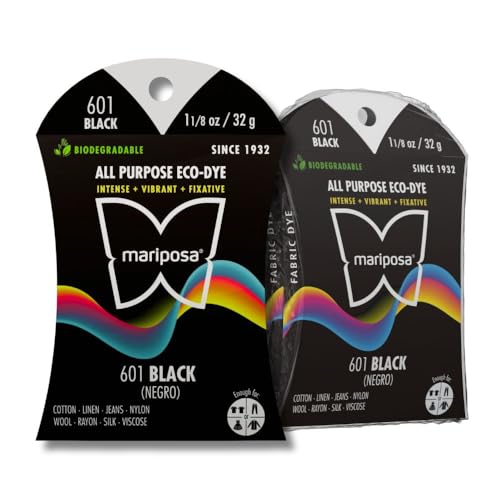
Black Fabric Dye (3-Pack) All-Purpose Eco-Dye

Rit All-Purpose Liquid Dye, Black, 3-Pack

Tulip Fabric Dye Pod Blackout (Black)

Jacquard Textile Color Fabric Paint Black 2.25 oz w/Brushes

Rit Dye ProLine 1 LB Powder Dye (Black)
A Deeper Look At The Lineup
This is the odd one out here, and that’s the point. Where every other option dyes fabric in a vat or a washing machine, this aerosol restores color in place, which matters when you’re staring at a worn driver’s seat or a bleached carpet patch you’d rather not rip out.
The can holds 15 ounces, roughly a third more product than standard spray dyes, so bigger restoration jobs need fewer cans. An adjustable fan nozzle gives you control over spray width, useful on textured carpet where blotches show easily.
Useful Highlights
- The oversized 15oz can cuts cost per ounce and means fewer interruptions mid-project.
- A snorkel-style nozzle with an adjustable fan pattern lets you dial coverage from tight spots to wide panels.
- The cured finish stays flexible, so carpet pile and upholstery keep their original feel instead of turning stiff.
- It bonds without cracking, peeling, or rubbing off, which is exactly what you want on high-friction surfaces like seat bolsters.
Things To Consider
- Work outdoors or with serious ventilation; aerosol overspray settles fast indoors.
- Color matching to surrounding material takes a light hand, since heavy passes can look painted rather than dyed.
Key Specs
Who It Suits Best
Anyone restoring auto interiors, carpets, or vinyl furniture in place without pulling items apart.
Where A Sibling Pick Shines
For whole garments rather than spot repair, the Qualia powder dye handles full immersion jobs far better.
Powder dye is the traditionalist’s route: dissolve it in hot water, submerge the garment, stir, rinse. Qualia leans into concentration, packing enough pigment into one box to handle up to two smaller items like children’s tees, which stretches each purchase further than most hobby-grade options.
It targets natural fibers specifically: cotton, wool, silk, linen, even wood. That focus pays off on denim and cotton knits, where concentrated black tends to saturate deepest. Synthetic-heavy blends are a weaker fit, so check your care label first.
Good Reasons To Consider
- Ultra-concentrated black delivers deep saturation on natural fibers with a single session.
- One box covers small garments twice over, making repeat projects economical.
- Powder stores indefinitely in a dry drawer, unlike opened liquid bottles that can settle or separate.
Points To Note
- Hot-water immersion and constant stirring demand more hands-on effort than pod formats.
- Results vary on synthetic blends; polyester content often resists uptake.
Quick Facts
Made For
Home dyers refreshing cotton and linen wardrobes on a budget, one garment at a time.
Swap It Out When
You’re dyeing large mixed-blend loads; the Rit liquid 3-pack below handles broader fiber ranges with less stirring.
Families with young kids and anyone wary of harsh chemistry will notice the difference here. This generic-brand pack uses a non-toxic, biodegradable formula built around high fixation, meaning the pigment bonds firmly to fibers instead of bleeding into the next wash load.
Three packets cover up to three pounds of fabric, enough for a stack of faded tees or a set of cotton napkins. Compared to the Qualia box above, you trade some per-box concentration for gentler ingredients and a wider stated fiber list including rayon and viscose.
Notable Upsides
- Non-toxic, biodegradable composition suits households with children or sensitive skin concerns.
- High-fixation formula helps black stay put through repeated laundering.
- Three pounds of total capacity covers multiple medium garments per purchase.
- Works across an unusually broad range: cotton, linen, wool, rayon, silk, viscose, and denim.
Small Caveats
- Being a lesser-known brand, batch-to-batch shade consistency is harder to verify than with Rit or Tulip.
- Powder still requires hot water and thorough rinsing before garments rejoin the regular laundry.
Right Fit For
First-time dyers restoring everyday cotton clothing in homes where ingredient lists matter.
Another Choice May Suit
Experienced crafters chasing maximum depth on pure cotton may prefer the concentrated Qualia powder instead.
Rit is the name most people picture when they think “fabric dye,” and the liquid format explains why: no dissolving, no clumps, just pour and stir. The all-purpose blend reaches across cotton, linen, silk, wool, rayon, ramie, and nylon, covering nearly everything in a mixed closet.
Beyond clothing, owners commonly use it for shoes, accessories, and home décor projects, plus rescuing laundry accidents like a red sock gone rogue. The 3-pack gives you headroom for a full washer load or several sink sessions.
A Few Highlights
- Liquid format mixes instantly, cutting prep time versus any powder on this list.
- Broad fiber compatibility makes it the safest single choice for unknown blends.
- Three bottles support larger batches or multiple color-refresh cycles.
- Non-toxic formulation keeps cleanup straightforward with soap and water.
Worth Noting
- All-purpose blends generally deliver less depth on pure synthetics than specialized disperse dyes.
- Opened bottles should be capped tightly; liquid dye can thicken over long storage.
Feature Rundown
Who Should Grab It
Busy households wanting one reliable black dye for clothes, décor, and accident rescue alike.
Reach For A Different Pick When
Your project exceeds ten pounds of fabric; the Rit ProLine powder further down scales far more efficiently.
This is dyeing reduced to its laziest form, in a good way. You toss the pod into the washing machine with salt and the damp fabric, run a cycle, done. No stovetop pots, no stirring sticks, no stained sinks, which makes it the friendliest option for apartment dwellers without utility sinks.
One pod brings up to 21 ounces of dry fabric to full shade, so heavier stacks may need two. Expect the shade to read darker while wet and lighten slightly after the first wash, a normal settling that Tulip documents openly.
Positive Points
- Machine-wash application eliminates stovetop work entirely, ideal for small kitchens.
- Even allover coverage beats hand-stirred dyebaths for consistency across a whole load.
- Permanent color rated for regular wear and laundering.
Honest Caveats
- Coverage tops out around 21 ounces of dry fabric per pod, so bulkier projects multiply pod count quickly.
- The shade naturally lightens after washing, so aim slightly darker than your target on the first pass.
- You’ll need salt on hand; the process depends on it for proper fixation.
Built With In Mind
Renters and busy parents who want even, low-mess black refreshes for everyday cotton loads.
Look Elsewhere When
Precision matters more than convenience; the Jacquard fabric paint later in this list offers far finer control.
Strictly speaking this isn’t a dye at all, it’s a textile paint, and knowing that distinction saves disappointment. Paint sits on the surface and follows your brushstroke; dye penetrates the whole fiber. For outlines, lettering, patch repairs, and design work on dark or patterned fabric, that surface control is exactly the tool you want.
Jacquard’s formula stays soft after curing rather than leaving a plastic crust, and it holds up to repeated wear and washing on both natural and stretchy synthetics. The bundle throws in brushes, so it’s usable straight out of the package.
The Helpful Details
- Brush-included bundle means zero extra purchases before starting a project.
- Stays flexible on fabric, avoiding the stiff, cracked patches cheaper paints leave behind.
- Adheres to natural, synthetic, stretchy, and semi-porous surfaces alike.
- Precision application lets you restore logos, trim, and printed graphics a dip-dye would ruin.
Practical Considerations
- A 2.25 oz bottle covers detail work, not whole-garment recoloring; coverage math doesn’t scale like dye.
- Painted areas can feel slightly different in texture than undyed cloth up close.
Core Details
Whose Shelf It Belongs On
Crafters doing graphic work, patching prints, or touching up specific areas on finished garments.
Consider Something Else When
The goal is uniform all-over color; the Tulip pod above delivers full-coverage results with less effort.
Everything earlier in this list works at garment scale. ProLine works at production scale. One pound of powder covers roughly sixteen pounds of fabric, about forty-eight yards, which puts it in territory suited to theatrical costume shops, small apparel studios, and anyone re-dyeing curtains by the panel.
The advanced blend mixes direct, acid, and disperse dyes, a combination that lets one tub bite into both natural and synthetic fibers. That triple approach is why industrial users lean on it for carpet panels and other tough-to-color textiles where single-type formulas stall out.
A Few Strong Suits
- One pound dyes approximately sixteen pounds of fabric, dwarfing consumer-pack capacity.
- Direct, acid, and disperse dye mix handles natural and synthetic fibers in the same workflow.
- Suited to industrial textiles like carpet tiles, not just clothing.
- Backed by Rit’s long track record in the category, so replacement supply is easy to source.
The Fine Print
- Overkill for a single shirt; unused powder needs a sealed, dry container to stay viable.
- Large-batch dyeing demands serious equipment: big vessels, heat control, and dedicated stirring.
Technical Highlights
Best Suited To
Small studios, costume departments, and frequent dyers processing fabric by the pound rather than the piece.
Not Your Match When
You’re reviving two faded t-shirts; the Qualia powder near the top of this list fits small jobs better.
What Matters Most Before Choosing Black Textile Dyes
Match The Format To The Project
Spray dye restores surfaces in place, liquids suit stovetop baths, pods run through the washing machine, paints handle detail work, and bulk powders serve volume jobs. Deciding the format first narrows the field faster than comparing brands. A wrong-format purchase usually ends in a half-finished project.
Know Your Fiber Content
Natural fibers such as cotton, wool, and linen absorb dye readily, while polyester and nylon often need specialized formulations like disperse dyes. Check the care label before ordering. Blends typically take color unevenly, landing somewhere between their components, so manage expectations accordingly.
Plan For Fixation And Fading
Fixation describes how permanently pigment bonds to fiber, and it depends on heat, time, salt, and the dye chemistry itself. Even permanent formulas tend to lighten a shade after the first few washes. Washing dyed items separately early on protects the rest of your laundry from stray pigment.
Size The Purchase Honestly
Underbuying forces a second order mid-project, and matching a mixed shade later is genuinely difficult. Weigh your dry fabric, then compare against the manufacturer’s coverage figure with a margin to spare. Bulk packs reward frequent dyers but waste money sitting sealed in a cupboard.
Key Considerations Across These Picks
Traps First Timers Fall Into
The most common slip is ignoring fiber content, then blaming the dye when polyester refuses color. Another is skipping the weight calculation, which leaves a load under-dyed and patchy. Skipping the rinse step causes pigment transfer onto other clothes, a mistake worth avoiding from day one.
What Separates Premium From Basic
Higher-tier products earn their cost through concentration and breadth. ProLine’s multi-dye blend colors fibers that basic formulas can’t touch, while HI-TECH’s oversized can lowers cost per ounce on repeat jobs. Pay more when volume, fiber variety, or permanence actually matter to your project.
Frequently Asked Questions
Do black textile dyes work on polyester?
Only formulations containing disperse dyes take reliably on polyester, since conventional direct dyes slide off synthetic fibers. Check the label for explicit synthetic-fiber claims before committing.
How much fabric does one package cover?
Coverage varies widely, from roughly 21 ounces per Tulip pod to about sixteen pounds per pound of Rit ProLine powder. Always weigh your dry fabric against the manufacturer’s stated capacity first.
Will dyed black fabric fade in the wash?
Some lightening after the first washes is normal even with permanent formulas. Washing inside out in cold water and drying away from direct sun slows fading considerably.
Can I dye fabric in my washing machine?
Pod formats like Tulip’s are designed for machine use, while powders and liquids generally prefer a stovetop bath for heat control. Clean the machine afterward with an empty hot cycle and bleach if desired.
Is fabric paint a substitute for dye?
No, paint coats the surface while dye penetrates the fiber, producing different textures and durability profiles. Paint excels at designs and spot repairs; dye wins for all-over recoloring.
Closing Remarks
Black fades faster than any color you own, but the fix rarely costs much. Match the format to the job, weigh your fabric honestly, and any of these seven will bring depth back to tired pieces. Start with the smallest suitable option and scale up only as your projects grow.
