
Black foam board hides a lot of sins. Smudged fingerprints, uneven marker strokes, glue globs at the edges, a dark surface forgives them all, which is exactly why teachers, students, and crafters keep reaching for it over white poster board. The catch is that not every black board is actually black through and through, and some cheap sheets dent or peel before your project ever makes it to the science fair table. This roundup sorts six solid options into three camps: full-size presentation boards, rigid foam core sheets for mounting and framing, and soft EVA craft foam for cutting and building. Match the format to your project and you’ll save yourself a frustrating afternoon.
The Lineup, Simplified
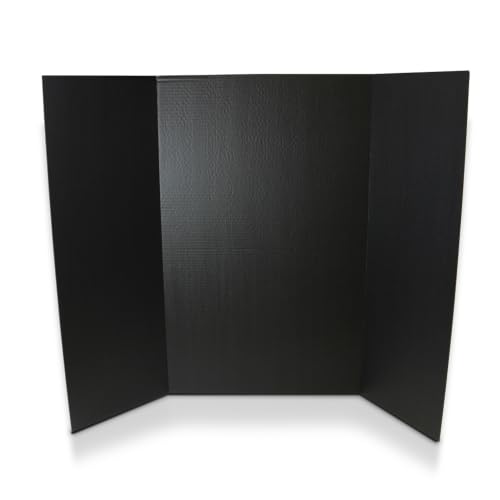
Flipside Products 36″ x 48″ Trifold Project Boards, Black (4 Pack)

Golden State Art 11×14 Black Foam Boards, 3/16″ (Pack of 10)

MEARCOOH 9×12 Inch Black EVA Foam Sheets, 2mm (10 Sheets)

UCreate Black-on-Black Foam Board, 20″ x 30″ (10 Sheets)

Darice 9″ x 12″ Extra Thick Black Foam Sheet, 6mm

EPHECH 12″ x 16.5″ Black Foam Core Board (20 Pack)
Inside Each Recommended Option
A trifold board is the one piece of equipment every science fair demands, and this four-pack covers a household with more than one presenter. The 36 by 48 inch panels stand on their own once folded, so no easel or wall space is needed at the event itself.
The surface takes markers, paint, and glued photos without much fuss, and owners commonly report the fold creases hold up through setup and teardown. Because these ship flat in a four-pack, you can prep all three display panels plus a spare weeks ahead of judging day.
A Favorable Mix
- Folds into a self-supporting A-frame that sits steady on cafeteria tables
- Smooth face accepts wet media like paint without warping badly in most conditions
- Four boards per order means siblings or teammates each get their own display
- Large canvas fits title banners, charts, and photo rows on one panel
Things To Consider
- The folded profile is awkward to carry; a large tote bag helps on transit days
- Corner dents can appear during shipping, so inspect each sheet on arrival
Key Specs
Who It Suits Best
Students facing a graded science fair or history day presentation who need a freestanding display they can assemble at home.
Where A Sibling Pick Shines
Shoppers mounting artwork instead of presenting should look at the Golden State Art 11×14 boards, which slide straight into standard frames.
Eleven by fourteen is one of the most common print and frame sizes, and that’s the whole appeal here. Ten pre-cut black sheets at 3/16 inch thickness give photographers and gallery-wall decorators a backing layer sized to drop directly behind an 11×14 print.
Unlike the Flipside trifolds above, these are flat single panels meant for framing and mounting rather than standing displays. The rigid core keeps prints from bowing inside the frame, a problem thin paper backers cause over time.
Everyday Advantages
- Drops into standard 11×14 frames with no trimming required
- Ten sheets cover an entire gallery wall refresh in one order
- 3/16 inch thickness adds stiffness that prevents print rippling
Small Caveats
- At this compact size, larger posters will need a different format entirely
- Sharp corners can ding in transit; check sheets before framing valuable prints
Built With In Mind
Home decorators and hobbyist photographers mounting multiple small prints for framed wall arrangements.
Swap It Out When
Larger signage jobs call for the UCreate 20 x 30 boards, which offer triple the surface area per sheet.
This is a different material from everything else on the list. EVA foam is soft, flexible, and cuts with ordinary scissors, which makes it the go-to for kids’ crafts, costume pieces, and card embellishments. The 2mm gauge is thin enough to bend around curves yet thick enough to hold a die-cut shape.
There’s no adhesive backing, so plan on glue dots or craft adhesive. That’s a minor extra step, but it also means sheets stay clean until you commit them to a project. The fine, closed cell texture resists tearing when little hands pull shapes off the cutting mat.
What Stands Out
- Scissors slice clean edges, no blade or heat tool needed
- Ten sheets stretch across a full classroom session or birthday party activity
- Flexible enough to wrap around cylindrical props for cosplay builds
- Uniform 2mm thickness stacks neatly for layered card designs
Points To Note
- No self-adhesive backing means you supply your own glue
- Too soft to stand alone as a display board; pair it with a rigid backer
Feature Rundown
Right Fit For
Parents, preschool teachers, and beginner cosplayers who need a forgiving, scissor-friendly material for hands-on making.
Reach For A Different Pick When
Rigid model-making calls for the Darice 6mm foam sheet below, whose extra depth supports structural detail work.
“Black-on-black” means the color saturates both the outer paper faces and the inner foam core, so a nicked edge still reads dark instead of flashing white. Anyone who has trimmed white-core board for a mounted sign knows how distracting that pale line becomes.
The matte finish also earns its keep: marker ink smears less than it does on glossy surfaces, handy when students letter signs freehand. At 20 by 30 inches, each sheet splits cleanly into two portrait posters or one substantial landscape display.
What Pays Off
- Color-through construction keeps cut edges looking finished
- Matte face reduces marker smearing during hand-lettered signage
- Ten-sheet count suits recurring classroom or office display needs
- Acid-free stock is safer for long-term photo mounting
Honest Caveats
- As value-tier board, the paper facing is thinner than premium lines and can tear at the corner under rough handling
- Sheets arrive flat-packed and benefit from storage under something weighted
Whose Shelf It Belongs On
Teachers and office coordinators producing frequent temporary signage where volume matters more than archival finish.
Not Your Match When
Full-size fair displays need the Flipside 36 x 48 trifolds, since these flat sheets won’t stand on their own.
Six millimeters is three times thicker than the MEARCOOH sheets reviewed earlier, and that depth changes what you can build. Raised letters, dimensional scrapbook layers, and lightweight model bases all gain real structure from a slab this chunky.
This listing is a single sheet rather than a multipack, which sounds limiting until you realize most detailed projects only need one or two pieces. Hobbyists carving or sanding foam will appreciate having enough body to shape without punching through.
The Good Stuff
- 6mm depth supports carving, stacking, and dimensional layering
- Stiff enough to serve as a small model base on its own
- Cuts acceptably with a sharp utility knife for custom shapes
Worth Noting
- One sheet per purchase gets costly for bulk classroom use
- Thick foam dulls scissors quickly; a sharp blade gives cleaner results
Quick Facts
Who Will Love This
Scale-model builders and mixed-media crafters who need genuine thickness for sculpted or stacked elements.
Another Choice May Suit
Volume crafting on a budget points back to the MEARCOOH ten-pack, which delivers ten thinner sheets for roughly the cost of a few singles.
Twenty sheets is serious inventory, and the midsize 12 by 16.5 inch format hits a sweet spot between the Golden State Art 11×14 panels and the larger UCreate boards. Each sheet pairs extruded polystyrene foam with paper facing at 3/16 inch, giving a light but rigid surface that pins, tapes, and mounts cleanly.
For a teacher stocking a project cart or an office running rotating bulletin displays, that quantity removes the reorder scramble. You may find the slightly unusual width actually helps, since it leaves a visible black border behind standard letter-size printouts.
Strong Points
- Twenty sheets eliminate mid-project shortages in group settings
- Polystyrene core stays rigid while remaining easy to push-pin
- Midsize format frames letter-size documents with a neat margin
- Suits painting, poster backing, and tabletop exhibit bases alike
Factors To Weigh
- Twenty flat sheets need dedicated storage space to stay warp-free
- Edges can compress if stacked under heavy items for long stretches
Details At A Glance
Who Should Grab It
Classroom teachers, scout leaders, and office managers who burn through display board regularly and want one order to last a semester.
Look Elsewhere When
Single-frame photo mounting is better served by the Golden State Art pack, whose exact 11×14 sizing skips any trimming step.
Choosing Between These Boards Without Guesswork
Match The Format To The Job
Start with how the finished piece will be used. Freestanding presentations demand a trifold like the Flipside pack, while anything destined for a frame needs exact dimensions such as the Golden State Art 11×14 sheets. Flat rigid board works for signs and mounts; flexible EVA foam belongs to cutting and building tasks. Buying the wrong format is the most common regret in this category.
Thickness Tells You What It Can Survive
Thin 2mm craft foam bends and cuts easily but won’t hold weight. Standard 3/16 inch foam core is the versatile middle ground, stiff enough to pin and mount yet light enough for kids to carry. The 6mm Darice sheet goes further, supporting carved and stacked designs. Heavier isn’t better by default; it just enables different techniques.
Core Color Matters More Than You’d Think
Many budget boards use white foam cores wrapped in black paper, so every cut edge flashes bright white. Color-through options like the UCreate black-on-black line avoid that, which matters enormously on trimmed signage viewed up close. Check the product details for core coloring before committing to a bulk order.
Count Your Real Consumption Rate
Multipacks reward high-volume users and punish occasional ones. A family doing one science fair a year is fine with the Flipside four-pack, whereas a teacher running monthly projects burns through the EPHECH twenty sheets quickly. Estimate your yearly usage honestly, then buy one step above it.
Two Quick Notes Before You Order
Wrong Turns To Avoid
The biggest slip is ordering craft foam when the project needs rigid board, or vice versa; the two look similar in thumbnails. Second, shoppers often skip checking whether the core is colored, then discover white edges after trimming. Measure your frame or display space first and buy to those dimensions, not to whatever pack size looks generous.
The Case For Spending Up
Higher-priced boards typically earn it through denser cores, deeper color saturation, and cleaner die-cutting. Premium sheets resist denting during transport and take wet media without bubbling the facing. For one-off school projects, value tiers do the job fine. For client work, exhibitions, or anything handled repeatedly, the upgrade pays for itself in fewer ruined sheets.
Frequently Asked Questions
Is black foam board suitable for painting?
Yes, acrylic and tempera paints adhere well to the paper facing. Apply lighter coats to avoid soaking the surface and causing warping.
Can I cut foam core board at home?
A sharp utility knife against a straightedge gives the cleanest results. Score lightly first, then make a second deeper pass to avoid tearing the facing.
What does black-on-black construction mean?
It means the foam core inside, not just the outer paper, is colored black. Cut edges stay dark instead of showing a white stripe.
How should I store unused sheets?
Keep them flat under light weight, away from humidity and direct sunlight. Standing on edge or leaning invites bowing over time.
Will hot glue damage EVA craft foam?
Low-temperature glue guns generally work fine on EVA foam. High-heat settings can melt or deform the material, so test on a scrap piece first.
Bottom Line
Your project dictates the pick. Stand-up science fair displays point to the Flipside trifolds, framing work to the Golden State Art sheets, and hands-on crafting to either the MEARCOOH multipack or the thick Darice sheet depending on how much dimension you need. Volume users get their money’s worth from the UCreate or EPHECH packs. Measure first, match the format second, and any of these six will hold its color long after the glue dries.
