
Blank patches are the quiet workhorse of the DIY world. You press a design on, stitch one down, and suddenly a plain cap looks like merch you paid a shop to make. Whether you run a heat press for small-batch orders or just want to fix up a favorite trucker hat at the kitchen table, the seven sets below cover the practical range: multi-shape sublimation blanks in several frame colors, leather squares with a premium feel, and single-shape iron-on packs sized for standard caps. Each pick earns its spot through material quality, quantity, or shape variety rather than marketing gloss.
The Main Contenders

Waydress Sublimation Hat Patches White Frame

Waydress Sublimation Hat Patches Black Frame

Waydress Sublimation Hat Patches Black/Blue Frame

Waydress Sublimation Hat Patches Gold Frame

Dunzy Blank Leather Hat Patch Multicolor
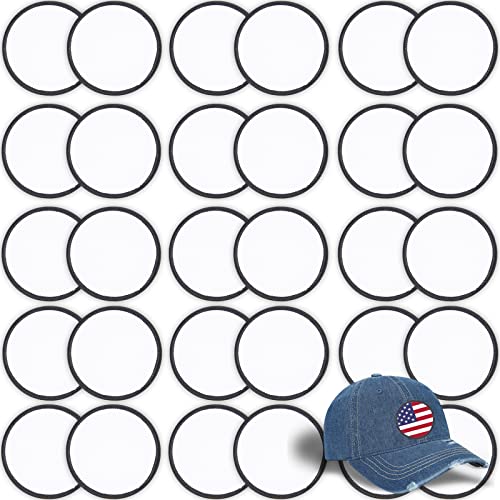
Gadjica Round Iron On Blank Patches 30 Pack

Gadjica Rectangle Iron On Blank Patches 30 Pack
The Strengths Of Each Pick
Anyone setting up a first sublimation workflow learns fast that blank quality decides everything downstream. This 30-piece set from Waydress gives you three different patch shapes, ten of each, so one order covers round badges, rectangles, and whatever third silhouette your cap design calls for. The white frame border acts like a built-in mat around your printed artwork.
In practice, that variety matters most when you’re prototyping. You can test a logo across shapes before committing to bulk stock, which saves real money compared to buying a single-shape pack blind.
The Upside
- Three shapes in one box means fewer repeat orders while you dial in your designs.
- Polyester construction accepts dye-sublimation ink well, so colors tend to stay vivid after pressing.
- The white frame gives finished patches a clean, professional edge without extra stitching.
- Thirty blanks is enough volume for a family craft afternoon or a small test batch.
Things To Consider
- These are sew-on blanks rather than glue-backed, so budget time for stitching or an adhesive backing.
- Sublimation results depend heavily on press temperature and dwell time; expect some trial and error on new equipment.
At A Glance
Who It Suits Best
First-time sublimation crafters who want shape flexibility before settling on a signature patch size.
Where A Sibling Pick Shines
Crafters who already know they want circles will get better value from the Gadjica Round pack, which adds iron-on backing these Waydress blanks lack.
Same recipe as the white-frame version above, dressed for darker wardrobes. The black border sits naturally against navy, charcoal, and black caps where a white ring would glare. You still get 30 polyester blanks split across three shapes, ten apiece, all ready for dye-sublimation printing.
For anyone decorating team hats or workwear in dark colors, this is arguably the more practical sibling. The dark edge also does a decent job disguising minor fraying over months of wear, something owners commonly appreciate on frequently washed gear.
Standout Benefits
- Black framing blends into dark headwear instead of fighting it visually.
- Three-shape assortment keeps your options open across caps, beanies, and bags.
- Polyester surface takes sublimation ink cleanly for sharp, saturated prints.
Worth Noting
- No adhesive backing, so attachment means needle and thread or fusible webbing.
- Dark borders can swallow fine line art pressed close to the edge; leave margin in your designs.
Made For
People customizing black or navy caps regularly, especially school teams and work crews.
Swap It Out When
Lighter hat colors call for the white-frame Waydress version, which keeps bright artwork from looking boxed in.
Here’s the interesting twist in the Waydress lineup: a two-tone black-and-blue border. That colorway lands squarely in sports territory, matching a huge share of team uniforms without any extra effort on your part. You get the familiar formula, 30 polyester blanks in three shapes at ten each, tuned for sublimation printing.
You may find this frame works double duty on denim jackets and canvas backpacks too, since blue threading reads as intentional there rather than decorative. It’s a niche advantage, but a genuine one.
Everyday Wins
- Black-and-blue edging coordinates with common athletic and casual color schemes.
- Mixed shapes let one purchase serve hats, sleeves, and bag panels alike.
- Thirty-piece count supports a small club order or classroom project comfortably.
Small Caveats
- The two-tone frame narrows your palette; neutral or pastel designs may clash.
- Like its siblings, it needs sewing or added backing, a step no-sew users should plan around.
- Blue accents can look out of place on formal merchandise.
Right Fit For
Coaches, booster clubs, and hobbyists making spirit-wear for teams in blue colorways.
A Better Fit Elsewhere
Neutral branding work suits the gold-frame Waydress set better, whose warmer trim flatters corporate and boutique designs.
Gold trim changes the whole character of a finished patch. Against deep green, burgundy, or black fabric, this Waydress set reads closer to boutique merch than backyard craft, and that perception gap matters if you sell what you make. The spec sheet stays consistent with the rest of the family: 30 polyester blanks, three shapes at ten each, sublimation-ready surfaces.
Compared with the black-frame version reviewed earlier, the trade is versatility for polish. Gold limits your color pairings but elevates the ones it matches.
Noteworthy Benefits
- Warm metallic-style framing gives handmade patches a retail-quality finish.
- Works especially well for wedding favors, anniversary gifts, and upscale logo work.
- Same three-shape spread keeps sizing flexible across hat styles.
Trade Offs
- Gold pairs poorly with cool-toned artwork, which constrains design choices.
- Still sew-on only; factor in thread color selection to match the trim.
Feature Snapshot
Built With In Mind
Sellers and gift-makers who want their finished patches to look store-bought rather than homemade.
Look Elsewhere When
Everyday utility beats presentation, and the Dunzy leather set delivers tougher material for workwear applications.
Leather changes the conversation entirely. These Dunzy blanks measure roughly 3 by 2 inches, the classic hat-patch footprint, and arrive in assorted colors so a single 60-piece order covers brown, black, and tan projects without separate purchases. Unlike the sublimation-focused Waydress sets, these suit engraving, embossing, laser work, or simple stitched monograms.
They’re billed as both iron-on and sewable accessories, though leather generally rewards stitching for anything that will see regular handling. Sixty pieces is serious volume, aimed squarely at people producing batches rather than one-off gifts.
Useful Highlights
- Leather surface brings a tactile, high-end feel no woven blank can match.
- Standard 3 x 2 inch sizing fits most cap fronts and jacket chests without trimming.
- Multicolor assortment eliminates ordering multiple color-specific packs.
- Double the count of every other pick here, ideal for small production runs.
Points To Keep In Mind
- Heat sensitivity varies by leather type; low-and-slow pressing is widely reported as safer than aggressive settings.
- Not suited to dye-sublimation printing, unlike the Gadjica and Waydress options.
Quick Facts
Whose Shelf It Belongs On
Etsy sellers and workshop hobbyists doing engraving or embossed monograms at batch scale.
Consider Something Else When
Full-color photo printing is the goal, and the Gadjica Rectangle pack handles sublimation imagery these leather blanks cannot accept.
This is the no-fuss option. Each of the 30 blanks is a circle measuring about 2.37 inches across, the size most commonly used on ball caps, and the woven cloth carries a high-temperature glue layer on the back. Press it, peel the protective step done, and the patch bonds without a single stitch. Edges come pre-stitched so the fabric won’t unravel over time.
Against the Waydress sets earlier in this list, you give up shape variety but gain genuine ease of application. For household crafting, that trade usually pays off.
Key Advantages
- Glue backing means no sewing skills required, a real win for beginners and kids’ projects.
- Roughly 2.37-inch diameter matches standard cap-front proportions.
- Locked edge stitching resists fraying through repeated washing.
Minor Gripes
- Round-only assortment limits layout options compared with the Waydress three-shape packs.
- Iron-on bonds on curved or textured hat panels can lift; owners commonly reinforce with a few stitches on heavy-use items.
Core Details
Who Will Love This
Parents, teachers, and first-time crafters who want finished patches today without touching a needle.
Reach For A Different Pick When
Long text or wide logos are the design, and the rectangular Gadjica sibling gives artwork room to breathe.
The rectangle companion to the round pack above trades badge proportions for billboard space. At approximately 3.15 by 1.97 inches, each of the 30 woven-cloth blanks accommodates business names, taglines, and horizontal logos that would shrink awkwardly inside a circle. The same high-temperature glue backing applies here, along with firmly stitched edges that hold their shape.
Backpacks, uniform chests, and tote panels are where this format genuinely outperforms. One honest note from the manufacturer: temperature and timing are critical during pressing, so follow guidance closely on your first run.
Positive Points
- Wide format fits text-heavy designs that circles force you to compress.
- Iron-on application skips sewing entirely for quick turnaround.
- Stitched perimeter keeps edges tidy through regular use.
- Translates well beyond hats onto bags, jackets, and uniform shirts.
A Few Limitations
- Press settings demand attention; wrong heat or duration is the most commonly reported cause of weak adhesion.
- Rectangle shape can overwhelm smaller caps visually, so placement takes judgment.
The Numbers That Matter
The Right Fit
Small businesses and sports programs labeling uniforms and gear with readable text branding.
Skip It When
Classic circular badge aesthetics matter, and the round Gadjica pack delivers that traditional look with identical convenience.
What Matters Most Before Choosing Blank Embroidery Patches
Material Decides Your Method
Polyester blanks accept dye-sublimation ink, which produces full-color photographic results. Leather blanks resist sublimation entirely but reward engraving, embossing, and stitching with a texture no fabric offers. Decide how you’ll decorate first, then buy the material that supports it. Mixing methods across one order rarely ends well.
Backing Type Shapes Your Workflow
Sew-on blanks like the Waydress line cost nothing extra in materials but demand needle time, thread matching, and patience. Glue-backed options such as the Gadjica packs apply in minutes under a household iron or press. Frequent makers often keep both types stocked: glue for quick jobs, sew-on for pieces that must survive hard wear.
Size And Shape Should Follow Placement
Measure the flat area of your hat front, jacket chest, or bag panel before ordering. Circles around 2.37 inches suit standard caps, rectangles near 3 by 2 inches handle text, and oversized designs overwhelm small headwear. Buying one mixed-shape pack early costs little and teaches you your preferred format quickly.
Quantity Math For Real Projects
Thirty pieces covers a family, a classroom station, or a trial merch run. Sixty, as with the Dunzy leather set, supports recurring small-batch output. Estimate your realistic monthly output and buy slightly above it, since blanks store indefinitely in a dry drawer.
Key Takeaways Before You Order
Traps First Timers Fall Into
The biggest mistake is buying blanks before confirming your decoration method works with them. Sublimation ink won’t bond to leather, and engraving tools skip off thin polyester. Second trap: skipping a test piece. Press one blank at your machine’s settings before committing a whole batch, because heat and dwell time vary between presses.
What Separates Premium From Basic
Pricier sets typically add volume, better materials, or both. The jump from a basic 30-pack to Dunzy’s 60 leather pieces buys durability and a retail-grade finish that commands higher prices if you sell. Paying more makes sense once your process is dialed in; while experimenting, cheaper polyester blanks absorb your learning curve affordably.
Frequently Asked Questions
Can I use a home iron instead of a heat press?
Yes, though results take more care. A press distributes even pressure and exact temperature, while an iron requires firm, steady hand pressure and longer dwell time.
Do sublimation patches need special ink?
They do. Dye-sublimation requires sublimation ink and compatible transfer paper; regular inkjet ink will not bond to the polyester coating.
How do I attach sew-on patches without sewing?
Fusible webbing or fabric glue works for lightweight, low-wear items. For anything washed often, a few anchor stitches dramatically extend the patch’s life.
Why did my iron-on patch peel off?
Usually a heat or pressure issue. Underheating leaves the glue inactive, while overheating degrades it, so verify your iron’s actual temperature and press longer than feels intuitive.
Can these patches go through the washing machine?
Attached patches tolerate gentle cycles reasonably well. Turning garments inside out and air-drying extends edge life considerably, especially on glue-backed versions.
Closing Remarks
Your best choice comes down to method and volume. Start with the Waydress white-frame set if you’re learning sublimation, grab a Gadjica pack for instant no-sew results, or step up to Dunzy’s leather blanks when polish and quantity both matter. Whatever you pick, run one test blank first, then enjoy watching plain hats turn into something people ask about.
