
Faded jeans, a washed-out tablecloth, a plain white tee that needs personality: fabric dye fixes all of it without a sewing machine or a big budget. The catch is that blues behave differently depending on the fiber, the format, and your patience level. A liquid all-rounder handles cotton and wood alike, synthetic-specific formulas tackle polyester athletic wear, and a spray bottle turns tie dye into a ten-minute project. This roundup sorts seven blue dyes by fiber type, application style, and skill level so you can match one to the actual project sitting on your workbench.
The Main Contenders

Rit Dye Multi-Purpose Liquid 8 oz 2-Pack, Evening Blue

S.E.I. Indigo Tie Dye Spray Bottle 2oz
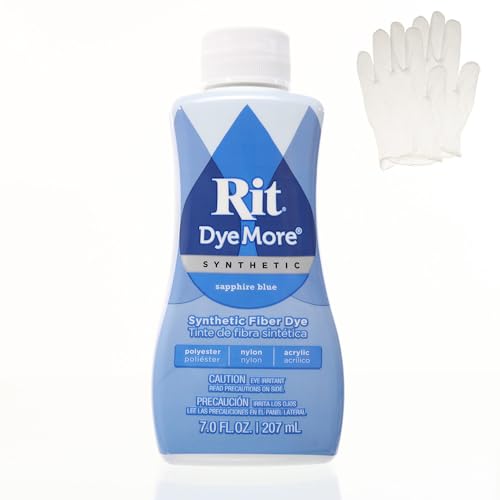
Rit DyeMore 7 Oz Synthetic Liquid Dye, Sapphire Blue

Rit DyeMore 7 Oz Synthetic Liquid Dye, Kentucky Sky

Rit DyeMore 7 Oz Synthetic Liquid Dye, Peacock Green

Qualia All Purpose Powder Fabric Dye, Dark Blue 3 Pack
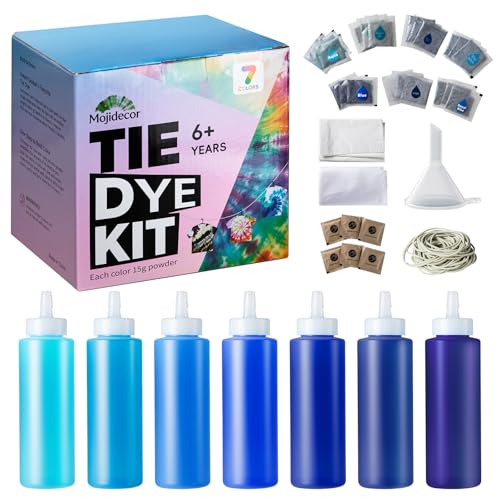
MojiDecor 7 Blue Shades Tie Dye Kit
The Picks, Examined More Closely
This is the dye that lives in most craft closets for good reason. The liquid format pours straight into a washing machine, sink basin, or bucket, and Evening Blue lands as a deep, wearable navy rather than a costume-bright royal. Because it comes as a two-pack of 8-ounce bottles, you have enough volume to cover a load of shirts or a set of faded curtains without rationing.
It suits anyone refreshing household textiles: cotton tees, linen napkins, even wicker baskets and unfinished wood. For a first dyeing session at home, this is the low-risk starting point.
What It Does Well
- Handles an unusually wide material list, from cotton and wool to paper, cork, and wicker, so one bottle covers several project types.
- Liquid form dissolves evenly in machine or hand-dye baths, which cuts down on blotchy results beginners often fight with powders.
- The two-pack gives you headroom for larger loads or a second pass when you want a darker shade.
- Evening Blue is a versatile mid-navy that reads well on both clothing and home décor.
Things To Consider
- Synthetic-heavy blends (roughly 35% polyester, acrylic, or acetate) take color poorly; those need a dedicated synthetic formula like the DyeMore picks below.
- Dyeing is messy by nature, so protect surfaces and wear gloves you don’t mind staining.
Key Specs
Who It Suits Best
Home crafters working mostly with natural fibers who want one dependable bottle for clothes, linens, and décor projects.
Where Another Pick Suits Better
Shoppers dyeing polyester activewear will get far better saturation from the Rit DyeMore Sapphire Blue instead.
Tie dye usually means buckets, soda ash, and a kitchen that looks like a crime scene afterward. S.E.I. skips all of that with a pre-mixed indigo in its own spray bottle, ready the moment you uncap it. Twist, spray, and the pattern forms where the mist lands, which makes ombré fades and speckled effects genuinely easy to control.
The trade-off shows up in scale: 2 ounces covers a shirt or a couple of scrunchies, not a bedding set. It’s built for spontaneous weekend projects, classroom activities, and anyone who wants results in an afternoon rather than a multi-step soak process.
The Practical Payoff
- Pre-mixed and ready to use, so there’s no measuring, dissolving, or fixative bath to manage before you start.
- Spray application gives you pattern control that dunk-dyeing can’t match; targeted bursts mean sharper designs and less waste.
- Cleanup stays contained since the dye never leaves its own bottle until it hits the fabric.
- Works on shirts, dresses, scrunchies, and sheets, giving small projects real variety.
Worth Noting
- The 2-ounce volume limits you to small pieces; larger garments or multiple items call for a bigger kit like the MojiDecor set later in this list.
- Single-shade means single-color designs; layered looks require buying additional colors separately.
Made For
Casual DIYers, parents, and teachers who want a no-fuss single-color tie dye session without setup or heavy cleanup.
Consider Something Else When
Group events with lots of participants are better served by the MojiDecor 7 Blue Shades Tie Dye Kit, which includes bottles, gloves, and aprons for everyone.
Standard dyes slide right off polyester, which is why so many first attempts on athletic wear end in disappointment. DyeMore exists specifically for synthetics: polyester, acrylic, and acetate bond with this formula under heat, and Sapphire Blue delivers a rich, saturated result on fabrics other dyes simply refuse to touch. The included plastic gloves are a small but thoughtful addition, since synthetic dyeing requires a hot stovetop bath and stained hands come with the territory otherwise.
You’ll need a pot you’re willing to dedicate to dye duty, plus patience for keeping the bath hot throughout. In return, faded polyester uniforms, curtains, and costumes get a genuine second life.
Well-Handled Touches
- Formulated for polyester, acrylic, and acetate, the three fibers most dyes can’t penetrate effectively.
- Plastic gloves come in the pack, so you’re protected from the very first pour.
- Compatible with stovetop, plastic-container, or stainless-steel setups, giving flexibility in how you run the hot bath.
- Sapphire Blue is deep enough to revive badly faded dark garments in one session.
Small Caveats
- Requires sustained heat, meaning a dedicated pot and close attention; owners commonly report reserving an old thrifted pot for dye work.
- Overkill for pure cotton, where the standard Rit liquid above does the job with less fuss.
Feature Snapshot
Who Will Love This
Anyone reviving polyester sportswear, uniforms, or costume pieces who’s comfortable running a heated dye bath on the stove.
Reach For A Different Pick When
Natural-fiber projects belong with the Qualia powder dye, which targets cotton, wool, silk, and linen directly.
Same trusted synthetic formula as the Sapphire Blue above, tuned to a much lighter mood. Kentucky Sky sits closer to a soft, washed denim tone, which makes it the shade to reach for when a deep navy would swallow the fabric’s texture or print detail. Lighter curtains, summer-weight polyester dresses, and pastel-leaning décor all benefit from this gentler register.
Everything about the workflow carries over from pick three: hot bath, plastic gloves included, patience required. The only decision here is tonal, and it matters more than people expect. Dark shades hide imperfections but flatten detail; a lighter sky blue preserves stitching lines and woven texture in a way deeper blues can’t.
Positive Takeaways
- Kentucky Sky offers a pale, airy blue that keeps fabric texture visible after dyeing.
- Shares the synthetic-focused chemistry that bonds properly with polyester, acrylic, and acetate.
- Gloves ship in the box, keeping the hot-bath session clean from the outset.
Points To Note
- Lighter shades reveal uneven agitation more readily than dark ones, so consistent stirring matters more here.
- Still heat-dependent, which adds time and equipment compared to cold-water options.
Right Fit For
Dyers refreshing light-colored synthetic garments or décor who want subtle, wearable color rather than a dramatic transformation.
Swap It Out When
Deep, saturated results on dark polyester call for the Rit DyeMore Sapphire Blue from the previous section instead.
The third member of this DyeMore trio splits the difference between blue and green, landing in peacock territory that photographs beautifully and reads as deliberately styled rather than dyed-by-accident. On synthetic throw pillows, lampshades, or accent chairs, this teal-leaning shade does decorative work that a straight blue can’t quite pull off. The chemistry matches its siblings: heat-activated bonding for polyester, acrylic, and acetate, gloves in the pack, same 7-ounce single-garment sizing.
Honestly, choosing among these three comes down to the room or outfit you’re dressing. Peacock Green earns its spot for anyone coordinating with existing teal, turquoise, or coastal palettes where pure blue would clash slightly.
The Value In It
- A distinctive blue-green shade that pairs naturally with coastal and jewel-tone interiors.
- Full synthetic compatibility, handling polyester, acrylic, and acetate under heat.
- Gloves included, matching the practical packaging of the other DyeMore shades.
Less Ideal Details
- The green lean limits wardrobe versatility compared to classic navy tones.
- Same heated-bath commitment as every synthetic dye, so plan the session around a free afternoon.
Core Details
Whose Shelf It Belongs On
Decor enthusiasts and upcyclers restyling synthetic home accents within teal or coastal color schemes.
Not Your Match When
Classic navy wardrobe refreshes suit the Rit Dye Multi-Purpose Evening Blue better, especially on cotton-based garments.
Where the Rit liquid sells convenience, Qualia sells concentration. Each powder box dyes up to 600 grams of fabric in roughly half an hour, and the brand notes a single box can handle two children’s t-shirts. Multiply that across a three-pack and you’re equipped for a serious closet overhaul: jeans, towels, canvas bags, wool sweaters, silk scarves, even unfinished wood.
Powder demands slightly more care than liquid. You’ll dissolve it fully before adding fabric, or you’ll chase undissolved specks out of your finished piece. That extra step buys intensity, though; ultra-concentrated formulas tend to push darker, richer color per ounce than pre-mixed liquids. For bulk natural-fiber work, this is the efficient choice.
What Earns Its Place
- Ultra-concentrated powder covers up to 600g of fabric per box, stretching further than comparable liquid volumes.
- Three boxes per order support multiple large sessions or a full seasonal wardrobe refresh.
- Broad natural-fiber compatibility spans cotton, wool, silk, linen, and wood.
- Fast processing, around 30 minutes per batch, keeps project momentum going.
- Dark Blue delivers depth that lighter sky tones can’t achieve on heavily faded items.
Details To Watch
- Powder must dissolve completely before fabric goes in; skipped stirring shows up as speckling, a commonly reported issue with concentrated powders.
- Store sealed and dry, since clumped powder loses dosing accuracy over time.
The Numbers That Matter
Best Suited To
Experienced home dyers tackling bulk natural-fiber projects who prioritize coverage per dollar over plug-and-play simplicity.
Another Choice May Suit
First-timers who’d rather skip powder dissolution will find the pre-mixed Rit Multi-Purpose Liquid far more forgiving.
Every other entry here assumes you already own gloves, bottles, and a drop cloth. MojiDecor ships the whole operation: twenty-one powder packs spread across seven blue shades (aqua through indigo), seven squeeze bottles, gloves, aprons, a protective tablecloth, and a funnel. That’s a birthday-party-sized session in one box, and the all-blue palette keeps group results looking coordinated instead of chaotic.
Each shade gets three 5-gram packs, enough for several shirts per color. Compared to the single S.E.I. spray bottle earlier, this kit trades simplicity for scale, which is exactly the right trade for families, scout troops, and classrooms. Setup and teardown still take effort, so budget the afternoon honestly.
What Pays Off
- Seven distinct blue shades allow gradient effects and coordinated group designs impossible with single-color products.
- All-in-one contents mean zero shopping trips before the activity starts.
- Twenty-one powder packs provide enough volume for multiple shirts per participant.
- Aprons and a tablecloth shift the mess management onto the kit, not your furniture.
- Sized for both kids and adults, so mixed-age groups work equally well.
A Few Limitations
- Powder packs require filling and mixing the bottles yourself, adding prep time versus ready-to-use sprays.
- Blue-only palette won’t satisfy groups wanting rainbow variety.
Feature Breakdown
Perfect Match For
Parents, teachers, and camp organizers running hands-on craft sessions for groups of kids or mixed ages.
Where A Sibling Pick Shines
Solo crafters wanting one quick project should stick with the S.E.I. Indigo Spray Bottle and skip the group-scale kit entirely.
Choosing Between These Blues: What Actually Matters
Match The Dye To The Fiber First
This single decision determines success more than any other factor. Natural fibers like cotton, linen, wool, and silk accept standard all-purpose dyes such as the Rit liquid and Qualia powder. Synthetics, including polyester, acrylic, and acetate, reject them almost completely and demand a heat-activated formula like DyeMore. Check the garment tag before ordering anything; a blend with heavy synthetic content needs the synthetic route.
Format Shapes Your Workflow
Liquid dyes pour straight into a washer or basin and forgive beginner mistakes. Powders concentrate more color per dollar but must dissolve fully to avoid speckling. Sprays offer pattern control for tie dye with minimal cleanup, while full kits bundle everything a group session requires. Honest self-assessment helps here: choose the format matching your patience, not just your ambition.
Volume Should Match Project Scale
A 2-ounce bottle covers a shirt; a 600-gram-capacity powder box covers a wardrobe segment. Buying too little forces a mid-project reorder, and matching dye lots across separate purchases risks slight shade variation between batches. Estimate total fabric weight first, then buy once with margin to spare.
Think About Where The Mess Lands
Hot synthetic dyeing claims a dedicated pot and a ventilated space. Powder and liquid dyeing stain sinks, counters, and skin without protection. Kits with included gloves, aprons, and tablecloths remove that friction, which matters enormously for households with kids or rented apartments.
Key Considerations Across These Picks
Traps First Timers Fall Into
The most common error is dyeing a synthetic blend with an all-purpose formula and blaming the product. The second is skipping the fabric-weight estimate and running short mid-session. Read the fiber content label, weigh your fabric, and buy accordingly.
The Upgrade Payoff
Higher-tier options earn their cost through coverage and completeness. Concentrated powders deliver more dyed fabric per purchase, while bundled kits replace five separate shopping trips with one box. Paying up pays off whenever project scale exceeds a single garment.
Frequently Asked Questions
Do blue dyes work on polyester?
Only synthetic-specific formulas like Rit DyeMore bond with polyester, and they require a hot dye bath. Standard all-purpose dyes will wash out or barely tint these fibers.
How much fabric does one container typically cover?
Coverage varies widely by format, from a single shirt with a 2-ounce spray up to roughly 600 grams of fabric with a concentrated powder box. Estimate your total fabric weight before purchasing.
Is fabric dye permanent after washing?
Properly set dye on the correct fiber type holds through normal laundering. Results depend on following the heat, timing, and rinsing directions exactly.
Can I dye wood or paper with these products?
Several all-purpose formulas, including the Rit liquid listed here, list wood, wicker, paper, and cork among compatible materials. Always test on a hidden area first.
What supplies do I need beyond the dye itself?
Gloves, a stainless-steel or dedicated container, and surface protection are the basics. Group kits include most accessories, while solo bottles assume you’ll supply the rest.
Closing Thoughts
Your fabric decides the dye more than any chart does. Cotton projects point toward the Rit liquid or Qualia powder, polyester demands DyeMore, and quick creative sessions favor the sprays and kits. Match the format to your workspace and the volume to your fabric pile, and the results tend to take care of themselves. Start with the smallest bottle that covers the job; you can always scale up on the next round.
