
Handmade journals, wedding guest books, sketchbooks you actually finish, most of them live or die on the paper inside. The right stock folds cleanly, takes ink without ghosting, and survives years on a shelf. The wrong one yellows, bleeds, or cracks at the spine before page ten. This roundup covers seven options that handle those jobs well, from bulk cardstock for printed pages to handmade cotton sheets with a deckle edge, plus the tools and reference material that tie a binding project together.
A Side-By-Side Look

Neenah Index Cardstock, 8.5″ x 11″, 90 lb., White, 300 Sheets
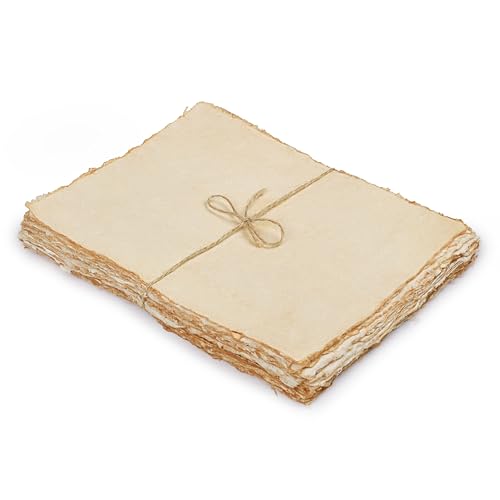
LEATHER VILLAGE Vintage Deckled Edge Watercolor Paper 25 Sheets

Joyberg Vintage Parchment Paper 8.5 x 11 in, 70 Sheets

Cranium Press Heavyweight White Cardstock 80 lb, 50 Sheets

The Papermaker’s Companion by Helen Hiebert

Goiio 11 Pieces Bookbinding Kit Tools

Wanderings Handmade A5 Cream Mixed Media Paper with Deckle Edge
The Strengths Of Each Pick
Most bound projects burn through paper fast, and this Neenah pack answers that with 300 letter-size sheets in one run. At 90 lb (163 gsm), it sits heavier than standard copy paper but light enough for home inkjet and laser printers to feed reliably. That weight also gives hand-bound signatures a satisfying stiffness without bulking up the spine.
The acid-free, lignin-free construction matters more than it sounds. Papers containing lignin break down over time, so a journal made with this stock should stay white instead of browning at the edges years from now.
Features That Help
- 300 sheets per pack means fewer reorders mid-project.
- Acid-free and lignin-free sheets resist yellowing over the years.
- The smooth surface reproduces sharp text and clean line art.
- 94 brightness delivers strong contrast for printed pages.
Things To Consider
- At 163 gsm it may feel too stiff for very tight coptic stitching, so test one signature first.
- Plain white finish offers no decorative character on its own.
Key Specs
Who It Suits Best
School teachers, scrapbookers, and self-publishing hobbyists who need dependable printable pages in volume.
A Better Fit Elsewhere
Artists wanting textured, characterful pages will get more joy from the Wanderings A5 cream mixed media paper further down this list.
Where the Neenah stock above is all business, these 4×6 sheets bring personality. Each one is handmade with a deckle edge, the soft irregular border left when paper is formed on a mould rather than machine-cut. In a bound book, those feathered edges peek out between pages and give the whole object an heirloom feel.
The 150 gsm weight handles both dry media and light washes, which makes these sheets useful beyond decoration alone.
What Earns Its Place
- Deckle edges add instant vintage character to any binding.
- 150 gsm thickness supports watercolor, charcoal, ink, and pastel work.
- Acid-free composition helps artwork stay stable over time.
- Loose sheets are easy to collate into custom signatures.
Honest Caveats
- Only 25 sheets come in the pack, so larger books require multiple orders.
- Heavy water saturation can cause cockling since this is not a heavy cold-press sheet.
- Handmade sizing varies slightly from sheet to sheet, which some owners find charming and others find inconsistent.
Right Fit For
Poetry chapbook makers, junk journal enthusiasts, and artists who want small-format pages with visible craft character.
Swap It Out When
Anyone planning serious watercolor work should step up to the Wanderings A5 cotton paper later in this list, which is purpose-built for wet media at the same weight.
This Joyberg pack solves a specific problem: getting an aged, antique look through a printer without staining tea bags or coffee-dipping every sheet yourself. The parchment-style design comes pre-printed on both sides of each 8.5 x 11 inch sheet, so certificates, diplomas, and keepsake book pages look finished straight off the tray.
At around 100 gsm, it runs lighter than the cardstocks here, closer to quality stationery than cover stock.
The Value In It
- Double-sided printing lets you use both faces of every page.
- Pre-aged design skips messy DIY antiquing entirely.
- The opacity prevents show-through between front and back printing.
- Letter size feeds standard office and home printers without trimming.
Points To Note
- The lighter weight suits flat inserts better than structural book covers.
- Inkjet output can smear if pages are handled before drying fully, a common report with coated decorative stocks.
Product Snapshot
Made For
Event planners, teachers, and family historians producing award certificates, letters, and commemorative booklets in batches.
Reach For A Different Pick When
You need plain white interior pages rather than decorative ones; the Cranium Press cardstock reviewed next is the cleaner canvas for everyday printing.
Book covers take abuse, and this Cranium Press stock is built for that role. The 80 lb cover weight (listed at 216 gsm) is thick enough to protect pages beneath it while still scoring and folding without cracking along the crease. Compared with the Neenah 90 lb index stock earlier, this one leans into a bright-white shade and a smoother finish aimed squarely at print quality.
Good ink holdout, meaning the surface keeps ink sitting on top rather than soaking in, translates to saturated colors and legible fine type.
Strengths Worth Knowing
- 216 gsm thickness stands up as durable covers or sturdy single cards.
- Minimal show-through keeps double-sided prints looking clean.
- Smooth finish supports crisp business-card and invitation output.
- Bright white shade makes colors pop against the page.
Small Caveats
- Only 50 sheets per pack, so large runs mean repeat purchases.
- Some home printers struggle feeding stock this heavy; check your tray’s cardstock setting first.
Feature Rundown
Who Will Love This
Small-batch stationery sellers and invitation designers who judge results by print sharpness and edge cleanliness.
Another Choice May Suit
High-volume school or office users get far better value per sheet from the 300-sheet Neenah pack at the top of this list.
Every other item here is something you bind with. This one teaches you how paper itself gets made. Helen Hiebert’s guide walks through forming sheets by hand, from pulp preparation through pressing, drying, and decorating, then moves into how finished handmade paper behaves in real projects. For anyone curious about why deckle edges exist or what sizing does, this is the reference that explains it.
It pairs naturally with the LEATHER VILLAGE and Wanderings sheets above, since understanding handmade construction helps you work with their quirks rather than against them.
Where It Excels
- Covers the full process from raw pulp to finished sheet.
- Explains how to use handmade paper once it’s made, not just produce it.
- Available as an ebook readable on any device, handy beside a messy workspace.
Worth Noting
- It’s instructional reading, not a supply, so it won’t help anyone who just needs sheets today.
- Complete beginners to crafts generally may find some terminology dense at first.
Whose Shelf It Belongs On
Curious makers ready to move beyond buying paper and start pulling their own sheets at a kitchen table setup.
Look Elsewhere When
You already know your craft and simply want materials; skip straight to the Goiio tool kit below and start binding.
Paper alone doesn’t make a book. This Goiio kit supplies the core hand tools: six large-eye needles in three sizes (6.9 cm, 6.2 cm, and 5.7 cm, two of each), a wood-handled awl for punching stitch holes, two bone folders, 50 metres of waxed polyester thread, and a plastic bottle to keep needles corralled. A bone folder, for anyone new to the term, is the flat tool used to score crisp folds and burnish edges.
Together, that’s everything a first coptic or saddle-stitch project needs besides the paper itself.
A Strong Showing
- Three needle lengths cover thin pamphlets through thicker signatures.
- Large eyes accept the included waxed thread without fraying frustration.
- 50 metres of thread is plenty for many beginner projects.
- Everything packs small, so the kit travels to workshops easily.
Softer Spots
- The bone folders are plastic rather than real bone, so they’ll show wear sooner under heavy professional use.
- The awl demands a steady hand; punching through thick stacks takes practice.
Core Details
Best Suited To
First-time binders who want one affordable box covering folding, punching, and stitching without piecing tools together separately.
Not Your Match When
Working binders who press hundreds of folds weekly will prefer upgrading to genuine bone folders while keeping this kit as a backup.
This is the pick for artists who plan to actually paint in their bound books. Each of the 50 A5 sheets (5.8 x 8.3 inches) is handmade from recycled cotton, sun-dried and cold-pressed, then treated with plant-based sizing so wet media behaves predictably. Cold press refers to the lightly bumpy texture that grabs pigment, and at 150 gsm these sheets hold up to watercolor, acrylic, ink, and charcoal far better than the smaller LEATHER VILLAGE pads earlier in the list.
The warm cream tone flatters calligraphy and sepia ink especially well.
A Few Strong Suits
- Recycled cotton construction gives real wet-media durability.
- Plant-based sizing reduces bleed on watercolor and ink work.
- Deckle edges lend a crafted, artisanal look to finished bindings.
- 50 sheets allow a substantial journal, not just a sampler.
Details To Watch
- Handmade sheets vary slightly in tone and thickness, so expect gentle inconsistency.
- The non-standard A5 size needs trimming to fit letter-format covers.
The Key Facts
Who Should Grab It
Watercolorists, calligraphers, and travel-journal keepers who want handmade character without sacrificing paint performance.
Where A Sibling Pick Shines
Anyone printing pages at home should stick with the Neenah cardstock, since handmade cotton sheets like these aren’t built for printer trays.
What To Weigh Before You Commit
Weight And Fiber Decide Everything
Paper weight, measured in grams per square meter (gsm) or pounds (lb), determines whether a sheet works as an interior page or a cover. Interior pages typically sit between 90 and 160 gsm, while covers want 200 gsm or more. Fiber matters just as much: wood pulp keeps costs down, cotton rag absorbs water gracefully, and recycled blends split the difference. Match the fiber to your medium before anything else.
Printability Versus Character
Machine-made stocks like the Neenah and Cranium Press sheets run cleanly through printers and deliver uniform results page after page. Handmade sheets trade that consistency for deckle edges, organic texture, and individual variation. Printed cookbooks and reports favor the former; art journals and keepsakes reward the latter. Deciding which camp your project belongs to narrows this list quickly.
Quantity Against Project Scale
A 25-sheet pack of handmade paper finishes one modest book, while a 300-sheet cardstock run covers a semester of classroom binding. Count your signatures before ordering, then add roughly 15 percent for misfolds and practice pieces. Running short mid-project usually means a mismatched second batch.
Don’t Forget The Tools
Paper is half the equation. Folding, punching, and stitching demand at minimum a bone folder, an awl, needles, and waxed thread. Buying them bundled, as the Goiio kit does, costs less than assembling piece by piece and guarantees compatible sizes.
Key Considerations Across These Picks
Traps First Timers Fall Into
The most common slip is buying decorative paper for structural jobs. Pre-printed parchment looks wonderful but lacks the body for covers or spine stress. Another frequent error is ignoring printer limits; feeding 216 gsm stock into a tray rated for plain paper leads to jams and wasted sheets. Check your printer’s maximum cardstock weight first, and always order extra for practice folds.
Where The Extra Money Goes
Higher-priced handmade papers charge for labor, not marketing. Each cotton sheet is formed, pressed, and dried individually, and plant-based sizing adds real wet-media performance. That premium pays off for art journals meant to last decades. For disposable notebooks or practice binds, mass-produced cardstock delivers everything you need at a fraction of the cost.
Frequently Asked Questions
What paper weight works best for handmade book pages?
Sheets between 120 and 160 gsm strike the best balance, folding without cracking yet feeling substantial in hand. Lighter stock suits pamphlets, while heavier weights belong on covers.
Can I print on handmade deckle edge paper?
Generally no, since irregular edges and uneven thickness can jam printer rollers. Print on standard sheets and reserve handmade paper for hand-lettered or painted work.
How many sheets do I need for one bound book?
A typical journal uses 60 to 100 interior pages plus two cover sheets. Add a margin for errors, then multiply by the number of copies planned.
Is acid-free paper really necessary for book making?
For keepsakes meant to survive years, yes. Acid-free, lignin-free sheets resist yellowing and brittleness, keeping pages readable decades later.
Do I need special tools to start bookbinding?
A bone folder, awl, needles, and waxed thread cover most beginner techniques. Bundled kits supply all four affordably and remove guesswork about sizes.
Closing Thoughts
Choosing among these seven comes down to matching the sheet to the job. Bulk cardstock serves printers and classrooms, handmade cotton serves brushes and ink, decorative parchment serves ceremonies, and the right tools turn any of them into a finished book. Start with your medium, count your pages honestly, and the rest follows. Whichever route you take, there’s real satisfaction waiting in that first stitched signature.
