
Turning empty wine bottles into drinking glasses, vases, or candle holders starts with one clean score line, and the right tool makes all the difference between a crisp break and a shattered mess. Whether you’re a weekend crafter recycling empties or a small-studio maker producing glassware regularly, this list covers machine-style cutters, hand-held scorers, and even grinder discs. Each option below suits a different skill level and budget approach, so you can match the tool to how often you actually cut.
How The Shortlist Stacks Up

Fixm Glass Bottle Cutter Square Round Bottlenecks

FIXM Glass Bottle Cutter Kit

Camdios Glass Bottle Cutter Kit with Glass Cutting Oil
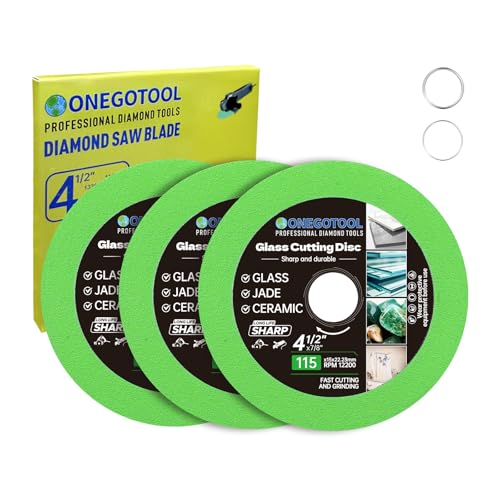
ONEGOTOOL Diamond Glass Cutting Disc 4-1/2×7/8 inch (3PCS)

TOYO TC17B Self-Oiling Brass Supercutter
Smasener Glass Bottle Cutter [S-201]

FIXM Glass Bottle Cutter Double Dam Boards Kit
Inside Each Recommended Option
This cutter earns its place at the top of the list because of how it handles awkward bottles. A detachable lateral plate angled at 95 degrees lets you work on larger square bottles, the kind most entry-level machines struggle to seat properly.
The eight supporting wheels do the quiet work here, holding the bottle steady while you rotate. For anyone cutting their first batch of beer or wine empties at the kitchen table, that stability matters more than any fancy extra.
The Good Stuff
- The eight-wheel support system keeps round bottles from wobbling mid-score, which means fewer crooked breaks.
- A 95-degree detachable side plate opens up bigger 750ml-and-above square bottles without improvising.
- Handles round, square, and bottleneck shapes, so mixed recycling bins all become raw material.
- Simple enough that a first session usually produces a usable cut within minutes.
Things To Consider
- The blade will dull over months of regular use, and replacement parts depend on availability from the seller.
- Very thick champagne-style glass may need several passes before the score line takes cleanly.
Key Specs
Who Should Grab It
First-time crafters who want a forgiving machine that handles standard wine and beer bottles without a learning curve.
Where A Sibling Pick Shines
Anyone planning heavy weekly production should look at the Camdios kit instead, since its lubricated carbide blades are built for far higher cut volumes.
Fixm reworked its own formula with this kit, and the change shows up where your hands actually touch the tool. The cutting arm now carries its own grip on the head, giving you direct steering control rather than relying purely on the frame.
A spiral lock button secures the arm for straight scores and releases it when you want horizontal movement. That two-mode setup suits hobbyists who’ve outgrown basic fixed-frame cutters but aren’t ready for studio equipment.
Strong Points
- The handle-mounted cutting head gives finer direction control than frame-only designs.
- Spiral button locking lets you switch between locked straight cuts and free horizontal movement quickly.
- Kit packaging means fewer separate purchases to start cutting.
Minor Gripes
- The added moving mechanism introduces more parts to check and tighten over time compared with simpler frames like the Fixm Square Round model above.
- Manufacturer documentation on supported bottle sizes is sparse, so confirm compatibility with oversized vessels before committing.
Right Fit For
Intermediate hobbyists who want adjustable control over their score lines without stepping up to professional gear.
Another Choice May Suit
Total beginners may find the original Fixm Square Round Bottlenecks cutter easier to learn on, thanks to its more rigid stabilizing frame.
Volume changes everything in bottle crafting, and this Camdios kit is engineered around it. Two diamond carbide blades, kept lubricated by included cutting oil, are rated by the manufacturer for well over 400,000 cuts. For context, a serious hobbyist might log a few thousand cuts a year, so blade life stops being a worry.
The stainless steel base plate adds real heft, which keeps the whole unit planted on a workbench while five support wheels cradle the bottle. Compared with the lighter Fixm models earlier in this list, it feels closer to shop equipment than a kitchen-table gadget.
What It Does Well
- Dual diamond carbide blades paired with cutting oil sustain sharpness across enormous cut counts.
- The solid stainless steel bottom plate resists flexing, so pressure transfers straight into the glass.
- Five support wheels stabilize bottles through the full rotation.
- Included oil removes the guesswork around blade maintenance for newcomers.
- Complete-kit format covers scoring and finishing in one purchase.
Potential Drawbacks
- The steel base adds weight, which matters if your workspace doubles as a dining table and gets packed away between sessions.
- You’ll need to keep oil topped up periodically; running the blades dry shortens their life noticeably.
- Extra components mean slightly more cleanup after each project.
Quick Facts
Whose Shelf It Belongs On
Sellers, market stall vendors, and prolific DIYers who cut dozens of bottles monthly and need blades that won’t quit.
Swap It Out When
Occasional crafters cutting a handful of bottles per season will find the Smasener S-201 delivers comparable results with less upkeep.
Not everyone wants to score-and-snap. This three-pack of ultra-thin diamond discs mounts to a standard angle grinder and slices directly through glass, ceramic, jade, crystal, and yes, wine bottles. Diamond particles embedded in the rim do the cutting, and their hardness translates to a long service life per disc.
Getting three discs in one pack stretches the value further, effectively tripling your working life before a reorder. You’ll want steady hands and proper eye protection, though; freehand grinding demands more skill than a guided cutter frame ever will.
Noteworthy Benefits
- Fine diamond particle surface produces smoother edges with less chipping than coarse abrasive wheels.
- The ultra-thin profile removes minimal material, which keeps cuts tight and controlled.
- Works across glass, tile, crystal, and stone, making it useful beyond bottle projects.
- Three discs per pack mean a spare is always on hand mid-project.
Honest Caveats
- An angle grinder throws glass dust and sparks, so ventilation, goggles, and gloves are non-negotiable safety basics.
- Freehand cutting offers no guide rail, so beginners commonly report uneven results until their technique settles.
- Requires an angle grinder with an arbor matching the disc bore, which not every household owns.
At A Glance
Made For
Workshop owners who already run an angle grinder and want a fast, aggressive option for trimming glass and stone alike.
Look Elsewhere When
Guided-score enthusiasts after clean snap-off cuts should stick with the TOYO TC17B below, which needs no power tools at all.
Some tools earn their reputation over decades, and this is one of them. Introduced in 1975, the TOYO TC17B remains a fixture among American glass professionals, and the reason is mechanical simplicity done right. A built-in reservoir feeds oil to the wheel automatically as you score, so every line stays consistently lubricated.
The brass barrel feels dense and balanced in hand, the kind of weight distribution that makes long scoring sessions less fatiguing. Unlike the bottle-cutter frames above, this is a pure hand scorer: you supply the straightedge or circle jig, and it supplies the precision.
Reasons It Performs
- Self-oiling action keeps the cutting wheel fed during continuous runs, no manual dabbing required.
- Brass construction resists corrosion and shrugs off years of workshop handling.
- Straight-line design pairs cleanly with rulers and jigs for repeatable scores.
- Trusted widely in stained-glass and float-glass trades, so technique resources are abundant.
Small Caveats
- No bottle-holding frame is included, so cylindrical cuts demand a separate jig or steady improvisation.
- The oil reservoir occasionally needs refilling depending on how heavily you score.
Technical Highlights
Who Will Love This
Stained-glass artists, glaziers, and serious hobbyists who score flat glass daily and want a tool that lasts decades.
Not Your Match When
Casual recyclers wanting an all-in-one bottle rig will get better results from the FIXM Double Dam Boards kit, which holds and guides the bottle for you.
Most bottle cutters draw straight lines only, and that’s where the S-201 branches off. Its multi-joint cutting arm adjusts the head position relative to the bottle, opening the door to curved and angled designs alongside standard horizontal rings.
The spiral button locks the arm for straight work and frees it for creative passes, mirroring the control scheme of the FIXM kit higher up this list but adding shape flexibility. Fair warning from the manufacturer itself: curved cuts take practice, so expect a few sacrificial bottles before the arcs come out smooth.
Strengths Worth Knowing
- Multi-joint arm geometry lets the cutter head track curves as well as straight rings.
- Spiral-button locking switches confidently between guided and freeform modes.
- Handles both round and square bottles for varied stock.
- New handle design improves grip comfort during longer sessions.
Points To Note
- Curved scoring genuinely takes patience; early attempts often crack unevenly until your speed and pressure settle.
- The articulated joints add setup time per bottle versus rigid single-motion frames.
Best Suited To
Creative makers designing sculptural vases, tilted planters, and asymmetric pieces rather than uniform drinking glasses.
Skip It When
Production-focused users churning out identical tumbler sets will move faster with the Camdios kit’s straightforward high-volume setup.
Fixm closes out the list with its most configurable machine. Twin dam boards brace the bottle from both sides, a layout that accommodates round, square, and necked shapes spanning wine, beer, and whiskey containers. The headline trick is the adjustable blade: sizing changes happen without disassembling screws, so switching from a slim beer bottle to a chunky spirits jug takes seconds.
That flexibility is why it lands last but hardly least. Where the first Fixm pick excels at simplicity, this one rewards owners with eclectic bottle collections who’d otherwise buy multiple dedicated tools.
Advantages To Know
- Tool-free blade adjustment handles any bottle size within the stated range without screw removal.
- Double dam boards brace irregular shapes securely from two directions.
- Covers round, square, and bottleneck profiles across wine, beer, and whiskey glass.
- Complete kit includes both the frame cutter and a supplementary glass cutter.
- Fast size changes suit households that recycle whatever comes through the door.
Worth Bearing In Mind
- More adjustment points mean more surfaces to wipe down and check for glass slivers after each session.
- Owners new to dual-board setups report a short familiarization period before cuts come out true.
Product At A Glance
The Right Fit
Household recyclers and gift-makers facing a rotating mix of bottle shapes who value versatility over single-purpose speed.
Reach For A Different Pick When
Flat-glass specialists doing panes and mosaic work belong with the TOYO TC17B, whose straight-scoring pedigree fits sheet glass far better.
What Matters Most Before Choosing Bottle And Glass Cutters
Match The Tool To Your Output Volume
Cutting ten bottles a month and cutting ten a day are different sports. Occasional crafters do fine with a simple frame like the Fixm Square Round, while anyone selling finished glasses needs oil-fed carbide blades and a rigid steel base to survive the workload. Be honest about your pace before spending.
Frame Rigidity Beats Extra Features
A wobbly frame ruins every score line regardless of blade quality. Support wheels, dam boards, and a solid base plate all serve one purpose: keeping the bottle perfectly still while the wheel travels. Prioritize stability claims over accessory bundles when comparing models.
Blade Material Determines Longevity
Standard hardened wheels dull within months of hobby use. Diamond carbide wheels, especially when paired with cutting oil, hold their edge dramatically longer. The first-time definition here matters: scoring means scratching a controlled line the glass can snap along, and a dull wheel produces the ragged scores that cause failed breaks.
Hand Scorers Demand Skill But Reward It
Frame machines guide the cut for you; tools like the TOYO Supercutter put accuracy entirely in your hands. Experienced stained-glass workers prefer them for control, yet beginners often frustrate themselves. Choose based on whether guidance or freedom matters more to your projects.
Key Considerations Across These Picks
Traps First Timers Fall Into
The most common mistake is buying on accessory count alone. A bundle stuffed with extras can’t rescue a flexible frame that lets bottles shift mid-score. Another frequent slip: ignoring bottle compatibility. Champagne bottles and thick-walled growlers defeat many budget frames, so verify capacity against what actually fills your recycling bin.
Why Top Tier Costs More
Higher-priced machines spend their budget where it counts: diamond carbide wheels, stainless bases, and oiling systems that extend blade life into hundreds of thousands of cuts. That engineering pays for itself once output climbs past casual levels. Below that threshold, a basic frame serves you just as well.
Frequently Asked Questions
Do I need hot water to finish a bottle cut?
Yes, alternating hot water and cold water over the score line uses thermal shock to encourage a clean split. Most crafters run three or four cycles before the top separates.
Can these cutters handle square whiskey bottles?
Several picks here can. The Fixm Square Round model, the Smasener S-201, and the Double Dam Boards kit all accommodate square profiles, though square glass typically requires slower, steadier scoring.
How long does a cutting wheel last?
It depends heavily on material and maintenance. Standard wheels may dull within a few hundred cuts, while oil-lubricated diamond carbide versions are rated for extremely high lifetime counts.
Is an angle grinder safe for cutting bottles?
It can be, with strict precautions: eye protection, gloves, secure clamping, and good ventilation are essential. Freehand grinding leaves no room for error, so it suits experienced tool users best.
What causes uneven, jagged breaks?
Usually an inconsistent score line from wobble, excessive pressure, or a dull wheel. Stabilizing the bottle firmly and applying light, even pressure solves most break-quality problems.
Closing Thoughts
Every cutter on this list solves the same problem differently, and the right answer depends on your volume, your bottle mix, and your patience level. Beginners should lean toward forgiving frames with strong stabilization, while high-output makers justify investing in lubricated carbide systems. Whichever route you choose, expect a learning curve of a few bottles before your breaks turn consistently clean. Start there, and let the results guide your next upgrade.
