
Chalkboard paint forgives almost nothing at application time. A cheap brush that sheds or leaves lap marks shows up on every coat, because the matte finish has nowhere to hide texture. The right tool keeps your wall, cabinet door, or craft project looking like one smooth slate instead of a patchwork of streaks.
This roundup covers seven options for different jobs: small detail work, big flat surfaces, furniture refinishing, and full roller coverage. Each pick suits a specific kind of project, from a kid’s bedroom wall to a café menu board. Match the brush to the surface and you’ll get cleaner edges and fewer coats.
A Quick View Of The Lineup

Cra-Z-Art Artist Brushes Assorted Sizes, 7 Count

Genixart Double Thick Chip Paint Brush, 3 Inch

Mister Rui 2-Pack Wax & Chalk Paint Brush
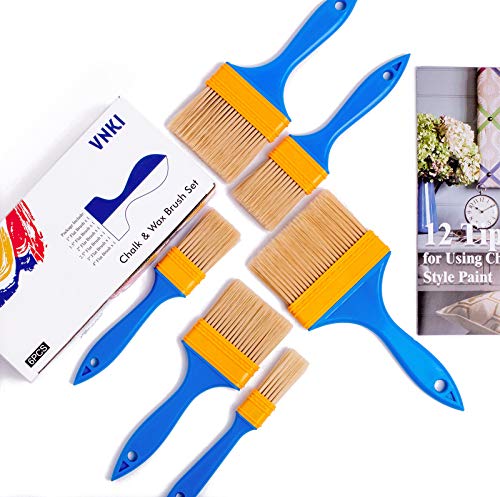
VNKI Chalk & Wax Paint Brush Set, 6PCS

Mister Rui Mini Paint Roller Kit, 13 Piece

Bates- Paint Brushes 6 Pack Angle Brushes, Wooden Handle

Bates- Flat Paddle Paint Brush Set, 3 Pack
More Details On Our Top Picks
Small chalkboard projects live or die on brush variety. This seven-piece card gives you different widths and tip shapes in one purchase, which matters when you’re painting a menu board’s border one minute and lettering on it the next. The bright translucent plastic handles also make it easy to spot the size you want mid-project.
These are hobby-grade tools rather than contractor gear, and that’s the honest read. In a classroom, craft room, or weekend DIY session they hold up well; owners commonly report the bristles stay put through light to moderate use.
Where It Delivers
- Seven distinct sizes and shapes cover borders, fills, and fine lines without buying anything else
- Translucent handles let you identify each brush at a glance while working
- Shed-resistant construction means fewer stray hairs stuck in drying paint
- Carded packaging keeps the set organized in a drawer between projects
Things To Consider
- Handles are lightweight plastic, so heavy pressure can flex them during long sessions
- Rinse thoroughly after water-based paints or residue hardens near the ferrule
Key Specs
Who It Suits Best
Hobbyists, teachers, and parents tackling small chalkboard crafts where variety beats heavy-duty durability.
A Better Fit Elsewhere
Anyone coating a full wall will get more done with the Mister Rui Mini Paint Roller Kit’s wide microfiber covers.
Where the Cra-Z-Art set thinks small, this 3-inch chip brush thinks big. The double-thick bristle block loads plenty of chalkboard paint per dip, and the 75mm width lays down broad strokes on fences, masonry, or an entire accent wall. One pass covers ground that would take a small artist brush four.
Chip brushes are traditionally semi-disposable workhorses, and this one follows that pattern. That’s actually useful with chalkboard paint, since dried paint in bristles ruins a fine brush but barely registers here. You may find the economy appealing on messy outdoor jobs.
Positive Points
- The 3-inch flat profile speeds up large surfaces dramatically compared to narrow brushes
- Double-thick bristles carry more paint, cutting dips and keeping strokes wet longer
- Suits varnish, limewash, paste, and stain alongside chalkboard coatings
Minor Gripes
- Chip-bristle shedding is more common than with premium synthetic sets, especially on rough wood
- No angled tip, so cutting in around trim calls for a steadier hand
- Treat it as replaceable; deep cleaning rarely restores the original edge
Made For
DIYers painting big, forgiving surfaces like shed doors, fence panels, or garage walls where speed outweighs finesse.
Swap It Out When
Detail-oriented furniture painters should reach for the Mister Rui 2-Pack instead, whose smaller heads handle tight spots far better.
This two-pack pairs a flat head with an oval one, and that combination is smarter than it sounds. The oval shape feathers chalk paint into curved furniture legs and spindles, while the flat version holds a crisp line along stencil edges. Dense natural bristles hold a good load of thick paint without dripping.
Furniture makeover fans tend to be the audience here. Natural bristle brushes are the traditional choice for wax finishing too, so the same set carries you from painted base coat to protective topcoat. Compared with the VNKI six-piece below, you trade size range for focused quality on medium and small work.
Standout Benefits
- Flat plus oval pairing handles straight edges and rounded profiles in one purchase
- Dense natural bristles grip thick chalk paint and wax without overloading
- Compact heads give crisp stencil definition on signs and cabinet fronts
- Works double duty as a wax applicator after the paint cures
Points To Note
- Natural bristles need gentle soap-and-water cleaning; hot water can warp them
- Only two sizes, so very large surfaces mean slower going
Right Fit For
Upcyclers refinishing dressers, chairs, and decor pieces who value control over raw coverage speed.
Another Choice May Suit
Room-scale projects call for the Genixart 3-inch chip brush, whose wider stroke clears big panels faster.
Six brushes spanning roughly 1 to 4 inches turn this set into a complete chalk-paint toolkit. Start with the smallest for picture frames, step up through the middle sizes for cabinet doors, and let the 4-inch flat clear a tabletop in minutes. Unlike the natural-bristle Mister Rui pair, these use synthetic filaments built to resist bristle loss.
The manufacturer lists compatibility with wood, metal, ceramic, and canvas, which opens the door to mixed-media projects beyond plain walls. Distressing painted finishes, a popular chalk-paint technique where you rub back edges for a worn look, also works well with a stiff flat head like these provide.
Everyday Advantages
- Six graduated sizes eliminate guesswork about which brush fits which task
- Synthetic bristles are engineered for minimal shedding on smooth finishes
- Cross-surface versatility covers wood, metal, ceramic, and canvas
- Stiff flats suit distressing techniques popular in furniture upcycling
- One set outfits a whole weekend makeover without extra purchases
Softer Spots
- Synthetic bristles hold slightly less thick paint than dense natural hair
- Storage of six brushes takes real drawer space
Core Details
Who Should Grab It
Serious DIY refinishers working across several furniture pieces and material types in one project cycle.
Reach For A Different Pick When
Beginners wanting a low-commitment starter should try the Bates angle pack first before investing in six brushes.
Brushes alone struggle on big chalkboard walls, and that’s the gap this thirteen-piece kit fills. You get a 4-inch roller frame, six microfiber covers, a matching tray with three liners, a 1.5-inch angled brush for edges, and even a drop cloth. Everything needed for a full wall arrives in one box, which removes the usual run-back-to-the-store moment.
The microfiber covers are designed for semi-rough and rough surfaces, common on textured interior walls. Rollers leave a stippled texture rather than the smooth look a good brush gives, so some painters roll the bulk and follow with light brush strokes while wet. That hybrid approach is where this kit genuinely earns its keep.
What Stands Out
- Thirteen coordinated pieces mean zero separate shopping trips
- Six spare roller covers support multi-coat jobs without mid-project washing
- Included angled brush handles corner and trim work the rollers can’t reach
- Drop cloth protects floors from chalk paint splatter
Areas To Watch
- Roller texture differs from brushed finishes, so blending technique takes practice
- Tray liners are single-use consumables you’ll eventually restock
Who Will Love This
First-time wall painters converting a playroom, kitchen, or office wall into a full chalkboard surface.
Look Elsewhere When
Sign makers and furniture painters needing fine control belong with the Mister Rui wax brush duo instead.
An angled sash brush is the secret weapon of clean chalkboard borders. The slanted tip lets you draw a crisp line against trim, tape, or an adjacent color without smudging, and this six-pack gives you 1-inch, 1.5-inch, and 2-inch widths so the tool matches the line. Wooden handles add a bit of heft that many painters find steadier than hollow plastic.
All six brushes share the same angled profile, so there’s no flat option in the box. For filling large areas you’d still want something like the Genixart chip brush, but for edging, corners, and window frames this set does the precision work properly.
Key Advantages
- Angled tips track lines accurately along trim and taped edges
- Three widths repeated across six brushes give backups as brushes wear
- Wooden handles feel balanced and resist the flex of thin plastic
- Suitable for paints, varnishes, and stains beyond chalkboard coatings
Trade Offs
- No flat-head option limits large-area filling within this set
- Wooden handles shouldn’t soak in water, or the finish can lift
Feature Rundown
Best Suited To
Careful painters framing a chalkboard wall or panel where the border line makes or breaks the result.
Not Your Match When
Broad surface coverage belongs to the Bates paddle trio reviewed next, whose 3-inch flat moves faster.
This three-pack splits the difference between the precision angle set above and the throwaway chip brush earlier. Nylon bristles, a synthetic filament that resists matting and cleans out easily with water-based paints, come mounted on short ergonomic paddle handles. The compact grip keeps your hand close to the work, which helps on detailed sign lettering and furniture faces.
With 1-inch, 2-inch, and 3-inch flats, the set scales from narrow frames to cabinet doors and modest wall sections. Nylon also plays nicely with oil-based sealers over chalkboard paint, giving one toolkit genuine range. Owners commonly report the bristles spring back well after washing.
Positive Takeaways
- Three graduated widths handle detail, edges, and broader fills in one set
- Nylon bristles rinse clean under tap water after latex and acrylic use
- Short ergonomic paddles reduce wrist fatigue during long sessions
- Compatible with oils, acrylics, and varnishes for sealing finished boards
Small Caveats
- Short handles sacrifice reach on high walls or deep cabinet interiors
- Three brushes offer less redundancy than the six-piece angle pack
Quick Facts
Whose Shelf It Belongs On
Mixed-medium painters who bounce between chalkboard art, sealing coats, and general household touch-ups.
Consider Something Else When
Stencil and wax specialists will prefer the denser natural bristles of the Mister Rui two-pack.
What Matters Most Before Choosing Brushes For Chalkboard Paint
Bristle Type Shapes Your Finish
Natural bristles are soft and thirsty, ideal for thick chalk-style paints and waxes because they release product smoothly. Synthetic nylon filaments, by contrast, shrug off water-based cleanup and hold their shape longer with frequent washing. Chalkboard paint is usually water-based, so synthetics suit most wall jobs while naturals shine on furniture refinishing.
Size Should Match The Surface
A 1-inch brush letters a sign beautifully and crawls across a wall painfully. Work backward from your project: small crafts want assorted detail sets, doors and cabinets want 2 to 3 inches, and full walls want a roller paired with an angled cutter. Buying one size for everything is how projects stall halfway.
Handle Comfort Affects Control
Long sessions expose weak handles fast. Short paddle grips bring your hand near the surface for detail work, while standard-length wooden handles give leverage on walls. Test the balance mentally against your typical project length before committing.
Plan For Cleanup And Storage
Whatever you choose, wash it promptly after each session. Dried chalk paint stiffens bristles permanently, and wooden handles swell if left soaking. Hang brushes or store them flat to keep tips true.
Key Considerations Across These Picks
Traps First Timers Fall Into
The classic error is grabbing one all-purpose brush for every stage of a chalkboard project. Edging needs an angled tip, filling wants width, and waxing prefers soft naturals. Another slip: skipping the drop cloth. Chalk paint spatters less than glossy paint but still spatters.
When Paying More Pays Off
Higher-tier brushes justify their cost through bristle retention and edge quality. A low-shed synthetic saves you picking hairs out of a drying board, and dense natural bristles lay wax evenly in half the passes. Occasional crafters can stay budget-friendly; anyone painting weekly will feel the upgrade within a few projects.
Frequently Asked Questions
Do I need a special brush for chalkboard paint?
No dedicated brush exists, but dense bristles help because the paint is thicker than standard latex. A quality synthetic flat or natural bristle brush both work well.
Can I use a foam brush instead?
Foam applies chalkboard paint but often leaves bubbles and a pebbled texture. Bristle brushes generally produce a smoother, more even slate surface.
How do I clean brushes after using chalkboard paint?
Rinse in warm soapy water immediately after painting, since the paint dries fast and hardens bristles. Reshape the tip and dry horizontally or hanging.
What brush size suits a chalkboard wall best?
Use a 2 to 3-inch angled brush for edges and either a wide flat brush or a small roller for the field. Combining both gives the cleanest result.
Will cheap brushes ruin my chalkboard finish?
They won’t ruin it, but loose bristles and streaky loading show clearly on a matte surface. For visible walls, spending slightly more pays off in fewer visible flaws.
Closing Remarks
Match the tool to the job and chalkboard paint becomes genuinely easy to work with. Small crafts call for the Cra-Z-Art assortment, walls want the Mister Rui roller kit or the Genixart chip brush, and furniture rewards the denser bristles of the Mister Rui or VNKI sets. Whichever route fits your project, clean your brushes promptly and they’ll serve you through many boards to come.
