
Gouache punishes the wrong brush. Its heavy, opaque body demands bristles that hold plenty of paint yet still snap back to a point, and a floppy or splayed tip ruins a flat wash faster than anything else in your kit. Whether you’re laying broad backgrounds in a sketchbook or pulling fine detail lines on toned paper, the right set saves you constant re-rinsing and reshaping.
This roundup covers seven sets that span beginner budgets through studio-grade sable-style synthetics. Each one earns its spot on shape variety, paint-carrying behavior, and how it holds up to repeated wet-dry cycles.
A Closer Look At The Lineup

Fuumuui 10Pcs Synthetic Squirrel Hair Watercolor Brush Set
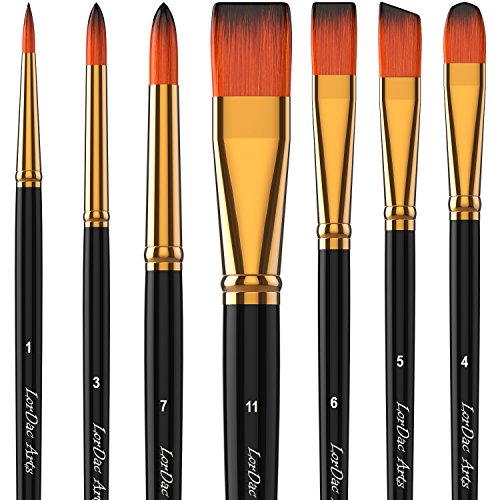
LorDac Arts 7 Artist Brushes with Carrying Case
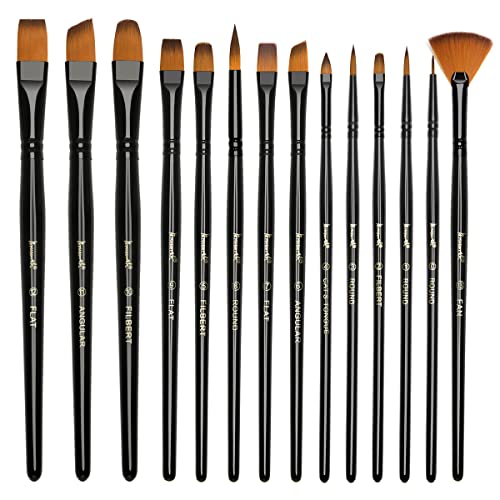
Brusarth 14 PCS Artist Brush Set Synthetic Nylon Tips

Winsor & Newton Foundation Watercolour Brush Set 6 Pack

Nicpro 10 PCS Flat Paint Brush Set

Golden Maple Sable Watercolor Brushes 10-Piece Set

Transon 10pcs Natural Watercolor Paint Brush Set
What Each Pick Brings To The Table
Squirrel-hair-style synthetics are prized in gouache because they drink up a lot of paint while staying soft against paper, and this ten-piece Fuumuui set leans fully into that character. You get pointed rounds, flats, a dagger, a cat’s tongue, and an oval wash, which covers everything from hairline strokes to sky-sized washes.
The oval wash alone justifies the set for painters who lay large flat color fields first and detail later. Beginners get a complete toolkit without buying singles one at a time, though the soft tips ask for gentler handling than stiff acrylic brushes.
What Helps Most
- Cat’s tongue and oval wash shapes make smooth, streak-free background layers far easier to pull off.
- Pointed rounds hold a fine tip, so detail lines stay crisp even after heavy loading.
- Dagger brush handles curved edges and tapered strokes that flats struggle with.
- Soft synthetic squirrel filaments feel forgiving on hot-press and cold-press paper alike.
- Ten pieces cover a full painting session without swapping between kits.
Things To Consider
- Very soft tips can flop under pressure, so scrubbing dried gouache off the ferrule area takes patience; rinse promptly after sessions.
- Shape-heavy sets like this offer fewer duplicate sizes than a rounds-only kit.
At A Glance
Who It Suits Best
Gouache painters who build paintings from big soft washes down to fine linework will get the most out of every piece here.
Where Another Pick Suits Better
Painters who want stiffer, solvent-tolerant bristles for mixed oil-and-gouache work should look at the LorDac Arts set instead.
Taklon is a synthetic filament engineered to mimic natural hair but shrug off solvents, and that’s exactly why this seven-brush LorDac Arts kit suits painters who bounce between gouache, acrylic, and oil in one sitting. Where the Fuumuui set specializes in soft washes, these tips keep their shape through harsher cleanup routines.
The included carrying case matters more than it sounds. Anyone painting outdoors, teaching a class, or working at a shared table knows loose brushes collect damage fast, and a labeled, protected set travels like a proper tool roll.
A Few Strong Suits
- Taklon bristles resist damage from solvents and thick paints, so cleanup with soap, water, or mineral spirits stays simple.
- Excellent shape retention means the tips survive months of daily use better than natural hair typically does.
- Animal-product-free construction suits vegan studios without any performance trade-off worth worrying about.
- The travel case keeps ferrules from bending in a backpack or tote.
- Clear labeling on each handle removes guesswork mid-session.
Trade Offs
- Seven brushes is a leaner spread than the ten- and fourteen-piece rivals here, so large-wash specialists may feel the gap.
- Taklon’s slightly firmer feel takes a short adjustment period coming from soft squirrel-style tips.
Made For
Mixed-media painters, students, and anyone commuting with their supplies benefit most from the durable Taklon build and protective case.
Consider Something Else When
Artists chasing maximum shape variety on a tight budget will find more options in the fourteen-piece Brusarth set below.
Fourteen brushes spanning rounds 0 through 8, angulars, three filberts, three flats, a cat’s tongue, and a fan gives this Brusarth kit the widest menu in the roundup. Filberts deserve a mention here: their rounded edge blends gouache transitions beautifully, something neither the LorDac Arts nor Winsor & Newton lineups include.
Nylon tips run springier than squirrel-style filaments, which suits the thicker end of gouache where you need to push paint around rather than float it. Hobbyists upgrading from a craft-store multipack will notice the difference immediately, though the sheer count means a few brushes may sit unused for weeks.
Notable Gains
- Six distinct shapes cover blending, edging, texture, and fine detail without supplementing from another set.
- Size 0 and 1 rounds give genuine detail control for lettering and miniature work.
- Fan brush adds dry-brush texture effects the softer sets can’t replicate.
- Springy nylon handles heavy-bodied gouache without bending out of shape.
Minor Gripes
- No dedicated liner or dagger means long continuous strokes take extra passes compared with the Transon kit.
- Owners commonly report needing to condition new nylon tips with a quick rinse to remove any factory sizing residue.
- Fourteen handles demand real drawer space, a consideration for cramped desks.
Quick Facts
Right Fit For
Hobbyists and intermediate painters who want one affordable kit to grow into will appreciate the breadth here.
Look Elsewhere When
Beginners who’d rather learn on a small, brand-backed set should start with the Winsor & Newton Foundation pack instead.
Winsor & Newton has manufactured artists’ brushes since the nineteenth century, and that pedigree shows in how deliberately this Foundation set is scoped. Six golden-synthetic brushes, three rounds and three flats, all on short handles sized for tabletop and sketchbook work rather than standing easel painting.
Compared with the sprawling Brusarth kit, this is a curated starter rather than an encyclopedia. The gold synthetic filament carries color evenly and cleans up fast, and the set officially tolerates gouache and acrylic alongside its watercolor focus. In our view that restraint is the point: fewer decisions, faster learning.
The Good Stuff
- Short handles suit desk-level painting, sketchbooks, and classroom settings where long easel handles get in the way.
- Golden synthetic filament springs back reliably after repeated wet-dry cycling.
- Brand consistency means replacement singles match the originals years later.
- Rounds 2, 3, 5 plus flats 3, 5, 6 form a logical size ladder that teaches brush control cleanly.
Softer Spots
- No specialty shapes here, so dagger, filbert, and wash techniques require a second purchase.
- Six brushes covers less ground per session than the ten-piece alternatives.
Core Details
Best Suited To
Art students, workshop attendees, and structured beginners who value a trusted name over sheer quantity will settle in fastest with this set.
Not Your Match When
Painters wanting specialty shapes like daggers and ovals out of the box should reach for the Fuumuui ten-piece instead.
Every other set here mixes shapes; this one goes all-in on flats, ten of them stepping up through sizes 1 to 10. That single-mindedness pays off for gouache painters who spend most of a session blocking in base coats, laying gradients, and covering board or canvas quickly before switching to a detail round from elsewhere.
The dense synthetic bristles soak up a good amount of water and release paint in steady, uninterrupted strokes, which is precisely what flat-wash work needs. Families and craft tables also get a lot here, since the set doubles happily for face and body painting and general kids’ projects without anxiety about wear.
A Strong Showing
- Ten graduated flat sizes mean you rarely grab a brush too wide or too narrow for the area at hand.
- Dense filaments hold plenty of thinned gouache for longer, smoother passes.
- Forgiving price point makes them comfortable beaters for classrooms and craft days.
- Angular-tip construction helps cut clean edges along borders and corners.
Room For Improvement
- No rounds, liners, or points at all, so this works as a companion set rather than a standalone gouache kit.
- With heavy daily use, budget-grade flats tend to splay at the corners over time; shaping them damp and air-drying flat extends their life.
Who Will Love This
Base-coat painters, crafters, teachers stocking a shared table, and anyone layering large gouache fields will wear these out happily.
Skip It When
Illustrators whose work lives in fine linework will get far more mileage from the Golden Maple sable-style set next.
Sable-style hair is the benchmark for controlled color release, and this Golden Maple set builds its identity around that flow. Six fine-tipped rounds running from 0 up to 12 give you a true size ladder, then a 3/8-inch dagger striper, a number 10 oval wash cat’s tongue, and two flats round out the specialist roles.
Where the Nicpro flats push paint, these tips carry it, releasing an even bead along each stroke so washes blend before they dry. Illustrators doing botanical work, lettering, or layered glazing will feel the difference within the first few strokes. The honest caveat: sable-style filaments reward careful rinsing and reshaping after every session.
The Helpful Details
- Six rounds in graduated sizes let you move from hairline detail to mid-area coverage without changing sets.
- The dagger striper pulls long, tapering calligraphic strokes that standard rounds can’t sustain.
- Oval wash loads heavily and releases evenly, ideal for graded skies and backgrounds.
- Color flows consistently off the tip, cutting down on streaky rework in layered gouache.
- Maple handles balance comfortably during long detail sessions.
Points To Note
- Sable-style tips need prompt rinsing and gentle reshaping after use; letting gouache dry in the belly shortens their life noticeably.
- Only two flats limits aggressive scrubbing or impasto-style application.
The Numbers That Matter
Perfect Match For
Intermediate and advanced gouache illustrators who prioritize stroke precision and smooth color flow above all else.
Another Choice May Suit
Low-maintenance painters who dislike fussy cleanup routines will prefer the hardier Taklon bristles of the LorDac Arts kit.
Transon closes the list with arguably the most balanced shape sheet of the bunch: a liner, rounds, flats, a dagger, and a cat’s tongue spread across sizes 0 through 18 plus half-inch and three-quarter-inch widths. That liner brush is the standout, since none of the earlier picks except the Golden Maple includes one, and long continuous outlines are a staple of gouache illustration.
The set plays well beyond gouache too, handling watercolor, acrylic, ink, and tempera on paper, wood, and canvas. Depending on how varied your media rotation runs, that flexibility either makes this the smartest all-rounder here or a jack-of-everything compromise.
Useful Strengths
- Liner brush sustains long unbroken strokes for outlining and script-style flourishes.
- Size 16 and 18 flats cover poster-sized areas quickly, larger than most rival sets reach.
- Five shape families in ten pieces keeps the kit versatile without drawer bloat.
- Handles tempera and ink as readily as gouache, useful for mixed sketchbook practice.
Small Caveats
- Only four rounds means less fine-detail depth than the Golden Maple set’s six-round ladder.
- Natural-fiber tips, widely reported by owners, benefit from hanging or lying flat to dry so water doesn’t wick into the ferrule and loosen the glue line.
Feature Snapshot
Whose Shelf It Belongs On
Versatile hobbyists splitting time between gouache, ink, and tempera will squeeze the most value from this flexible ten-piece.
A Better Fit Elsewhere
Structured beginners wanting a smaller, brand-name starting point will be happier with the Winsor & Newton six-pack.
Factors To Weigh Before Choosing Brushes For Gouache
Bristle Behavior Comes First
Gouache sits between watercolor and acrylic in body, so your bristles need both absorbency and backbone. Soft squirrel-style synthetics excel at smooth washes and layered glazes, while springy nylon and Taklon push thicker paint and survive harder scrubbing. Match the filament to how you actually apply paint, not to what looks impressive in a product photo.
Shape Range Versus Depth
A ten-brush set with eight different shapes offers variety but only one of each tool. Rounds-only ladders teach control faster, while shape-rich kits like the Fuumuui or Transon open techniques such as dagger striping and cat’s tongue blending from day one. Decide whether you’re learning fundamentals or expanding technique.
Handle Length And Workspace
Short handles suit sketchbooks, desks, and classroom tables; longer handles balance better at an easel. Most gouache work happens close to the paper, which is why compact sets dominate this category. Check handle length before ordering anything destined for a cramped studio corner.
Care Determines Lifespan
Whatever you buy, rinse immediately after each session, reshape damp tips with your fingers, and store horizontally or bristle-up. Gouache dries fast and reactivates with water, so dried paint buried in the belly is the number-one killer of otherwise good brushes.
Key Considerations Across These Picks
Traps First Timers Fall Into
Newcomers often buy the biggest set available, assuming more brushes equal faster progress. In practice, three well-chosen shapes beat fourteen neglected ones. Another common slip: ignoring handle length, then discovering a full-length easel brush feels clumsy over a sketchbook. Read the size chart carefully rather than judging by photos alone.
The Upgrade Payoff
Higher-tier sets charge more for filament quality and ferrule construction, and both show up in daily use. Better synthetics hold their point through hundreds of wash cycles, and secure ferrules stop the dreaded shedding-into-your-painting problem. Serious painters logging weekly hours recoup that difference quickly; casual weekend dabblers usually won’t notice it.
Frequently Asked Questions
Can watercolor brushes handle gouache?
Yes, and most sets in this roundup are rated for both media. Gouache is thicker, so stiffer synthetics tend to hold up better over time than very soft natural-style fibers.
How many brushes does a gouache beginner actually need?
Three or four covers the basics: a medium round, a small detail round, and one or two flats. Add specialty shapes once your technique demands them.
Do synthetic bristles perform as well as natural hair?
Modern synthetics match natural hair on paint retention and often exceed it on durability. They’re also easier to clean and free of animal products.
How do I stop my gouache brushes from splaying?
Rinse thoroughly before paint dries, then reshape the damp tip and let it dry flat or suspended. Never leave brushes standing in water, which bends tips and loosens ferrules.
Are short-handle brushes worse for gouache?
Not at all. Short handles give finer control for the close, detailed work gouache usually involves, and they store easily in small studios.
Bottom Line
Match the set to your painting rhythm rather than the biggest piece count. Wash-driven painters will click with the Fuumuui or Golden Maple, mixed-media travelers belong with LorDac Arts, and structured starters get everything they need from Winsor & Newton’s tidy six-pack. Whichever route you take, rinse promptly, reshape gently, and your brushes will return the favor for years of gouache sessions ahead.
