
Trim work exposes every flaw in a cheap brush. Splayed bristles leave ridges along baseboards, shedding hairs stick into fresh enamel, and a fat, clumsy ferrule makes cutting in around door casings feel like surgery with boxing gloves. Anyone repainting a hallway, refreshing crown molding, or detailing furniture knows the difference a well-shaped brush makes. This roundup sorts seven solid options by size range, bristle behavior, and grip comfort so you can match the tool to the job instead of fighting it halfway through a Saturday project.
The Choices Worth Comparing

Bates Trim Paint Brush Set, 3 pcs

Bates Trim Brush Set 3 pcs, Grey Theme

Bates Trim Brush Set 3 pcs, Sunset Colors

Zibra Precision Detail Angle Brush, 2-Inch

Coltree Flat & Angle Paintbrushes, 5 Pcs

Wooster Q3211-2 Shortcut Angle Sash Brush, Pack of 3
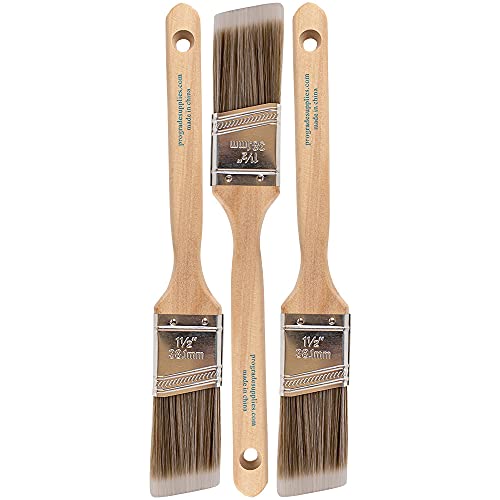
Pro Grade Angled Trim Brushes, 1.5 Inch, 3 Pc
The Picks, Examined More Closely
Detail brushes live or die by their width range, and this three-piece kit covers the sweet spot: 5/8, 3/4, and 1 inch. That span lets you switch from hairline touch-ups on a window muntin to broader strokes along a chair rail without swapping kits mid-project.
For someone assembling a first toolbox, the format makes sense. Small brushes cost little, wear out faster than full-size sash brushes, and having spares means a clogged brush never stalls an afternoon of trim painting.
Reasons It Performs
- Fine-tipped bristle ends lay down smoother lines on narrow moldings than a standard 2-inch brush ever could.
- The graduated sizing means one purchase covers hinges, outlets, and wider trim boards alike.
- Lightweight builds keep your wrist fresh during long sessions above shoulder height.
- Owning three at once lets one soak in cleaner while you keep working.
Small Caveats
- Small brushes load less paint per dip, so wide baseboard runs take noticeably longer than with a bigger angled brush.
Key Specs
Who It Suits Best
Renters and first-time painters tackling small trim refreshes, hardware details, and craft-scale woodwork.
Skip It When
You’re coating long stretches of baseboard, where the Pro Grade 1.5-inch angled set moves paint far faster.
This is the same 5/8, 3/4, and 1-inch trio as the opening pick, dressed up with reshaped handles and a muted grey finish. Synthetic filaments replace whatever fiber blend the basic version uses, which matters most when you’re brushing water-based latex: synthetics hold their stiffness instead of going limp and streaky.
In practice, that stiffness translates into cleaner edges on door frames and window casings. Homeowners who repaint a room or two each year tend to appreciate a brush that keeps its snap after several wash cycles rather than fraying into a fan shape.
What Works In Its Favor
- Synthetic bristles resist shedding, so fewer stray hairs end up frozen in your finish coat.
- Ergonomic handles spread pressure across the palm, a real relief during ceiling-height trim work.
- The neutral grey look stays presentable hanging in an open garage pegboard.
Points To Note
- Likewise sized but pricier than the plain Bates set, so the upgrade only pays off if handle comfort genuinely matters to you.
- Synthetics need prompt rinsing; dried latex locked in the ferrule shortens brush life considerably.
Right Fit For
Weekend DIYers with arthritic hands or repetitive-strain sensitivity who still want crisp trim results.
Another Choice May Suit
Anyone indifferent to handle styling gets identical brush widths from the original Bates 3-piece set at a friendlier entry point.
Functionally a twin of the grey-theme version, this set swaps the palette for warm sunset tones across its three ergonomic handles. Same synthetic bristles, same 5/8, 3/4, and 1-inch lineup, same low-shed promise. What you gain is visibility: bright grips are far harder to lose under drop cloths or inside a crowded paint tote.
That sounds trivial until you’ve spent ten minutes hunting a dropped brush in a dusty workshop. Families sharing tools, or anyone whose workspace doubles as storage, will find the color coding genuinely useful rather than decorative.
Useful Highlights
- Vivid handles make each brush easy to locate and sort by size at a glance.
- Synthetic filaments suit latex trim paint, the coating most interior walls and casings use today.
- Three widths again cover fine detailing through standard trim boards.
Honest Caveats
- You’re paying partly for aesthetics here; performance matches the cheaper plain Bates trio almost exactly.
- Brightly colored plastic handles can show paint stains permanently, which some owners find untidy over time.
Who Will Love This
Households where several people share a toolkit and quick identification saves constant rummaging.
A Better Fit Elsewhere
Purists who don’t care about looks should grab the budget Bates starter set and spend the difference on painter’s tape.
Where the Bates sets specialize in tiny surfaces, this single Zibra brush attacks the hardest job in trim painting: cutting in, meaning painting a clean line where wall meets trim without tape. Its angled tip narrows to a precision point, giving you steering control that straight-edged brushes simply lack near an outlet or doorway jamb.
Zibra built it for all paint types and stains, which broadens its usefulness beyond trim into furniture refinishing. In our view, that versatility plus the pro-grade construction justifies treating it as a keeper brush rather than a disposable one.
Advantages To Know
- The chiseled point holds a sharp line along casings, reducing touch-up passes dramatically.
- Compatible with both oil-based and water-based coatings, unusual flexibility at this price tier.
- Smooth, easy paint release leaves fewer visible brush marks on glossy trim enamel.
- Doubles as a furniture-detailing brush for legs, spindles, and recessed panels.
Things Worth Weighing
- One brush, not a set, so larger projects still need companions from elsewhere on this list.
- At 2 inches it’s wider than true detail brushes, which can feel bulky inside very narrow reveals.
Quick Facts
Made For
Confident DIYers chasing tape-free cut-in lines around trim, doors, and built-ins.
Reach For A Different Pick When
Your priority is outfitting a whole toolkit at once, since the Coltree five-piece bundle delivers more coverage variety per dollar.
Every other pick here focuses narrowly on trim. The Coltree set widens the aperture: two flats (1 and 2 inch) plus three angles (1.5, 2, and 2.5 inch) handle everything from cutting in ceilings to rolling-adjacent wall work, with the smaller angles doubling as your trim brushes.
Thick bristle loading is the standout spec. More paint held per dip means fewer trips back to the tray, and on a full-room repaint those saved trips add up to real time. Compared with the Zibra’s single specialized head, this is the generalist’s answer.
What It Does Well
- Five sizes eliminate the mid-project store run that derails so many weekend repaints.
- Dense filaments carry heavier loads, smoothing out coverage on textured walls.
- Soft-yet-firm bristle feel suits both oil-based and latex formulations plus stains.
- The 2.5-inch angle covers large wall sections surprisingly quickly for a brush.
A Few Limitations
- No ultra-narrow option below 1 inch, so hinge and latch detailing still needs something like the Bates trio.
- Five brushes demand disciplined cleaning; neglected latex buildup ruins a full set at once.
Feature Snapshot
Whose Shelf It Belongs On
Homeowners repainting entire rooms who want one purchase to cover walls, ceilings, and trim together.
Swap It Out When
Tight cabinet interiors and cramped corners call for the stubby Wooster Shortcut instead, whose short handle reaches where these longer grips won’t.
Wooster’s Shortcut solves a problem most brush makers ignore: reach. The handle is deliberately stubby, letting you paint deep inside cabinet boxes, behind toilet tanks, or along window sashes where a full-length grip keeps bumping the frame. A flexible Shergrip section adds give right where your fingers press.
This is also the most established name on the list, and the construction shows it. A brass-plated steel ferrule anchors a synthetic blend rated for all paints and water-based stains, the kind of build that survives years of solvent cleanups. Getting three in a pack softens the cost further.
What Makes Sense
- Short body maneuvers in tight cavities that defeat standard-length brushes entirely.
- Brass-plated steel ferrules resist rust and keep bristles anchored through repeated washings.
- Angled sash profile excels at controlled edging on window muntins and sash corners.
- Three-brush pack spreads across multiple simultaneous rooms or paint colors.
Less-Strong Areas
- The abbreviated handle offers less leverage on long, open wall runs; pair it with a full-size brush for those.
- Fixed 2-inch width only, no size variety within the pack.
Core Details
The Right Fit
Kitchen-cabinet refinishers and anyone working in bathrooms, closets, or other cramped quarters.
Where A Sibling Pick Shines
Open-wall cutting in goes faster with the Zibra’s longer precision-angle profile and finer tip control.
Baseboards, door casings, and window trim share a common width, and 1.5 inches happens to sit right in that zone. Pro Grade leans into it with a three-pack of identically sized angled brushes, each carrying a thick synthetic filament blend that scoops generous paint loads per dip.
The taper toward the bristle tips sharpens the edge enough for decent cut-in work, though not quite the surgical line the Zibra draws. Wooden comfort-grip handles round out a package aimed squarely at volume: more paint, longer runs, fewer interruptions.
Standout Benefits
- High-capacity filaments translate directly into faster baseboard coverage with fewer streaks.
- Thinner tapered tips give reasonable precision for touch-up edging without a dedicated detail brush.
- Wooden grips stay comfortable across multi-hour sessions and clean up predictably.
- Interior and exterior suitability extends usefulness to shutters, fences, and porch trim.
Worth Bearing In Mind
- Single-size packaging limits flexibility; fine detailing still requires a narrower companion.
- Wooden handles swell slightly if left soaking, so hang them to dry rather than resting them in a jar of water.
The Numbers That Matter
Built With In Mind
DIYers grinding through whole-house trim repaints who value speed and consistency over specialty finesse.
Consider Something Else When
Your project centers on intricate molding and hardware, where the Bates 3-piece detail set’s narrower widths earn their keep.
What Actually Separates A Good Trim Brush From A Forgettable One
Bristle Material Comes First
Synthetic filaments dominate modern trim work because latex paint, the default interior coating, turns natural bristles limp and streaky. Synthetics keep their snap wet, release paint evenly, and survive soap-and-water cleanup. Oil-based enamels and stains remain the exception, where either chemistry performs acceptably. Match the filament to your paint before anything else.
Size Should Follow The Surface
Narrow moldings, hinges, and window grids want brushes between 5/8 and 1 inch; standard casings and baseboards reward 1.5 to 2 inches. Owning both ranges, as the combined Bates-plus-Pro-Grade pairing does, covers nearly every residential scenario. One brush rarely does it all well.
Angle And Tip Shape Decide Your Lines
An angled sash profile lets you steer the bristle edge precisely where wall meets wood, which is why nearly every serious trim brush carries one. Tapered or chiseled tips sharpen that control further. Straight-edged flats belong on broad surfaces, not finish work.
Handle Geometry Affects Endurance
Long sessions punish awkward grips. Ergonomic contours, flexible rubberized sections like Wooster’s Shergrip, and balanced weight all reduce the hand fatigue that shows up as wobbly lines late in a project. Try to picture your actual workspace: cramped corners favor short handles, open walls favor leverage.
Key Considerations Across These Picks
Traps First Timers Fall Into
The classic error is buying one do-everything brush and forcing it onto every surface. A 2-inch flat drags across delicate moldings, while a 5/8-inch detail brush turns a baseboard run into an all-day affair. Skipping cleanup discipline hurts too: hardened paint in the ferrule ruins bristle shape permanently. Buy two complementary sizes and rinse promptly.
What The Higher Tier Buys
Pricier sets generally add refined filaments that shed less, shaped handles that fight fatigue, and ferrules that outlast dozens of wash cycles. Those gains matter most for frequent painters finishing whole rooms regularly. For a single accent wall or one closet of trim, a budget trio will honestly get you there too.
Frequently Asked Questions
What size brush works best for painting trim?
A 1.5 to 2-inch angled brush handles most baseboards, casings, and door frames efficiently. Narrower 5/8 to 3/4-inch brushes take over for moldings, hinges, and detailed millwork.
Should trim brushes be synthetic or natural bristle?
Synthetic filaments suit water-based latex paint, keeping their stiffness and releasing evenly. Natural bristle remains viable mainly for oil-based enamels and certain stains.
How do I clean a paint brush after using latex paint?
Rinse under warm water while combing the bristles gently until the water runs clear, then reshape and hang to dry. Prompt cleaning prevents hardened paint from ruining the brush shape.
Do angled brushes really make cutting in easier?
Yes, the slanted edge lets you steer a precise line where wall meets trim without painter’s tape. Combined with a tapered tip, control improves noticeably on casings and corners.
How many brushes does a typical room repaint need?
Two usually suffice: one wider angled brush for trim and cut-in, one narrow detail brush for hardware and tight spots. Extra brushes help when switching between paint colors mid-project.
Bottom Line
Trim painting rewards matching the brush to the surface, and this list gives you every rung of that ladder. Start with the Bates trio for fine detailing, add the Pro Grade or Zibra for serious edge work, and lean on the Wooster Shortcut wherever space gets tight. Whichever combination fits your project, sharper lines and fewer do-overs are waiting on the other side of the right bristles.
