
Applying varnish sounds easy until streaks, drips, and stray bristles show up in your finish. The right brush changes that entirely, whether you’re sealing a tabletop, staining a fence, or glazing a canvas. This roundup covers seven options spanning budget chip brushes to artist-grade tools, so you can match the tool to the job instead of fighting it.
A Snapshot Of The Selections

Genixart Double Thick Chip Paint Brush 3 Inch

EORTA Flat Art Paint Brushes Set Assorted Sizes

EORTA Flat Art Paint Brushes Set Assorted Sizes

Liquitex Large Scale Broad Flat/Varnish Brush 3″

Liquitex Large Scale Broad Flat/Varnish Brush 6″

Liquitex Large Scale Broad Flat/Varnish Brush 8″
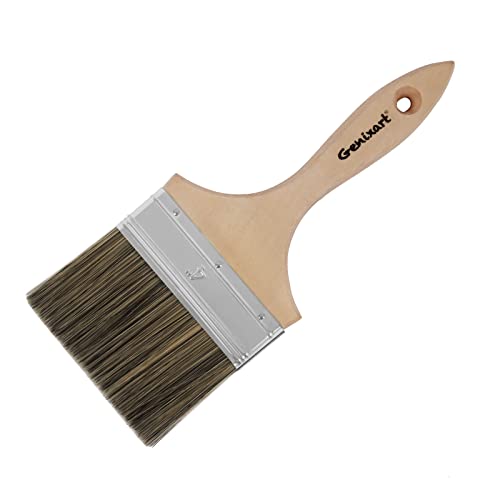
Genixart Double Thick Chip Paint Brush 4 Inch
Taking A Closer Look At The Options
A chip brush is the workhorse nobody babying their tools reaches for, and this 3-inch version from Genixart fits that role well. The double-thick bristle load holds more stain or varnish per dip, which matters when you’re coating a long fence rail or a rough-sawn board.
The flat profile spreads limewash, paste, masonry coatings, and oil finishes without fuss. Because these are treated as disposables, you can let epoxy or shellac cure right in the bristles and toss the brush guilt-free at day’s end.
Well-Handled Touches
- Double-thick fill carries extra finish, cutting reload trips on long runs
- 3-inch width covers fence pickets and trim boards quickly
- Handles stains, varnish, limewash, and pastes interchangeably
- Low replacement cost suits messy, single-use jobs like epoxy work
- Flat shape lays material evenly across grain and gaps
Things To Consider
- Chip-bristle shedding is commonly reported, so pull loose fibers before starting
- Not built for repeated cleanings; treat it as a short-life tool
Key Specs
Made For
Weekend DIYers staining fences, decks, or rough lumber who want a cheap brush they can wear out without regret.
Where A Sibling Pick Shines
For fine furniture finishing where a smooth, lint-free coat matters more than price, the Liquitex Large Scale Broad Flat/Varnish Brush 3″ is the stronger choice.
Starting out in acrylics or small craft varnishing usually means guessing which brush size you need. This six-piece EORTA set removes the guesswork by putting several flat widths in one package, all with white nylon bristles on black wooden handles.
Nylon is a synthetic filament that springs back after each stroke, so edges stay crisp on small canvases, models, and sealed craft blanks. In our view, that assortment alone makes it a sensible first kit for anyone still finding their preferred widths.
A Strong Showing
- Six assorted flat sizes cover detail lines through broader fills
- Nylon bristles rinse clean under warm soapy water between sessions
- Wooden handles keep weight low during longer painting sessions
- One purchase equips a whole beginner setup
Small Caveats
- Nylon softens with heat, so skip hot water and never leave brushes soaking tip-down overnight
- Entry-level bristle density may show slight streaking on thick varnish coats
Feature Snapshot
Who Should Grab It
Students, hobbyists, and first-time painters who want a complete flat-brush starter kit for crafts and light varnish touch-ups.
Swap It Out When
Anyone coating large furniture panels will get better mileage from the Genixart Double Thick Chip Paint Brush 4 Inch instead of working panel-by-panel with small art brushes.
This earlier EORTA listing shares the same formula as the newer set above: six flat brushes, nylon tips, wooden black handles. The practical difference shows up in availability and pricing cycles, so it’s worth comparing both product pages before ordering.
For craft-room use, the appeal is redundancy. Keeping two sets means a dedicated brush for varnish, another for glue, and a third for paint, which saves the constant mid-project washing that ruins bristle shape over time.
Why It Works Well
- Duplicate coverage lets you dedicate brushes to specific mediums
- Flat tips suit edge work, base coats, and even varnish sweeps
- Assorted sizing adapts to miniatures through mid-size canvases
Points To Note
- Cleaning discipline matters: dried varnish permanently stiffens nylon, so wash immediately after each session
- Listing details vary, so confirm piece count and sizes on the current page
The Right Fit
Crafters running mixed-medium projects who want spare brushes on hand so glue, paint, and sealant each get their own tool.
Another Choice May Suit
Shoppers wanting a single, well-documented current-generation set should lean toward the newer EORTA Flat Art Paint Brushes Set Assorted Sizes reviewed above.
Liquitex builds its Freestyle line specifically for artists applying large, even coats, and this 3-inch broad flat is the entry point into that range. Strong synthetic filaments and an ergonomic handle are the headline attributes, designed around comfort during long glazing or varnishing sessions.
Where the Genixart chip brush trades refinement for price, this one aims for a clean, streak-minimized finish on canvases and panels. You may find the difference obvious on dark final coats, where cheap-bristle marks tend to telegraph.
Where It Delivers
- Synthetic filaments hold their shape through repeated varnish applications
- Ergonomic handle reduces hand fatigue on extended sessions
- Designed by artists for controlled, even large-area coats
- Works across acrylic media, gesso, and protective topcoats
Worth Noting
- Costs meaningfully more than a chip brush, so casual users pay for quality they may not notice
- Requires prompt cleaning after water-based finishes to preserve filament snap
Who Will Love This
Serious hobbyists and studio artists finishing paintings, panels, and poured pieces who want a dependable dedicated varnish brush.
Look Elsewhere When
Budget-conscious fence stainers should stick with the Genixart Double Thick Chip Paint Brush 3 Inch, since outdoor rough wood hides the finish differences anyway.
Step up to the 6-inch version and the math shifts: double the width means roughly half the passes across a large canvas or cabinet face. That’s the entire argument for this size, and for mural-scale or oversized artwork it’s a convincing one.
The same Freestyle DNA applies, strong synthetics plus that comfortable handle, but the wider ferrule demands a steadier wrist. Depending on your technique, edges can load heavy, so wiping excess against the container rim before each pass keeps drips away.
Real Benefits
- 6-inch width halves stroke count on big surfaces
- Consistent filament quality matches the smaller Liquitex sibling
- Ideal for glazing, gessoing, and varnishing in fewer, smoother sweeps
- Comfortable grip supports overhead or easel-height work
A Few Limitations
- Too wide for detailed edges or narrow trim, so most studios still need a smaller companion
- Storage demands a roomy brush holder; cramming it bends filaments permanently
Core Details
Whose Shelf It Belongs On
Muralists, abstract painters, and furniture refinishers working panels larger than three feet across.
Not Your Match When
Artists handling standard stretched canvases will find the 3-inch Liquitex Large Scale Broad Flat/Varnish Brush easier to control without sacrificing finish quality.
An 8-inch brush is less a tool than a commitment. This is the largest width in Liquitex’s broad flat range, aimed at gallery-scale canvases, floor cloths, and full-wall glazing where every saved pass compounds.
Compared with the 6-inch model, control gets harder and cleanup takes longer, but the payoff is a near-roller-like sweep that still leaves brush-finished texture rather than stipple. Honest read: unless your work regularly exceeds four feet wide, this size sits unused in a jar.
Notable Gains
- Maximum coverage per dip in the Liquitex lineup here
- Synthetic filaments maintain stiffness despite the wide head weight
- Suited to gesso priming, glazing, and final varnish on oversized pieces
Factors To Consider
- Wide heads demand thorough, patient cleaning or bristles mat together near the ferrule
- Overkill for anything under roughly three feet, where a smaller width performs better
Quick Facts
Built With In Mind
Professional artists and scenic painters covering very large surfaces who want brush-quality texture at roller speed.
Reach For A Different Pick When
Standard-size canvas work calls for the Liquitex Large Scale Broad Flat/Varnish Brush 3″, which offers the same build quality in a far more maneuverable footprint.
The 4-inch sibling of our opening value pick adds an inch of width for faster progress on decking, siding, and broad fence faces. Same double-thick chip construction, same tolerance for abuse, same throw-it-away-after attitude toward messy finishes.
Owners commonly report using these straight through a full weekend project and discarding them afterward, which is precisely the intended lifecycle. Against the 3-inch version, expect noticeably fewer laps on horizontal rails and a slightly heavier feel in hand.
The Practical Payoff
- 4-inch span speeds up large exterior surfaces considerably
- Double-thick bristles reduce dipping frequency on hot, fast-drying days
- Handles varnish, stain, limewash, and paste coatings alike
- Disposable pricing encourages replacing rather than rescuing ruined brushes
Trade Offs To Consider
- Expect some fiber loss early on; a quick pre-use flick against your palm helps
- Too coarse for interior fine finishing or smooth cabinetry work
- Wide head splatters easily at full load, so work close to the surface
Details At A Glance
Right Fit For
Homeowners tackling fences, sheds, and decks who prioritize speed and low cost over a glass-smooth final coat.
Consider Something Else When
Indoor furniture refinishing deserves the Liquitex Large Scale Broad Flat/Varnish Brush 3″, whose finer filaments leave a cleaner surface on visible pieces.
What To Weigh Before Choosing A Varnish Brush
Bristle Type And Finish Quality
Synthetic filaments, like the nylon in the EORTA sets or Liquitex’s polymer blend, stay stiff in water-based polyurethane and acrylic varnish while releasing material smoothly. Natural-style chip bristles soak up more product and suit oil stains on rough wood. Match the filament to your finish, because the wrong pairing shows up as streaks or bubbles in the cured coat.
Width Versus Control
Wider heads cover fast but punish sloppy technique, especially on vertical surfaces where gravity pulls the load downward. A 3-inch brush remains the sweet spot for most home projects, balancing speed with enough control for edges. Keep one narrow brush nearby for corners regardless of what you choose.
Reusable Versus Disposable
Cleaning a quality brush properly, solvent or soap depending on the finish, preserves it for years and justifies a higher upfront cost. Chip brushes flip that equation: they cost little enough that curing epoxy or shellac inside the bristles costs you nothing but the brush itself. Your project frequency decides which economics win.
Handle Comfort And Fatigue
Long varnishing sessions expose weak grips fast. Ergonomically shaped handles, like Liquitex’s, distribute pressure across the palm and matter most on overhead or easel-height work. Standard wooden dowels are fine for short bursts but tire the hand sooner.
Key Considerations Across These Picks
Traps First Timers Fall Into
The classic error is buying one brush for everything, then wondering why varnish drags behind a bristle-clogged head. A second slip is letting finish dry in the ferrule, the metal band holding the bristles, which permanently stiffens the tool. Buy two widths, clean immediately, and store brushes flat or hanging.
The Case For Spending Up
Higher-tier brushes earn their price through filament consistency, shaped handles, and bristles that release finish evenly instead of pooling it. Visible furniture, canvases, and doors benefit immediately. Rough outdoor lumber rarely does, which is exactly why the budget chip brushes coexist with the premium options here.
Frequently Asked Questions
Can I use one brush for both paint and varnish?
You can, but residue from either medium contaminates the other and often leaves streaks. Dedicated brushes per medium give cleaner results and last longer.
How do I clean a brush after oil-based varnish?
Wipe out excess, then work the bristles in the manufacturer-recommended mineral spirits before a warm soapy-water rinse. Hang or lay the brush flat to dry so the filaments keep their shape.
Are chip brushes really disposable?
They’re built and priced for limited reuse, and most owners discard them after messy jobs like epoxy or shellac. Light-duty staining can stretch one across a couple of projects with prompt cleaning.
What size brush works best for furniture varnishing?
A 3-inch flat brush handles most tabletops, doors, and cabinet faces with good control. Reach for 6 inches or wider only on panels larger than about three feet.
Why does my varnish finish show brush marks?
Overworking the coat, loading too much product, or using a worn brush are the usual culprits. Apply thinner coats with a quality synthetic brush and resist re-stroking once the surface starts to level.
Closing Remarks
Your best brush depends less on brand loyalty than on matching width, filament, and price to the job in front of you. Rough outdoor wood favors the Genixart chip brushes, studio finishing rewards the Liquitex range, and craft work suits the EORTA sets. Start with the job, not the tool, and the rest of the decision falls into place naturally.
