
Repainting cabinets is one of those weekend projects where the tool makes or breaks the result. A cheap brush leaves streaks and bristle marks baked into every door face, while the right one lays paint down smooth enough that you might skip light sanding between coats. Whether you’re refreshing a dated kitchen on a budget or finishing built-ins you just installed, this list covers trim brushes, angled sash brushes, foam rollers, and detail edgers that handle enamel, latex, and stain alike.
A Quick View Of The Lineup

Bates Trim Paint Brush Set, 3 Pcs

Coltree Flat & Angle Paintbrushes for Wall & Trim, 5 Pack

Genixart Double Thick Chip Paint Brush, 3 Inch

Mister Rui 2 Inch Foam Paint Roller Kit

Wooster Q3211-2 Shortcut Angle Sash Paintbrush, 2-Inch
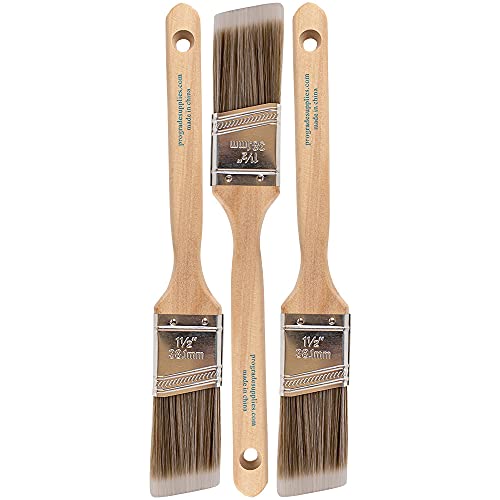
Pro Grade Angled Paint Brushes, 1.5 Inch, 3 Pc

ROLLINGDOG Trim Edging Paint Brush, 2PC
A Deeper Look At The Lineup
Cabinet doors hide their hardest spots in plain sight: hinge recesses, beaded panels, the shallow groove where a stile meets a rail. That’s the job this three-piece set is shaped around, with narrow widths at roughly 5/8 inch, 3/4 inch, and 1 inch so you can match brush to channel instead of overloading a wide blade.
The finely tapered tips are what matter here. A pointed bristle end lets you feather paint into corners without dragging excess back out, which is the difference between a crisp reveal and a blobby one. For most first-time cabinet painters, having all three sizes on hand removes the guesswork entirely.
Where It Delivers
- Three graduated widths let you pair each brush to grooves, edges, and hardware cutouts without switching mid-stroke.
- Tapered tips hold a fine point, so corner lines stay sharp instead of rounding over.
- Comfortable grip handles reduce hand fatigue during long detailing sessions on door after door.
- A low-cost way to build a proper trim kit alongside a wider brush like the Coltree set below.
Things To Consider
- Narrow widths mean slow going on flat faces; owners commonly report these are detail tools, not coverage tools.
- Like most value-priced synthetics, gentle soap-and-water cleanup right after painting helps the bristles keep their shape longer.
Who Should Grab It
First-time cabinet painters who want precise tools for grooves and trim without committing to pro-grade pricing.
Swap It Out When
If your project is mostly large flat panels rather than fine detail, the Coltree five-piece set covers more ground per stroke.
A full kitchen repaint usually needs two jobs done at once: laying smooth coats across broad stiles and rails, then cutting clean lines against walls and countertops. The Coltree set handles both from one box, pairing 1-inch and 2-inch flats with 1.5-, 2-, and 2.5-inch angle sashes.
Thick bristles are the headline attribute here. Denser filament packs carry more paint per dip, which means fewer reload trips to the can and a wetter edge that self-levels before it skins over. The manufacturer lists compatibility with both oil-based and water-based paints plus stains, so the same kit works whether your cabinets get enamel or a tinted topcoat.
Key Advantages
- Five sizes spanning flats and angles cover doors, frames, and cut-in lines without buying anything else.
- Dense bristles load heavily, cutting down reload stops and helping each coat go on even and streak-light.
- Works with oil and water-based formulas, so it suits enamels, latex, and stains alike.
- Soft filaments that resist shedding mean fewer stray hairs fished out of a drying finish.
- Comfortable handles keep your grip steady through a multi-door session.
Small Caveats
- There’s no very narrow option for deep grooves, so pairing it with the Bates set covers the full range.
- Some users note the largest 2.5-inch angle feels oversized inside tight face-frame corners.
Key Specs
Right Fit For
DIYers repainting a full set of cabinet doors and frames who want one versatile kit instead of piecing brushes together.
Where Another Pick Suits Better
For hinge recesses and panel grooves under an inch wide, the Bates trim trio reaches places these blades can’t.
Every serious cabinet project starts with ugly work: priming raw MDF, sealing sanded surfaces, brushing paste or limewash onto backs you’ll never see again. Spending a premium brush on that stage hurts. This double-thick 3-inch chip brush exists precisely for it, moving primer fast across big areas and retiring without ceremony afterward.
“Double thick” refers to an extra-dense bristle block, which holds noticeably more material than a standard chip brush of the same width. In practice that means fewer dips when coating drawer interiors or the backs of doors. Compared with the Coltree set above, expect a rougher cosmetic finish; this is a utility tool, not a showpiece.
The Good Stuff
- The 3-inch width throws a wide stroke, speeding up priming and staining on broad surfaces.
- Extra-dense bristles carry heavy loads of primer, varnish, or paste in one pass.
- Disposable-friendly economics make it sensible for glue-ups, masonry touch-ups, or one-off staining jobs.
Points To Note
- Chip-bristle construction won’t leave the glass-smooth laydown a synthetic sash brush gives on visible faces.
- Plan on single-project use; repeated washing tends to degrade economy bristles faster than premium filament.
Made For
Weekend painters who want a sacrificial workhorse for priming, backs, and garage-side prep before the good brushes come out.
Reach For A Different Pick When
Visible door faces deserve the Wooster Shortcut’s finer finish instead of a chip brush’s texture.
Here’s a trick seasoned painters lean on: brush the edges and details, roll the flats. High-density foam rollers leave almost no texture on broad, flat door faces, which is why they’ve become a staple for cabinet refinishing. This nine-piece kit bundles six 2-inch foam covers with a matching frame and a small tray lined for easy cleanup.
The foam is formulated with high elasticity so it springs back rather than flattening permanently under pressure, and the maker rates it for water-based paints, oil-based paints, stains, and varnishes. On raised-panel doors, you’d brush the profile with something like the Pro Grade angles, then roll each field in long, light passes.
The Upside
- Foam covers lay down a nearly texture-flat film, ideal for smooth enamel finishes on visible panels.
- Six spare covers keep you rolling through multiple doors or colors without stopping to clean mid-job.
- The included frame and tray make this a ready-to-run mini station straight out of the box.
- Narrow 2-inch reach fits recessed panels and narrow rail faces a standard roller can’t enter.
Worth Bearing In Mind
- Foam traps paint deep in the pores; thorough rinsing immediately after use keeps covers usable for later coats.
- Rollers can’t cut sharp lines, so you’ll still want a quality angle brush alongside this kit.
Core Details
Whose Shelf It Belongs On
Anyone chasing a factory-smooth enamel look on flat door faces without renting a sprayer.
Not Your Match When
Deep grooves and edge cut-ins still call for the ROLLINGDOG detail brushes reviewed below.
Wooster has been making brushes since long before most of this list existed, and the Shortcut line shows what decades of refinement looks like. The signature move is the stubby flexible Shergrip handle, which bends slightly under pressure and gives you fingertip-level control in tight spots like the inside of a face frame or along a countertop backsplash.
The synthetic blend is rated for all paints and water-based stains, and the brass-plated steel ferrule (the metal band binding bristles to handle) resists rust through repeated washings. Getting three brushes in one pack matters too, since pros typically dedicate separate brushes to primer, color, and clear coat.
What Pays Off
- The short flexible handle offers maneuverability in cramped cabinet interiors where long handles bump and scrape.
- Synthetic blend works across every common cabinet finish, from latex enamel to water-based stain.
- Brass-plated steel ferrule stands up to solvent cleaning better than bare crimped bands.
- A three-pack supports dedicated brushes per product, extending each one’s life.
Trade Offs
- The abbreviated handle takes a few doors to adjust to if you’re used to full-length brushes.
- At 2 inches it’s a cut-in specialist; broad flat coverage still belongs to a wider flat brush or the Mister Rui rollers.
Key Attributes
Best Suited To
Detail-focused DIYers and working painters who cut in around countertops, walls, and hinges daily and want a brand-name tool that survives the routine.
A Better Fit Elsewhere
Tighter budgets doing occasional touch-up work will find the Pro Grade trio covers similar angles for less.
Consistency is the quiet virtue here: three identical 1.5-inch angle brushes means every edge of your kitchen gets the same stroke width and the same feel. Where the Coltree set spreads its sizes across flats and angles, this trio doubles down on one do-everything shape that suits interior and exterior trim alike.
The thick synthetic blend loads generously, and the flagged, thinner tip at the business end helps you land paint precisely where you aim during touch-ups. Wooden comfort-grip handles round out a package that reads like a contractor’s spare kit: nothing fancy, everything functional.
What Stands Out
- Thick filaments hold more paint per dip, trimming reload time on long runs of trim and framing.
- Tapered tips sharpen accuracy for edge work and small repairs on installed cabinetry.
- Wooden comfort-grip handles stay steady in hand through extended sessions.
- Suited to both indoor and outdoor projects, so leftover brushes serve fences and shutters later.
Less Ideal Details
- A single fixed size limits flexibility compared with multi-size sets like Coltree’s five-pack.
- Wooden handles need prompt drying after washing to avoid swelling around the ferrule over time.
Who Will Love This
Hands-on homeowners who value dependable repetition over variety and want spare angle brushes always within reach.
Consider Something Else When
Professionals cutting in daily will appreciate the Wooster Shortcut’s ergonomic handle more on long shifts.
Most trim brushes are rectangles. ROLLINGDOG took a different route with this Detail Pro duo: one square four-sided head at roughly 22mm per side and one triangle three-sided head at about 24mm, letting you flip the brush to present a fresh edge instead of walking back to the can to re-chalk the tip.
Both heads use solid round-tapered filament that converges to an angular point, mounted in seamless aluminum ferrules on short rubber-gripped handles with hanging holes for storage. Against the Wooster Shortcut’s conventional sash profile, this is a geometry-first approach aimed squarely at inside corners and hard-to-reach cut-ins.
Notable Upsides
- Multi-sided heads give you several usable edges per brush, stretching each loaded tip further.
- Round-tapered filament comes to a fine angular point for controlled lines along reveals and moldings.
- Seamless aluminum ferrules shed less paint residue than crimped bands and rinse clean quickly.
- Compact rubber-grip handles with hanging holes store neatly on a pegboard hook.
Details To Watch
- Heads this small cover little area per pass, so they complement rather than replace a larger brush.
- The unusual shapes take a short adjustment period before your strokes feel natural.
The Right Fit
Precision-minded painters tackling inside corners, window casings, and detailed millwork around freshly painted cabinets.
Another Choice May Suit
Broad surface coverage is better handled by the Mister Rui foam roller kit once the detailed edges are done.
What Matters Most Before Choosing Brushes To Paint Cabinets
Match The Brush To The Surface
Flat door faces reward wide flats or foam rollers, while grooves, hinges, and beaded panels demand narrow tapered tools. Buying one of each category beats buying three of the same. Look at your specific doors first: slab fronts need almost no detail work, but raised panels live and die by a fine-pointed brush.
Filament Type And Paint Formula
Synthetic bristles suit water-based enamels and latex, and most modern sets handle oil-based products too. Dense filament packs hold more paint, which translates directly into fewer streaks because each stroke stays wet long enough to level. Check the listed compatibility before committing to a specialty finish like lacquer or tinted varnish.
Ergonomics For Long Sessions
Painting ten doors means hours of repetitive wrist motion. Short flexible handles like Wooster’s Shergrip reduce fatigue in tight interiors, while padded rubber grips help on open runs. Weight matters less than balance; a front-heavy brush tires your hand faster than a well-ferruled light one.
Care And Reuse Economics
A quality synthetic brush cleaned promptly with warm water and mild soap can serve dozens of projects, while chip brushes are designed to retire after one. Factor replacement cost into the decision: a three-pack of durable brushes often outlasts five rounds of disposables.
Key Considerations Across These Picks
Wrong Turns To Avoid
The classic mistake is buying one all-purpose brush for an entire kitchen. Wide blades smear inside grooves, and tiny detail brushes crawl across flats. Skipping the foam roller for door faces is another; brushing alone leaves visible texture. Match tool to task before the first dip.
The Case For Spending Up
Higher-tier brushes justify their cost through denser filament, better ferrules, and handles engineered for control. Those attributes show up as sharper cut lines and finishes that need less sanding between coats. Frequent painters recover the difference quickly; one-time refinishers can lean on value sets happily.
Frequently Asked Questions
What size brush works best for cabinet doors?
A 1.5- to 2-inch angle sash handles most edges and frames on standard doors. Narrower 5/8- to 1-inch brushes take over inside grooves and hardware cutouts.
Can I use a foam roller instead of a brush on cabinets?
Yes, and many painters combine them: brush the profiles and edges, roll the flat fields. Foam leaves far less texture than bristles on broad surfaces.
Do I need different brushes for primer and paint?
It’s not mandatory, but dedicating one brush to primer extends the life of your finish brushes. Primer residues are harder to fully remove and can affect later coats.
How should I clean brushes after using water-based paint?
Rinse in warm water with mild soap until the water runs clear, reshape the bristles, and hang or lay flat to dry. Prompt cleaning prevents hardened paint near the ferrule.
Are angled brushes really necessary for cabinets?
They make cut-in work dramatically easier along walls, countertops, and adjacent trim. The angled tip lets you place a clean line without taping every seam.
Bottom Line
Your cabinet project probably needs a small team of tools rather than a single hero. Start with a versatile set like the Coltree five-pack, add the Bates trio for grooves, and let the Mister Rui rollers flatten the door faces. Serious cut-in work earns the Wooster Shortcut its spot. Whichever combination fits your doors, buying the right shape for each task is what separates a crisp, professional-looking finish from a weekend of frustration.
