
Extended-range playing no longer demands a four-figure guitar. The honest catch is that genuinely affordable eight-string instruments remain scarce, so this lineup blends the best low-cost seven-string bodies with string sets that push your range lower or higher without a new purchase. Whether you’re chugging through drop tunings in a bedroom studio or just curious about that extra low B, you’ll find a workable starting point here.
A Closer Look At The Lineup

Ernie Ball Baritone Slinky Nickel Wound Strings 13-72
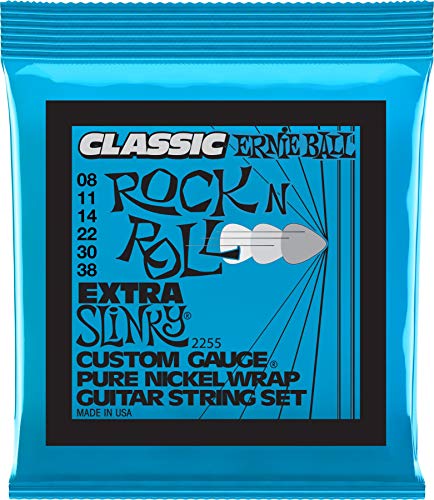
Ernie Ball Extra Slinky Classic Pure Nickel Strings 8-38

Ernie Ball Extra Slinky Cobalt Strings 8-38

Ibanez GRG7221 7-String Metallic Light Blue

Ibanez GRG7221QA 7-String Transparent Black Sunburst

Ibanez GRG 7-String Solid-Body White

Fender FA-25N 3/4 Nylon Acoustic Natural
What Each Pick Brings To The Table
Gauge 13-72 is thick. That heft is exactly what keeps low tunings tight instead of floppy, which matters most when you’re converting a standard guitar toward baritone territory. The nickel-wound wrap over a steel core gives these a balanced voice that sits well in a mix rather than poking out.
For players running drop A or lower on a longer-scale instrument, this set removes the guesswork of mixing individual strings. Made in California, they’re widely stocked and easy to re-order when you burn through them.
The Practical Payoff
- The 13-72 spread holds tension at extreme low tunings, so riffs stay articulate instead of muddy.
- Nickel winding delivers an even tonal balance across all six positions.
- Small ball ends make restringing quicker and less fiddly at the bridge.
- A dependable choice for gigging, since replacements are easy to find anywhere.
Honest Caveats
- On a short 24.75-inch scale you may find the low E overly stiff; owners commonly report needing a setup adjustment after switching to this gauge.
- Thick strings wear frets faster over years of hard playing.
Right Fit For
Players with baritone or long-scale guitars chasing tight, defined low-end riffing.
Where A Sibling Pick Shines
Standard-tuning players wanting effortless bends will prefer the lighter Ernie Ball Extra Slinky Classic Pure Nickel set instead.
Pure nickel was the norm through much of the fifties and sixties, and this set leans fully into that character. Compared with the heavier Baritone Slinky above, the 8-38 gauge feels almost weightless under the left hand, which suits fast lead work and wide bends.
Pure nickel means the entire wrap wire is nickel rather than a plated steel core, producing a warmer, rounder output than modern nickel-plated options. Blues, classic rock, and clean-tone players tend to hear the difference immediately.
Strong Points
- Warm, vintage-leaning tone that flatters single-coil pickups especially well.
- The .008 top string makes big expressive bends nearly effortless during long practice sessions.
- Tempered tin-plated plain strings resist early dulling at the contact points.
- An affordable way to experiment with retro voicing before changing amps or pedals.
Small Caveats
- Light gauge strings break more easily under aggressive picking, so keep spares in your case.
- Drop tunings feel loose on this set; it’s really built for standard pitch.
Quick Facts
Made For
Clean-tone and blues-rock players who prioritize touch sensitivity over sheer output.
Swap It Out When
Djent and high-gain players should reach for the Cobalt version next on this list for stronger pickup response.
Same comfortable 8-38 gauge as the pure-nickel set, completely different personality. Cobalt forms a stronger magnetic bond with your pickups, which translates to noticeably hotter output and clearer note separation under distortion.
In a dense band mix, that extra harmonic content helps palm-muted chords stay defined instead of smearing together. Metal and progressive players often describe these as revealing detail their previous strings hid.
Standout Benefits
- Stronger magnetic interaction with pickups boosts output and dynamic range.
- Crisp highs cut through a full-band mix without harshness.
- Extended low end keeps rhythm parts punchy at stage volume.
- Identical gauge to the Classic set, so switching requires no setup change.
Points To Note
- The brighter voice can sound thin on dark-sounding guitars; pairing with warm electronics balances it out.
- Finger squeak is more audible than with pure nickel, worth knowing for clean recording takes.
- Like any light gauge, aggressive technique shortens string life.
Who Will Love This
High-gain and metal players who want maximum clarity and output from modest gear.
Another Choice May Suit
Vintage-tone purists get more character from the Ernie Ball Extra Slinky Classic Pure Nickel reviewed earlier.
This is the least intimidating doorway into extended-range playing on the list. Two humbucking pickups, a poplar body, and a maple neck with matching fingerboard keep things simple: plug in, tune down, play heavy.
The metallic light blue finish stands out among sea-of-black budget sevens, and the bolt-on maple construction is the kind of layout Ibanez has refined for decades. Fixed bridges mean fewer tuning headaches for newcomers, though you give up whampy expression.
Practical Pluses
- Humbuckers cancel the hum that plagues single-coils under gain, ideal for bedroom amp levels.
- Maple neck and fingerboard offer a bright, snappy attack that suits rhythmic riffing.
- The distinctive finish looks far pricier than the Gio line suggests.
- Simple two-knob control layout keeps learning friction low.
A Few Limitations
- No tremolo bridge, so dive-bomb techniques are off the menu entirely.
- Stock strings are usually light for the low B; many owners swap to a heavier set like the Baritone Slinky for better tension.
Details At A Glance
Who Should Grab It
First-time seven-string buyers who want a reliable, fixed-bridge instrument for home practice and first band rehearsals.
Reach For A Different Pick When
Players who want a whammy bar and flashier cosmetics will find the GRG7221QA sunburst model a step up in both.
Think of this as the flat-finish GRG7221 wearing its good clothes. A quilted maple art-grain top over the transparent black sunburst catches stage light beautifully, and black hardware ties the look together.
Ibanez pairs that cosmetic upgrade with its Infinity R humbuckers, described by the maker as high-output designs, plus a synchronized tremolo for expressive pitch work. For intermediate players recording demos at home, the combination of stable tuning and a usable vibrato covers a lot of ground.
Positive Points
- Quilted art-grain top delivers visual depth that photographs well for band pages.
- High-output humbucker pair handles drop-tuned rhythm parts with authority.
- The synchronized tremolo opens up subtle vibrato and classic dive effects.
- Designed with beginners and intermediates in mind, per the manufacturer.
Things To Consider
- Tremolo systems demand more maintenance; owners commonly report checking spring tension and tuning stability after aggressive use.
- Art-grain tops are printed rather than carved solid quilted maple, a fair trade at this tier.
Feature Rundown
The Right Fit
Intermediate players upgrading from a starter six-string who want extended range plus visual presence.
Not Your Match When
Minimalists who dislike tremolo upkeep will be happier with the simpler white GRG below.
Where the sunburst GRG7221QA spends on cosmetics, this white GRG puts every dollar into function. Poplar body, bolt-on maple neck, and a New Zealand pine fingerboard chosen specifically for smooth, easy playability.
The Infinity R humbuckers carry over from its sibling, so the electrical side matches the pricier model. What you lose in flash you gain in a clean, sharp look and one less moving part to maintain, since this configuration skips the tremolo.
The Value In It
- Same high-output Infinity R pickup pair as the costlier QA model in the lineup.
- New Zealand pine fingerboard glides comfortably during long rehearsal sessions.
- Fixed bridge keeps tuning predictable between practices.
- Crisp white finish hides nothing, which oddly helps you spot grime and clean it promptly.
Less Ideal Details
- White finishes show fingerprints and yellowing risk over many years near sunlight.
- No vibrato arm limits expressive techniques compared with the GRG7221QA.
Core Details
Who It Suits Best
Budget-conscious students and garage-band rhythm players who value reliability over ornamentation.
Consider Something Else When
Stage performers wanting audience-catching visuals should pick the transparent sunburst GRG7221QA instead.
Not every multi-string journey starts with distortion. This compact nylon-string acoustic earns its slot as the gentlest possible on-ramp: three-quarter scale, soft nylon strings, and a slim C-shaped neck that small hands wrap around easily.
Nylon reduces the fingertip soreness that derails most first-month players, and the all-laminate body shrugs off humidity swings that crackle solid woods. Toss it in a car for camping trips or leave it beside the couch; it invites casual playing in a way a heavy seven-string doesn’t.
What Earns Its Place
- Nylon strings dramatically cut finger fatigue during those crucial first weeks of practice.
- Three-quarter body size suits children, smaller adults, and travel bags alike.
- All-laminate construction tolerates temperature changes better than solid-wood acoustics.
- Fender’s player-friendly design philosophy shows in the approachable neck profile.
Worth Bearing In Mind
- Laminate bodies project less volume than solid tops, noticeable in loud rooms.
- Nylon sets stretch for days after installation, so frequent retuning is normal at first.
Product At A Glance
Built With In Mind
Young students, classroom learners, and travelers who want a low-pressure instrument that travels anywhere.
Look Elsewhere When
Players ready for amplified heavy riffing belong on the Ibanez GRG7221 further up this list.
Choosing Between These Extended-Range Options
Scale Length Comes First
Scale length, the vibrating distance from nut to bridge, decides how a low string behaves. Shorter scales make thick strings feel slack and undefined, while longer scales keep them taut and clear. Before committing, match your tuning ambitions to the instrument’s length rather than fighting it later.
Strings Shape Everything Else
The right gauge transforms an ordinary guitar into a capable low-tuning machine. Light sets suit standard pitch and expressive bending, while heavy 13-72 sets anchor baritone conversions. Budget a few dollars of your total spend for experimentation here; it pays off faster than any pedal purchase.
Know Your Amplification Path
Humbucker-equipped electrics like the Ibanez models pair naturally with affordable practice amps, whereas the Fender acoustic needs no electricity at all. Decide where you’ll actually play most. Bedroom players can start quieter and cheaper than gigging musicians ever can.
Key Considerations Across These Picks
Traps First Timers Fall Into
The biggest misstep is buying a heavy string set for a guitar never set up to handle it. Nut slots and truss rods may need professional adjustment after major gauge changes, which costs money people forget to plan for. Another common error is chasing extra strings before mastering six; fundamentals transfer, shortcuts don’t.
When Paying More Pays Off
Stepping up within the Ibanez Gio line buys you cosmetics, tremolo hardware, and finer finishing touches rather than raw capability. That matters for performers whose gear appears onstage, and less for bedroom practice. Spend the difference on a proper setup and quality strings first, then upgrade visuals once your playing justifies the attention.
Frequently Asked Questions
Can a 7-string guitar play 8-string music?
Partially. You can retune a seven-string to cover most extended-range repertoire, though the very lowest notes of true eight-string writing sit beyond its range. Many budget players start here before committing to an eight.
Do heavy strings damage my guitar?
Not inherently, but sudden large gauge jumps stress the neck and nut. Have a technician check the setup whenever you change gauge categories, and adjust gradually.
Are nylon strings easier for beginners?
Yes, considerably. Their lower tension and softer contact reduce fingertip pain, which keeps new players practicing longer. The trade-off is a mellower, quieter voice than steel.
How often should electric guitar strings be replaced?
Casual players typically change them every two to three months; daily performers far sooner. Dull tone, visible corrosion, and tuning instability all signal it’s time.
Is a tremolo bridge worth having on a budget guitar?
It depends on your style. Vibrato adds expressive range but demands periodic maintenance and careful tuning habits. Fixed bridges suit beginners and rhythm-focused players better.
Closing Thoughts
Budget extended-range playing is genuinely viable in 2026, provided you match the tool to the task. Start with the right strings for your tuning goals, add an Ibanez GRG when you’re ready for dedicated low-end hardware, and keep the Fender nearby for quiet skill-building. Whichever route fits your hands, the cheapest mistake is waiting; pick one and start playing.
