
A serger is the machine that turns homemade garments into something that looks store-bought, trimming and binding raw edges in one pass. The catch is that many first-time sewists assume professional finishing requires a four-figure investment. It doesn’t. These six machines cover the essentials, from a proven entry-level workhorse to an air-threading model that removes the most frustrating part of serging entirely.
The Lineup, Simplified

Brother 1034D Serger Overlock Machine
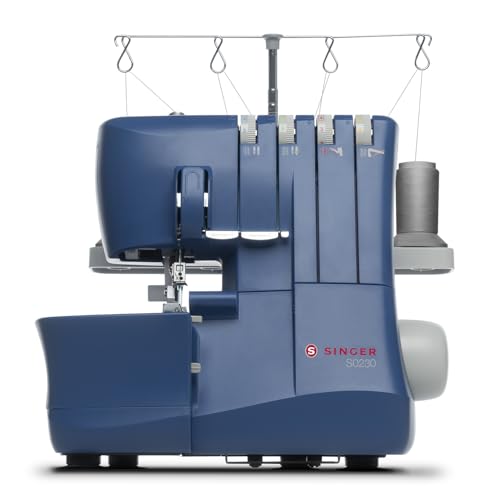
SINGER S0230 High Speed Overlock Serger (Navy Blue)
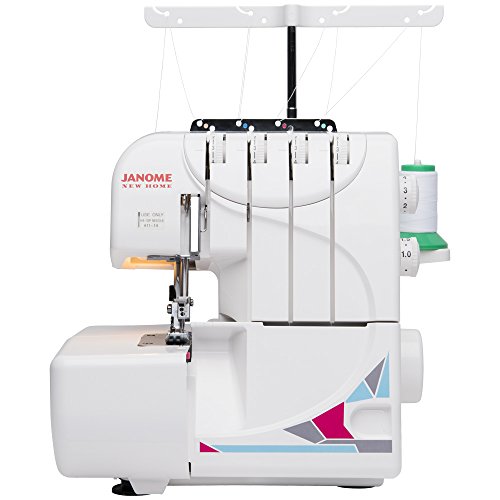
Janome MOD-8933 Serger with Differential Feed

Brother AIR1800 Air Serger with Jet Air Threading

SINGER X5004-HD Serger Overlock Machine

Juki MO-50E 3 or 4 Thread Serger
A Closer Look At Each Pick
This is the machine that introduced a generation of home sewists to serging, and its longevity says plenty. A lay-in threading system means you guide threads into slots rather than hunting for needle eyes, which matters enormously during your first month of ownership. The convertible free arm lets you finish sleeves and cuffs, the tightest curves in garment work.
Stitch variety covers the practical range: 4-thread overlock for sturdy seams, 3-thread for lighter knits, narrow hems, rolled hems, and ribbon lock. Optional presser feet extend it into blind hems, pin tucks, and flat lock stitching, so the platform grows with your skills.
The Value In It
- Lay-in threading with a lower looper threader cuts setup time dramatically for newcomers
- Five stitch types out of the box handle most garment and craft finishes
- Free arm/flat bed conversion makes sleeve and cuff work manageable
- Optional feet unlock blind hem, pin tuck, and flat lock techniques later
Things To Consider
- Threading is easier than manual systems but still takes practice; expect some frustration early on
- Advanced techniques require buying additional presser feet separately
Who Will Love This
Anyone sewing their first knit garments who wants a forgiving, well-documented learning curve without overspending.
A Better Fit Elsewhere
The Brother AIR1800 suits you more if threading anxiety outweighs budget concerns, since its jet-air system eliminates the fiddliest step entirely.
Where the Brother 1034D prioritizes approachability, the SINGER S0230 leans into throughput. Its high-speed motor trims excess fabric while simultaneously sewing and finishing seams, so a batch of t-shirt hems takes minutes instead of an afternoon. That speed becomes addictive once you start producing garments regularly.
The 2-3-4 thread capability gives real flexibility across fabric weights. Two threads suit delicate sheers, three works for standard knit seams, and four delivers durable stretch-ready construction for activewear.
Notable Gains
- High-speed operation dramatically shortens project completion time
- Simultaneous seaming, trimming, and finishing replaces three separate steps
- Three thread configurations adapt to sheers through heavy knits
Minor Gripes
- High speed demands steadier fabric control than slower machines require
- Owners commonly report a learning period before achieving consistent tension at full throttle
Made For
Intermediate sewists producing garments regularly who value finished-project speed over hand-holding features.
Swap It Out When
Thick denim and canvas are your regular fabrics; the SINGER X5004-HD’s metal frame handles those better.
Differential feed deserves a quick definition here: it’s a mechanism that feeds the top and bottom fabric layers at slightly different rates, preventing wavy seams on stretchy knits and puckering on lightweight wovens. The Janome MOD-8933 includes this feature, which many budget machines omit entirely. In our view, that alone justifies a close look from anyone working with jersey or spandex.
The compact footprint fits a corner desk or shared craft table, and lay-in threading with color-coded guides keeps setup intuitive. Convertible 3- and 4-thread operation covers everyday garment construction.
Bright Spots
- Differential feed prevents stretched-out hems on knits, a common budget-serger complaint
- Lay-in threading with color-coded paths simplifies rethreading after thread breaks
- Convertible 3/4-thread design adapts to different fabric types
- Compact body suits small sewing spaces
Potential Drawbacks
- Fewer stitch options than higher-tier models offer
- Lighter build may vibrate more at top speed than metal-framed alternatives
Key Specs
Who Should Grab It
Apartment dwellers and knit-garment enthusiasts who need differential feed without sacrificing desk space.
Reach For A Different Pick When
You want maximum stitch variety and accessory support; the Brother 1034D’s optional feet ecosystem runs deeper.
Threading a conventional serger involves tweezers, squinting, and occasional colorful language. The AIR1800 sidesteps all of it: tubes connect each threading port to its looper, and pressing a button fires a burst of air that shoots the thread straight through. Once you’ve used jet-air threading, going back feels like dial-up internet.
Beyond the headline trick, owners describe it as a versatile, durable daily driver suited to any sewing room. You pay more than the 1034D costs, but the time saved on every color change compounds quickly for frequent sewists.
Standout Benefits
- Jet-air threading completes loopers in seconds at the push of one button
- Versatile enough to serve as a primary machine rather than a specialty tool
- Eliminates the single biggest frustration reported by new serger owners
- Durable construction supports long-term regular use
- Color changes become trivial, encouraging creative experimentation
Honest Caveats
- Costs noticeably more than basic models in this roundup
- Air-tube system adds components that differ from familiar mechanical designs
The Right Fit
Sewists who change thread colors often and would happily trade extra dollars for reclaimed hours.
Not Your Match When
Tight budgets rule; the Juki MO-50E delivers core reliability at a friendlier entry point.
Most budget sergers use plastic housings that flex under load. The X5004-HD builds around a heavy-duty metal frame instead, which holds the machine stable during operation and reduces the vibration that causes skipped stitches. On thick seams, that stability is the difference between clean edges and redoing your work.
Like the S0230 earlier in this list, it offers 2-3-4 thread flexibility, but the reinforced frame makes it the stronger candidate for denim, canvas, and layered fleece. Home décor sewists hemming curtains or upholstery will notice the difference immediately.
Where It Helps
- Metal frame minimizes vibration for consistent, skip-free stitching on thick fabrics
- Sturdy base keeps the machine planted during aggressive feeding
- 2-3-4 thread options span delicate to heavy-duty applications
- Durable construction suggests a longer service life than plastic-bodied rivals
Worth Noting
- Added frame weight makes it less portable between rooms or classes
- Heavier build typically carries a modest price premium over plastic-bodied models
Feature Snapshot
Right Fit For
Home décor makers and garment sewists who regularly push denim, canvas, or multiple fabric layers through their machine.
Another Choice May Suit
Portability matters most for class-hopping sewists; the lighter Janome MOD-8933 travels far more easily.
Juki built its reputation on industrial machines that run all day in factories, and the MO-50E brings that engineering DNA home at an accessible price. Lay-in tensions simplify adjustment, while an automatic lower looper threader handles the hardest threading task automatically. The adjustable differential feed matches what the Janome MOD-8933 offers, keeping knits flat and wovens smooth.
Two details stand out for practical owners: a retractable upper knife lets you serge without cutting when decorative topstitching calls for it, and the calibrated knife adjusts cleanly rather than drifting. Built-in rolled hem rounds out a genuinely complete package.
Strong Points
- Automatic lower looper threader removes the toughest threading chore
- Adjustable differential feed keeps both knits and wovens looking flat
- Retractable upper knife enables non-cutting decorative serging
- Calibrated knife adjustment maintains consistent cutting width over time
- Industrial-lineage engineering at a home-sewer price point
Points To Note
- No 2-thread mode, limiting options for very sheer fabrics compared with the SINGER models
- Some owners report the manual benefits from a patient first read before setup
Who It Suits Best
Sewists who prioritize mechanical reliability and want industrial-brand durability without paying premium-tier money.
Consider Something Else When
Jet-air threading tops your wishlist; only the Brother AIR1800 in this lineup offers it.
What Matters Most Before Choosing Budget Sergers
Threading System First
Threading consumes more serger time than actual sewing, especially early on. Lay-in systems with color-coded guides cut errors substantially, while automatic lower looper threaders and jet-air mechanisms remove nearly all friction. Match the system to your patience level honestly.
Fabric Range And Feed
Differential feed separates capable machines from frustrating ones on stretch fabrics. Check whether a model offers 2-thread modes for sheers, and confirm the frame can handle your heaviest planned material. Denim and canvas demand metal construction.
Growth Room
Your first serger should accommodate skills you haven’t developed yet. Optional presser feet ecosystems, rolled hem capability, and adjustable knives extend usefulness for years. A machine that only does today’s technique becomes tomorrow’s limitation.
Weight And Workspace
Metal frames add stability but also pounds. Measure your sewing area and consider whether the machine will travel to classes or stay put.
Key Considerations Across These Picks
Traps First Timers Fall Into
New serger owners frequently buy on stitch count alone, then discover their chosen model lacks differential feed and struggles with every knit project. Another common slip: ignoring threading complexity until the machine sits unused. Read the threading path diagrams before committing.
The Case For Spending Up
Higher-tier models justify their cost through automation, not decoration. Jet-air threading, automatic loopers, and metal frames each solve a specific recurring problem. Frequent sewists recoup the difference in saved time within months.
Frequently Asked Questions
Do I still need a regular sewing machine alongside a serger?
Yes, for most sewists. Sergers finish edges and construct stretch seams brilliantly but cannot do topstitching, buttonholes, or zippers.
How difficult is serger threading really?
Conventional models take practice, usually a few sessions before it clicks. Lay-in systems and air-threading machines shorten that curve considerably.
Can a budget serger handle knits?
Models with differential feed, like the Janome MOD-8933 and Juki MO-50E, manage knits well. Machines lacking it tend to produce wavy seams on stretch fabrics.
Is a 4-thread serger necessary for beginners?
Four threads create stronger, more durable seams for garments worn and washed often. Three threads suffice for decorative work and lighter projects.
How much maintenance do these machines need?
Regular lint removal after each project and occasional oiling per the manual keep them running smoothly. Neglected lint buildup causes most tension problems.
Wrap Up
Every machine here earns its place for a distinct reason, so let your dominant fabric type and patience for threading guide the choice. Knit-heavy wardrobes point toward differential feed, denim points toward metal frames, and color-changing creativity points toward the AIR1800. Whichever you choose, a serger changes how finished your projects look almost immediately. Happy sewing.
