
A button press turns a paper design into a wearable pin in about thirty seconds, which is why these machines show up everywhere from school fundraisers to craft stalls. The catch is that kits vary wildly in mold sizes, included supplies, and how fiddly the die swap feels. This roundup sorts seven popular options by what actually matters at your craft table: ease of alignment, supply volume, and whether you can grow past one badge size without buying a second machine.
A Side-By-Side Look

VEVOR Button Maker Machine, 1.25/2.25 inch 2-in-1 Pin Maker (Green)
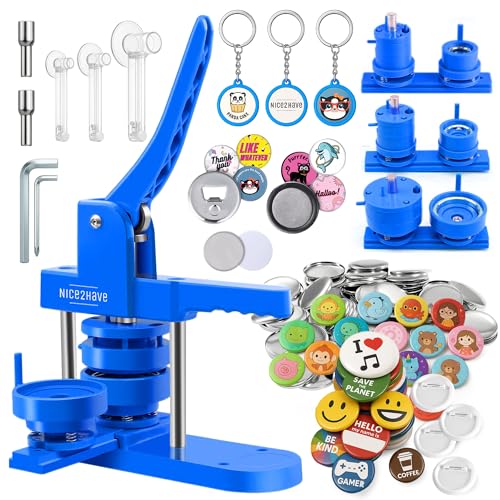
Button Maker Machine 1+1.25+2.5 Inch Pin Maker Kit

VEVOR Button Maker Machine 1.25’+2.25′ Badge Punch Press Kit

Button Maker Machine Multiple Sizes 1.25in+2.25in DIY Gift Kit

300pcs Button Pin Maker Machine Multiple Sizes 1”+1.25”+2.25”

DCBADGE Button Maker Machine (3rd Gen) Light Blue 58mm

DCBADGE Button Maker Machine (3rd Gen) Green 58mm
The Strengths Of Each Pick
This green VEVOR covers the two sizes most crafters actually use: 1.25-inch pins for lanyards and 2.25-inch badges for tote bags. A reinforced ergonomic handle matters more than it sounds, because pressing several dozen buttons in an evening puts real strain on your wrist.
Alignment guides help keep artwork centered, which is where most first-timers lose supplies to crooked results. The bundled circle cutter trims designs to size so you aren’t tracing scissors lines freehand.
Positive Points
- Switches between 1.25-inch and 2.25-inch output without buying separate presses
- 200 button parts mean a full afternoon of making before refills are needed
- Magic Book guide walks newcomers through each pressing step
- Ergonomic handle reduces fatigue during longer sessions
A Few Limitations
- Plastic body construction may feel less substantial than all-metal rivals under heavy use
- Only two mold sizes, so niche diameters require other equipment
Key Specs
Who Will Love This
Complete beginners who want two useful sizes and clear guidance from day one.
Where A Sibling Pick Shines
Crafters wanting three sizes including a tiny 1-inch option should look at the GreHom 300-piece kit instead.
Where the VEVOR above stops at pins, this kit branches into finished goods. Alongside 500 button parts across three mold sizes, it ships fridge magnets, bottle openers, and keychain blanks, so one press produces sellable products rather than just badges.
The 500-plus design sheets give you artwork to practice with before committing your own illustrations. For anyone eyeing a market stall or school fundraiser table, that head start is worth a lot.
What Earns Its Place
- Three mold sizes span 1 inch up to a generous 2.5 inches
- Magnets, keychains, and bottle openers turn buttons into giftable merchandise
- 500 button sets support a serious first production run
- Preset design sheets shorten the path from unboxing to finished pin
Points To Keep In Mind
- Swapping between three dies takes practice, and misaligned inserts waste blanks
- The sheer accessory volume needs dedicated storage space between sessions
Feature Snapshot
Made For
Hobbyists turning buttons into magnets and keychains for markets, fundraisers, or gift baskets.
Another Choice May Suit
If your projects stay strictly pin-shaped, the simpler MK.Bear kit delivers similar core capability with less clutter.
Think of this as the grown-up sibling of pick one. The headline difference is a detachable mold system: the 32mm and 58mm dies pop off the body, and VEVOR sells additional sizes that install into the same frame later.
That modularity changes the ownership math. Instead of replacing the whole machine when your needs shift toward 1-inch or 1.75-inch work, you buy one new die set and keep pressing.
Real-World Strengths
- Detachable dies accept other purchased sizes down the road
- Two circle cutters let both standard sizes run without tool sharing
- Arrives complete with machine, both molds, and paper-cutting tools
Things That May Matter
- Die removal and reinstallation adds a step between size changes
- Extra mold purchases are needed to unlock the expandability advantage
The Numbers That Matter
Right Fit For
Crafters confident they’ll expand their size range within the first year of regular use.
Consider Something Else When
Total beginners who want zero setup decisions may prefer the DCBADGE light blue model’s fixed, ready-to-press design.
The MK.Bear kit keeps things refreshingly simple: two detachable molds at 32mm and 58mm, 200 button supplies, and two circle cutters. Owners commonly report the build holds up well to steady home use, and the swappable mold design means other sizes can be added separately if your projects branch out.
Compared to the nice2have kit above, you trade away magnets and keychains but get a leaner package focused purely on pins. For birthday gifts, party favors, and classroom projects, that focus suits most households just fine.
Standout Benefits
- Detachable molds allow future size additions without a new machine
- 200 supplies cover a solid run of party or classroom buttons
- Dual cutters speed up prep when alternating sizes
Small Caveats
- No magnet or keychain blanks, limiting product variety out of the box
- Die swapping between the two sizes interrupts batch workflow slightly
Who Should Grab It
Budget-minded families and teachers making pins for events, parties, and school crafts.
Reach For A Different Pick When
Sellers needing a third size should step up to the GreHom three-mold machine instead.
GreHom goes widest here with three dies: 25mm, 32mm, and 58mm. That smallest 1-inch size is the one every other kit on this list skips, and it happens to be the format most convention vendors and band merch tables want.
Supplies total 300 sets split evenly, 100 per size, with metal covers and pinbacks. Three separate circle cutters match the three dies, so prep stations can stay organized per size rather than juggling one shared tool.
Benefits That Matter
- Three sizes include the rarely bundled 1-inch format
- Metal pinback refills feel sturdier than plastic alternatives
- 100 blank sets per size enable balanced production runs
- Matching cutter per die streamlines multi-size sessions
What To Weigh
- The maker notes the small and medium molds look alike, and installing the wrong one wastes parts
- Three-die storage demands more drawer or shelf space than two-size kits
Quick Facts
Whose Shelf It Belongs On
Experienced crafters and small sellers producing mixed-size batches on a schedule.
Swap It Out When
Families with younger children will find the fixed-die DCBADGE green unit far less fiddly.
Every other machine here asks some assembly or die installation before the first press. The DCBADGE third-generation body arrives with its 58mm mold already integrated, so the unboxing-to-first-button gap is minutes, not an evening with instructions.
That single-size simplicity is also its identity. There’s no mold swapping, no wrong-die mistakes, nothing for kids to misalign during a birthday-party craft station. The stainless construction and lighter weight make it easy to carry between rooms or pack for workshops.
Reasons It Performs
- Integrated mold works straight from the box with no assembly
- Lightweight body moves easily between home, classroom, and events
- Single fixed die removes the most common beginner error entirely
- Includes button parts, circle cutter, and wrench gadget
Honest Caveats
- Fixed 58mm mold means no smaller pin sizes, ever
- One size limits resale variety compared to multi-die kits
Core Details
Who It Suits Best
Parents, teachers, and workshop hosts running craft activities for children.
Not Your Match When
Anyone needing multiple output sizes should pick the GreHom three-mold kit instead.
This is the light blue DCBADGE above in a different shell, mechanically identical: third-generation integrated 58mm mold, no assembly, button parts and cutter in the box. The choice between them comes down purely to color preference and whichever finish matches your craft space.
For a dorm desk, a small apartment corner, or a teacher’s supply cart, the compact footprint and low weight earn their keep. You sacrifice size flexibility, yet gain the simplest possible operating experience in this entire lineup.
Positive Takeaways
- Ready to press immediately, no die installation required
- Light, portable build suits shared spaces and mobile workshops
- Fixed single mold keeps operation foolproof for groups
Less Ideal Details
- Locked to 2.25-inch output, so smaller pins need another machine
- Functionally identical to the blue variant, offering no extra capability
The Right Fit
Space-limited crafters and group leaders who value simplicity over size range.
Look Elsewhere When
Volume sellers wanting three sizes and bulk refills belong with the GreHom 300-piece kit.
What Matters Most Before Choosing Button Maker Machines
Size Range And Mold Flexibility
Mold diameter decides what you can make. A 1.25-inch die suits lanyard pins, 2.25-inch covers tote-bag badges, and 1-inch fits convention merch. Detachable systems like the VEVOR punch press let you add dies later, while fixed-mold machines lock you in permanently.
Supply Volume And Consumables
Button parts are the ongoing cost of this hobby. Kits bundling 200 to 500 sets delay your first refill order, and even splits across sizes matter if you plan balanced runs. Check whether refills use metal or plastic backs, since metal wears better on daily-use pins.
Assembly And Learning Curve
Integrated-mold machines press correctly from minute one, which suits kids and group settings. Interchangeable-die models demand careful installation, and mixing up similar-looking dies wastes blanks. Honest self-assessment here saves frustration later.
Output Goals Beyond Pins
Plain badges are only the start. Kits adding magnets, keychains, and bottle opener blanks convert one press into a small product line, which matters enormously for fundraiser tables and market stalls.
Key Considerations Across These Picks
Traps First Timers Fall Into
The most common mistake is buying a single-size machine and outgrowing it within weeks. The second is skipping the circle cutter math: hand-cut circles almost always sit off-center under the mylar film. Match your die count to a realistic twelve-month plan, not just today’s project.
Why Top Tier Costs More
Pricier kits buy three dies instead of two, metal hardware instead of plastic, and larger refill bundles. For someone pressing weekly, those upgrades pay back quickly in saved refills and avoided second purchases. Occasional makers lose little sticking with entry kits.
Frequently Asked Questions
How long does one button take to make?
Once your artwork is cut, a single press cycle runs roughly 30 seconds. Cutting and prepping artwork usually takes longer than the pressing itself.
Can kids use these machines safely?
Fixed-mold models like the DCBADGE units suit supervised children well since there’s nothing to assemble. Adult handling is still recommended for the pressing lever.
Do I need special paper for button designs?
Standard printer paper works for most kits, and the included circle cutters trim it to size. Heavier cardstock may not crimp properly depending on the die.
Are refill button parts universal?
Not entirely, since dimensions vary slightly between brands. Buying refills matched to your machine’s stated millimeter size avoids crimping problems.
Which size should a beginner start with?
A 2.25-inch mold gives the most room for artwork and forgiving alignment. Two-size kits offer better long-term value once confidence grows.
Bottom Line
Your best match depends on how far this hobby goes. Casual families get everything they need from the DCBADGE units, while the MK.Bear kit stretches a modest budget across two sizes. Sellers and frequent pressers should weigh the GreHom three-mold machine or the expandable VEVOR punch press. Whichever route you take, start with a design you love, because the first successful press tends to hook you.
