
Starting calligraphy usually ends one of two ways: a satisfying new hobby or a drawer full of pens that never clicked. The difference is rarely talent. It’s whether your first kit gave you the right nibs, clear instructions, and enough ink to practice without frustration. This roundup covers six beginner-friendly options, from polished fountain pen sets to a feather quill gift box and even a workbook that teaches kids the fundamentals. Each one solves a different starting problem, so match the pick to the person holding the pen.
The Essentials At A Glance

Wordsworth & Black Calligraphy Pen Set (Black Rose)

Wordsworth & Black Calligraphy Pen Set (Blue)

Wordsworth & Black Calligraphy Pen Set (Brown)

Wonwood Direct 7-Pen Calligraphy Kit
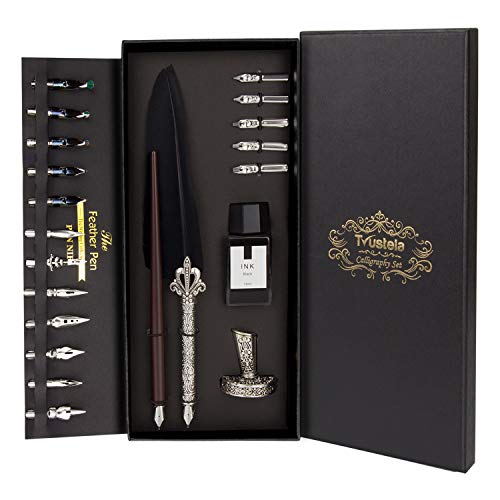
Trustela Feather Quill Dip Pen Set

Modern Kid Press Lettering Workbook
The Strengths Of Each Pick
Most starter kits hand you a pen and wish you luck. This one arrives with instruction booklets, so the evening you unbox it is also the evening you write your first letters. The black rose finish gives it a formal, gift-worthy presence that looks at home on a writing desk.
For anyone practicing at a kitchen table after work, the included cartridges mean no separate ink shopping trip. Swap a cartridge, screw the barrel back together, and keep going.
Practical Advantages
- Six replacement nibs let you move from fine lines to broad flourishes without buying anything else.
- An ink bottle plus converter supports bottle-fed filling once cartridges run dry.
- Three blue and three black cartridges cover both everyday notes and formal pieces.
- The bundled booklet removes the guesswork that stalls most beginners in week one.
- Presentation packaging makes it a credible gift straight out of the box.
Things To Consider
- Cartridge-fed pens need occasional nib rinsing to keep ink flowing cleanly between sessions.
- You may find the luxury styling heavier in the hand than a basic plastic practice pen.
Key Specs
Who Should Grab It
First-time calligraphers who want a complete, guided setup and a pen handsome enough to leave out on the desk.
Where A Sibling Pick Shines
The Wordsworth & Black Blue version suits the same writer who prefers a cooler, more understated look over this rose-gold warmth.
Functionally, this is the same kit as the black rose edition above: six nibs, an ink bottle, a converter, and paired blue and black cartridges. What changes is the character. The deep blue finish reads calmer and more contemporary, which matters more than it sounds when the pen lives on your desk all day.
Writers who journal nightly tend to care about how a tool feels during long sessions, not just how it photographs. In our view, this colorway fits that crowd best. Everything else about the ownership experience carries over, including the included instruction booklets and the gift-ready presentation.
Strengths Worth Knowing
- Identical six-nib flexibility means you can progress through stroke widths as skill grows.
- Dual ink colors support both casual practice pages and finished address envelopes.
- The converter opens up bottled inks once you’re ready to experiment beyond stock colors.
A Few Limitations
- Owners commonly report needing to clean the nib after pauses in use, standard for any cartridge pen.
- With three near-identical versions in this list, choosing comes down purely to aesthetics.
Made For
Adult beginners who want the complete guided kit but prefer a modern, cool-toned instrument over ornate metalwork.
Another Choice May Suit
The Wonwood Direct 7-Pen Kit fits the same newcomer better when variety across seven nib widths matters more than a single luxurious barrel.
The brown edition closes out the Wordsworth & Black trio with a warmer, vintage-leaning personality. Underneath the finish sits the same proven formula: a cartridge-and-converter pen, six interchangeable nibs, bottled ink, and step-by-step booklets for the very first session.
That consistency is genuinely useful. Whichever colorway you choose, tutorials written for one will transfer directly to the other two, so there’s no wrong entry point here. The honest read is that this decision is emotional rather than practical, and warm brown tones suit leather journals and sepia-toned stationery beautifully.
The Upside
- Full accessory loadout means nothing else to buy before your first practice page.
- The earthy finish pairs naturally with traditional correspondence and journaling setups.
- Booklet-based onboarding shortens the learning curve that defeats many newcomers.
Points To Note
- Like its siblings, expect routine nib maintenance; dried ink is the usual culprit behind scratchy starts.
Whose Shelf It Belongs On
Lovers of old-fashioned letter writing and leather-bound journals who want their tools to match the mood of the page.
Swap It Out When
The Trustela Feather Quill Dip Pen Set serves the same traditionalist better when dipping and historical technique appeal more than cartridge convenience.
Where the Wordsworth sets refine one pen, this Wonwood kit spreads the budget across seven. Each fountain pen ships with a different nib width, running from a hairline 0.5 mm up to a sweeping 2.9 mm. That spread matters because discovering your preferred stroke width is the single biggest early milestone in calligraphy, and owning the whole range accelerates it dramatically.
Refilling works two ways: forty pre-filled cartridges in eleven colors for grab-and-go sessions, or six converters that draw ink straight from any bottle. A plunger converter, for those new to the term, is a small piston mechanism that sucks ink into the pen’s reservoir.
Well-Handled Touches
- Seven graduated nib widths cover everything from delicate script to bold display lettering.
- Forty cartridges in eleven colors invite colorful practice without constant refilling.
- Dual refill systems let you start simple and graduate to bottled ink at your own pace.
- Multiple pens mean a spare stays ready while another dries or gets cleaned.
Small Caveats
- Lighter build quality than the Wordsworth barrels is the trade-off for the lower cost per pen.
- No instruction booklet appears in the source details, so plan on pairing it with online guides.
Feature Rundown
Right Fit For
Experimenters, students, and anyone who’d rather sample seven widths than commit to one premium barrel.
Consider Something Else When
The Wordsworth & Black Black Rose set suits the same beginner better when guided instructions and gift presentation outrank nib variety.
This set skips modern convenience entirely and goes back to the dip pen, the tool calligraphers used for centuries. You get a wooden holder, a decorative feather quill, nineteen nibs, and an ink supply, all packed in a gift box. Nineteen nibs is the standout number here; it edges out even the Wonwood kit’s seven widths for sheer experimentation room.
One detail worth knowing before your first session: new nibs ship coated in protective oil to prevent corrosion in transit. That coating repels water, so the manufacturer instructs owners to gently scrub each nib with toothpaste or dish detergent on a soft brush before use. Skip that step and the ink will bead off instead of flowing.
The Practical Payoff
- Nineteen nibs offer the widest stroke exploration of any set in this roundup.
- The feather quill and wooden body deliver genuine period charm for themed projects.
- Gift-box packaging makes it a memorable present for history buffs and crafters alike.
- Dip pens teach ink control and pressure discipline faster than cartridge systems.
Honest Caveats
- Every session starts with dipping and ends with rinsing and drying the nibs, more upkeep than cartridge pens demand.
- The mandatory oil-removal prep adds a small but real barrier before first use.
Product Snapshot
Who Will Love This
Crafters, renaissance-fair regulars, and romantics who want the ritual of dipping as much as the final lettering.
Not Your Match When
The Modern Kid Press workbook pairs far better with young learners, since structured lessons beat a tray of loose nibs for keeping kids engaged.
Every other item here is hardware. This one is the teacher. Modern Kid Press built an 8.5 x 11 inch workbook aimed at children eight and up, printed on sturdy 60 lb interior stock that stands up to erasing and repeated pencil passes. The matte cover survives backpack transport reasonably well, though corners will soften over a school year.
The structure does the heavy lifting: terminology and warm-up drills first, then lowercase and uppercase alphabets in both sans serif and serif styles, then connecting letters into flowing words. Over ten projects follow, including party planning templates for banners, placemats, and cupcake toppers. That project payoff keeps kids practicing longer than blank drill sheets ever will.
Notable Upsides
- Warm-up drills and terminology give kids a proper foundation instead of guesswork.
- Both serif and sans serif alphabets broaden stylistic range early.
- Ten-plus craft projects convert practice into things siblings can actually admire.
- Large format leaves generous room for unsteady childhood handwriting.
Trade Offs
- It contains no pens or ink, so budget for a separate starter pen alongside it.
Perfect Match For
Children ages 8 and up, plus patient adults who want a structured curriculum rather than scattered YouTube tutorials.
Reach For A Different Pick When
The Wonwood Direct 7-Pen Kit complements it directly, supplying the varied nibs this workbook assumes you’ll bring to the table.
What Matters Most Before Choosing Calligraphy Sets For Beginners
Nib Style Decides Your Path
Fountain pens hold their own ink and glide with minimal pressure, making them the gentlest introduction for shaky hands and long practice sessions. Dip pens demand rhythm, since every few letters require a fresh trip to the inkwell. Beginners who crave quick wins should lean fountain; those drawn to traditional craft should embrace the dip.
Ink Supply Shapes Momentum
Nothing kills a hobby like running dry mid-practice. Cartridges offer instant swaps, while bottles and converters cut long-term costs and open up dozens of colors. Kits bundling both, like the Wonwood set, let you defer that choice.
Guidance Separates Progress From Abandonment
A booklet or workbook turns equipment into education. First-time letterers consistently stall without structured drills, so treat included instructions as a core feature rather than a bonus.
Presentation Counts For Gifts
A boxed set with a finished appearance doubles as a present. Unboxing experience matters when the recipient is a teenager or a colleague.
Key Considerations Across These Picks
Traps First Timers Fall Into
Chasing the cheapest bundle often means thin nibs, watery ink, and no instructions, which leads straight to abandonment. The opposite mistake is overbuying: a professional-grade setup overwhelms someone still forming letters. Match the kit to your current stage, not your ambitions.
Why Top Tier Costs More
Premium sets pay for materials and curation: weighted barrels, consistent nib grinding, real instruction booklets, and packaging worth gifting. That polish pays off for dedicated learners and gift-givers; casual dabblers lose little starting with a value kit.
Frequently Asked Questions
Do I need prior handwriting skill to start calligraphy?
No, these kits assume zero background. Instruction booklets and workbooks walk you from warm-up strokes onward. Consistent daily practice matters far more than natural neatness.
Which nib width should a beginner try first?
Medium widths around 1.1 to 1.5 mm balance control with visible flourish. Fine nibs expose every wobble, while very broad ones flood easily. Multi-nib kits remove the guesswork entirely.
How do I prepare new dip pen nibs?
Manufacturers coat nibs in protective oil for shipping, and ink won’t flow until it’s removed. Scrub gently with dish detergent or toothpaste on a soft brush, then rinse and dry. The Trustela set includes this guidance directly.
Are cartridges or bottled ink better for beginners?
Cartridges win on convenience: twist one in and write. Bottled ink via a converter costs less over time and unlocks countless colors. Many kits include both paths deliberately.
Can kids learn calligraphy with adult pen sets?
They can, but grip strength and patience vary widely. A dedicated workbook designed for ages 8 and up builds skills gradually. Pair it with a forgiving medium-width fountain pen for the smoothest start.
Closing Thoughts
Your first calligraphy set should lower barriers, not raise them. The Wordsworth & Black editions deliver a guided, gift-ready path in three finishes, the Wonwood kit trades polish for seven nib widths and mountains of ink, and the Trustela quill rewards anyone who loves ritual over speed. Younger learners get a real curriculum from the Modern Kid Press workbook. Choose the one matching your temperament, then give yourself a month of short, daily sessions. The letters improve faster than you’d expect.
