
The right surface changes how acrylic behaves in your hands. Paint too thick and it cracks on a flimsy panel; too thin and it soaks straight into raw cotton. This roundup covers stretched canvases and flat boards across every common need, from a statement 24×36 wall piece to a classroom-sized stack of practice panels. Whether you paint daily at an easel or host craft nights with the kids, one of these six will fit your shelf and your budget.
The Essentials At A Glance

KINGART Stretched White Canvas Set 24×36 Inch 2-Pack

Simetufy Canvas Boards for Painting 52 Pack 8×10 Inch

Simetufy 32 Pack 11×14 Inch Canvas Boards
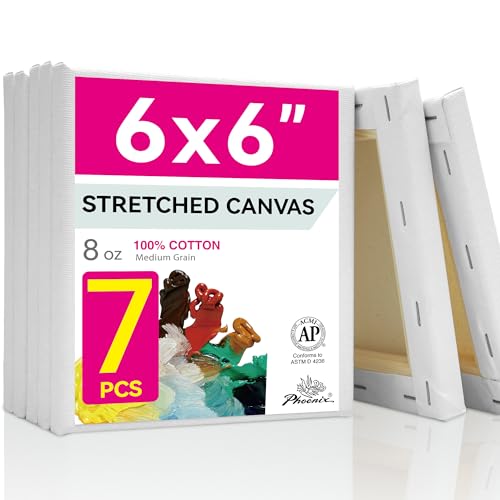
PHOENIX Small Stretched Canvas 6×6 Inch 7 Pack

AETEXA Canvases for Painting 8×10 Inch Bulk Pack of 12
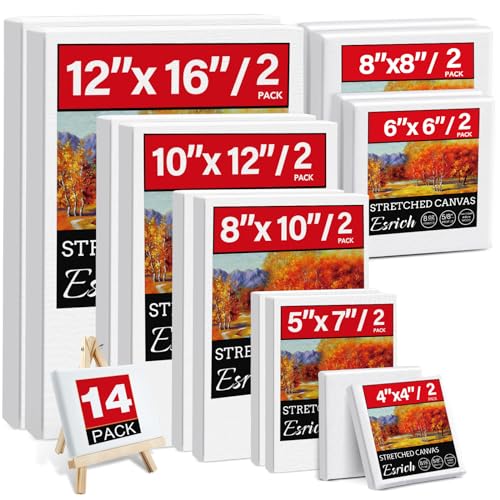
ESRICH Stretched Canvas Multi-Size 14 Pack
More On The Choices That Made The List
A 24×36 surface is where a painting stops being a sketch and starts being furniture for your wall. This KINGART pair gives you two of them, built on pine stretcher bars with a back-stapled edge so the sides stay clean enough to hang frameless. Gesso, for anyone new to the term, is the chalky primer coat that keeps paint sitting on top of the fibers instead of sinking in.
Three coats of that primer come standard here over medium-grain cotton, which matters most with heavy acrylic applications and pour work where thin priming shows through. Compared with the flat Simetufy panels further down, these have real depth at a 5/8-inch profile, so they read as finished objects rather than studies.
The Case For It
- Triple gesso priming means you can open the box and start laying down color the same afternoon
- The acid-free cotton surface holds true color tone instead of dulling bright pigments over time
- Back-stapled edges leave clean sides for frameless hanging or later framing
- Handles acrylic, oil, pouring media, and collage without switching surfaces
- Two large canvases per set suit diptychs or matched companion pieces
Points To Note
- At this size, store flat or upright against a wall; leaning corners are the usual cause of dents reported on large stretched canvas
- Only two pieces per purchase, so prolific painters will restock often
Key Specs
Who It Suits Best
Home artists ready to move past small studies and fill actual wall space.
Where A Sibling Pick Shines
Anyone still finding their footing gets more mileage per dollar from the Simetufy 32-pack of 11×14 boards.
Fifty-two panels is less a purchase than a season of painting. Each 8×10 board arrives pre-primed with acid-free acrylic gesso, so there is no prep step between opening the box and the first brushstroke, which is exactly what a Tuesday-night class needs. Where the KINGART set above is about depth and display, this is about volume and zero hesitation.
Flat panels like these also store far better than stretched canvas; a stack of fifty slips into a drawer or a portfolio bag. Teachers running workshops and beginners who ruin three attempts before one lands will find the math hard to argue with.
Good Reasons To Consider
- The bulk count covers a full semester of classes or months of daily practice
- Pre-primed cotton accepts both acrylic and oil straight from the tube
- Flat profile stacks neatly, unlike bulky stretched frames
- Works for kids’ crafts and adult study alike thanks to the friendly 8×10 size
Worth Noting
- Boards can bow slightly in humid rooms, so keep them stored flat under light weight
- No frame depth means these need framing or mounting before hanging as finished art
Made For
Art teachers, workshop hosts, and prolific beginners burning through practice surfaces weekly.
Skip It When
You want a framed look out of the box; the PHOENIX six-inch squares below give you that stretched depth in miniature.
Same brand, different brief. This Simetufy run steps up to 11×14, a size big enough for real composition practice yet still cheap enough to fail on without wincing. The cotton surface comes pre-coated with acid-free gesso, and the listing extends compatibility beyond acrylic and oil to watercolor and gouache, though you may find watery media slightly beading until a second coat of primer settles in.
Against the 52-pack of 8×10 boards reviewed just above, you trade quantity for working room. Thirty-two panels still goes a long way, and the extra three inches of width makes a genuine difference for landscapes and figure studies.
What Helps Most
- 11×14 hits the sweet spot between thumbnail sketches and full compositions
- Gesso is already applied, so prep time drops to zero
- Cotton weave takes both wet and dry media reasonably well
- Thirty-two units serve a household, a club, or a semester comfortably
Small Caveats
- Flat boards offer no wraparound edge, so finished pieces want a frame
- Very fluid techniques can pool at panel edges rather than gripping like stretched fabric
Quick Facts
Right Fit For
Students and returning painters rebuilding skills on a forgiving, disposable-feeling surface.
Another Choice May Suit
Classrooms needing maximum volume per session should reach for the 52-pack Simetufy 8×10 boards instead.
Six-inch squares are the darlings of pour artists, and this PHOENIX seven-pack leans directly into that crowd. Each canvas stretches 100% cotton over pinewood bars at a standard 5/8-inch profile, sized to slip into off-the-shelf frames. Triple priming at 8 ounces per yard gives the surface enough body to hold thick pours without the paint starving into the weave.
Owners commonly report the tension staying even across the small span, which is where cheap mini canvases usually fail. Seven matching squares also invite series work: same subject, seven moods, hung as a grid.
Strengths Worth Knowing
- Dimensionally stable cotton resists shrinking, keeping pours level as they cure
- Medium grain holds pigment tone and gloss faithfully
- Standard stretcher bar sizing makes framing simple and affordable
- Seven uniform squares suit gallery walls and gift sets
Things To Consider
- Square-only format limits composition choices compared with the ESRICH multi-size set
- Small canvases go quickly during pour sessions; heavy users may want two packs
Feature Snapshot
Who Will Love This
Pour artists, miniature painters, and anyone building a salon-style wall of small works.
Consider Something Else When
Varied sizes matter more than matching squares; the ESRICH fourteen-pack covers that ground better.
Twelve panels sit in a sensible middle zone: enough for weeks of hobby painting without committing to the fifty-plus counts from Simetufy earlier in this list. AETEXA builds each 8×10 board around a recycled paper core with a cotton painting face, primed at 8 ounces and ready for acrylic or oil the moment the shrink wrap comes off. That rigid core is the practical advantage here; boards resist the gentle flexing that thinner panels show over time.
In our view, this is the low-drama choice for teens setting up a first desk studio or adults squeezing in weekend sessions.
What Pays Off
- Rigid core construction stands up to handling by younger painters
- Acid-free primed face keeps colors from shifting as paintings age
- A dozen units balance cost against storage reality in small homes
- Universal 8×10 sizing fits inexpensive ready-made frames
A Few Limitations
- Pack of twelve runs out faster than the Simetufy bulk options for group settings
- Recycled paper core means these are indoor-use panels; damp garages are unkind to them
Built With In Mind
Teens, casual hobbyists, and gift-givers assembling starter art kits.
Look Elsewhere When
Class-size volume is the goal; the 52-pack Simetufy boards deliver far more surfaces per purchase.
One box, seven sizes, two of each: 12×16 down to tiny 4×4 squares. ESRICH nails each blank onto a pinewood frame and pre-coats the cotton with acid-free acrylic gesso, so every piece is ready for oil, acrylic, gouache, or tempera on arrival. Unlike the single-format packs elsewhere in this roundup, this assortment lets a family paint side by side at whatever scale suits each person.
It also solves the classic problem of buying a big canvas for one project and never touching the leftovers. Here, the small sizes absorb experiments while the larger two handle something worth framing.
The Value In It
- Seven formats cover everything from fridge-art minis to living-room pieces
- Pinewood frames resist warping, a common complaint on budget stretched canvas
- Pre-applied gesso removes all prep friction for kids and guests
- Fourteen total canvases keep a household stocked through many sessions
Details To Watch
- Assorted sizing means you get only two of any given dimension; dedicated volume painters should stick with uniform packs
- Store the smaller squares flat inside a box so corners do not catch on anything
The Numbers That Matter
Whose Shelf It Belongs On
Families, craft-night hosts, and beginners who want to sample multiple scales before specializing.
Swap It Out When
You already know your preferred format; the KINGART 24×36 set serves committed large-format painters far better.
What Matters Most Before Choosing Canvas For Acrylic Painting
Priming Depth Decides Everything
Gesso is the white primer layer between raw cotton and your paint. Single-primed surfaces drink color and dull it; triple-primed boards like the KINGART and PHOENIX picks keep pigments sitting bright on top. Heavy-body acrylic and pour work demand the thicker priming, while light washes forgive a lighter coat.
Stretched Versus Flat Panels
Stretched canvas has depth, presents finished edges, and suits display work. Flat boards cost less, store flat, and shine for practice, classes, and studies. Most working painters keep both: boards for warm-ups, stretched pieces for anything meant for a wall.
Size Honesty
Be realistic about your space and patience. A 24×36 canvas demands a plan, a proper easel, and storage room. Beginners progress fastest on 8×10 to 11×14 surfaces where a failed attempt costs minutes, not a weekend.
Fabric And Frame Quality
Cotton with medium grain is the category standard because it grips paint evenly. Pine stretcher bars hold tension better than softwood alternatives, and back-stapled edges keep sides presentable for frameless hanging.
Key Considerations Across These Picks
Traps First Timers Fall Into
The most common mistake is buying huge canvases before skills justify them; a stack of small panels teaches faster. Another trap is ignoring storage, since stretched canvas warps when leaned on corners or kept in humid rooms. Match the pack size to actual usage too, not ambition.
Why Top Tier Costs More
Higher-tier canvas spends more on cotton content, triple gesso application, and kiln-dried pine frames. Those details show up as brighter color retention and frames that stay square for years. For display-worthy work, the upgrade pays for itself; for practice, budget boards do the job fine.
Frequently Asked Questions
Do I need to prime these canvases before painting?
No, every option here ships pre-primed with gesso. You can apply paint directly once the surface reaches room temperature.
Can I use oil paints on acrylic-primed canvas?
Yes, oil paint bonds well over acrylic gesso. Just avoid the reverse order, since acrylic over oil does not adhere reliably.
How should I store unused canvas?
Keep flat panels stacked flat and stretched canvas upright or flat, away from humidity. Never lean either type on a corner.
Are flat canvas boards good for beginners?
Absolutely, they are inexpensive, rigid, and forgiving of mistakes. Most teachers recommend starting on boards before moving to stretched pieces.
Can kids use these same canvases?
Yes, the pre-primed surfaces accept tempera and craft paints alongside acrylic. Smaller sizes from the ESRICH pack suit young hands best.
Closing Remarks
Match the surface to the stage you are actually at, not the artist you hope to become. Start small, learn fast, then graduate to the KINGART large format when a piece deserves the wall space. Any of these six will treat your paint well.
