
A capo looks like the simplest accessory in your gig bag, and honestly it is: a small clamp that shortens the vibrating length of every string at once so you can shift keys without relearning chord shapes. The catch is that classical guitars play by different rules than steel-string acoustics. Nylon strings need less clamping force, wider fretboards demand a broader contact bar, and a heavy-handed spring can pull notes sharp or leave you with an annoying buzz at the third fret.
That’s exactly why this list exists. Every option below was chosen with nylon-string players in mind, whether you’re a student working through Segovia studies, a teacher moving between tunings mid-lesson, or a gigging guitarist who needs fast changes between songs. Some picks favor one-handed speed, others favor precision tension adjustment, and a couple are budget-friendly backups worth tossing in a case pocket.
The Picks In Brief

Kyser Quick-Change Capo KG6SNB (Sunburst)

Salvori SC-01S Blue-Plated Guitar Capo with 4 Picks
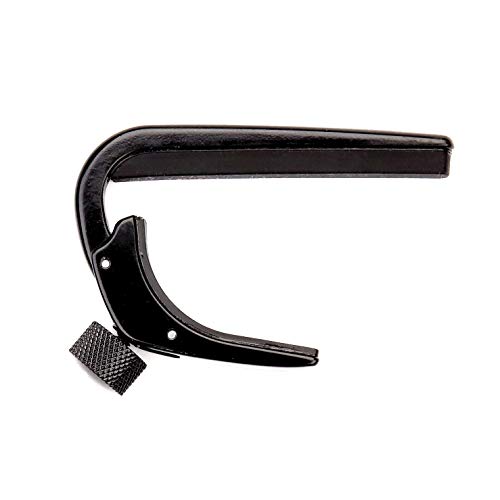
D’Addario NS Classical Guitar Capo (Black)

Alice Alligator Shape Aluminum Alloy Capo
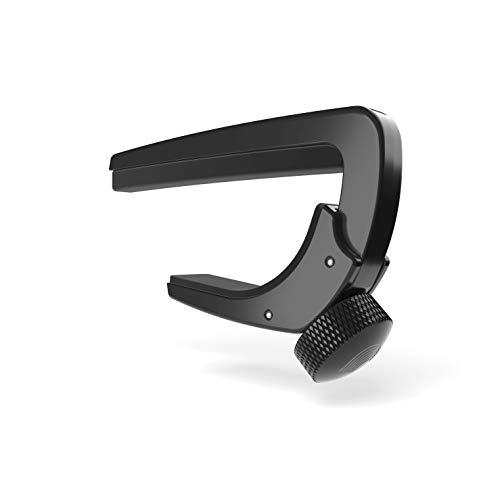
D’Addario NS Lite Classical Guitar Capo (Black)

Htaexpu Clip Capo for Acoustic and Electric Guitar

Jim Dunlop Trigger Capo Classical Flat (Black)
More On The Choices That Made The List
The Kyser Quick-Change earned its reputation by solving the problem every performer dreads: fumbling with a screw clamp while an audience waits. Squeeze it open with one hand, place it at the fret, release, done. Between songs, it parks neatly on the headstock instead of rattling around a pocket.
The sunburst finish adds a touch of character most black clamps lack. Owners commonly report the spring tension staying consistent over years of use, which matters when a nylon-string setup already sits close to the edge of buzzing.
Strengths Worth Knowing
- One-handed squeeze action makes key changes mid-set nearly invisible to the audience
- Strong yet lightweight aluminum body won’t weigh down the headstock or dull sustain
- Steel spring delivers steady pressure, reducing retuning after placement
- Parks on the headstock during breaks, so it’s always within reach
- Built in the USA, and owners widely report long service life
Things To Consider
- Tension isn’t adjustable, so fit depends on your guitar’s neck profile; some players report needing a slight reposition to kill buzz
- Store it clamped loosely or off the instrument to avoid unnecessary pressure on the nut area
At A Glance
Who It Suits Best
Gigging classical and crossover players who change keys often and want a dependable, grab-and-go clamp.
Where A Sibling Pick Shines
Players who want dialable tension rather than fixed spring pressure should look at the D’Addario NS Classical Guitar Capo instead.
Most capos look like hardware. This one doesn’t. The Salvori SC-01S wears a blue-plated zinc alloy body with a gradient that shifts depending on the angle, giving it a jewelry-box quality you’ll notice every time you reach for it.
Looks aside, the brand emphasizes an industrial-strength spring tuned to press strings firmly enough to avoid fret buzz, that raspy rattle caused by insufficient clamping pressure. The bundle also throws in four picks, a handy bonus if you split time between fingerstyle nylon work and a plectrum-driven acoustic.
The Upside
- Gradient blue plating catches light differently at every angle, a genuine conversation piece on stage
- Heavy-duty zinc alloy construction feels solid in hand compared with thin stamped clamps
- Strong spring tension targets clean, buzz-free contact across all six strings
- Includes four picks, covering a common small accessory you’d otherwise buy separately
Worth Bearing In Mind
- Zinc alloy runs heavier than aluminum, which some players feel dampens upper-fret resonance slightly
- The plated finish can show wear at contact points with frequent repositioning
- Fixed tension means very lightly built parlor guitars may need careful placement
Whose Shelf It Belongs On
Players who treat their instrument setup as part of their personal style and want an accessory that photographs as well as it performs.
Reach For A Different Pick When
Weight-sensitive players chasing maximum sustain will likely prefer the lighter Jim Dunlop Trigger Capo further down this list.
Nylon strings respond badly to brute force. Clamp too hard and every note pulls sharp; too soft and the low E buzzes. The D’Addario NS addresses this with a micrometer adjustment, a fine-thread screw that lets you apply pressure in tiny increments until the tone sits exactly where it should.
Aircraft-grade aluminum keeps the body strong without excess weight, and because it’s purpose-built for six-string classical guitars, the geometry matches wider nylon-string necks properly. You trade away one-handed speed, but what you gain is repeatable, in-tune clamping at any fret.
Well-Handled Touches
- Micrometer screw lets you dial in precise pressure, minimizing retuning after each move
- Designed specifically for classical guitars, so the fit suits wider flat fretboards
- Durable aluminum body stands up to years of lesson bags and rehearsal rooms
- Adjustable enough to double for banjo or mandolin setups in a pinch
Small Caveats
- Two-handed adjustment is slower than spring-loaded designs like the Kyser Quick-Change
- Wipe the screw thread occasionally; grit buildup is the most commonly reported maintenance issue
Feature Snapshot
Right Fit For
Classical students and teachers who prioritize accurate intonation over lightning-fast changes during practice sessions.
Not Your Match When
Performers who switch keys constantly mid-song will find the Kyser Quick-Change Capo far quicker to operate.
Shaped like a little crocodile biting down on your fretboard, the Alice capo leans into personality. The warm bronze finish gives it a vintage-shop look that pairs nicely with natural-wood classical guitars, and it comes in a clamshell package that works fine for storing spare picks alongside it.
Functionally, it follows the familiar spring-clamp formula: aluminum alloy body, high-quality steel spring for consistent pressure, and a padded grip surface intended to protect the neck finish. Repositioning takes seconds, making it a low-friction choice for casual practice.
Notable Upsides
- Crocodile silhouette and bronze finish make it genuinely fun to own and easy to spot in a crowded case
- Steel spring holds consistent clamping pressure across the fretboard
- Aluminum alloy build balances lightness with everyday durability
Points To Note
- Fixed spring tension may need a nudge toward the fret wire on some guitars to stay fully clear of buzz
- The decorative sculpting adds bulk, which can crowd your fretting hand in higher positions
Quick Facts
Perfect Match For
Hobbyists, students, and gift-givers who want a reliable clamp with real character rather than another plain black bar.
Another Choice May Suit
Players wanting adjustable tension for delicate intonation work should step up to the D’Addario NS Classical Guitar Capo.
Think of this as the NS family’s featherweight sibling. Instead of machined aluminum, the Lite uses molded ABS, a tough plastic that keeps the whole unit remarkably light on the headstock. That matters more than you’d expect: a heavy clamp hanging near the nut can subtly change how an acoustic instrument resonates.
You keep the same micrometer-style tension philosophy as its aluminum counterpart, letting you match pressure to your strings and playing position, which cuts down on post-capo retuning. The honest trade-off is that plastic threads and hinges generally don’t outlast metal ones under daily abuse.
Good Reasons To Consider
- Molded ABS construction keeps weight minimal, preserving the instrument’s natural response
- Fine tension adjustment reduces the need to retune after clamping
- Works across standard electric and acoustic six-string setups, adding flexibility
- An affordable way to keep a spare capo in every gig bag
Trade Offs
- ABS feels less premium and may wear sooner than aluminum under heavy touring use
- Thread mechanism benefits from occasional cleaning to keep adjustments smooth
Essential Details
Built With In Mind
Students, classroom players, and anyone who wants trusted tension control without spending on a metal-bodied unit.
Skip It When
Frequent flyers and full-time teachers should consider the sturdier aluminum D’Addario NS Classical Guitar Capo for daily wear.
Households with more instruments than people tend to lose track of which accessory belongs where. The Htaexpu clip sidesteps that problem entirely: one black clamp marketed for electric guitar, acoustic guitar, bass, mandolin, ukulele, and banjo, so it migrates happily between whatever’s on the stand tonight.
Operation is the simple squeeze-and-place kind, quick enough that changing keys during a song is realistic rather than wishful thinking. Compared with the specialized D’Addario options earlier in this list, it’s a generalist, and that’s precisely its appeal.
What Works In Its Favor
- One clamp serves guitars, bass, mandolin, ukulele, and banjo, simplifying a multi-instrument collection
- Quick single-hand clipping allows key changes even mid-song
- Plain black styling blends in rather than drawing attention on stage
Honest Caveats
- A universal fit rarely matches a classical neck as precisely as a dedicated design does
- Spring tension is fixed, so thinner uke strings versus thicker bass strings sit at different points on the comfort curve
- Being a newer, lesser-known brand, long-term spring durability is harder to gauge from owner reports
The Right Fit
Players juggling several stringed instruments who want one inexpensive clamp that travels between them all.
A Better Fit Elsewhere
Dedicated classical guitarists seeking an exact nylon-neck fit will be better served by the D’Addario NS Lite Classical Guitar Capo.
Since the mid-nineties, the Trigger has been the clamp you see clipped to professional stages everywhere, and there’s a reason it stuck around. The classical flat version tailors the concept for nylon-string guitars, pairing a strong spring-action clamp with a slim profile that stays out of your fretting hand as you move up the fingerboard.
Aircraft-grade aluminum keeps it light, and special padding cushions the neck against scratches, a detail your lacquer finish will appreciate over hundreds of placements. One squeeze opens it; one release locks it in place. Nothing to adjust, nothing to forget.
Everyday Wins
- Decades-long track record as the standard live-performance clamp speaks for itself
- One-handed squeeze operation makes silent key changes routine on stage
- Slim profile leaves your fretting hand unobstructed in upper positions
- Neck padding protects delicate classical finishes from scuffs
- Lightweight aluminum body barely affects headstock balance or tone
Room For Improvement
- No tension adjustment, so extremely light-touch setups may need placement tweaks to avoid slight sharpness
Technical Reference
Who Should Grab It
Working musicians and serious students who want a battle-tested, one-handed clamp shaped specifically for classical guitars.
Swap It Out When
Studio players chasing exact intonation at each fret will get finer control from the D’Addario NS Classical Guitar Capo.
What Matters Most Before Choosing Capoes For Classical Guitar
Tension Control Comes First
Nylon strings sit at lower tension than steel, so an overly aggressive clamp drags every note sharp. Adjustable screw designs like the D’Addario models let you match pressure to your specific string set, while spring clamps rely on fixed force. Players who tune to alternate references will appreciate the fine control a micrometer offers.
Fit And Finish Protection
Classical necks run wider and flatter than steel-string profiles, so a capo built for acoustics may not seat evenly. Look for a flat or broad contact bar plus padding where the clamp meets the wood. Without it, repeated placement slowly mars the finish behind the nut.
Speed Versus Precision
Ask yourself how often you actually change keys mid-performance. Gig musicians benefit enormously from one-handed spring designs such as the Kyser or Dunlop Trigger. Home practitioners rarely need that speed and gain more from the repeatable accuracy of a threaded clamp.
Build Material And Weight
Aluminum bodies balance strength with lightness, ABS keeps cost and weight down, and zinc alloy leans decorative but heavier. Heavier clamps can subtly affect how the instrument rings, something worth considering on a sensitive classical top.
Key Considerations Across These Picks
Traps First Timers Fall Into
The most common mistake is buying a steel-string capo and forcing it onto a classical neck, then blaming the guitar for the buzz. The second is ignoring tension adjustment altogether and accepting out-of-tune chords as normal. Both problems disappear with a classical-specific design and thirty seconds of careful placement.
Where The Extra Money Goes
Higher-priced units pay for precision machining, adjustable mechanisms, protective padding, and materials that survive years of handling. Casual players may never notice the difference, but anyone playing daily will feel it in smoother operation and steadier tuning stability over time.
Frequently Asked Questions
Can I use a regular acoustic guitar capo on a classical guitar?
Sometimes, but results vary because classical necks are wider and nylon strings need gentler pressure. A classical-specific capo seats more evenly and protects your tuning accuracy.
Why do my notes sound sharp when I clamp a capo?
Excessive pressure pushes the strings down too far past the fret, raising their pitch. An adjustable-tension capo lets you lighten the clamp until tuning returns to normal.
Is a spring capo or screw capo better for beginners?
Spring capos are faster and simpler to place, which suits new players still learning chord shapes. Screw capos reward patience with cleaner intonation once you learn to set them.
Will a capo damage my guitar’s finish?
Quality capos include padding specifically to prevent scratches. Cheap unpadded clamps, or dragging a metal capo across the neck, are what actually cause marks.
How high up the neck can I place a capo?
Most designs work anywhere along the fretboard, though intonation quirks increase past the seventh fret. Slim-profile models handle upper positions more comfortably than bulky ones.
Closing Thoughts
Every clamp here solves the same basic problem, but they solve it differently. Speed-first players should lean toward the Kyser Quick-Change or the Dunlop Trigger, while precision-focused classical students will get more from either D’Addario. The Salvori brings style, the Alice brings charm, and the Htaexpu covers a whole instrument shelf. Match the tool to how you actually play, and any of these seven will serve you well for years.
