
Rosin is a small purchase that changes everything about how your bow speaks. A cake that grips too little leaves your cello sounding thin and airy; one that dusts heavily coats your strings and top after every practice session. This roundup sorts seven well-regarded options by what they actually do for cellists, from school beginners to gigging players who want a cleaner, more controlled bite.
The Picks In Brief
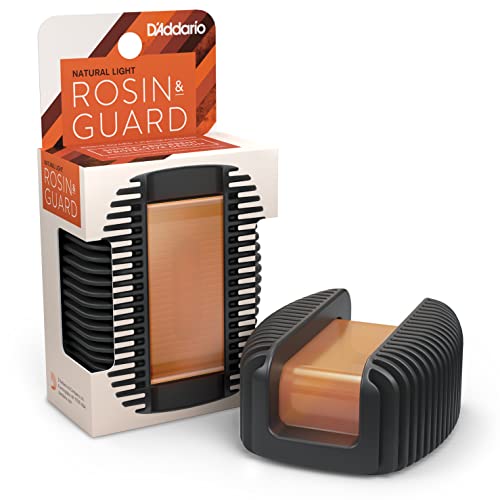
D’Addario Rosin Guard with Light Rosin

D’Addario Kaplan Artcraft Rosin Dark No. 7

Pirastro Goldflex Rosin Gold-Infused Formula

Sherman’s VP-01C Cello Rosin Dark

EastyGold Natural Low-Dust Rosin 3 Pack

Jade L’Opera JADE Rosin Original

Super Sensitive 911 Original Rosin Light
More Details On Our Top Picks
Rosin cakes crack when they live loose in a case pocket, and that’s exactly the problem this D’Addario kit attacks. The guard wraps the cake on every side, so a drop off a music stand or a jostle inside a backpack doesn’t end its life early.
The shock-absorbent shell also doubles as a handle of sorts, giving your fingers a cushioned surface to press against while you draw the bow across. A magnetic backing keeps it parked somewhere reachable, which matters more than it sounds during rehearsal breaks.
Well-Handled Touches
- The full-wrap guard shields the cake from chips and shatters, stretching each block’s usable life considerably.
- A cushioned exterior gives you a comfortable, slip-resistant hold while rosining long bow hair.
- Magnetic backing lets you stick it to a stand or case lid so it never wanders mid-session.
- The guard accepts refills, so the shell outlives multiple cakes instead of joining them in the trash.
Things To Consider
- It ships with light rosin only, so players who prefer a darker, grippier cake will want to refill it accordingly.
- Some owners report the magnet holds best on steel stands rather than wooden surfaces.
At A Glance
Who Should Grab It
Students and commuters who haul their cello between home, school, and lessons will get the most mileage from the built-in protection.
Where A Sibling Pick Shines
Advanced players chasing tone over convenience will likely prefer the Pirastro Goldflex’s stronger grip and lower dust output.
Kaplan Artcraft sits a tier above basic student rosin, and the difference shows up in what it leaves behind: very little. The dark No. 7 formulation aims for a clean application with reduced dust, which translates into fewer wipe-downs of your strings and instrument top after long practice runs.
The cake comes in a traditional round shape wrapped in felt, a small detail that makes handling tidier than bare blocks. D’Addario pours and packages this line at its New York facilities under strict quality controls, which helps explain the consistency players tend to notice batch to batch.
Points In Its Favor
- Low-dust behavior keeps fingerboards and tops noticeably cleaner between cleanings.
- Felt wrapping around the round cake means less mess on your hands and case lining.
- The dark blend delivers a warmer, firmer grip suited to fuller cello tone.
Minor Gripes
- Dark rosin can feel slightly sticky in humid climates, so lighter-handed strokes work better on muggy days.
- Unlike the EastyGold multipack, you’re buying a single cake here.
Made For
Intermediate and advancing cellists who practice daily and care about both response and cleanliness will appreciate this upgrade path.
Consider Something Else When
Total beginners on a tight budget may find the Super Sensitive 911 covers their needs without the premium step up.
Pirastro built its reputation in Germany on string-making, and the Goldflex carries that pedigree into bow accessories. Tiny flecks of gold are worked into the resin, and whatever marketing romance surrounds that, the practical outcome is real: an assertive bite on the string with comparatively little powder left behind.
For cellists pushing big sound through an orchestra section, that combination is hard to argue with. You may find it slightly grabbier than the Kaplan Artcraft above, which cuts both ways depending on how heavy your right hand already is.
Positive Points
- Gold-infused resin produces a strong, immediate grip that supports projecting solo lines.
- Minimal dusting keeps strings responsive longer between wipes.
- Works across violin, viola, and cello, handy for multi-instrument households.
Softer Spots
- The aggressive grip can overwhelm a delicate bow arm, so gentle players sometimes prefer a softer cake.
- Premium pricing puts it above student options like the Sherman’s VP-01C.
Key Specs
The Right Fit
Advanced students and performing cellists who need reliable projection in ensemble settings are the natural audience here.
Swap It Out When
Players wanting smoother, silkier contact under the bow should look at the Jade L’Opera instead.
School orchestras have recommended Sherman’s for years, and there’s a reason teachers keep pointing new cellists at it. The two-inch, 30-gram dark cake arrives mounted in a wooden holder, which gives young hands something solid to hold while they learn proper rosining technique.
Student-grade formulations like this one prioritize forgiveness: enough grip to make a beginner’s bow respond without punishing sloppy pressure with screech. Compared with the D’Addario guard kit, you give up drop protection but gain simplicity and a classic presentation that fits any case tray.
Bright Spots
- The wooden holder protects the cake edges and feels sturdy in smaller hands.
- A generous 30-gram cake lasts a full school year of regular practice for most students.
- Teacher-endorsed reputation makes it an easy default for lesson assignments.
Small Caveats
- Dark student blends tend to dust more than refined formulas, so expect occasional string wiping.
- Wood holders can loosen over time if stored in very dry climates, according to common owner reports.
Feature Snapshot
Right Fit For
First-year cellists, school rental programs, and parents stocking a beginner’s starter kit will find this the path of least resistance.
Not Your Match When
Gigging musicians needing cleaner, more articulate response should step up to the Pirastro Goldflex.
Three cakes, each with its own storage case, changes the math entirely for households with more than one string player. Instead of rationing a single block, you keep one in the case, one at the lesson bag, and one in reserve, which is a quietly brilliant setup for families.
The light yellow cakes use natural resin aimed at low dust and strong adhesion, and the maker claims a single pass across the hair lasts roughly twice as long as ordinary rosin. Treat those figures as directional rather than gospel; individual bows and humidity vary the outcome.
Benefits That Matter
- Natural-resin construction reduces airborne powder around your playing space.
- Individual cases keep each cake protected and separate, ending shared-robin arguments.
- Long-lasting adhesion means fewer trips back to the rosin mid-practice.
- Three-pack format stretches across siblings, rentals, or backup needs affordably.
Trade Offs
- Light rosin suits warmer, softer grip preferences; heavy-grip players may find it subtle.
- Generic-brand consistency can vary slightly from batch to batch, based on widely reported feedback.
Quick Facts
Who It Suits Best
Multi-player families, school sections buying in bulk, and anyone tired of losing loose cakes will get obvious value.
Another Choice May Suit
Solo performers wanting a single refined cake will favor the Kaplan Artcraft No. 7’s consistency.
French rosins occupy a special place among serious string players, and L’Opera follows a centuries-old recipe refined over generations. The jade-green cake delivers what the brand describes as smooth yet firm contact, a balance that flatters legato playing and controlled spiccato alike.
Two packaging details set it apart from everything else on this list. The cake mounts on protective velvet cloth, and it ships in a crush-proof box engineered specifically to prevent the cracking that ruins cheaper rosins in transit.
A Few Strong Suits
- Highly refined resins produce a smooth, even grip that rewards careful bow control.
- Velvet cloth mounting keeps your fingers clean and the cake stable during use.
- Crush-proof shipping box dramatically reduces the odds of arrival damage.
- Suits violin, viola, and cello, adding flexibility for doubling players.
Room For Improvement
- Premium positioning costs meaningfully more than student options such as the Sherman’s VP-01C.
- The smooth character may feel underpowered for players chasing maximum volume.
Core Details
Best Suited To
Advancing conservatory students and performing amateurs who value tonal polish will find the investment sensible.
Reach For A Different Pick When
Budget-first shoppers should start with the Super Sensitive 911 before committing to premium prices.
Some products earn their longevity by simply doing one job reliably, and the 911 has done that for decades. The light cake applies easily and responds quickly under the bow, which makes warm-ups feel effortless compared with harder, slower-grabbing blends.
The formula combines all-natural ingredients processed for consistent performance at an accessible cost, and it works across violin, viola, and cello. Next to the EastyGold three-pack, you trade quantity for a proven name, though the light character lands in similar territory.
What Works In Its Favor
- All-natural ingredient list appeals to players wary of synthetic additives.
- Fast, even application gets bow hair speaking within a few strokes.
- Light formulation suits players who prefer a gentler, less sticky feel.
Honest Caveats
- No protective holder or wrap, so case storage requires some improvisation to prevent chipping.
- Light rosin offers less bite in cold, dry rooms where darker cakes typically perform better.
Who Will Love This
Casual adult returners, hobbyist cellists, and students upgrading from mystery rental-kit rosin will feel right at home.
Look Elsewhere When
Cellists wanting maximum grip for orchestral projection should move to the Pirastro Goldflex instead.
What Matters Most Before Choosing Cello Rosins
Light Versus Dark Formulations
Light rosin generally grips less aggressively and suits warmer climates, smaller instruments, and players with a delicate bow arm. Dark rosin carries more tack, which helps cellists pull bigger tone from thick strings, especially in cool, dry concert halls. Neither is objectively better; match the cake to your room and your right hand.
Dust Output And Instrument Care
Every rosin sheds some powder onto strings, fingerboard, and instrument top, but refined formulas shed far less. Heavy dusters demand weekly cleaning sessions and can dull string response faster. Players practicing daily benefit most from low-dust cakes, since residue buildup compounds quickly over months.
Holder, Wrap, And Storage Design
Bare cakes crack, chip, and mark up case interiors, so mounting matters more than most first-time shoppers expect. Wooden holders, felt wraps, velvet bases, and hard shells each solve the problem differently. Frequent travelers should prioritize enclosed guards or crush-proof packaging above almost every other attribute.
Matching Grade To Skill Level
Student grades emphasize forgiving, predictable response that hides uneven pressure, which is exactly what beginners need. Premium grades reward developed technique with greater dynamic range and articulation clarity. Buying beyond your current stage rarely hurts, but it also won’t transform your sound overnight.
Key Considerations Across These Picks
Where Shoppers Go Wrong
The most common mistake is buying dark, high-grip rosin for a beginner whose unsteady bow then produces scratch and squeak. Another frequent misstep is ignoring storage design, leaving bare cakes to shatter in soft cases within weeks. Check the formulation type before checkout, not after.
What Separates Premium From Basic
Higher-tier rosins invest in refined resins, stricter batching, and protective packaging, all of which show up as lower dust and more consistent grip. That refinement pays off for daily practicers and performers. Occasional players rarely extract enough extra value to justify the jump.
Frequently Asked Questions
How often should cellists apply rosin?
Most players swipe the bow two to four times before each session, adjusting for humidity and how the bow responds. Daily players often touch up lightly every day rather than applying heavily once a week.
Does rosin expire?
Rosin doesn’t spoil, but it can oxidize, crack, or collect grime over many years, dulling its grip. Stored in a holder away from heat, a cake remains serviceable for a very long time.
Can one rosin work for violin and cello?
Several cakes on this list, including the Pirastro Goldflex and Jade L’Opera, are formulated for violin, viola, and cello alike. Dedicated cello blends simply lean toward the heavier grip cello strings demand.
Why does my rosin leave so much dust?
Excess dust usually comes from pressing too hard, over-applying, or using a coarse student-grade blend. Switching to a low-dust formula and lightening your strokes typically resolves most of it.
Is dark rosin better for cello?
Dark rosin’s extra tack generally suits cello’s thicker strings and larger vibration, particularly in dry conditions. In humid climates, some cellists still prefer light rosin to avoid excessive stickiness.
Closing Thoughts
Your best rosin depends on where you play, how hard you dig in, and how much maintenance you tolerate. Students get dependable results from the Sherman’s VP-01C, while the D’Addario Rosin Guard solves the breakage problem outright. Performers have two strong paths in the Pirastro Goldflex and Jade L’Opera. Start with your skill level, let the dust complaints guide the next purchase, and your bow will thank you.
