
Working clay by hand lives or dies on the tools in reach. Score a seam badly and a handle cracks in the kiln; sand a tile edge with the wrong grit and hours of work show every scratch. This roundup covers seven ceramic tools that solve those exact problems, from diamond grit pads for finishing fired surfaces to kid-safe plastic sets for first projects. Studio potters, weekend hobbyists, and craft-table families will all find something here worth keeping on the shelf.
Your Options, Compared

EGOFIX 4pcs Diamond Hand Polishing Pads
Zuoyou 6 Pcs Clay Pottery Sculpting Tools
Xiem Tools Retractable Scoring Tool

HANWER Stainless Steel Circular Clay Hole Cutters (4 Pack)

WALTERT W 40PCS Clay Sculpting Tools Kit

KETAR 4 Pcs Pottery Tool Tips, 6.3 Inch

LINPHCEY Air Dry Clay Tools for Kids Ages 8+
The Details Behind The Selections
Fired edges are unforgiving. These hand pads use bonded diamond abrasive, the same hard mineral that cuts glass and stone, so they bite into glazed ceramic tile, porcelain, and glass where ordinary sandpaper glances off. Each pad measures roughly 3.6 by 2.2 inches, small enough to control around curves and corners.
The set spans four grits, letting you move from aggressive shaping to a near-polished finish in stages. Tile installers touching up cut edges and mosaic artists smoothing glass pieces get the most from this kind of kit.
Useful Highlights
- Four grit levels cover everything from heavy grinding to fine polishing without buying separate pads
- Diamond abrasive resists wear and heat, so the surface keeps cutting through repeated sessions
- Compact block shape fits comfortably in the palm for controlled hand pressure
- Works across ceramic tile, stone, and glass, making it useful beyond one material
Things To Consider
- Rinse pads after wet use and let them dry fully; trapped grit slurry shortens pad life over time
- Hand-only format means large floor areas take patience compared to powered polishers
Key Specs
Who It Suits Best
Tilers, mosaic makers, and anyone refining fired ceramic or glass edges by hand.
Where A Sibling Pick Shines
Soft, unbaked clay calls for the WALTERT W 40-piece kit instead, since shaping wet material needs flexible tools rather than hard abrasive.
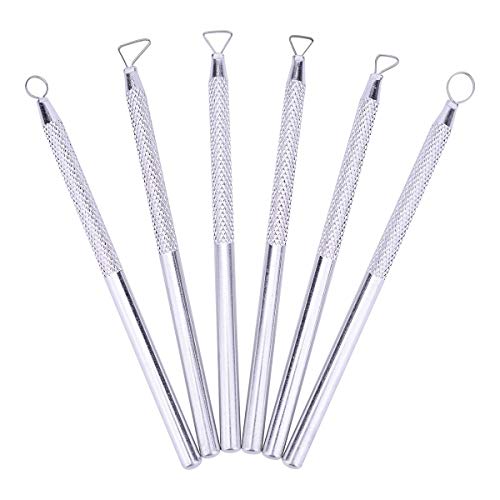
Six double-ended aluminum tools, each about 12.3 centimeters long, cover the classic ribbon-and-loop shapes used for trimming, carving, and hollowing. Aluminum keeps them light, which matters during long detailing sessions when heavier steel tools tire your wrist. Unlike the EGOFIX pads above, these are made for soft or leather-hard clay, not finished surfaces.
Beyond pottery, the same profiles handle polymer clay, soap carving, wax work, and jewelry modeling, so one set earns its drawer space several ways.
Practical Pluses
- Twelve working ends across six tools give you loops, ribs, and blades for most shaping jobs
- Aluminum alloy construction stays light and resists rust in damp studio air
- Compact length offers close control for facial features, textures, and fine trim lines
- Serves polymer clay, soap, wax, and jewelry crafts alongside traditional ceramics
Worth Noting
- Aluminum tips are softer than steel, so owners commonly report they bend under heavy prying pressure
- No storage case is included, so you’ll want a pouch to keep the set together
At A Glance
Made For
Hobbyists and intermediate potters who spend time on detail carving across several craft materials.
Skip It When
Classroom settings with younger students suit the LINPHCEY plastic set better, thanks to its safer, grippier build.
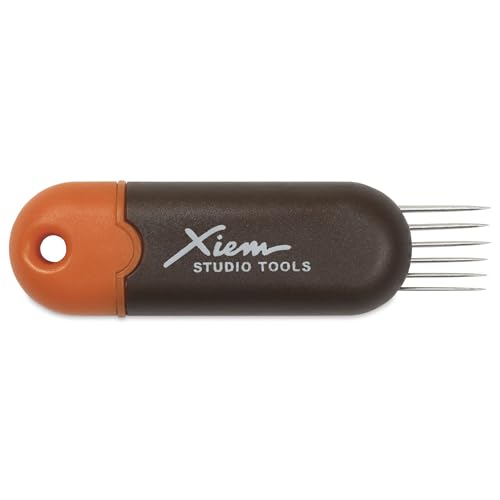
Scoring is how clay joins hold: scratching crosshatch marks into both surfaces before adding slip so seams survive drying and firing. Most studios use bare needles rolling loose in drawers, which is exactly the problem this tool solves. Six sharp tines sit in a pen-style body and retract into a plastic sheath when capped, protecting fingers and apron pockets alike.
The multi-tine head also scores faster than a single needle, cutting even marks with light pressure. That adds up on production work like attaching handles or lugs in batches.
Practical Advantages
- Six tines score deeper, more consistent crosshatch than a single needle in fewer passes
- Retractable sheath removes the most common studio hazard: exposed points in pockets and toolboxes
- Ergonomic body reduces hand fatigue during repetitive attachment work
Trade Offs
- Clay residue can dry inside the retraction mechanism; occasional cleaning keeps it sliding smoothly
- Fixed tine spacing limits ultra-fine single-line scoring some decorative techniques require
Quick Facts
Right Fit For
Wheel throwers and hand builders who attach handles, spouts, and slabs regularly and value safe storage.
Another Choice May Suit
General shaping and trimming tasks are better served by the Zuoyou six-piece set, which trades this tool’s single specialty for versatility.
Teapot spout holes, incense holders, planter drainage, and lace patterns all need clean circles, and freehand knives rarely deliver them. This four-pack pairs different diameter stainless steel tubes with smooth turned wooden handles, so each punch twists through clay leaving a crisp wall instead of a ragged tear. Steel holds its edge far longer than the aluminum in the Zuoyou set, though these do one job rather than many.
They also mark and scrape well, doubling as texture tools when pressed partway into a slab.
Everyday Perks
- Four diameters handle everything from tiny vent holes to generous drainage openings
- Stainless steel barrels resist rust and slice cleanly through moist clay
- Wooden handles stay comfortable and warm in the hand during repeated twisting
- Works for beginners learning punch technique and professionals needing consistent results
Small Caveats
- Clay packs inside the tube after several punches; keep a skewer nearby to clear cores
- Wood handles need drying away from the sink to avoid swelling or splitting over seasons
Who Will Love This
Functional potters making planters, teapots, lanterns, or any piece that needs precise round openings.
Consider Something Else When
Broad surface texturing and contour work fits the KETAR tip set below better, since those tools shape rather than pierce.
Starting a home studio usually means discovering mid-project that you’re missing exactly one tool. This forty-piece kit attacks that problem head-on: eleven double-sided sculpting tools, nine pottery staples, ten ball styluses split between wood and rubber handles, five rubber pens, four plastic styluses, a sponge, and a zip bag to hold it all. Where the Xiem scoring tool does one thing brilliantly, this set aims at coverage.
Ball stylus sizes matter more than people expect; smaller spheres draw crisp lines while larger ones blend and smooth, and having both grades on hand saves improvising with household items.
Reasons It Performs
- Forty pieces span cutting, shaping, scraping, smoothing, and texturing without extra purchases
- Stainless steel heads on the main tools hold edges through regular studio use
- Included sponge handles water smoothing and cleanup in one kit
- Carrier bag keeps everything sorted and portable to classes or workshops
Points To Note
- With forty small items, individual pieces go missing easily; returning them to the bag after each session helps
- Volume-first kits rarely make every piece essential, so expect a few tools to sit unused
Core Details
The Right Fit
New potters building a first toolkit, teachers stocking a shared table, and mixed-media crafters who jump between materials.
Reach For A Different Pick When
Experienced sculptors who know their preferred profiles may prefer the focused KETAR four-tip set over bulk quantity.
At 6.3 inches, these stainless steel tools give your knuckles clearance from the pot wall while trimming on the wheel, something shorter hobby tools can’t manage without smudging the surface. The knurled grip is the standout detail: that crosshatched metal texture locks into slightly clay-damp fingers, so the tool stops twisting mid-stroke. Clean lines and crisp edges come from that stability more than any other factor.
Four tips cover the common profiling shapes for rims, feet, and surface grooves.
What Earns Its Place
- Knurled steel grip maintains control even with wet or slippery hands at the wheel
- Long 6.3-inch shafts keep hands clear of delicate thrown surfaces
- Stainless steel tips produce sharp, defined edges on leather-hard clay
- Four distinct profiles handle rim shaping, foot rings, and groove work
Honest Caveats
- Only four specialized shapes means less flexibility than a broad kit like the WALTERT W forty-piece set
- Metal grips feel cold during long winter sessions in unheated studios, a minor but real comfort note
Feature Snapshot
Whose Shelf It Belongs On
Serious wheel throwers and intermediate-to-advanced students who trim regularly and want dependable precision tools.
Swap It Out When
First-time hobbyists still exploring techniques get better value from the WALTERT W kit’s wide assortment.
Every tool in this list so far assumes adult hands and some caution. The LINPHCEY set flips that: molded plastic bodies sized for smaller grips, no sharp points, and an age rating of eight and up. For kitchen-table craft sessions with air dry or polymer clay, that design choice matters more than edge precision ever would.
The assortment supports sculpting, shaping, and carving basics, enough variety for kids to discover which motions they enjoy before graduating to metal tools like the Zuoyou set later on.
Real Benefits
- Plastic construction removes sharp-point hazards common with metal studio tools
- Easy-grip shapes fit smaller hands and reduce dropping mid-project
- Variety of sculpting and carving ends keeps group activities moving without sharing arguments
- Suitable for adults too, doubling as a low-commitment starter set for cautious beginners
Room For Improvement
- Plastic edges won’t refine details the way steel does, so results stay chunky by design
- Wash tools soon after use; dried clay wedged in textured grips is tedious to pick out
Who Should Grab It
Parents, grandparents, and teachers setting up craft time for children eight and older, especially with air dry clay.
A Better Fit Elsewhere
Adults pursuing serious pottery should step up to the KETAR four-tip set, whose steel tips and knurled grip deliver the precision this playful kit intentionally skips.
What Actually Matters When Choosing Ceramic Tools
Match The Tool To The Clay State
Clay changes personality as it dries, and tools must match. Soft, wet clay wants flexible ribs, sponges, and loop tools; leather-hard clay takes steel trimmers and hole cutters; fired ware demands diamond abrasives like the EGOFIX pads. Buying a scoring needle for greenware finishing wastes money, and vice versa.
Handle Comfort Decides Everything
You’ll hold these tools for stretches at a time, often with damp or tired hands. Knurled metal, smooth wood, and contoured plastic each behave differently, and grip security directly affects line quality. Longer shafts around six inches help at the wheel; shorter tools suit tabletop slab work.
Count Versus Coverage
Big kits look economical until half the contents gather dust. Focused sets cost less and store easier, but leave gaps mid-project. An honest inventory of your current work, trimming-heavy throwers versus casual sculptors, tells you which side of that trade you’re on.
Material Durability And Care
Stainless steel shrugs off water and wipes clean; aluminum bends under force but weighs almost nothing; wood handles need drying to avoid splitting. Whatever you choose, rinsing tools right after sessions and storing them dry extends their working life considerably.
Key Considerations Across These Picks
Wrong Turns To Avoid
The most common mistake is buying for the project you imagine rather than the one on your table. Sharp metal tools around young children is another frequent misstep; age-appropriate plastic exists for good reason. Skipping storage planning also bites people, since loose needles and styluses vanish fast.
When Paying More Pays Off
Higher-tier tools earn their cost through materials and ergonomics: diamond abrasive over sandpaper, knurled steel over smooth plastic, retractable safety mechanisms over exposed points. Casual users won’t feel those differences weekly. Anyone producing work regularly will, and the upgrade typically pays for itself in consistency.
Frequently Asked Questions
Can diamond polishing pads be used dry?
They can, though light water lubrication reduces dust and heat buildup. Wet use generally produces smoother finishes and extends pad life.
What does scoring mean in pottery?
Scoring scratches crosshatch marks into clay surfaces before joining them, usually with slip added. The rough texture gives seams the mechanical grip needed to survive drying and firing.
Are aluminum sculpting tools durable enough for daily use?
For typical detailing and trimming, yes. They bend under heavy lateral force, so avoid prying or levering with them.
How do I clean clay off my tools?
Rinse metal and plastic tools in warm water immediately after use, before clay dries. Wooden handles should be wiped rather than soaked to prevent swelling.
Is a 40-piece kit better than a few quality tools?
Depends entirely on your stage. Beginners benefit from experimenting broadly, while experienced makers usually prefer three or four tools they trust completely.
Wrap Up
Your best starting point depends on where you sit in the craft. Wheel throwers trimming regularly should look hard at the KETAR tips and the Xiem scorer, while finishers working fired tile or glass need the EGOFIX diamond pads. Families and classrooms have an obvious answer in the LINPHCEY set, and anyone building a first studio gets the widest runway from the WALTERT W kit. Start with the job in front of you, add tools as gaps appear, and your collection will grow honest.
