
Fixed-length circulars confuse a lot of knitters: one cable length rarely suits every project, so most crafters end up owning three or four needles before they find their rhythm. That’s exactly the problem a well-chosen set solves. Whether you knit socks on your commute or throw blankets on the couch, the seven options below cover short-circumference magic loop work, mid-size hats, and interchangeable systems that grow with your skills. Each entry notes where it fits best and where a different pick serves you better.
The Shortlist At A Glance
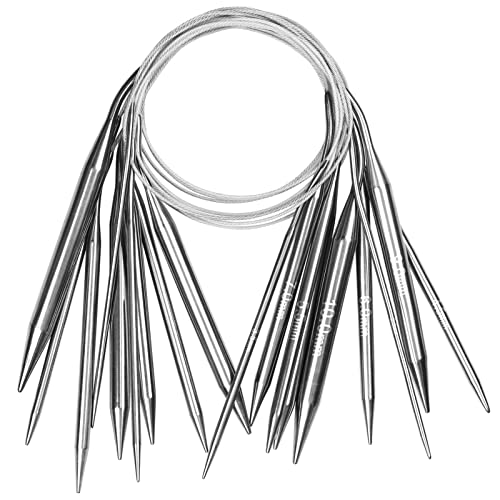
Aeelike Circular Knitting Needles Set 2.5-10 mm, 40 inches
Aeelike Circular Knitting Needles Set 2.5-10 mm, 24 inches
Aeelike Circular Knitting Needles Set 2.5-10 mm, 32 inches

16 Inch Stainless Steel Circular Knitting Needles Set, 1.5-5mm

Clover Takumi Bamboo Circular 16-Inch Needles, Size 6

Aeelike 13 Pair Interchangeable Circular Knitting Needles Set 3-10 mm, Red

Yarniss 18 Pairs Circular Knitting Needles with Swivel Cable, US 0-15
Taking A Closer Look At The Options
The 40-inch cable is the workhorse length of circular knitting. Sweater bodies, lap blankets, and wide shawls all sit comfortably on it without stitches bunching at the joins, which matters once you’re juggling two hundred cast-on stitches.
You get nine fixed pairs spanning 2.5 mm to 10 mm, so worsted through chunky yarn is covered from day one. Compared with the shorter Aeelike versions below, this one trades portability for capacity, and for most living-room knitting that’s the right trade.
Benefits That Matter
- Nine metric sizes handle everything from fingering-weight lace to bulky throws
- The 100 cm span keeps large stitch counts spread out instead of stretched tight
- One purchase replaces a drawer full of single-purpose needles
- Metal tips glide quickly through wool, cotton, and acrylic alike
Things To Consider
- Fixed cables mean you can’t swap lengths; owners commonly store the set flat to protect the cord kinks
- The longest pair won’t fit a small project bag easily
Key Specs
Who It Suits Best
Intermediate knitters working garment-scale projects at home who want a complete fixed-size kit in one go.
Where A Sibling Pick Shines
Knitters who mostly make hats and cowls will get more use from the Aeelike 32-inch version, which handles smaller circumferences more gracefully.
Same nine-size spread as the 40-inch Aeelike above, shrunk onto a 60 cm cable. That shorter loop is built for baby garments, sleeves, cowls, and anything you knit in the passenger seat or on a train platform.
In our view this is the sleeper pick of the three Aeelike fixed sets: it slips into a tote without tangling, yet you still own every common needle diameter. The honest caveat is that big projects feel cramped here, so know your usual project scale before choosing between the siblings.
Advantages To Know
- Fits small bags, making it a natural commute or vacation companion
- Full 2.5-10 mm coverage means no separate purchases for different yarn weights
- Shorter cable reduces stitch strain on small circumferences like sleeves
Worth Noting
- Blankets and adult sweaters will crowd the 60 cm loop badly
- Like all fixed sets, cable length can’t be changed later
Made For
Commuters and travelers who knit small-to-medium pieces on the move and want one compact kit that does it all.
Another Choice May Suit
Anyone whose queue is full of afghans should reach for the Aeelike 40-inch set instead, since its longer cable carries heavy fabric comfortably.
Thirty-two inches sits squarely between its two siblings, and that middle ground is where many knitters actually live. Adult hats, cowls, children’s sweaters, and even small adult garments all behave well on an 80 cm loop.
You still receive the same nine diameters from 2.5 mm to 10 mm, so nothing changes on the yarn side. The trade-off is compromise by design: it’s less roomy than the 40-inch for blankets and less pocketable than the 24-inch, but for a first serious circular set it’s hard to argue against.
Standout Benefits
- The 80 cm length covers the widest variety of everyday project types
- Nine sizes mean gauge swatches and final pieces can share the same needle family
- Still compact enough to travel with, unlike the 40-inch sibling
Trade Offs
- Very large stitch counts may feel snug; some owners report switching to a longer cable for afghans
- No interchangeability if your preferred length shifts over time
At A Glance
Right Fit For
New-to-circular knitters building their first complete kit around hats, cowls, and mid-size garments.
Reach For A Different Pick When
Sock knitters chasing tiny circumferences will be happier with the Coowayze 16-inch stainless steel pack later in this list.
This Coowayze pack flips the formula: eleven fine-gauge sizes from 1.5 mm up to 5 mm, each on a short 16-inch cable. That’s sock territory, and the included magic-loop-friendly cords let you knit tiny tubes without double-pointed needles.
Each pair ships individually wrapped, and the bundle adds eleven yarn needles for weaving in ends, a genuinely thoughtful touch for newcomers. Steel tips are slick, so slippery silk yarns can run away from you; bamboo fans may prefer the Clover below. For fingering and sport weight, though, this is the focused tool.
Features That Help
- Eleven closely spaced sizes nail gauge accuracy on fine yarns
- Individual packaging keeps pairs sorted inside a project bag
- Matching yarn needles finish seams and hide ends without extra shopping
- Short 43 cm total length suits socks, cuffs, and baby knits
Minor Gripes
- Nothing above 5 mm, so worsted and bulky projects need another set entirely
- Steel’s low friction takes practice for knitters used to grippier wood
Quick Facts
Who Will Love This
Beginners tackling their first sock, plus experienced knitters who want a dedicated fine-gauge travel kit.
Where Another Pick Suits Better
Knitters working medium-weight garments should stay with the Aeelike 32-inch set, whose larger diameters and longer cable match those projects better.
A single needle rather than a set, and Clover knows exactly what it’s doing with it. Takumi bamboo has a warm, slightly grippy surface that tames slick yarns like bamboo-viscose and smooth merino, which is why so many experienced knitters keep one in every common size.
The join is the headline: cables attach cleanly, and the connection rotates freely so the cord doesn’t twist while you work. Size markings are laser-imprinted permanently into the tip, so they won’t wear off after months of handling. You’re buying one 16-inch, US 6 pair here, not a collection.
Everyday Advantages
- Bamboo’s gentle grip controls silky and splitty yarns far better than metal
- Swiveling join prevents cord twist during long sessions
- Laser-etched size label stays legible for the life of the needle
Small Caveats
- Only one size and length, so building a full bamboo wardrobe means repeat purchases
- Wood tips can snap under rough treatment; store them padded rather than loose in a bag
Built With In Mind
Knitters who struggle with slippery yarn on metal needles and want a calm, controlled 16-inch hat-and-cowl needle.
Consider Something Else When
If you’d rather buy once and cover every size, the Yarniss 18-pair system below delivers that breadth in aluminum instead.
Here’s where the list pivots from fixed cables to an interchangeable system, meaning the tips unscrew from the cords so you build any length you need. Thirteen aluminum tip pairs run 3 mm to 10 mm, aimed squarely at blankets, winter layers, toys, and seasonal decor.
The red finish looks sharp, and every tip carries its size marking so sorting after a session takes seconds. Interchangeables reward organization: lose a cord cap or cross-thread a joint and you’ll feel it, so a dedicated case earns its place. Compared with the fixed Aeelike trio earlier, this one grows with your project list instead of limiting it.
What Makes Sense
- Swap tips and cords to create custom cable lengths per project
- Thirteen medium-to-large sizes suit home decor and cold-weather knitting
- Size-marked red tips make identification quick between sessions
- Aluminum body stays light across marathon blanket sessions
Points To Note
- Joints need periodic checking; owners commonly re-tighten connections mid-project to avoid loosening
- Skips the finest gauges, so sock yarn isn’t this kit’s job
Feature Snapshot
The Right Fit
Home-decor knitters and gift makers who want one adaptable system for blankets, toys, and winter accessories.
Not Your Match When
Lace knitters needing sub-3 mm tips will find the Yarniss set’s wider range a better match.
The widest coverage on this list, and it isn’t close. Eighteen aluminum tip pairs stretch from 2 mm (US 0) to 10 mm (US 15), paired with four swivel cables that rotate a full 360 degrees so the cord never fights your tension.
Each tip is laser marked, which sounds minor until you’re squinting at two near-identical sizes late at night. The four-cord setup lets you keep a sock, a sweater, and a cowl on needles simultaneously, something none of the fixed sets here allow. The catch is management: eighteen tips plus cords demand a case and a habit of tightening joints before sessions.
Everyday Wins
- US 0 through 15 spans threadlike lace yarn to super-bulky
- 360-degree swivel cables reduce twisting on long rounds
- Four cords support several works-in-progress at once
- Laser-marked sizes eliminate guesswork during swaps
- One system replaces years of piecemeal needle buying
Honest Caveats
- More components mean more to organize and occasionally misplace
- Screw-on joints benefit from a quick tighten before each session, a habit widely reported among interchangeable users
Core Details
Whose Shelf It Belongs On
Dedicated knitters ready for a do-everything system, especially those bouncing between lace shawls and chunky blankets.
Skip It When
Occasional knitters who make one scarf a year will find the simpler Aeelike 32-inch fixed set easier to live with.
What Matters Most Before Choosing Circular Knitting Needles Sets
Cable Length First
Cable length dictates project type more than any other attribute. Sixteen-inch loops serve socks and hats, 24 to 32 inches cover cowls, sleeves, and adult garments, and 40 inches carry blankets and wide shawls. Measure your typical cast-on count against the loop: stitches should slide without stretching. Buying a length that matches your actual queue prevents frustration faster than upgrading materials does.
Fixed Versus Interchangeable
Fixed sets cost less upfront and never loosen mid-row, which beginners appreciate. Interchangeable systems cost more but replace dozens of individual purchases, since thirteen tips times several cords equals dozens of possible combinations. Frequent knitters usually recoup the difference within a year; occasional knitters rarely do.
Material And Feel
Aluminum and stainless steel glide fast and suit production knitters, while bamboo adds friction that calms slippery fibers. Neither is better universally. Match the material to your yarn: slick silk wants bamboo, sticky cotton wants metal.
Size Range Honesty
Check the metric range against the yarn weights you actually buy. A set topping out at 5 mm cannot knit a worsted blanket, and a set starting at 3 mm ignores most sock patterns. Range gaps are the most common regret in this category.
Key Considerations Across These Picks
Wrong Turns To Avoid
The classic error is buying a beautiful case of needles in the wrong length for your projects. The second is ignoring gauge: a 4 mm needle from one brand can differ slightly from another, so always swatch. Third, don’t assume interchangeable joints stay tight forever; a loose tip drops stitches.
Why Top Tier Costs More
Higher-tier kits pay for breadth and hardware: laser etching, swivel joints, extra cords, and finer size steps. That engineering shows up as fewer interruptions per project. Serious knitters knitting weekly justify the spend; seasonal hobbyists get equal joy from a simple fixed set.
Frequently Asked Questions
What cable length should a beginner start with?
Thirty-two inches handles the widest mix of beginner projects, from hats to small garments. Add a 16-inch needle once socks enter the picture.
Are metal or bamboo circular needles better?
Metal moves fast and suits confident knitters and sticky yarns. Bamboo grips slippery fibers and forgives tense hands, so neither wins outright.
Can I knit flat items on circular needles?
Yes, and many knitters prefer it for blankets because the cable holds hundreds of stitches comfortably. Simply turn the work at each row’s end as with straight needles.
Do interchangeable needles come loose while knitting?
They can, particularly with vigorous knitting or heavy projects. A quick check of each joint before you start, plus a mid-session glance, prevents dropped stitches.
How do I stop a circular cable from kinking?
Soak the cord in warm water for a few minutes and lay it straight to dry, which relaxes most coils. Storing needles flat rather than coiled also helps long term.
Closing Thoughts
Every option here solves a slightly different problem, and that’s the point: the right circular knitting needles set depends on what you actually cast on. Match the cable length to your projects, the material to your yarn, and the size range to your ambitions. Start there and you’ll knit happily for years, one row at a time.
