
Anyone who has helped a relative move into a care facility knows the laundry problem. Dozens of residents, similar garments, one industrial washing machine, and suddenly a favorite cardigan belongs to nobody. That’s the exact situation these clothing labels for nursing homes solve. Each option below is an Avery no-iron fabric label: you write the name with a permanent marker, peel off the backing, press it onto the care tag or fabric, and skip the iron entirely. The differences come down to size and how many you get per pack, so this guide walks through which dimensions suit which garments and which counts fit your budget.
The Leading Options At A Glance

Avery No-Iron Fabric Labels 1″ x 3″ 50 Count (40725)

Avery No-Iron Fabric Labels 1″ x 3″ 20 Count (40724)

Avery No-Iron Fabric Labels 1″ x 1-3/4″ 100 Count (40723)

Avery No-Iron Fabric Labels 1″ x 1-3/4″ 40 Count (40722)
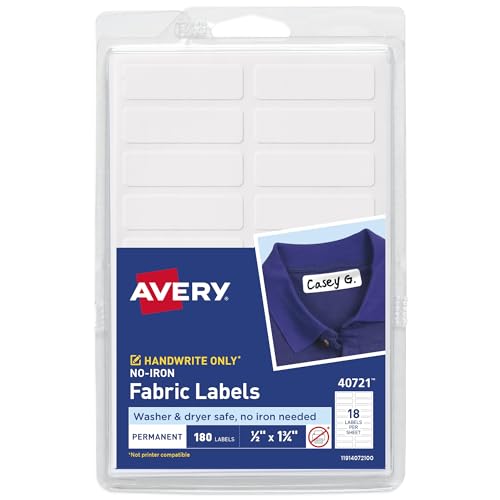
Avery No-Iron Fabric Labels 1/2″ x 1-3/4″ 180 Count (40721)

Avery No-Iron Fabric Labels 1/2″ x 1-3/4″ 54 Count (40720)

Avery No-Iron Fabric Labels Assorted Shapes 45 Count (40700)
A Closer Look At Each Pick
The three-inch width is the whole story here. On bulky knits, bathrobes, and winter coats, a longer strip gives you room to write a first name, last initial, and even a room number in letters big enough for laundry staff to read at arm’s length.
Application takes seconds: write with a permanent marker, peel, and stick directly onto the garment’s care tag or inner seam. There’s no iron involved, which matters when arthritis makes pressing awkward or when you’re labeling fifty pieces in one sitting.
Reasons It Performs
- Extra writing width fits full names plus room numbers without cramped lettering.
- Peel-and-stick application means no ironing board setup during a move-in day.
- The white background keeps marker ink legible against dark fabrics.
- Fifty labels typically cover a seasonal wardrobe swap with spares left over.
Things To Consider
- You’ll need a fine-tip permanent marker, since none is included in the pack.
- Three inches can feel oversized on delicate camisoles and children’s-sized clothing.
Key Specs
Who It Suits Best
Family members outfitting a resident whose outerwear-heavy wardrobe needs bold, unmistakable identification.
A Better Fit Elsewhere
For sock drawers and underwear, the narrower Avery 40721 half-inch labels sit flatter on small seams than these wide strips.
Same generous three-inch format as the 40725 above, just twenty labels instead of fifty. That smaller count turns out to be genuinely useful in one scenario: a short rehabilitation stay where the resident brought only a week’s worth of clothing.
In our view, this is also the sensible way to trial the format before committing. You can test adhesion on a few garments through several wash cycles, then step up to a larger pack with confidence rather than guesswork.
A Favorable Mix
- Wide surface handles complete names in clear, readable handwriting.
- Twenty labels match a short-term stay or a partial wardrobe refresh.
- Waterproof construction holds up through washer and dryer cycles.
Small Caveats
- Twenty labels run out quickly once you start labeling shoes, bags, and toiletry kits too, so heavy-duty household needs point toward bigger packs.
Right Fit For
Shoppers handling a temporary care stay or testing whether no-iron labels survive their family’s laundry routine.
Where A Sibling Pick Shines
Long-term residents with rotating seasonal wardrobes get far more mileage from the 100-count Avery 40723 instead.
This is the workhorse of the lineup. A hundred labels at the middle 1″ x 1-3/4″ size covers shirts, pants, sweaters, pajamas, and a jacket or two for most residents, with enough left over for replacements when a garment gets retired.
The shorter length trades some writing room for versatility. Compared to the 3-inch strips reviewed earlier, these tuck onto standard care tags without folding over edges, which owners commonly report helps them lie flat through dozens of wash cycles.
Strengths Worth Knowing
- Hundred-count supply outlasts a typical season of laundry turnover.
- Middle sizing balances name visibility with a low profile on collars and waistbands.
- Peel-and-stick bond avoids needle-and-thread sewing sessions entirely.
- White face makes dark permanent-marker writing pop for quick sorting.
Points To Note
- Handwriting stays the only option since these are non-printable, so very long names may need abbreviating.
- Adhesion depends on a clean, dry application surface; oily or dusty care tags can weaken the bond over time.
At A Glance
Who Will Love This
Families managing a permanent residency who want one purchase to handle every garment type in the closet.
Consider Something Else When
Residents with mostly small items like hosiery will find the slim Avery 40721 easier to apply discreetly.
Think of this as the 100-count pack trimmed down to essentials. The identical 1″ x 1-3/4″ footprint works on nearly any adult garment tag, but forty labels suit someone easing into the routine rather than relabeling an entire estate’s worth of clothing.
It’s also a practical split-household solution: one pack per sibling sharing responsibility for a parent’s wardrobe keeps each home stocked without anyone hoarding leftovers.
A Strong Showing
- Forty labels handle roughly two dozen everyday garments with room for reapplications.
- Same versatile midsize format as the larger value pack, so results are predictable.
- No-iron bonding protects synthetic blends that high heat can damage.
Honest Caveats
- Larger wardrobes will exhaust forty labels fast, and buying multiple small packs costs more per label than stepping up to the 100-count version.
Made For
First-time caregivers labeling a modest starter wardrobe after a recent admission.
Swap It Out When
Anyone expecting to label more than about thirty garments should reach for the Avery 40723 hundred-pack instead.
The half-inch height changes what these labels can do. Narrow enough to wrap around sock cuffs, bra straps, and elastic waistbands without bunching, they solve the small-garment problem that wider strips simply can’t touch.
One hundred eighty labels is serious volume, too. Facilities and multi-resident households can label linens, towels, and personal belongings alongside clothing, and still have stock remaining months later. The trade-off shows up in writing space: expect first names and initials rather than long entries.
What Pays Off
- Slender profile conforms to socks, underwear, and other tight-fitting items.
- High count supports shared use across several residents or rooms.
- Doubles as markers for towels, sheets, hearing-aid cases, and eyeglass pouches.
- Washer and dryer safe construction endures daily institutional laundry.
Details To Watch
- The narrow strip limits handwriting to short names, so families preferring full legal names may find it tight.
- Applying tiny labels demands steadier fingers, worth considering for anyone with limited dexterity.
Quick Facts
The Right Fit
Households and facilities needing bulk coverage across clothing, linens, and small personal effects alike.
Reach For A Different Pick When
Outerwear and bathrobes call for bolder identification, which the wider Avery 40725 delivers far better.
Here’s the same slim half-inch format as the 180-count pick, scaled back to fifty-four labels. For most residents, that’s precisely enough to mark every pair of socks, all undergarments, and a handful of handkerchiefs without committing to bulk volume.
The honest read is that this size-to-count pairing hits a sweet spot for single-person households. Fifty-four labels cover a week’s rotation of delicates comfortably, and the narrow width disappears against ribbed cuffs where wider labels would pucker.
The Case For It
- Half-inch height lies smooth on sock cuffs and lingerie seams.
- Mid-range count matches a typical personal-item inventory without surplus.
- Waterproof backing shrugs off both washer agitation and dryer heat.
Less Ideal Details
- Writing space accommodates only brief entries, so initials work better than full names here.
- Per-label value trails the 180-count version noticeably for anyone planning large labeling projects.
Feature Card
Who Should Grab It
Individual residents whose main concern is keeping socks and undergarments separated in shared laundry.
Another Choice May Suit
Shared facilities burning through labels weekly will save money with the higher-volume Avery 40721.
Every other entry here commits to one shape. This assortment mixes sizes and outlines in a single 45-label sheet, so one pack handles a sweater tag, a slipper sole, a glasses case, and a walker pouch without buying four separate products.
That flexibility comes at a cost worth naming: because shapes are pre-assorted, you can’t control how many of each size you receive. Residents with unusual inventories may find themselves short on the one shape they need most.
Everyday Perks
- Varied shapes cover clothing, footwear, and hard personal items in one purchase.
- Round and specialty shapes adhere neatly to curved surfaces like slippers.
- Same no-iron, washer-safe formula as every other pick in this guide.
- White faces keep marker writing visible across different materials.
Potential Sticking Points
- Shape distribution is fixed by the manufacturer, so heavy users of one particular size may run dry early.
- Forty-five total labels is modest volume compared to the dedicated packs ranked above.
The Numbers That Matter
Whose Shelf It Belongs On
Residents bringing a mixed bag of belongings, from apparel to adaptive equipment accessories, into care.
Skip It When
Uniform garment labeling is the goal, in which case a single-size pack like the Avery 40723 keeps things simple.
What To Weigh Before Ordering Clothing Labels For Nursing Homes
Size Should Follow The Garment
Match label dimensions to what you’re actually marking. Wide 3-inch strips excel on coats and robes where legibility from a distance matters, while half-inch labels disappear cleanly into sock cuffs and waistbands. Measure a few representative care tags before ordering, since a label that folds over a seam edge tends to lift prematurely.
Count Realistic Volume
Tally the wardrobe honestly. A resident with thirty everyday garments plus seasonal rotations will exhaust a 20-count pack within weeks, whereas a short rehab stay rarely needs more. Buying the right quantity up front usually beats patching together multiple small packs later.
Adhesive Conditions Matter
These labels bond best to clean, dry fabric. Care tags coated in fabric softener residue or dust can undermine the hold, so wipe the surface before applying. Press firmly for several seconds and give the adhesive a day to set before the first wash.
Handwriting Quality Counts
Every option here is non-printable, meaning a fine-point permanent marker does the writing. Practice on paper first: laundry staff sort faster when they can read a name in one glance, and smudged or cramped lettering defeats the entire purpose.
Key Considerations Across These Picks
Traps First Timers Fall Into
The most common misstep is ordering wide labels for small garments. A 3-inch strip on a sock cuff curls and catches in the wash, then peels away entirely. The second trap is skipping the surface prep; applying over lint or softener film is the leading cause of early failures owners describe.
What The Higher Tier Buys
In this category, spending more buys volume and format flexibility rather than better adhesive. Larger packs lower the cost per label substantially, and assorted-shape options extend labeling beyond clothing into personal items. Frequent relabeling needs justify the upgrade; a one-time, ten-garment task doesn’t.
Frequently Asked Questions
Do these labels require an iron to attach?
No. Every label in this guide uses peel-and-stick adhesive designed specifically to skip ironing. Press firmly onto clean fabric and the bond develops on its own.
Will they survive commercial laundry machines?
They’re rated washer and dryer safe and waterproof, which covers standard machine cycles including the hotter settings common in care facilities. Extremely harsh industrial programs may shorten lifespan over many months.
Can I print on them with a printer?
No, these are non-printable labels intended for handwriting with a permanent marker. A fine-tip pen produces the clearest, longest-lasting results.
Where should the label be placed on clothing?
The care tag or an inner seam near the collar or waistband works well. Those spots stay visible to staff while remaining comfortable against skin.
How many labels does one resident typically need?
Most wardrobes need somewhere between 30 and 60 labels depending on garment count. Add extras for socks and undergarments, which benefit from the narrower formats.
Closing Remarks
Choosing between these seven options really comes down to two questions: which garments need marking, and how many. Match the label width to the fabric, size the pack to the wardrobe, and the whole laundry-mixup headache fades quietly into the background. Whichever Avery pack fits your situation, a steady marker and five minutes of prep will do the rest.
