
A computerized sewing machine takes the guesswork out of stitching by letting you select patterns on a screen instead of turning dials. That matters most when you’re mid-project at your kitchen table and need to switch from a straight seam to a zigzag hem without stopping to consult a manual. The seven machines below span beginner-friendly basics to feature-heavy workhorses, so there’s a fit whether you’re hemming school pants or piecing a queen-size quilt.
A Snapshot Of The Selections

Brother XM3700 Sewing Machine with 37 Built-in Stitches
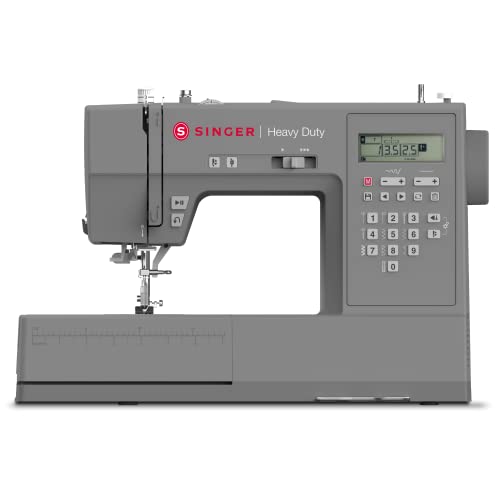
SINGER 6700C Heavy Duty Computerized Machine

Janome JW8100 Computerized Sewing Machine with 100 Stitches

Brother CP100X Computerized Sewing and Quilting Machine

Brother CS7205 Computerized Machine, 150 Stitches, White

Brother CS7205 Computerized Sewing Machine with Wide Table, 150 Built-in Stitches

Brother FB1757X Mechanical Sewing Machine
The Picks, Examined More Closely
Thirty-seven stitches sounds modest next to some rivals here, but that count covers garment construction, decorative topstitching, heirloom work, and light quilting. For someone moving up from a borrowed or hand-me-down machine, it’s plenty of room to grow without paying for stitches you’ll never touch.
The included five feet handle zippers, blind hems, buttons, and buttonholes, which means you can finish a pair of trousers start to end without buying extras. A built-in storage compartment keeps those accessories from wandering off in a drawer.
Everyday Perks
- Five presser feet included, so zipper and buttonhole projects are ready on day one
- Stitch range suits garments, decoration, and heirloom-style work alike
- Onboard storage keeps small parts organized between sessions
Things To Consider
- Owners commonly report needing to keep lint cleared from the bobbin area on light-duty machines like this one
The Right Fit
A confident beginner or returning sewer who wants computerized convenience without an overwhelming menu.
Another Choice May Suit
Sewers tackling thick denim or canvas regularly will find the SINGER 6700C’s heavy-duty build better matched to the job.
Where the Brother XM3700 keeps things simple, the SINGER HD6700C goes deep: 411 stitch applications spanning utility, stretch, and decorative patterns, plus a built-in lettering font for monogramming. That breadth turns one machine into a garment studio, a home-décor helper, and a personalization tool.
Heavy-duty construction is the headline for anyone who sews through denim hems, canvas bags, or layered quilt sandwiches on a regular basis. The bundled accessory kit rounds out the package, though you may find the sheer stitch menu takes a few sessions to navigate comfortably.
Bright Spots
- 411 stitch applications give professional-level flexibility across fabrics
- Lettering font handles basic monogramming without extra equipment
- Heavy-duty frame suits dense materials like denim and canvas
- Accessory kit arrives in the box rather than as add-on purchases
Small Caveats
- The large stitch library can feel overwhelming until you bookmark favorites
- Heavier builds take up more permanent table space than compact models
At A Glance
Who Will Love This
Intermediate sewists who push through tough fabrics weekly and want one machine to do everything.
Skip It When
Total beginners who want a shorter menu will get further faster with the Brother XM3700’s simpler layout.
Janome ships this one close to complete: 100 stitches, seven buttonhole styles, a hard cover, an extension table, and 22 accessories all arrive together. In practice that means fewer follow-up purchases than almost anything else on this list, which matters when budget planning a new hobby setup.
Day-to-day, the automatic needle threader saves eyesight and patience, while the auto-declutch bobbin winder stops winding on its own so bobbins fill evenly. The 7mm stitch width gives decorative patterns real presence on visible seams, something narrower machines can’t match.
Features That Help
- Automatic needle threader removes the fiddliest step of every session
- Auto-declutch bobbin winder prevents overfilled, uneven bobbins
- Hard cover protects the machine during storage or transport to classes
- Extension table supports large quilts and curtain panels
Worth Noting
- With 22 pieces onboard, keeping the accessory tray sorted takes a little discipline
- Some owners report the LCD backlight being dimmer than phone screens they’re used to
The Numbers That Matter
Who It Suits Best
A dedicated home sewer wanting one well-equipped machine for garments, décor, and occasional quilting.
Consider Something Else When
Shoppers prioritizing quilting above all else should compare the Brother CP100X, whose wide table targets that craft directly.
Quilters know the frustration of wrestling a bulky sandwich through a narrow throat, and that’s exactly what the CP100X addresses with its large wide table. Compared to the Janome JW8100, it leans harder into quilting-specific workflow rather than spreading features evenly across every discipline.
The one-step automatic needle threader includes threading diagrams printed right on the machine, a small kindness during late-night project pushes. Adjustable speed control lets you crawl through intricate free-motion curves, then open up for long straight runs of piecing.
Well-Handled Touches
- Wide table gives bulky quilts proper support at the needle
- Quick-Set bobbin drops in without manual threading gymnastics
- Adjustable speed control adapts to both detail work and fast seaming
- On-screen LCD display makes stitch selection quick and visual
Potential Drawbacks
- As a quilting-first design, general garment sewists may find some features underused
- Like most computerized models, it needs periodic dusting around the feed dogs to stay smooth, per common owner routines
Quick Facts
Best Suited To
Craft-room quilters who piece, sandwich, and free-motion regularly and want purpose-built support.
Reach For A Different Pick When
Monogramming fans will get more mileage from the Brother CS7205 bundles, which include a lettering font plus stabilizer supplies.
Eleven sewing feet in the box is the number that separates this CS7205 configuration from pricier siblings. Zipper, walking-equivalent, and decorative feet typically cost extra elsewhere, so the total ownership picture looks friendlier than the sticker suggests.
The flip chart sits on the machine and shows every built-in stitch at a glance, which beats scrolling menus when you’re trying to remember which pattern you liked last week. Eight one-step auto-size buttonholes adapt their length to the button automatically, a genuine time-saver on shirt-making runs.
Where It Delivers
- Eleven included feet cover zippers, hems, and embellishment without add-ons
- Flip chart displays all stitches visually for fast selection
- Eight auto-size buttonhole styles self-adjust to each button
Points To Note
- The white finish shows dust and thread lint more readily than darker casings
Who Should Grab It
Budget-conscious makers who want maximum accessories per dollar and a broad stitch palette.
A Better Fit Elsewhere
Anyone wanting bundled consumables like stabilizer and needles should look at the newer CS7205 bundle instead, covered next.
Same core machine as the previous pick, different starting kit. This version pairs the 150-stitch engine and wide table with water-soluble stabilizer and a five-piece needle set, consumables appliqué and embroidery-leaning sewists burn through constantly. You skip the first supply run entirely.
The 55-character alphanumeric lettering font handles basic monogramming on towels, tote bags, and kids’ backpacks, and the backlit LCD keeps stitch settings legible under typical indoor lighting. For most home setups, that combination covers personalization projects without a separate embroidery unit.
What It Does Well
- Bundled stabilizer and needles mean appliqué projects start immediately
- Lettering font with 55 alphanumeric characters enables simple monograms
- Backlit LCD display keeps settings readable in dim evening workspaces
- Wide table steadies larger fabric panels during seaming
Details To Watch
- Water-soluble stabilizer dissolves quickly, so store it sealed away from humidity
- Monogramming here is functional rather than decorative-scale, per the single-font design
Core Details
Made For
Hobbyists who monogram and appliqué often enough that bundled consumables genuinely save money over time.
Swap It Out When
Sewists who already own stabilizer stock will find the standard CS7205 configuration delivers identical performance with less packaging.
Yes, this one is mechanical, and it earns its place precisely because of that. Dial-based operation means no screens to fail and no menus to learn, which suits mending piles, dorm rooms, and anyone whose sewing happens in short, practical bursts rather than marathon creative sessions.
You still get modern conveniences where they count: LED lighting over the needle area, a free arm for cuffs and sleeves, and a reverse button for locking seams. The 4-step buttonhole takes slightly longer than automatic versions but teaches fundamentals many beginners appreciate.
A Few Highlights
- 17 built-in stitches cover repairs, garments, and simple décor
- Free arm simplifies sleeve, cuff, and pant-leg sewing
- LED work light improves visibility on dark fabrics
- Reverse button locks seams without repositioning fabric
Honest Caveats
- The 4-step buttonhole requires manual lever work compared to the automatic systems on the CS7205 models
- Mechanical tension dials need occasional adjustment between fabric weights, a routine most owners learn within weeks
Whose Shelf It Belongs On
Students, renters, and repair-focused sewists who value simplicity and a small footprint over stitch libraries.
Not Your Match When
Decorative stitchers craving pattern variety will be happier with the Brother CS7205’s 150-stitch lineup.
Choosing Between These Machines: What Actually Matters
Stitch Count Versus Stitch Usefulness
A big number looks impressive, yet most sewists lean on ten to fifteen stitches for ninety percent of projects. Count the categories instead: stretch stitches for knits, a reliable buttonhole, a few decorative options. The Janome JW8100’s 100 stitches hit a sweet spot, offering variety without burying you in near-duplicates.
Workspace And Fabric Handling
The area right of the needle determines how comfortably you sew anything wider than a shirt sleeve. Quilters and curtain-makers benefit enormously from extension tables like those on the CP100X and CS7205 bundles, while garment menders rarely notice the difference.
Included Accessories
Feet, covers, and tables purchased separately add up quickly. Machines like the JW8100, which bundles 22 accessories and a hard cover, effectively lower your true cost of ownership compared to bare-bones listings that require immediate add-on spending.
Mechanical Versus Computerized Operation
Dial machines such as the FB1757X trade programmability for simplicity and fewer electronic failure points. Screen-based models reward you with precise, repeatable stitch settings, which matters most for decorative work and monogramming.
Key Considerations Across These Picks
Traps First Timers Fall Into
The most common mistake is buying far more machine than your current skills use, then feeling intimidated every time you sit down. Another frequent slip is ignoring accessory costs: a cheap listing with zero included feet often ends up costing more once you buy them individually. Match the machine to the projects actually on your list this year.
When Paying More Pays Off
Higher-tier models justify their cost through metal internals, wider stitch width, and bundled hardware. Heavy-duty builds like the SINGER 6700C earn their premium for anyone sewing denim or upholstery regularly. Casual menders gain nothing from that spend, so let your fabric choices drive the decision.
Frequently Asked Questions
Are computerized sewing machines harder for beginners to learn?
Not usually, since screens guide stitch selection more clearly than unlabeled dials. Models like the Brother XM3700 are designed specifically to ease newcomers in.
Can these machines handle denim and canvas?
The heavier-built SINGER 6700C is designed for dense fabrics and multiple layers. Lighter-duty models manage occasional denim but struggle with sustained thick-seam work.
Do I need a separate machine for monogramming?
No, several picks include built-in lettering fonts for basic text work. Elaborate multi-color embroidery designs would require a dedicated embroidery machine beyond this category.
How much maintenance do computerized models require?
Regular lint removal around the bobbin case and occasional oiling per the manual keeps most units running smoothly. Skipping cleaning is the leading cause of skipped stitches reported by owners.
Is a wide table really necessary?
For quilts, curtains, and other bulky projects, yes, because unsupported fabric pulls the seam off-line. Garment sewists working with smaller pieces can live without one.
Closing Remarks
Your best match depends less on specifications and more on honest self-assessment: what you sew today, and what you realistically plan to learn next year. Start there, weigh the bundled accessories against your supply closet, and one of these seven will slot neatly into your crafting life.
