
Whether you’re running a classroom craft station or cutting out party decorations at your kitchen table, the right paper makes every project easier. Cheap stock tears mid-fold, fades in sunlight, and jams printers, while good sheets hold creases sharp and colors stay true. This guide sorts seven solid construction papers by weight, color count, and sheet volume so you can match the pack to your actual workload.
Your Options, Compared

TUXIYA 500 Sheets Colored Cardstock, 50 Colors

TUXIYA 100 Sheets Colored Cardstock, 50 Colors
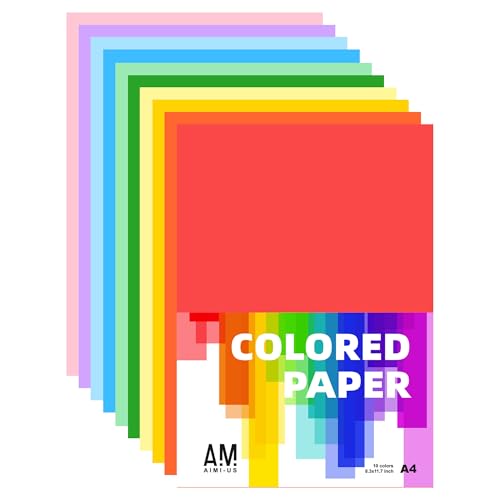
AIMI Assorted Colors Construction Paper A4

Prang (Formerly SunWorks) Construction Paper, Yellow

MAXECHO Colored Cardstock Bulk 300 Assorted Sheets, 180 GSM

TUXIYA 50 Sheets Colored Cardstock, 50 Colors

Livholic 120 Sheets Construction Paper Assorted Colors (120GSM)
Why These Options Stand Out
A 500-sheet box with ten sheets of each of fifty shades is the kind of supply that quietly runs an entire semester of art class. Teachers coordinating group posters, scout leaders prepping badge crafts, and parents hosting birthday-party craft tables all burn through color fast, and this pack means nobody runs dry halfway through a project.
The letter-size 8.5 x 11 format also plays nicely with standard templates and die-cutters, so you’re not trimming everything down before the fun starts.
The Good Stuff
- Fifty distinct shades give you matching options for themed events, seasonal boards, and layered paper art without buying separate packs.
- Ten sheets per color supports whole-classroom distribution, so twenty kids can share a hue instead of fighting over two sheets.
- Cardstock body holds up to scoring, curling, and glue without going limp the way thin construction stock does.
- Letter sizing fits standard frames, envelopes, and cutting machines straight from the stack.
- One bulk purchase covers months of typical home or school crafting volume.
Things To Consider
- A 500-sheet box takes real shelf space, so plan storage before it arrives.
- Exact sheet thickness isn’t specified by the maker, so check the listing if your project demands a specific weight.
Feature Snapshot
Who It Suits Best
Teachers, daycare coordinators, and frequent group-craft hosts who need dependable color variety in serious quantity.
Where Another Pick Suits Better
Occasional crafters should look at the TUXIYA 100-sheet version, which keeps the full palette at a fraction of the storage burden.
Same fifty-color lineup as the bigger TUXIYA box above, scaled down to two sheets per shade. That ratio suits anyone still figuring out which colors they actually reach for, since you get the whole spectrum without committing a closet shelf to leftovers.
In practice, two sheets handles most single-project needs: a card front plus backing, a pair of gift tags, or a small garland strand. The honest trade-off is that one misfold eats half your supply of that color.
Where It Delivers
- Full 50-shade spread lets newcomers experiment across warm, cool, pastel, and dark tones in one purchase.
- Compact 100-sheet footprint stores easily in a desk drawer or small craft caddy.
- Letter dimensions work with common household printers’ trays and standard scrapbook layouts.
Points To Note
- Two sheets per color runs out quickly once a project grows beyond greeting-card scale.
- Manufacturer doesn’t publish a GSM figure, so verify suitability for machine cutting against your cutter’s requirements.
The Right Fit
Hobbyists, students, and gift-card makers who want broad color choice without bulk-box commitment.
Swap It Out When
High-volume users will find far better value in the MAXECHO 300-sheet pack, which adds heavier 180 GSM stock to the mix.
Unlike the cardstock picks ahead of it, this AIMI pack is true sulphite construction paper, meaning longer, stronger fibers woven through a heavyweight sheet. Sulphite stock is what schools have used for decades because it survives the abuse kids dish out: aggressive folding, repeated scoring, and curling around pencils for paper flowers.
Colors are described as fade-resistant with a smooth surface that cuts evenly, and the material is recyclable, which matters for households tossing craft scraps weekly.
Notable Upsides
- Sulphite fibers resist cracking along fold lines, keeping snowflakes and pop-up cards intact after handling.
- Fade-resistant pigment keeps bulletin-board displays looking fresh across weeks of classroom light exposure.
- Recyclable composition simplifies cleanup after big craft sessions.
- Smooth texture accepts crayon, marker, and glue stick cleanly without pilling.
Honest Caveats
- A4 sizing (slightly narrower than US letter) may require trimming for stateside templates and frames.
- Per-color sheet breakdown isn’t published, so exact shade quantities stay unknown until unboxing.
Quick Facts
Made For
Elementary classrooms, after-school programs, and families with young children who fold, crumple, and glue daily.
Another Choice May Suit
Precise color planning favors the TUXIYA 500-sheet set, where ten guaranteed sheets of each of fifty hues removes guesswork entirely.
Every assortment list needs one single-color workhorse, and yellow is the shade classrooms deplete first: suns, stars, bees, bus safety posters, autumn leaves all start here. Prang, formerly sold under the SunWorks name, has long been a default brand in American schools, and this 100-sheet pad reflects why.
The medium-weight groundwood stock cuts and folds evenly, and the bright, consistent tone means a poster assembled across several sessions won’t show patchwork shading.
Real-World Strengths
- One hundred uniform yellow sheets eliminate the mismatched-shade problem when a project spans multiple days.
- Medium groundwood weight balances affordability with enough body for clean folds and cuts.
- Nine-by-twelve sizing gives extra margin over letter-size stock for larger shapes and borders.
Worth Bearing In Mind
- You’re locked to one color, so pairing with an assorted pack like the AIMI sulphite set makes sense for mixed projects.
- Groundwood paper, made from mechanical wood pulp, is softer than cardstock and won’t suit structural builds.
Best Suited To
Teachers restocking a specific high-demand color, and parents supporting school assignments that call for yellow specifically.
Look Elsewhere When
Multi-color variety seekers belong with the Livholic 120-sheet assortment, which spans 24 coordinated shades instead.
GSM stands for grams per square meter, the metric measure of paper density, and 180 GSM puts this MAXECHO pack firmly in true cardstock territory: stiff enough to stand as a box lid, thick enough to feed most inkjet and laser printers without flopping. Thirty colors arrive ten sheets each, spanning burgundy through navy with multiple reds, greens, and yellows for tonal layering.
For Cricut and Silhouette owners, that published weight figure matters enormously, since cutting machines behave very differently at 120 versus 180 GSM.
The Helpful Details
- 180 GSM density produces sturdy invitations, boxes, and 3D paper structures that hold their shape.
- Thirty-color spread includes close tonal neighbors, ideal for ombre wreaths and gradient wall art.
- Printer compatibility turns colored backgrounds into print-at-home cards without wasting ink on full-coverage fills.
- Three hundred sheets sustain a serious holiday-card season or wedding-suite run.
Details To Watch
- Stiff stock can resist tight curls and intricate scissor curves compared with lighter paper.
- Owners commonly report checking printer tray specs first, since some compact home printers cap below this weight.
Core Details
Whose Shelf It Belongs On
Die-cutting enthusiasts, card makers, and DIY decorators who need verified heavy weight for structural work.
Reach For A Different Pick When
Lighter, printer-first projects suit the Livholic 120 GSM pack better, especially for everyday document printing on colored stock.
This is the sampler of the TUXIYA family: one sheet of each of the same fifty colors found in the 500-sheet edition reviewed earlier. Apartment dwellers, dorm residents, and anyone whose craft corner doubles as a dining table will appreciate how little room a 50-sheet pad claims.
It also works well as a color-reference kit, letting you match shades against a project before ordering a larger quantity of the winning hue.
Where It Excels
- All fifty shades in one slim pad deliver maximum palette per square inch of storage.
- Single-sheet-per-color format doubles as a physical swatch book for planning bigger orders.
- Lightweight pack travels easily to workshops, crop nights, and grandparent visits.
Softer Spots
- One sheet per color leaves zero margin for mistakes, misfeeds, or second attempts.
- No weight specification is published, so confirm machine-compatibility separately.
Right Fit For
Minimalist crafters, travelers to craft retreats, and planners sampling colors before a bulk reorder.
Not Your Match When
Anyone producing multi-sheet projects belongs with the TUXIYA 500-sheet box, which supplies ten sheets of every identical shade.
Where the MAXECHO leans structural, this Livholic pad splits the difference: 120 GSM sits comfortably above plain copy paper yet stays light enough for smooth feeding through most inkjet and laser machines. Twenty-four colors arrive five sheets apiece, grouped into eight coordinated families including pinks, purples, teals, aquas, and blues, which makes assembling matched sets nearly automatic.
The slightly taller 11.6-inch length also accommodates A4 documents without trimming, a quiet win for international forms and printable planners.
Useful Highlights
- 120 GSM weight prints reliably while feeling noticeably sturdier than standard office copy stock.
- Color-family grouping simplifies coordinated projects like wedding signage and themed flyers.
- Five sheets per shade covers small print runs of invitations, menus, or event programs.
- A4-friendly dimensions handle overseas paperwork and planner inserts directly.
Small Limitations
- Twenty-four colors is a narrower range than the fifty offered by either TUXIYA pack.
- At this weight it lacks the rigidity for freestanding 3D builds that 180 GSM cardstock provides.
The Numbers That Matter
Who Should Grab It
Home-office users printing colored flyers, resumes on tinted stock, and event hosts handling short-run printed pieces.
Consider Something Else When
Structural crafters wanting maximum stiffness should step up to the MAXECHO 180 GSM bulk pack instead.
What Matters Most Before Choosing Construction Papers
Weight Changes Everything
Paper weight determines what a sheet can survive. Lighter groundwood stock (the traditional school-grade kind, like the Prang pad) folds and cuts easily but won’t hold structure. Midweight 120 GSM stock prints well and feels substantial in hand. True cardstock at 180 GSM stands on its own, which is exactly what box-making and die-cut projects demand.
Match Size To Your Workflow
US letter (8.5 x 11 inches), A4, and 9 x 12 inches all appear in this list. Letter stock drops into American printers and cutters untouched. A4 saves trimming for international documents but needs a trim for many US templates. Buying the wrong size means a scissors session before every single project, and that friction adds up fast.
Color Count Versus Sheet Depth
A fifty-color pack with one sheet per shade offers breadth; a twelve-color pack with thirty sheets offers depth. Classrooms and group events need depth in repeatable shades. Personal card making usually rewards breadth. Decide which failure hurts more: running out of a color or lacking the right one.
Know Your Machine’s Limits
Cutting machines and printers both publish maximum paper weights. Feeding stock heavier than your device tolerates causes jams and worn rollers, so confirm the spec before choosing between the 120 and 180 GSM options here.
Key Considerations Across These Picks
Where Shoppers Go Wrong
The most common slip is ignoring paper weight entirely and judging packs by sheet count alone. A thousand flimsy sheets can’t replace three hundred rigid ones for structural work. The second trap is size confusion: ordering A4 for a US-letter cutter (or vice versa) guarantees wasted time trimming. Always cross-check the listed dimensions against your machine’s tray before checkout.
What The Higher Tier Buys
Pricier packs typically buy verified GSM ratings, richer pigment consistency, and fiber quality that resists cracking along fold lines. For casual coloring pages, those upgrades go unnoticed. For wedding invitations, layered paper art, or anything fed through a cutting machine hundreds of times, the difference between basic and premium stock shows up in every finished edge.
Frequently Asked Questions
What does GSM mean on construction paper?
GSM stands for grams per square meter and measures paper density. Higher numbers mean thicker, stiffer sheets suited to structural crafts.
Can construction paper go through a home printer?
Midweight stock around 120 GSM generally feeds through most inkjet and laser models. Heavier 180 GSM cardstock requires checking your printer’s maximum paper weight first.
Is sulphite construction paper better than regular?
Sulphite uses longer, stronger fibers, so it resists tearing and cracking when folded or curled. That durability explains its popularity in schools.
Why choose single-color packs over assortments?
Single-color pads prevent shade mismatches on large projects built across multiple sessions. They also refill the colors classrooms deplete fastest.
How should leftover colored paper be stored?
Keep sheets flat in a closed drawer or file box away from direct sunlight. Sunlight fades pigments over time, and humidity warps edges.
Closing Thoughts
Seven packs, seven different jobs. The TUXIYA 500-sheet box anchors high-volume classrooms, while its 50-sheet sibling serves tight spaces and color sampling. AIMI brings classic sulphite toughness for kids, Prang covers dedicated yellow demand, and MAXECHO delivers the heft Cricut projects need. Livholic rounds things out for printer-first homes. Match the pack to your workload and every sheet earns its keep.
