
Crooked edges ruin a project faster than almost anything else. Whether you’re trimming scrapbook pages, slicing cardstock for invitations, or cutting photo mats in a home studio, a reliable craft paper cutter saves time and keeps every sheet square. This roundup covers seven trimmers suited to different workloads, from light hobby use to daily office duty.
A Closer Look At The Lineup

Fiskars SureCut Deluxe Craft Paper Trimmer, 12-Inch
Swingline ClassicCut Lite Guillotine Trimmer 12-Inch

Firbon 12 Inch Guillotine Paper Cutter, Pink

Firbon 12 Inch Guillotine Paper Cutter, Gray

Firbon 12 Inch Heavy Duty Paper Trimmer
Fiskars SureCut Deluxe Paper Cutter, 12-Inch

DIAPHANORNIS Heavy Duty Guillotine Paper Slicer
A Closer Look At Each Pick
A rotary trimmer uses a sliding blade inside a carriage instead of an exposed arm, and this one leans on Fiskars’ TripleTrack system, which interlocks the blade with the rail to keep it from wandering. For scrapbook pages where one crooked cut wastes a whole sheet, that rail-to-blade lockup matters more than any other spec.
The bend-resistant rails sit over an aluminum alignment grid, and the slim footprint tucks into a craft drawer without complaint. Compared with the Swingline further down, you trade raw sheet capacity for finer precision on single sheets and photos.
Everyday Perks
- TripleTrack blade-and-rail interlock keeps long cuts straight from edge to edge
- Aluminum grid gives you a durable reference surface that won’t warp over time
- Rails resist bending or bowing, so alignment stays true season after season
- Slim profile stores easily in shallow drawers or on a shelf
Things To Consider
- Rotary blades dull gradually; owners commonly report replacing the cartridge after heavy seasonal use
- Single-sheet focus means stacking thick piles isn’t its strength
Key Specs
Made For
Scrapbookers and card makers who cut single sheets weekly and refuse to tolerate a drifted edge.
Where A Sibling Pick Shines
If your sessions involve ten-sheet stacks of copy paper, the Swingline ClassicCut Lite handles volume more comfortably.
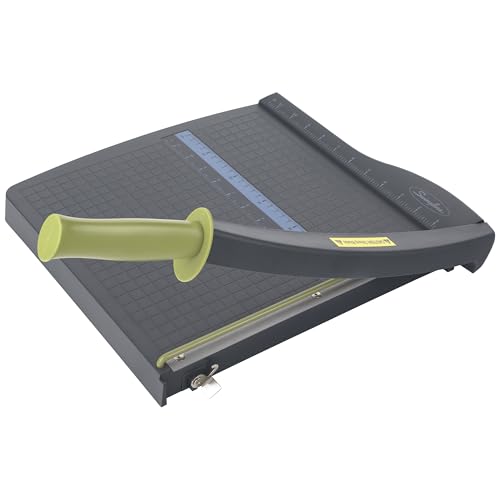
Where the Fiskars glides a blade along a track, this Swingline swings a guillotine arm down through the stack, and that motion makes quick work of up to ten sheets at once. Teachers prepping handouts and office workers trimming memos will appreciate not feeding paper through one page at a time.
The plastic base keeps weight down, so carrying it between a desk and a supply closet takes no effort. An alignment grid printed on the base helps you square each stack before the arm drops, though you may find lighter sheets shift slightly under the blade unless you hold them firm.
Real Benefits
- Ten-sheet capacity clears batch jobs like flyers or worksheets fast
- Lightweight plastic body moves between rooms without strain
- Printed grid supports accurate sizing before each cut
- Simple arm mechanism needs no blade cartridges to replace
Small Caveats
- Exposed guillotine blade deserves respect around curious kids or pets
- Plastic base flexes slightly under maximum loads, so very thick stacks can wander
Who Will Love This
Teachers, parents, and home-office users who batch-trim standard paper several times a week.
Swap It Out When
Photo and scrapbook work calls for the gentler rotary action of the Fiskars SureCut Deluxe trimmer instead.
Firbon’s pink variant pairs a curved-edge stainless steel blade with rubber feet that grip the desktop, a combination aimed squarely at craft tables. The curve on the blade edge slices with a rolling contact point, which tends to leave fewer frayed edges on cardstock than a flat grind.
Dual inch and centimeter scales run along the base alongside an alignment grid, handy when a pattern calls for metric sizing. Against the gray sibling below, nothing mechanical differs; the choice here is purely aesthetic, and the pink finish brightens a shared craft corner nicely.
The Value In It
- Curved 3Cr13 stainless blade produces clean edges without tearing
- Non-slip rubber feet anchor the base during firm pulls
- Both inch and centimeter markings suit international patterns
- Cheerful color makes it easy to spot in a crowded craft room
Points To Note
- Blade care matters; wiping the steel edge dry after use helps prevent corrosion over years
- Guillotine arms on budget models benefit from occasional hinge tightening
Right Fit For
Hobbyists decorating a dedicated craft space who want dependable cutting with some personality.
Another Choice May Suit
Neutral-studio decorators will prefer the identical hardware in the Firbon gray version.
Same cutter, quieter wardrobe. The gray Firbon carries the identical stainless guillotine blade, dual measurement scales, and rubberized footing as the pink model above, which makes it the natural pick for desks shared with coworkers or family members who’d rather their tools blend in.
In practice, the non-slip feet do most of the quiet work here. A stable base is what separates repeatable cuts from frustrating ones, especially when slicing heavier cardstock where the arm meets real resistance. For the money, the feature set covers nearly everything a school project or small business mailing demands.
Well-Handled Touches
- Curved-edge stainless blade glides through stacks up to twelve sheets
- Gripping rubber feet keep the unit planted mid-cut
- Alignment grid plus dual scales reduce measuring errors
- Understated gray finish suits office and classroom settings
Less Ideal Details
- Twelve-sheet rating assumes standard 80 gsm paper; dense cardstock trims best in smaller batches
- Base surface can show scuffs after months of daily handling
Whose Shelf It Belongs On
Students and small-office organizers who want solid cutting performance without paying for extras they won’t use.
Reach For A Different Pick When
Volume beyond a dozen sheets per pass points toward the DIAPHANORNIS slicer later in this list.
This third Firbon entry serves anyone buying a first serious cutter. The mechanics match its siblings: a curved 3Cr13 stainless blade, twelve-inch reach, and capacity for twelve sheets of standard-weight paper in one pass. Nothing here intimidates, and the guillotine action feels natural within the first few cuts.
The twelve-inch span accepts A4, A5, B5, and B6 formats, so school assignments and greeting-card blanks both fit without awkward repositioning. In our view, that format flexibility is the quiet reason this line keeps earning recommendations for starter craft kits.
The Case For It
- Handles A4 through B6 sizes without repositioning tricks
- Twelve-sheet throughput speeds up multi-page school or club jobs
- Curved blade edge leaves smooth, fray-free results on common stocks
- Straightforward operation suits first-time users immediately
Worth Bearing In Mind
- Storage takes a dedicated drawer or shelf slot given the fixed arm length
- Owners commonly report keeping the blade edge away from moisture to preserve sharpness
Who Should Grab It
Newcomers to paper crafts, students outfitting a dorm desk, and parents stocking a homework station.
Not Your Match When
Precision photo trimming rewards the wire-guided accuracy of the Fiskars SureCut Deluxe rotary instead.
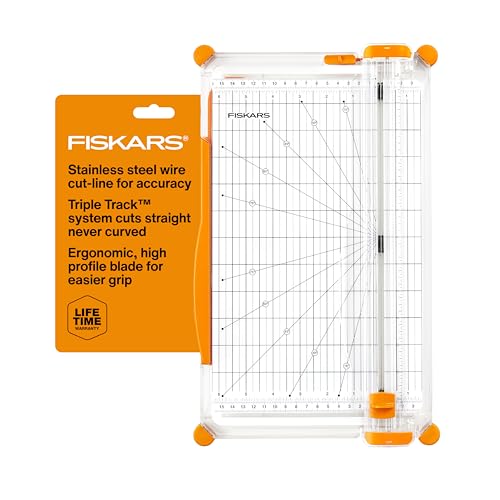
This newer SureCut Deluxe iteration keeps the family’s signature stainless wire that shows exactly where the blade will land, then adds an easy-grip high-profile carriage that’s kinder on hands during long cropping sessions. Anyone who’s spent an evening trimming fifty photos knows wrist fatigue is real.
It’s the lightest and most compact Fiskars here, which makes it the obvious companion for crop nights, workshops, and craft fairs where gear travels. Compared with the original trimmer at number one, you gain portability and ergonomics while keeping the TripleTrack rail system that prevents sideways blade drift.
Everyday Advantages
- Stainless cut-line wire shows the exact trim path before cutting
- High-profile carriage offers a comfortable, secure grip
- Compact, lightweight build slips into tote bags for crops and classes
- TripleTrack interlock guards against angled cuts on long passes
A Few Limitations
- Wire guides deserve gentle handling; bending the guide throws off visible alignment
- Single-pass rotary design isn’t built for thick stacks
Best Suited To
Mobile crafters, workshop instructors, and photo enthusiasts who cut away from home regularly.
Look Elsewhere When
Bulk trimming of ten-plus sheets belongs with the Swingline ClassicCut Lite’s guillotine arm.
Not every cutter needs to apologize for being substantial. This DIAPHANORNIS unit measures roughly 14.8 by 10.75 by 2.2 inches and targets busy environments: print shops, photo studios, and offices that trim cardstock, vinyl sheets, photos, labels, and business cards throughout the day.
Two features separate it from the Firbon models earlier in the list. A safety guard shields fingers near the blade path, and a blade lock secures the arm when the tool sits idle, both meaningful in shared spaces. Twelve-sheet capacity matches the Firbons, but the heavier-duty framing suggests it tolerates daily commercial rhythms better.
Useful Touches
- Safety guard reduces accidental contact with the blade edge
- Blade lock secures the arm during storage and transport
- Cuts cardstock, vinyl, photos, labels, and business cards
- Substantial footprint stays planted during firm commercial use
Trade Offs To Consider
- Larger dimensions demand permanent bench space rather than drawer storage
- Heavier build makes it less convenient to carry between locations
Quick Facts
Who It Suits Best
Print-shop staff, studio owners, and office managers running steady trimming workloads every day.
Consider Something Else When
Occasional home crafters save space and money with the Firbon 12 Inch Heavy Duty Paper Trimmer.
What Matters Most Before Choosing Craft Paper Cutters
Rotary Versus Guillotine Action
A rotary trimmer slides a concealed blade along a rail, excelling at single sheets, photos, and long precise passes. A guillotine drops an exposed arm through a stack, clearing up to a dozen sheets at once. Match the mechanism to your workload: scrapbookers lean rotary, teachers and offices lean guillotine.
Cut Length And Capacity
Twelve inches covers letter-size paper, A4 stock, and 12×12 scrapbook sheets, which explains why every pick here lands on that figure. Capacity claims assume standard 80 gsm paper, so dense cardstock trims more reliably in halves or thirds of the stated maximum.
Stability And Alignment Features
Rubber feet, aluminum grids, and interlocking rail systems all serve one goal: keeping the material still while the blade moves. Wobble at the base translates directly into angled edges, so stability features deserve as much attention as blade marketing.
Safety In Shared Spaces
Exposed guillotine blades demand respect, particularly around children or in classrooms. Guards, blade locks, and enclosed rotary carriages reduce risk considerably, and those features matter more in a household with kids than any precision advantage.
Key Considerations Across These Picks
Where Shoppers Go Wrong
The most frequent mistake is matching capacity to a worst-case day rather than a typical week. Buying a twelve-sheet slicer for two sheets a month wastes desk space, while underbuying forces tedious single-sheet feeding. Measure your actual workload honestly before committing.
What Separates Premium From Basic
Higher-tier models spend their cost on rigidity: metal grids, interlocked rails, hardened steel, and safety hardware. Those upgrades pay off for daily users whose cuts feed client work or paid projects. Weekend hobbyists rarely notice the difference, and a solid basic trimmer serves them well for years.
Frequently Asked Questions
Can a craft paper cutter handle cardstock?
Yes, all seven picks cut cardstock within their rated capacities. Feed dense stock in smaller batches for the cleanest edges.
How often do trimmer blades need replacement?
Rotary cartridges typically last through months of regular hobby use before dulling. Guillotine blades hold an edge longer but eventually need professional sharpening or replacement.
Is a 12-inch cut length enough for scrapbooking?
Standard 12×12 scrapbook pages fit exactly, so twelve inches covers the most common format. Larger poster work requires a bigger machine entirely.
Are guillotine cutters safe around children?
They require supervision because the blade arm is exposed. Models with guards and blade locks, like the DIAPHANORNIS, add meaningful protection in family spaces.
Do these trimmers cut laminated documents?
Thin lamination generally cuts fine on guillotine models. Thick pouches stress the blade and can leave ragged edges, so trim before laminating whenever possible.
Closing Remarks
Your workload should drive this decision more than anything else. Single-sheet precision points to the Fiskars rotary options, batch efficiency points to a guillotine, and shared spaces deserve the safety features on the DIAPHANORNIS. Whichever direction fits, any of these seven will keep your edges straight for years of projects ahead.
