
Hand quilting lives or dies on the thread you pull through the layers. Cotton sashiko cord lets your needle glide without fraying; fine cotton piecing thread disappears into seams; polyester embroidery thread keeps a hoop project bright through years of washing. The right choice depends on what you stitch, how often, and how much wear the finished piece will see. This roundup covers threads for sashiko, hand piecing, applique, machine embroidery, and heavy serger work, so you can match fiber, weight, and color to the project actually sitting on your hoop.
Your Options, Compared

Daruma Sashiko Thread Thinner Weight 40m Col. 214
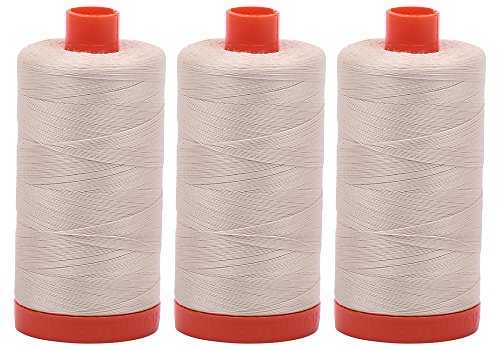
Aurifil Mako 50wt Cotton Thread 3-Pack (Light Beige)

Simthread 6 Polyester White 40wt 1000M Spools

Simthread 40wt Polyester 5500yd White 2-Spool Set
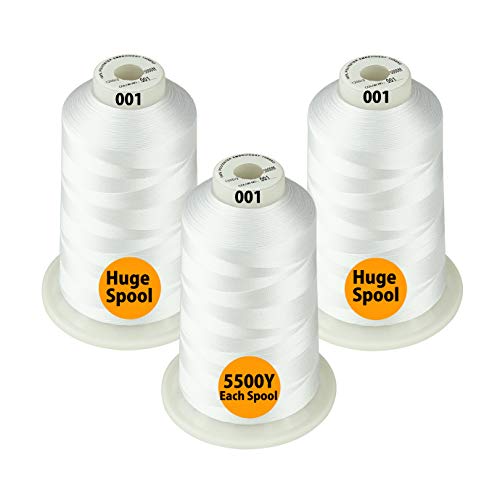
Simthread 5500yd Polyester Embroidery Thread #001 White

Simthread 40S/2 Spun Polyester 5000M Cones, 4-Pack

Simthread 40-Spool Polyester Embroidery Set, 20 White + 20 Black
The Details Behind The Selections
Most sashiko work leans on cotton thread with a slightly matte finish and a twist that holds its shape under repeated needle pulls. The Yokota 40m card in Carrot Orange is a thin, four-strand twisted cotton wound on a flat paper card, which is the format Japanese stitchers have used for generations. You separate strands as needed, so a single card moves from fine hitomezashi (one-strand running stitch) to bolder geometric pattern work without a thread change. The card shape keeps storage tidy in a project bag, and 40 meters (about 43 yards) covers a generous panel before you reach for a replacement.
If you love visible mending, this thread sits in a sweet spot: matte enough to read as natural fiber, bright enough to make the stitches a deliberate design choice. The orange here is a warm carrot tone, not fluorescent, so it reads beautifully on indigo, denim, and natural linen. Owners commonly report the twist stays even through long runs, though the card format does take some getting used to if you are accustomed to round spools.
Benefits That Matter
- Four-strand twist lets you split the thread down for finer running stitch or use it full for bolder geometric work.
- 100% cotton construction gives stitches a soft, matte finish that ages well on natural fabric.
- Carded format keeps the thread tangle-free and easy to store between sessions.
- Color 214 Carrot Orange is a versatile warm hue that pairs cleanly with indigo and natural linens.
Trade Offs
- Paper card format can feel awkward on standard thread holders, so a flat dish or small bowl works better for keeping it tidy mid-stitch.
- 40 meters is modest compared with machine spools, so larger sashiko panels may require a second card.
- Cotton is not the right pick for projects that will see heavy outdoor exposure; expect some fade over years of direct sun.
Whose Shelf It Belongs On
Sashiko stitchers, visible-mending enthusiasts, and crafters adding warm contrast stitching to denim or natural fiber projects.
A Better Fit Elsewhere
For piecing a quilt top where you want the thread to nearly vanish into the seam, the Aurifil Mako 50wt Light Beige 3-Pack is a stronger match.
When hand piecing or hand applique, you want a fine cotton thread with a tight twist and very little lint, because lint builds up on your needle and slows the rhythm of a long session. The Aurifil Mako 50wt is a 100% Egyptian cotton, long-staple thread on a generous 1422-yard spool, and a three-pack of Light Beige (color 2310) means you can let one spool sit on the sewing surface while two more stay on the shelf. The 50wt weight (a thread weight that describes how fine the strand is, with higher numbers meaning thinner) is widely considered the sweet spot for invisible hand seams and needle-turn applique, because the stitches tuck into the fold without adding bulk.
Compared with the Daruma carded sashiko thread above, this is a very different tool. Sashiko is about visible, textural stitches; Aurifil 50wt is about disappearing. You will get a flat, even seam on a quilt back and a near-invisible line on folded applique edges, which is why so many quilters and applique artists reach for it. Light Beige is a soft neutral that works across cream, ecru, and many low-volume printed fabrics, though you may want a true white or a deeper neutral for projects with a very different base palette.
Useful Touches
- 50wt weight lies flat in seams, so hand-pieced backs stay smooth without heavy thread impressions.
- Long-staple Egyptian cotton produces very little lint, meaning fewer interruptions to clean your needle.
- Three 1422-yard spools give long runway for big quilting projects without running out mid-block.
- Light Beige 2310 is a versatile neutral for most ecru, cream, and low-volume fabric collections.
Honest Caveats
- Three spools of the same color can feel like overkill if you only work on small projects, so this is a better match for committed piecers.
- 50wt is intentionally thin, and beginners may find it tangles more easily than a heavier thread on long stitches.
- Light Beige does not cover pure white or very dark backgrounds cleanly, so a multi-color project may need additional spools.
Key Specs
Right Fit For
Quilters and applique artists who want seams to disappear and who work on projects large enough to justify a three-spool reserve.
Look Elsewhere When
For the bold, decorative running stitches of sashiko or visible mending, the Daruma Sashiko Thread Thinner Weight card is a better match.
Most home embroidery machines run on polyester 40wt thread, and white is the single most-used color in a typical studio. The Simthread 6-pack delivers six individually wrapped spools of trilobal polyester (a polyester yarn with a triangular cross-section that gives the thread a higher sheen than standard polyester) in a standard 40 weight, each spool holding 1000 meters (around 1100 yards). That makes this a sensible starter or refill pack: enough thread to handle a long series of white-based designs without reordering, and enough spools to share across a small classroom or a couple of household machines.
For hand quilters who occasionally run a quilt through a machine, this thread also serves well as a machine basting and outline option, though it is genuinely optimized for embroidery work. The trilobal finish gives designs a clean, slightly glossy read, which suits modern and monogrammed pieces. Compared with the Simthread 5500-yard cones further down this list, this is a friendlier format for someone who wants manageable spools rather than king-size cones.
Useful Highlights
- Six spools of the most-used color keep a busy embroidery station stocked for months of white-based designs.
- Trilobal polyester finish adds a slight sheen so designs pop on matte base fabric.
- Each spool is individually wrapped, so any unused spools stay clean in storage.
- Standard 40 weight is the format most home embroidery machines are tuned to, so tension settings usually need no adjustment.
Worth Bearing In Mind
- All white, all the time, means this pack does not help on color-driven projects; you will need additional spools for full color work.
- Polyester embroidery thread is not the same as hand-quilting thread, so it is not the right pick for traditional big-stitch hand work.
Best Suited To
Home embroidery machine owners who run a lot of white, ecru-on-white, or monochrome designs and want a tidy multi-pack on the shelf.
Swap It Out When
For hand piecing where you want cotton to glide through the layers, the Aurifil Mako 50wt Light Beige 3-Pack is a stronger choice.
Small studios and production shops burn through white polyester thread faster than they ever expect, and the Simthread 5500-yard two-spool set is built for exactly that workload. Each of the two cones holds 5000 meters (about 5500 yards) of 40wt trilobal polyester, which is the same weight and fiber family as the six-spool pack above, just in a much larger format. Where the six-spool set suits a hobbyist, this two-spool set suits someone who runs a long-arm or a multi-needle embroidery machine on near-daily rotations.
The two-spool design is genuinely practical: you can keep one cone threaded on the machine while the second sits on a backup holder, so you are never caught mid-design with an empty spool. Owners commonly report the thread runs cleanly through Brother, Babylock, Janome, Singer, Pfaff, Husqvarna, and Bernina machines. The trade-off is cone size: these are tall, wide spools that need a proper thread stand or machine-mounted holder, so they are not a casual living-room pickup.
Notable Gains
- Two 5500-yard cones provide a serious supply for production-level embroidery work.
- Trilobal polyester finish gives a brighter, more reflective read than standard polyester thread.
- Two-spool format lets you rotate between an active cone and a backup without stopping.
- Compatible with the major home embroidery machine brands, so swapping brands is low friction.
Points To Note
- Large cones require a proper thread stand or machine-mounted holder; tabletop use is awkward.
- All-white format means color-rich projects will need additional cones in other shades.
Quick Facts
Who It Suits Best
Small studios and serious hobby embroiderers who run white-based designs at high volume and need a thread stand-ready cone.
Not Your Match When
For occasional home embroidery in a hobby room without a thread stand, the smaller Simthread 6 Polyester White 1000M pack is easier to live with.
Sometimes a single 5500-yard cone is exactly the right answer: one bulk spool you can keep on the machine, with no second cone taking up storage. The Simthread 5500-yard cone in #001 White delivers the same 40wt trilobal polyester as the multi-pack options above, just in a single-cone format. It is a useful format for someone who already has a thread stand, wants to commit to white as their main color, and prefers the simplicity of a single spool in front of them.
Where the two-spool set above suits shops that want a hot spare on the bench, this single cone suits a single-machine setup that just needs one long-running source. The fiber behaves the same way on the machine: clean run, consistent tension, and the slight trilobal sheen that makes white designs read clearly on light and mid-tone base fabric.
Key Advantages
- Single 5500-yard cone means a long stretch of uninterrupted embroidery on one machine.
- Trilobal polyester thread provides a brighter finish than standard polyester.
- Standard 40 weight keeps the thread compatible with most home embroidery machines.
- White #001 is the most universally useful single color in a studio.
Possible Compromises
- One cone, one color: no backup spool, and no color variety for multi-tone designs.
- Requires a thread stand or machine holder, which is an extra purchase for casual users.
Who Should Grab It
Solo embroiderers with a thread stand who mainly stitch white-based designs and want one long-running cone on the machine.
Reach For A Different Pick When
For a two-cone rotation that gives you a hot spare, the Simthread 40wt Polyester 5500yd 2-Spool Set is the stronger pick.
Serger owners know the frustration of watching a cone run dry mid-roll. The Simthread four-cone pack of 40S/2 spun polyester is built to take that problem off the table: four cones, each 5000 meters (about 5500 yards), in white, on a spun polyester format that handles sergers, overlock machines, and cover-stitch work without complaint. The 40S/2 spec (a yarn-size notation where 40S describes the cotton-count fineness and 2 indicates two plies twisted together) makes it heavier and more durable than the 40wt embroidery thread above, which is exactly what you want for seams that take stress.
This thread also works for utility sewing, hemming, and piecing utility quilts, though the heavier hand is a noticeable change from the finer cotton threads suited to traditional hand quilting. Compared with the embroidery-focused Simthread spools above, the cones here are wider and meant for serger thread stands. Four cones is a real stockpile, so this is a smart match for someone running multiple machines, or a household that shares a serger across projects.
Positive Points
- Four 5000-meter cones keep a serger fed for months of consistent production work.
- Spun polyester construction resists stretching, which helps seams hold shape under wear.
- Versatile enough for serging, overlock, hemming, and utility quilting seams.
- Minimal lint output keeps the serger tension discs and cutting blades cleaner over time.
Less-Strong Areas
- Heavier hand is not the right feel for delicate hand-quilting or fine applique work.
- Cone format requires a serger thread stand, which is an extra accessory for casual users.
Feature Snapshot
Who It Suits Best
Serger owners, small studios, and households running overlock or cover-stitch machines that need a deep, dependable white supply.
Where Another Pick Suits Better
For visible hand-quilting stitches on a cotton quilt top, the Daruma Sashiko Thread card is a more appropriate choice than this heavier serger thread.
White and black together cover an enormous share of embroidery and utility sewing: monograms, outlines, fill stitches, and any project where the thread is a structural element rather than a color statement. The Simthread 40-spool set delivers 20 white and 20 black spools of 40wt polyester thread, each spool carrying 500 meters (about 550 yards). The smaller-spool format is friendlier for casual users than the giant 5500-yard cones above, and the two-color split covers most monochrome designs without a second order.
This is also a sensible classroom or workshop format: every student gets a labeled spool, and the count supports multiple workstations. Owners commonly find the thread runs smoothly on Brother, Babylock, Janome, Pfaff, Singer, and Bernina machines without tension adjustments. For hand quilters specifically, the smaller spools are easier to keep on a worktable than full cones, even if the thread itself is more at home on a machine than under a running stitch.
The Case For It
- 40-spool format (20 white, 20 black) covers the two most-used colors in a single purchase.
- Smaller 500-meter spools fit standard home embroidery machine holders without a thread stand.
- 40wt polyester runs cleanly on the major home embroidery machine brands.
- Bulk format is friendly for shared studios, classrooms, and small production runs.
- Black-and-white pairing is the safest baseline for outline, monogram, and structural stitching.
Some Limits To Know
- Only two colors limits expressive multi-tone projects, so color work needs additional spools.
- Polyester 40wt is not the right thread for traditional cotton hand quilting, where cotton is preferred.
- Forty small spools take up noticeable storage space compared with a single large cone.
Who It Suits Best
Multi-machine households, classroom settings, and small studios that want a deep black-and-white supply on hand without managing giant cones.
Consider Something Else When
For cotton-on-cotton hand quilting where you want a soft, traditional feel, the Aurifil Mako 50wt Light Beige 3-Pack is a smarter pick.
How To Choose The Right Hand Quilting Thread
Match Fiber To The Stitch First
Cotton thread behaves like cotton fabric. It breathes, softens with washing, and blends visually into natural-fiber quilts, which is why sashiko and piecing quilters tend to reach for it. Polyester thread is stronger, more colorfast, and more reflective, which suits machine embroidery and seams under stress. If your project is a hand-pieced cotton quilt, cotton thread will feel right; if it is a machine-embroidered logo or a serged seam on a heavy garment, polyester is the more reliable tool.
Think About Thread Weight In Real Terms
Thread weight is not a quality score. A higher number means a thinner thread, and 50wt cotton is roughly half the diameter of a typical 40wt polyester. Thinner thread disappears into seams and lays flatter in applique; thicker thread reads as a deliberate design element. For sashiko, the four-strand twisted format lets you choose between fine and bold without changing fiber. For piecing, 50wt cotton is the most forgiving choice. For embroidery, 40wt polyester is the standard most machines are tuned to.
Color Choice Goes Beyond The Obvious
A perfect color match to the base fabric disappears, which is what you want for hand-pieced seams. A deliberate contrast color turns the thread into a feature, which is the point of sashiko and visible mending. Buying in bulk (the Simthread 40-spool set, or the giant 5500-yard cones) is most efficient when you have committed to one or two go-to colors, while smaller spools make sense for projects that need a wide palette.
Length And Format Match Your Workflow
A 40-meter carded thread is right for sashiko panels. A 1422-yard spool of cotton is right for a serious piecing project. A 5500-yard cone is right for a shop or studio. The format you choose should reflect how much you will actually use the thread, because thread is one of the few supplies that does not age well when exposed to light and dust over years. Owning more than you will realistically use in two years rarely pays off.
Key Considerations Across These Picks
Mistakes Worth Dodging
A surprisingly common slip is choosing machine embroidery thread for hand-quilting projects. Polyester embroidery thread is designed to run through a machine at high speed, and under a hand needle it can feel rough and produce a stiffer seam than you expect. The reverse mistake is just as common: picking a soft, matte hand-quilting cotton for a machine embroidery design, where the lint and the looser twist can disrupt machine tension. Reading the format on the listing (hand-quilting thread, machine embroidery thread, sashiko thread, serger thread) before you order is the single best time-saver.
Where The Extra Money Goes
Premium cotton threads like the Aurifil Mako 50wt cost more because of the fiber source and the long-staple spinning process, which gives you a smoother pull and noticeably less lint. Bulk polyester cones cost more per cone but cost less per yard, so the price gap is largely a question of how much thread you will actually use. For someone running a single home machine on weekend projects, mid-tier multi-packs are usually the most efficient spend; for someone producing consistent work, premium fiber or bulk volume both earn their keep.
