
Picking markers that actually blend well changes the whole feel of a project. The difference between streaks and seamless gradients usually comes down to ink type, tip design, and how forgiving the color range is when you push two tones together. Whether you sketch in a studio corner, journal at the kitchen table, or teach a Saturday class, the right tool keeps color transitions soft instead of stripey. This roundup covers seven well-regarded sets across alcohol-based, water-based, and paint-marker styles, so you can match the marker to your medium, your paper, and the way you actually work.
An Overview Of The Picks

Copic Sketch Alcohol Markers, 6 Color Dual Tip Set
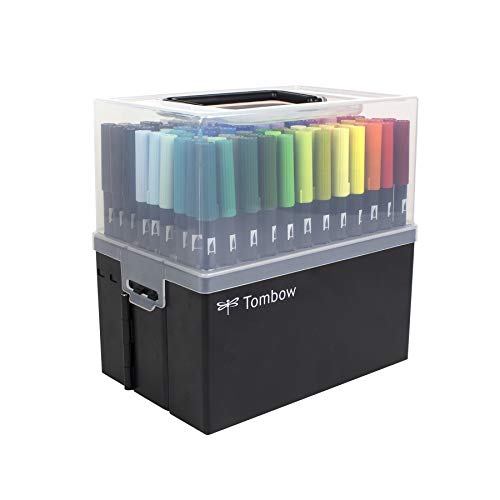
Tombow 56179 Dual Brush Pen Markers, 108-Color Set with Case

Copic Ciao Markers 24pc Basic Set

Copic Ciao Alcohol Markers Doodle Kit Rainbow

Tombow 56237 Dual Brush Pens Very Berry 6-Pack

Ohuhu Alcohol Markers Brush and Fine Tip 48-Color Set

POSCA PC-5M Water-Based Paint Markers 8-Count
More On The Choices That Made The List
The Copic Sketch sits at the top of the alcohol-marker conversation for good reason. Its alcohol-based ink stays transparent on the page, so layering creates depth instead of muddiness, and the dual tips give you a flexible brush nib for organic shapes plus a chisel nib for filling in larger areas. The barrel design even stops the marker from rolling off a tilted desk, a small but appreciated detail during long illustration sessions.
For working illustrators, the refillable ink and replaceable nibs mean the per-use cost drops sharply over time. The Copic Sketch tends to suit studio artists who blend heavily, render portraits, or build out detailed backgrounds where ink control matters more than price.
The Good Stuff
- Alcohol-based ink blends smoothly into gradients without breaking down the paper surface
- Brush and chisel tips in one barrel reduce the need to swap tools mid-piece
- Refillable design with swappable nibs extends the marker life well beyond disposables
- Cap-off time lets you leave the lid off briefly while you grab the next color
Trade Offs
- Per-marker cost runs higher than most sets on this list
- A six-pack in earth tones covers a narrow slice of the spectrum, so most users build out over time
- Brush tips can fray with heavy use and benefit from occasional replacement
Feature Snapshot
Who It Suits Best
Intermediate to professional illustrators working on portraits, fashion, or layered landscapes who treat markers as a long-term studio investment.
Look Elsewhere When
Beginners should reach for the Copic Ciao 24pc Basic Set instead, since the lower per-marker spend makes early experimentation less painful.
Tombow’s Dual Brush Pens take a different path than the alcohol-based picks. The water-based ink reactivates when you go back over it with a wet brush or a colorless blender, which feels more like painting than coloring. Each marker pairs a flexible nylon brush tip with a fine bullet tip, and the included accordion-style case opens flat on a desk and snaps shut for transport.
A full 108-color run covers almost any project a hobbyist can throw at it, from layered botanicals to hand-lettered cards. The case design tends to suit journalers and studio crafters who want every shade in one organized place.
Notable Upsides
- Water-based ink reactivates with water or a colorless blender, so blending windows stay open longer
- 108-color range removes the usual “wish I had that shade” frustration
- Accordion case unfolds flat for a working desk and snaps together for travel
- Resilient nylon brush tip holds its point through extended lettering sessions
Honest Caveats
- Brush tips can splay if pressed too hard on rough paper stocks
- The case adds bulk, so it works best on a permanent desk spot rather than a crowded shelf
Who Will Love This
Planners, journalers, and watercolor-style illustrators who prefer transparent washes and a wide color library in one package.
A Better Fit Elsewhere
Colorists working on marker-specific paper who want fast-drying, streak-free layers should look at the Ohuhu Alcohol Markers Brush and Fine Tip 48-Color Set instead.
The Ciao is Copic’s smaller-barrel sibling to the Sketch, and the 24-piece Basic Set gathers the colors most beginners reach for first. You get vibrant primaries and secondaries, a handful of earth tones for skin and ground, cool grays and black for shading, and soft pastels for highlights. Same alcohol ink, same refillable system, just in a friendlier starter bundle.
For someone stepping into alcohol markers for the first time, the Ciao reduces the upfront cost while keeping the same blending behavior the Sketch is known for. You may find the barrel thinner than expected, which actually helps smaller hands stay relaxed during long sessions.
Where It Delivers
- Curated 24-color set covers the basics without forcing early add-ons
- Refillable body keeps long-term costs in line with the larger Copic Sketch
- Thinner barrel fits teen and smaller adult hands comfortably
Worth Noting
- Smaller ink reservoir means refills come up sooner than on the Sketch
- Limited color range means expanding into a full spectrum takes more purchases
- No chisel tip on the Ciao, so wide fills take a touch longer
Feature Snapshot
Best Suited To
Beginners and hobbyists stepping into the Copic system who want authentic alcohol-marker blending without a full studio outlay.
Swap It Out When
Colorists who already know they want earth tones first should pick up the Copic Sketch Alcohol Markers 6 Color Dual Tip Set to skip the basic primaries.
The Doodle Kit Rainbow shrinks the Copic experience into a five-marker pack plus two extra pens, aimed at kids, teens, and anyone wanting a portable bundle. The alcohol-based ink stays low-odor and the round barrel has a child-safe cap, which is helpful for classroom and family-shared art tables. The flexible brush tip handles soft strokes, while the medium broad nib supports larger fills.
For travel kits or a first taste of the Copic system, this bundle hits a sweet spot. The compact size makes it easy to toss in a backpack, and the included pens add detail variety without buying more markers.
Well-Handled Touches
- Compact 5-marker count plus two extra pens fits neatly in small art kits
- Child-safe cap and low-odor ink make the kit classroom-friendly
- Same replaceable nib system as the full Copic line
Points To Keep In Mind
- Only five colors means serious projects need additional purchases
- Refillable system is great long-term, but younger users may not engage with it yet
Right Fit For
Kids, teens, and casual doodlers who want authentic Copic ink in a starter-friendly bundle.
Reach For A Different Pick When
Adults building out a long-term color library will find the Tombow 56179 Dual Brush Pen 108-Color Set a more useful foundation.
The Very Berry 6-Pack is one of Tombow’s themed samplers, pulling together a tight cluster of berry-toned dual brush pens. The same flexible brush tip and fine bullet tip appear here, both delivering the water-based, blendable ink the line is known for. The narrow palette actually encourages cohesion: berry shades, deep plums, and soft pinks all play nicely together on a greeting card or journal spread.
For card makers and scrapbookers who want a focused kit for a specific mood or season, this kind of themed pack removes the guesswork. The nylon brush holds its point stroke after stroke, and the water-based ink reactivates for smooth blends.
Useful Touches
- Themed berry palette keeps projects visually cohesive without extra color planning
- Flexible brush tip produces everything from hairline details to broader calligraphic strokes
- Water-based ink reopens easily with a damp brush, giving more blending time
Less Ideal Details
- Six colors caps the project scope, so larger illustrations need additional packs
- Themed range is narrower than building your own from the full Tombow library
Perfect Match For
Card makers, journalers, and crafters who like a curated palette for a specific look or season.
Not Your Match When
Illustrators wanting a full rainbow should start with the Tombow 56179 Dual Brush Pen 108-Color Set instead.
Ohuhu’s Honolulu B series delivers alcohol-marker behavior at a much softer price than the legacy brands. The 48-color set pairs a flexible brush tip with a fine tip on each marker, and the alcohol ink lays down transparent layers that blend cleanly on marker paper. The barrels are refillable and the brush tips are replaceable, which extends the working life of the set well beyond typical disposables.
For colorists who want a wide range without committing to premium pricing, the Honolulu B sits in a friendly middle ground. The build quality won’t feel quite as refined as a Copic, but the ink behavior and tip variety make it a strong daily driver.
The Practical Payoff
- 48-color range covers a wide spectrum for the price tier
- Refillable body and replaceable brush tips extend the set’s working life
- Brush and fine tip combination handles both detail and area fills
- Alcohol ink produces smooth, transparent gradients when layered
Where It May Fall Short
- Barrel plastics and tip feel feel lighter than the Copic equivalents
- Replacement tips and refill bottles tend to sell separately, adding to the long-term cost
- Color naming can vary between runs, so rebuilding specific shades takes some care
Feature Snapshot
Built With In Mind
Budget-conscious colorists, students, and adult coloring enthusiasts who want alcohol-marker behavior without the studio-tier price.
Where Another Pick Suits Better
Professional illustrators who want firmer tip feedback and the longest possible cap-off time will find the Copic Sketch Alcohol Markers 6 Color Dual Tip Set a closer match.
POSCA’s PC-5M steps outside the traditional alcohol or water-marker camp. The tip is a reversible medium point, around 1.8 to 2.5 mm, and the water-based pigment lays down opaque color that layers well. The key difference is the surface range: paper, wood, glass, ceramic, fabric, and metal all take the pigment without bleeding the way dye-based markers do.
For crafters and sign painters, the opaque finish opens up projects that the other picks on this list can’t touch. Blending here works differently, since the paint dries quickly and reacts to wet-on-wet application more than to layering. You may find a small learning curve if you’re used to alcohol markers.
Why It Works Well
- Opaque water-based pigment covers dark surfaces without showing the base through
- Works on paper, wood, glass, ceramic, fabric, and metal with appropriate prep
- Reversible medium tip (1.8 to 2.5 mm) handles both outlining and filling
- Layers cleanly once dry, building up solid color without muddying
Practical Considerations
- Blending technique differs from alcohol or watercolor markers and may take practice
- Tip can clog if the marker is left uncapped for long stretches
- Eight colors limits the range compared to traditional marker sets
Whose Shelf It Belongs On
Sign painters, DIY crafters, and mixed-media artists who want opaque color across non-paper surfaces.
Consider Something Else When
Illustrators building smooth gradient portraits on paper should reach for the Copic Ciao 24pc Basic Set, which handles layering more naturally.
What To Weigh Before Choosing Your Blending Markers
Ink Type Drives The Blend
Alcohol-based ink stays transparent, which means layered colors create depth without muddying the paper. Water-based ink reactivates with water or a colorless blender, which keeps blending windows open longer but tends to soak into thin paper. Paint markers like POSCA lay down opaque pigment and behave more like gouache than dye, so blending happens wet-on-wet rather than through layering. The medium you choose shapes the entire workflow.
Tip Shape Affects Control
A flexible brush tip excels at organic blends and variable line weight, while a fine bullet tip is better for details and consistent lines. Chisel tips fill large areas quickly but offer less control on small details. Dual-ended markers combine two of these, which is why most modern sets lean toward that format.
Paper Choice Is Half The Equation
Marker paper with a smooth, coated surface helps alcohol ink blend without bleeding into the fibers. Cheap copy paper tends to pill and bleed, which sabotages even a high-quality marker. For paint markers, sealed or primed surfaces behave more predictably than raw canvas.
Color Range And Refill Logistics
A small set covers a specific mood or project, but most users end up buying additional singles. Refillable systems with swappable nibs soften long-term cost, while disposable markers suit one-off or classroom use where replacement is part of the budget. Matching the system to your commitment level avoids overspending.
Smart Considerations Across These Picks
Common Shopping Slip Ups
Buying a huge set before trying one or two markers leads to cluttered shelves and abandoned projects. Many users also forget that alcohol ink behaves poorly on standard copy paper, so skipping proper marker paper ruins even a great marker. Matching the marker to the paper first tends to deliver better results than chasing a bigger color count.
Where The Extra Money Goes
Premium markers like the Copic line put the cost into refillable bodies, swappable nibs, and tightly controlled ink batches. That construction matters most for illustrators blending dozens of layers or working daily. Casual hobbyists who sketch occasionally often find mid-range alcohol sets like the Ohuhu Honolulu B meet their needs without the studio-tier investment.
Frequently Asked Questions
What type of marker blends the smoothest?
Alcohol-based markers tend to blend the smoothest on coated marker paper, because the transparent ink layers without breaking down the surface. Water-based markers also blend well, but the technique leans on reactivating the ink with water or a colorless blender.
Do I need special paper for blending markers?
Marker paper, Bristol board, or other coated surfaces give the cleanest blends. Standard copy paper tends to pill and bleed, which interrupts smooth color transitions and can ruin a finished piece.
How many colors do I need to start blending well?
A small palette of light, mid, and dark tones in the same hue family can produce smooth gradients. For broader projects, a 24 to 48-color set gives you room to layer without constantly swapping markers.
Can alcohol and water-based markers be used together?
They can be layered in some workflows, but the results depend on which goes down first. Water-based markers usually need to be fully dry before alcohol ink is applied on top to avoid activating the underlayer.
How do I keep marker tips from fraying?
Light pressure and proper paper go a long way. Pressing too hard on rough stock, leaving caps off for long stretches, or dragging the tip sideways accelerates wear and shortens the life of any nib.
