
A fresh journal spread lives or dies by the pens behind it. Skippy, streaky pigment or tips that bleed through thin paper ruin the calm that made you pick up a notebook in the first place. This roundup sorts six marker sets that play nicely with fountain-pen-friendly paper, dotted bullet journals, and the thicker pages of sketch-style logs. The list mixes fluorescent study highlighters with dual-tip acrylic paint pens, so whether you color-code meetings or paint mandalas on a Sunday, there’s a fit below.
The Leading Options At A Glance

Sharpie Clear View Highlighters, 8 Count

Sharpie Tank Highlighters, 36 Count

Pagather Acrylic Paint Markers, 48 Colors

Pagather Acrylic Paint Markers, 72 Colors
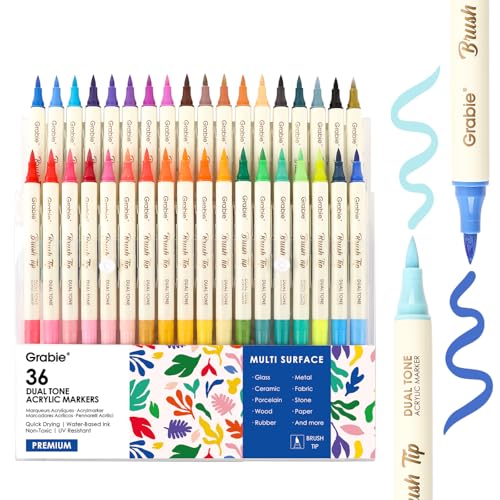
Grabie 72 Color Acrylic Paint Markers, 36 Pens

Grabie 24 Color Acrylic Paint Markers, 12 Pens
The Strengths Of Each Pick
When you underline a sentence in a passage, the worst feeling is a chunky yellow stripe that swallows three lines you meant to keep readable. The Clear View chisel tip on this Sharpie set keeps the pigment narrow and gives you a window through the body so you can see the words below as the ink lands. Eight fluorescent colors cover most color-coding systems for class readings, Bible study, or a planner with a heavy text load.
For bullet-journal fans, this set earns its slot when your spread leans toward tracking and labels rather than full illustrations. The chisel geometry gives you both a fine underline and a thicker block for headers without needing two markers per color.
Practical Advantages
- Transparent barrel lets you watch the page, so you stop before overshooting a line.
- Chisel tip switches between a slim underline and a broad header in a single stroke.
- Resists smearing across common journal papers once it dries for a second.
- Compact pack of 8 fits easily in a pencil cup or planner pouch.
Worth Noting
- Fluorescent pigment shows through thin Bible pages, so a backing sheet helps.
- Eight colors cover basics, but you may want a wider set for themed art logs.
Who It Suits Best
Students and reading-heavy journalers who mostly mark lines rather than paint illustrations.
Consider Something Else When
Grabie 24 Color Acrylic Paint Markers, 12 Pens makes more sense when your spreads lean toward illustration and brush shading.
The Tank version is essentially the same chisel-tip formula as the Clear View set, but the barrel holds a noticeably larger ink reservoir. You get a wider grip, which matters if you spend a couple of hours a day highlighting lecture notes, and the ink supply keeps up with marathon study sessions without drying out mid-chapter.
The pack of 36 is built for shared classroom use, a study group, or a household with multiple journals going at once. Compared to the 8-count above, the trade is bulk in your drawer for far fewer mid-semester replacements.
Practical Pluses
- Larger ink supply extends time between refills or replacements.
- Wider barrel gives a more comfortable grip during long study blocks.
- Bulk packaging is friendly to dorms, offices, and teacher supply closets.
- Same reliable chisel tip as the smaller Sharpie set, so the line quality stays consistent.
Trade Offs
- Bulk size is overkill for a single user who journals lightly.
- Same fluorescent bleed risk on thin paper as other highlighter ink in this class.
Key Specs
Made For
College students, teachers, and shared households that go through highlighters faster than a single 8-pack can keep up.
Not Your Match When
Pagather Acrylic Paint Markers, 48 Colors suits you better if you want brush-tip flexibility rather than additional highlighter barrels.
Dual-tip markers (one fine point, one flexible brush nib) cut your kit in half without cutting your range. The 48-color Pagather set threads that needle well: enough variety to build a real palette, not so many pens that you cannot close your journal pouch.
Acrylic paint markers lay down opaque pigment on dark paper and behave predictably on the coated stock that dotted bullet journals often use. The fine end handles labels and small icons while the brush side lays down petals, ribbons, and gradients for headers.
Useful Highlights
- Two tips per pen save drawer space and let one color serve two jobs.
- Opaque acrylic shows up on both white and black journal pages.
- 48 colors is generous without being unwieldy for most home setups.
- Brush nib flexes for organic strokes on botanical and floral spreads.
Room For Improvement
- Acrylic paint takes longer to dry than standard ink, so smudge risk is real on slick paper.
- The fine tip is solid, but very thin lettering still wants a separate micron-style pen.
- 48 pens demand a storage solution; tossing them loose leads to lost caps fast.
Best Suited To
Hobby journalers and art-journal beginners who want one kit to cover both line work and color fills.
Skip It When
Sharpie Clear View Highlighters, 8 Count is the right call for a text-first reading log that does not need opaque color.
The 72-color Pagather set is the larger sibling of the 48-count above. Same dual-tip format, broader spectrum. The extra 24 shades mostly land in the pastels, metallics, and skin tones that an art journaler reaches for once the basics feel flat.
You will not notice the extra colors on a weekly spread, but for an annual art-journaling project or shared craft sessions, the wider range means fewer workarounds. The same brush-nib control carries over, and pigment behaves consistently across the line.
Points In Its Favor
- Expanded palette covers skin tones, pastels, and metallics for portrait or landscape spreads.
- Dual-tip design holds across the full set, so you do not lose quality in the added colors.
- Same opaque acrylic performance on dark and textured papers.
Small Caveats
- Storage is a real concern at 72 pens; a rolling case or rack helps.
- Many added colors overlap with mixes you can already blend from the 48-count.
Feature Snapshot
Perfect Match For
Dedicated art-journalers running a long project that needs true color variety beyond the basics.
Look Elsewhere When
Grabie 24 Color Acrylic Paint Markers, 12 Pens fits better when a slimmer kit that travels well matters more than range.
Where Pagather’s 72-count gives you 72 individual pens, Grabie gets to 72 colors with 36 dual-tip barrels, two shades per pen. That is a different kind of range: more variety in a smaller footprint, and a more interesting challenge when you have to choose between the two ends of one pen.
For a journaler who treats art-making as part of a routine rather than a marathon, the 36-pen count is easier to keep on a desk or pack into a tote. Brush tips on this set behave similarly to other acrylic paint pens, so shading gradients is straightforward once you get a feel for the pressure.
What It Does Well
- 72 colors in 36 pens keeps the kit compact without sacrificing variety.
- Dual-tip format pairs complementary shades on one barrel for quick matching.
- Acrylic ink handles both paper and harder surfaces like stone or wood if you branch out.
Where It May Fall Short
- Having two colors per pen means you sometimes want the shade that is on the other end.
- Brush tip flexibility is solid but not as soft as a dedicated watercolor brush pen.
Who Should Grab It
Art-journalers who want maximum color variety in a kit that still fits on a small desk or in a carry bag.
Another Choice May Suit
Pagather Acrylic Paint Markers, 48 Colors works when you prefer a single color per pen for quick color grabbing.
Twelve pens, 24 colors, the same dual-tip formula as the larger Grabie set. This is the kit to keep in a backpack or glove box, the one that travels to a coffee shop without making you choose between the journal and the laptop for space.
For journaling on the move or a starter set before committing to the bigger Grabie set, this version is approachable. Acrylic paint still means longer dry times and opaque coverage, so the same paper rules apply.
Good Reasons To Consider
- Compact 12-pen count fits in a pencil case or travel pouch.
- Two tips per barrel still cover detail work and brush fills.
- Lower commitment than the larger sets, so you can test the format first.
Honest Caveats
- Smaller color range limits complex illustrations, so detailed art spreads may feel constrained.
- You may outgrow it within a few months if your journaling habit expands.
Quick Facts
Whose Shelf It Belongs On
New journalers, travelers, and anyone building a starter art-journal kit before scaling up.
Where A Sibling Pick Shines
Sharpie Tank Highlighters, 36 Count fits better for high-volume study notes where opaque paint is overkill.
What Matters When Picking Markers For Journaling
Tip Type Drives The Feel
Chisel-tip highlighters lay down flat color fast and switch between a fine underline and a thick header in one stroke. Brush tips flex with pressure, which suits organic shapes and gradients. Fine tips handle lettering and small icons. Decide what you draw most, then match the tip, not the brand.
Pigment Type Changes Your Paper Rules
Water-based highlighters are gentle on thin paper and dry fast, but they look washed out on darker spreads. Acrylic paint markers go opaque on any color, yet need longer drying time and can smear if you flip the page too soon. The best markers for journaling are the ones that match the paper you actually use, not the paper you wish you used.
Color Count Has A Real Ceiling
Past the 48-color mark, you start hitting overlaps and shades you barely reach for. A 24-color kit covers most planning needs, while 48-72 colors give art journalers room to blend. More colors always means more storage, so the honest tradeoff is range versus how much desk space you can give up.
Drying Time And Bleed-Through
Quick-dry ink matters when you are journaling on the go and flipping pages right after a line. Heavier pigment, including most acrylic paint pens, will bleed through standard 70-80 gsm paper. A test page in the back of your journal saves a ruined spread later.
Key Tradeoffs To Weigh Before You Buy
Pitfalls Shoppers Hit
Most marker regret comes from buying for the wrong journal. Highlighter ink that bleeds through a Bible or thin traveler’s notebook ruins more pages than the wrong color ever did. Test your top two or three picks on a back page before committing to a full spread. Also, check the cap style, because lost caps dry out a marker faster than anything else in this category.
What The Higher Tier Buys
Stepping up to a 72-color set or a bulk highlighter pack is mostly about range and ink volume, not a dramatic change in line quality. The upgrade is worth it when you keep running out of a specific shade mid-project, or you share the kit with a study group. For solo journaling, a curated 24 or 36 color kit is the more honest buy.
