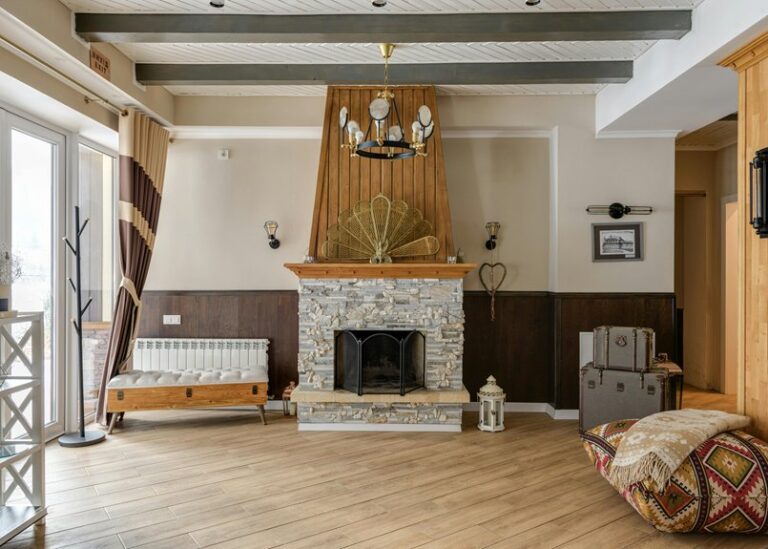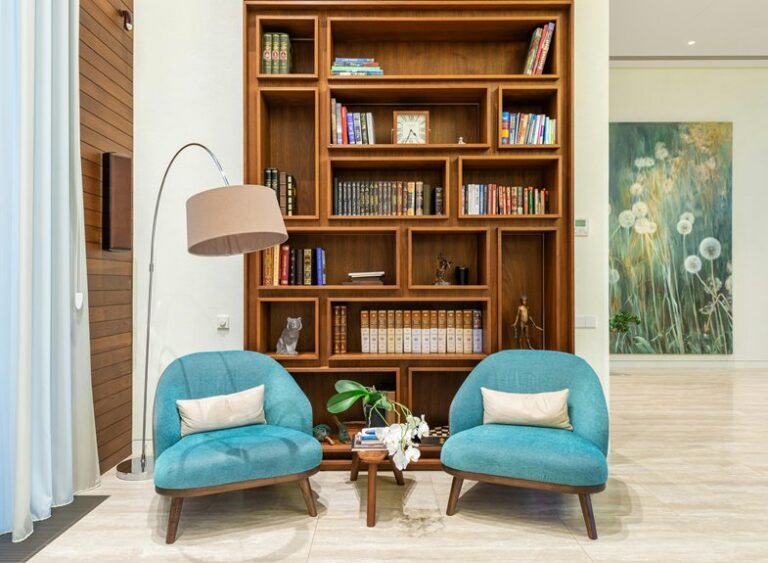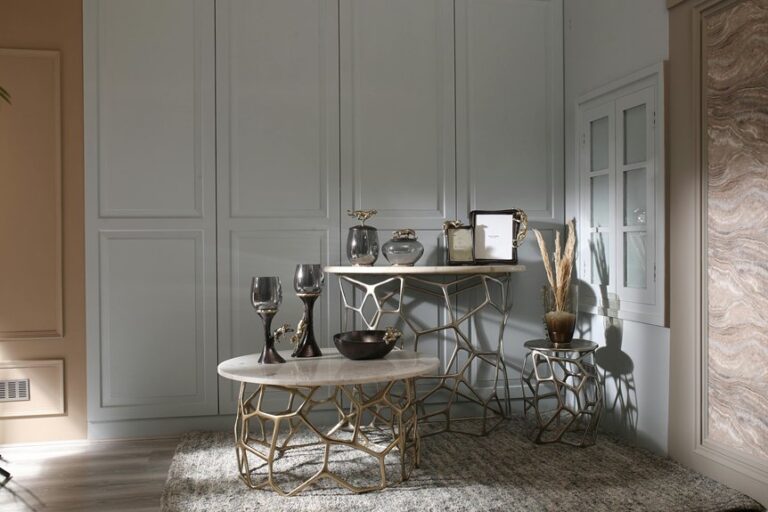
Anchor a room by picking a natural focal point like a cozy coffee corner. Use rugs, furniture placement, and layered lighting to define separate zones while keeping flow intact. A low shelf or open divider softens transitions without blocking sightlines. A bold paint wash or accent wall sharpens boundaries and ties the design together.
Choose the Main Zone First
Before you divide a room, choose the zone that should lead the conversation. You’ll create calm faster when you set priority sequencing with intention: decide whether dining, lounging, or working deserves the spotlight, then let every other choice orbit it.
Visualize the functional focal point as the room’s anchor, the place where eyes land and daily rituals begin. Should you host often, your table perhaps claim center stage; should you unwind there, the sofa could hold that role.
Once you name the lead, you’ll shape the rest with confidence, and your space will feel unified, welcoming, and unmistakably yours. That clarity helps you belong in your own home, because each area starts to support your life instead of competing for attention.
Use Rugs to Define Room Zones
Underfoot, a well-placed rug can quietly declare where one zone ends and another begins. You can use area rugs to give your room a grounded, welcoming rhythm, like islands in a shared sea. Choose rug textures that echo the mood you want: plush for lounging, flatweave for crisp energy. Let color, scale, and pattern whisper identity without shouting.
| Zone | Rug Choice | Effect |
|---|---|---|
| Lounge | Large plush | Cozy anchor |
| Dining | Flatweave | Clean boundary |
| Reading | Textured wool | Gentle focus |
| Entry | Durable weave | Clear welcome |
| Open plan | Layered rugs | Soft separation |
When you align each rug with your layout, you help every corner feel intentional, connected, and undeniably yours.
Separate Areas With Furniture
You can let furniture shape the room like a quiet архитector, with a sofa’s back or a pair of chairs sketching clear boundaries between lounge, dining, and work zones.
A sectional can wrap a space into its own cozy nook, giving each area purpose without building a wall.
Open shelving screens add both display and definition, filtering light while keeping the layout airy and connected.
Furniture as Dividers
With a few well-placed pieces, furniture can quietly carve a room into distinct zones without building a wall. You can anchor a reading nook with an open bookcase, tuck dining chairs behind a table, or let planter dividers soften the edge between work and rest. These choices help you feel the room’s rhythm and claim your place in it. Screen accents add a light, stylish pause, while low storage keeps sightlines open and the space breathing.
- Use open shelving to frame, not fence.
- Let a console mark a passage.
- Choose pieces with shared finishes for harmony.
- Leave enough flow so every zone still feels connected.
Sectional Sofa Zones
A sectional sofa can do more than seat a crowd—it can quietly sketch the room’s boundaries. You can angle it to cradle a lounge, or float it to mark a shift without closing the space in.
That’s one of the Sectional arrangement benefits: you shape flow while keeping everyone connected. With the right placement, your room feels gathered, not crowded, and guests naturally face one another in a conversation friendly seating layout.
Let the chaise guide movement toward a window, a rug, or a reading lamp, while the longer side holds the social edge. Add a slim table behind the back for polish, and you’ll create a warm, welcoming zone that feels like it already knows your name.
Open Shelving Screens
Open shelving can split a room without shutting it down, giving each zone its own rhythm while light still travels through. You turn open shelving into a display partition that feels welcoming, not barricaded. Style it with books, bowls, baskets, and a few cherished objects so both sides sense your story. Keep the tallest pieces near the center to guide movement, then leave airy gaps for sightlines and breath.
- It frames a dining nook without stealing daylight.
- It lets your home area feel connected, not crowded.
- It creates storage that also speaks personality.
- It makes shared spaces feel like they belong together.
Choose warm woods or painted finishes, and you’ll shape a room that feels composed, social, and unmistakably yours.
Layer Lighting for Each Zone
You can give each zone its own glow, bathing the room in a soft ambient wash that makes the whole space feel intentional and calm.
Then place task lights where you need focus—on a reading chair, above a desk, or beside a prep surface—so every area works as beautifully as it looks.
As you layer light this way, your zones feel distinct, sculpted, and effortless.
Ambient Zone Lighting
- Use dimmable bulbs to shift energy over time.
- Pair warm tones with relaxed seating for comfort.
- Highlight walkways with a soft, shared glow.
- Echo finishes across zones so the room feels united.
When you glow the space with intention, you don’t just light rooms; you invite belonging.
Task Light Placement
Once the room has a shared glow, task lighting sharpens each zone’s purpose. You can place desk lamps beside a reading chair or fold-down desk to draw the eye and invite focus.
In the kitchen edge, under cabinet lighting washes the countertop with a clean, practical sheen, making prep feel effortless and connected. Aim each beam where your hands work, not where your wall art rests.
A slim floor lamp can anchor a lounge corner, while a pendant over the dining table frames shared meals with warmth. Whenever you layer light this way, each zone feels distinct yet part of the same story. You’re not just lighting surfaces; you’re creating a home where everyone finds their place.
Use Shelving as a Soft Divider
A well-placed bookshelf can do more than store your favorite objects—it can quietly define a room without shutting it down.
You can use open shelving as floating storage, letting light slip through while your favorite books, ceramics, and woven baskets create display zoning with purpose. This soft divider helps you feel at home in two spaces at once.
- Place taller shelves where you want privacy.
- Leave airy gaps so sightlines stay open.
- Mix everyday items with meaningful keepsakes.
- Anchor the base with a rug or bench.
When you choose slim frames and curated objects, you guide movement naturally. The room keeps breathing, and you belong in every corner, whether you’re reading, working, or welcoming someone in.
Add Color to Mark Each Zone
Color can quietly do the work of design, giving each zone its own mood without adding walls. You can paint one accent wall behind the sofa, then echo a softer hue at the dining nook to signal a new rhythm. With color blocking, you guide the eye from one gathering spot to the next, creating a home that feels welcoming and intentional.
Try grounding a reading corner with deep olive, while keeping the workspace light and airy in warm ivory. Even small shifts—a painted trim line, a bold backdrop, a repeat of one shared shade—help each area belong. Once your palette flows with purpose, the room feels edited, connected, and ready for every part of your life.
Adapt Zoning Ideas to Your Room Size
Upon tailoring zoning to the scale of your room, the right divider feels almost invisible in a small space and satisfyingly structural in a larger one. In small space zoning, choose light-touch cues: a rug, a slim curtain, or open shelves that keep air and connection flowing. For a large room layout, let bolder elements claim territory without crowding the room’s spirit.
- Use glass partitions to preserve daylight.
- Float furniture to sketch pathways.
- Reach for slatted wood whenever you want warmth and rhythm.
- Add ceiling tracks or screens to shift mood as your day changes.
Whenever you size each gesture to the room, you create a home that feels shared, intentional, and warmly yours, where every zone welcomes you back.