
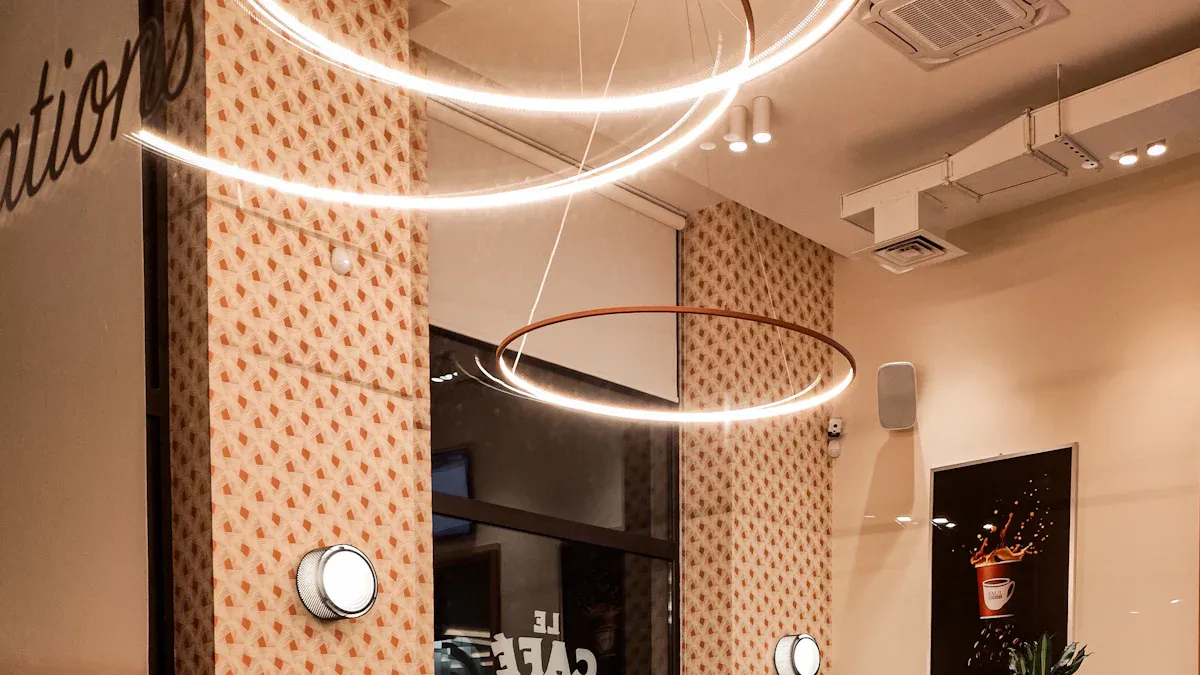
Lighting changes mood and plays a crucial role in shaping the atmosphere of your interior spaces. Different types of lighting can evoke a wide range of emotional responses. For instance, warm lighting can create a cozy and inviting environment, while cool lighting may promote focus and clarity.
Consider how various hues affect your feelings. A recent study shows that warm colors like yellow and purple often lead to positive emotions, while high saturation colors like red can trigger negative moods. By understanding how lighting changes mood, you can make more informed design choices that enhance your living space.
Key Takeaways
Natural light enhances mood and reduces stress. It supports your sleep cycle and overall health.
Different color temperatures influence feelings. Use cooler lights for productivity and warmer hues for relaxation.
Layer your lighting with ambient, task, and accent options. This allows you to adjust the mood based on your needs.
Choose the right fixtures to match your space. Consider functionality, color temperature, and style for the best results.
Smart lighting systems can improve your environment. They allow you to adjust brightness and color throughout the day.
Lighting Changes Mood
Emotional Effects of Warm and Cool Light
Have you ever noticed how different types of light can change how you feel? Warm light, like the glow of a sunset, often makes you feel cozy and relaxed. Research shows that warm lighting, specifically in the range of 1,800K to 3,000K, lowers cortisol levels. Lower cortisol means less stress and more relaxation. This is why you might feel more at ease in a dimly lit living room or a softly lit restaurant.
On the other hand, cool light, which is brighter and bluer, can boost your alertness. It’s perfect for workspaces where you need to focus. A study by the Lighting Research Center found that workers exposed to higher color temperatures reported feeling more alert and less fatigued in the evening. So, if you want to stay sharp while studying or working, consider using cooler lighting.
The Role of Color Temperature
Color temperature plays a significant role in how lighting affects mood. It defines the hue of light emitted from a source. Warmer tones create inviting environments, while cooler tones enhance focus. For example, warm lighting around 2700K to 3000K is ideal for spaces where you want to relax, like bedrooms or living rooms. This color temperature encourages calmness, lowers heart rates, and reduces stress, making it a great choice for evening use.
In contrast, cooler lighting, often above 4000K, can make spaces feel more energetic. This is especially useful in commercial settings where productivity is key. The interplay between color and lighting is essential in design. It influences how colors are perceived and can evoke specific emotional responses.
Understanding how lighting changes mood can help you create the perfect atmosphere in your home or workspace. By choosing the right color temperature, you can transform any space into a haven of relaxation or a hub of productivity.
Neurological Insights
The science behind how lighting affects mood is fascinating. Studies show that both light color and brightness impact emotional regulation. For instance, lower light levels can reduce your ability to manage emotions effectively. Interestingly, purple light at low levels can enhance positive feelings, as it activates areas in the brain associated with happiness.
Moreover, research indicates that lighting conditions with correlated color temperatures of 4000K and 6000K can significantly influence stress levels. In one study, 80.5% of participants felt less stressed under 6000K lighting. This highlights how thoughtful lighting design can improve your well-being and productivity.
By understanding these emotional effects and the science behind them, you can make informed choices about your lighting. Whether you want to create a calming retreat or a vibrant workspace, the right lighting can be a powerful mood changer.
Lighting for Enhancing Mood
When it comes to creating the right atmosphere in your home, understanding the different types of lighting is essential. You can enhance your mood by using a combination of ambient, task, and accent lighting. Each type serves a unique purpose and contributes to the overall feel of your space.
Ambient, Task, and Accent Lighting
Ambient Lighting: This is your primary source of light. It fills the room with a soft glow, making it feel welcoming. To create a cozy atmosphere, consider using warmer color temperatures between 2700K and 3000K. This warmth can make your living room feel inviting and comfortable.
Task Lighting: This type of lighting focuses on specific areas where you need more light for activities like reading or working. Task lighting for precision work is crucial in spaces like home offices or kitchens. It helps reduce eye strain and enhances focus. For example, a desk lamp with bright white or neutral white light can create a calming environment while you work.
Accent Lighting: Use accent lighting to highlight artwork or architectural features. This type of lighting adds depth and interest to your space. It can also create a dramatic effect, drawing attention to specific areas.
Layering these three types of lighting creates a balanced and functional space. By combining them, you can adjust the mood based on your needs. For instance, you might want bright task lighting during the day and softer ambient lighting in the evening for relaxation.
Choosing the Right Fixtures
Selecting the right fixtures is just as important as the type of lighting you choose. Here are some criteria to consider:
Criteria | Description |
|---|---|
Functionality | Fixtures should meet the specific needs of each area, providing adequate illumination for tasks. |
Color Temperature | Warm light creates a cozy atmosphere, while cooler light promotes alertness, influencing mood. |
Style and Aesthetics | Fixtures should complement the existing decor and architecture, enhancing the overall design. |
Energy Efficiency | Choosing energy-efficient fixtures reduces costs and supports sustainability. |
When you choose fixtures, think about how they will affect your mood. For example, yellow light can relieve fatigue and promote a good mood, while blue light might not be the best choice for living areas due to its potential to create a more somber atmosphere.
Smart lighting systems can also enhance your experience. These systems allow you to adjust brightness and color temperature throughout the day. For instance, you can use dynamic lighting to match daily routines, simulating a natural sunrise in the morning and transitioning to warmer hues in the evening. This automation helps create a rhythm in your daily life, reducing jarring transitions and enhancing emotional well-being.
By thoughtfully combining ambient, task, and accent lighting, and choosing the right fixtures, you can create a space that not only looks beautiful but also feels great.
Natural Light for Boosting Positivity

Enhancing Spaces with Natural Light
Natural light can transform your home into a brighter, more inviting space. It not only enhances the aesthetic appeal but also offers numerous mental health benefits. Here are some key advantages of incorporating natural light into your interior design:
Exposure to direct sunlight is linked to reduced anxiety levels.
Indirect sunlight through windows correlates with lower levels of depression.
Adequate daylight exposure is crucial for psychological well-being, as insufficient light can lead to increased sadness and fatigue.
Patients with severe depression often show faster recovery in well-lit rooms compared to poorly lit ones.
To maximize natural light in your home, consider these design techniques:
Skylights: These bring additional natural light into areas lacking windows.
Furniture Arrangement: Position furniture to avoid blocking windows, enhancing light flow.
Indoor Plants: Placing plants near windows can complement natural light and enhance the atmosphere.
Impact on Circadian Rhythms
Natural light plays a vital role in regulating your circadian rhythms, which are essential for maintaining a healthy sleep-wake cycle. Here’s how it works:
Natural sunlight is significantly brighter than indoor light, helping to regulate your body’s internal clock.
Morning light exposure boosts healthy cortisol levels, which is crucial for maintaining a proper circadian rhythm.
Continuous exposure to outdoor sunlight throughout the day enhances sleep quality, hormone regulation, and overall mood.
Research shows that natural light exposure can advance sleep timing and improve sleep duration. It even helps mitigate the negative effects of artificial light in the evening. By allowing more natural light into your spaces, you can create an environment that supports both your mood and productivity.
Incorporating natural light into your home design not only brightens your space but also uplifts your spirit. So, open those curtains and let the sunshine in!
Lighting Design for Interior Spaces
Creating the right atmosphere in your home starts with effective lighting design. You can easily shift a space from cozy to energizing by adjusting your lighting choices. Here’s how:
Creating Cozy vs. Energizing Atmospheres
Cozy Atmospheres: Use warm light to create a welcoming feel. Strategically place floor and table lamps to form inviting spots for reading or relaxing. Incorporate paper lantern-style lamps to scatter soft light throughout the room. This approach helps you unwind after a long day.
Energizing Atmospheres: For communal spaces like kitchens and living rooms, layered lighting works wonders. Combine ambient, task, and accent lighting to enhance both aesthetics and functionality. Use pendant fixtures over kitchen islands for focused illumination. Dimmers allow you to adjust light levels, creating a lively environment during gatherings or a more relaxed vibe when winding down.
Practical Examples of Effective Lighting Design
Lighting design significantly influences how you perceive space. Here are some real-world examples:
Example | Description |
|---|---|
Corporate Office | A redesign featuring recessed lighting and pendant fixtures enhances productivity and aesthetics. |
Kitchen Remodel | A family-friendly kitchen with pendant lights over an island for task lighting creates a warm gathering space. |
Master Bedroom | A serene retreat with soft, diffused lighting promotes relaxation with adjustable brightness. |
By understanding how lighting design affects mood and functionality, you can create inviting and sophisticated environments. Remember, the right lighting not only enhances your space but also elevates your overall experience.
Lighting plays a vital role in shaping the mood and atmosphere of your space. Thoughtful lighting choices can enhance your interior design and positively impact your emotional well-being. Here are some key takeaways:
Natural light boosts mood and reduces stress. It helps regulate your circadian rhythms, which are essential for sleep and overall health.
Different color temperatures evoke various feelings. Cooler lights work well in productive areas, while warmer hues create relaxing environments.
Layering your lighting with ambient, task, and accent options allows you to adjust the mood as needed.
Experiment with these techniques in your own spaces. You might be surprised at how much a simple change in lighting can transform your environment!
Using light in interior design is an art that brings spaces to life. It’s not just about illuminating a room; it’s how you use lighting fixtures, the interplay between shadows and brightness, and how these elements interact with your overall decor.
FAQ
What types of lighting should I use for a cozy atmosphere?
For a cozy atmosphere, use warm ambient lighting around 2700K to 3000K. Incorporate table lamps and floor lamps to create inviting spots for relaxation.
How can I improve productivity with lighting?
To boost productivity, use cooler task lighting above 4000K. This type of light enhances focus and alertness, making it ideal for workspaces.
What are the benefits of natural light in my home?
Natural light reduces anxiety and improves mood. It also helps regulate your circadian rhythms, promoting better sleep and overall well-being.
How can I layer lighting effectively?
Layer lighting by combining ambient, task, and accent lights. This approach allows you to adjust the mood based on your activities and preferences.
Can smart lighting systems really make a difference?
Yes! Smart lighting systems let you control brightness and color temperature. You can create a dynamic environment that adapts to your daily routines, enhancing comfort and mood.
