
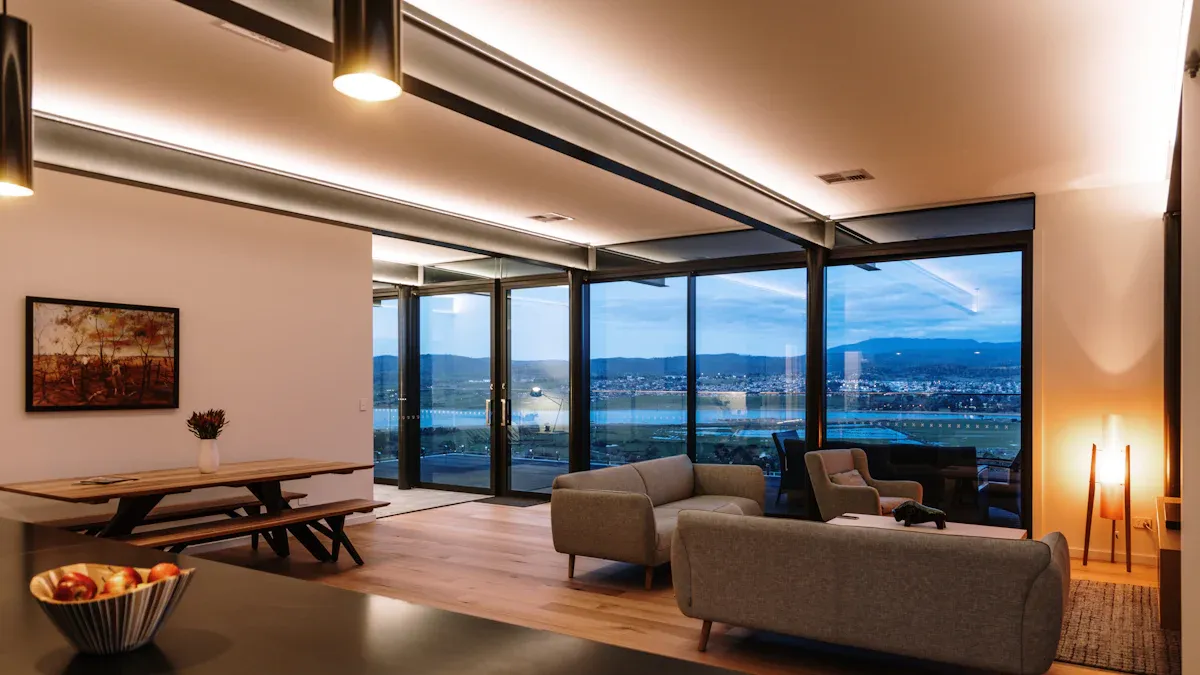
Good lighting transforms your home into a welcoming space. It sets the mood and enhances functionality. You’ll find that the right types of lighting can make a significant difference. Consider how ambient, task, and accent lighting can elevate both the ambiance and style of your home.
Key Takeaways
Ambient lighting creates a warm atmosphere and is essential for daily activities. Use ceiling fixtures, wall sconces, and lamps to brighten your space effectively.
Task lighting focuses on specific activities, improving visibility and reducing eye strain. Place lights in kitchens, home offices, and reading areas to enhance functionality.
Accent lighting highlights key features in your home, adding drama and interest. Use spotlights and wall sconces to showcase artwork and architectural details.
Ambient Lighting
Purpose
Ambient lighting serves as the foundation of illumination in your home. It creates a warm and inviting atmosphere, making spaces feel comfortable and functional. This type of lighting ensures that every corner of a room is well-lit, which is essential for both daily activities and overall aesthetic appeal. Think of it as the backdrop that sets the mood for your living areas.
Best Uses
You can effectively use ambient lighting in various rooms throughout your home. Here are some common sources of ambient lighting:
Ceiling-mounted Fixtures: These include chandeliers, flush-mount or semi-flush fixtures, and recessed lighting.
Wall-mounted Fixtures: Sconces and cove lighting can add a soft glow to your walls.
Portable Fixtures: Floor lamps and table lamps provide flexibility in placement.
Integrated Lighting: Built-in cove lighting and recessed lighting offer a sleek look.
Different rooms benefit from ambient lighting in unique ways. For instance, in kitchens, it enhances meal preparation by making the space more enjoyable and efficient. Living rooms thrive on soft, warm lighting that promotes relaxation, making them ideal for unwinding after a long day. In home offices, effective lighting boosts productivity and focus, especially when you layer different types of lighting to create a balanced environment.
To achieve the right level of brightness, consider the recommended lumens for your space. For example, a living room typically needs about 10–20 lumens per square foot, while a kitchen may require 30–40 lumens per square foot.
By thoughtfully selecting and placing your ambient lighting fixtures, you can transform your home into a beautifully illuminated haven.
Task Lighting

Purpose
Task lighting plays a crucial role in your home by providing focused illumination for specific activities. Whether you’re reading a book, cooking dinner, or working on a project, this type of lighting enhances visibility and reduces eye strain. For instance, in the kitchen, task lighting ensures you can see clearly while chopping vegetables or reading recipes. It eliminates shadows and creates a safer environment for food preparation.
Ideal Locations
You can strategically place task lighting in various areas of your home to maximize its benefits. Here are some ideal locations:
Kitchen: Install under-cabinet lighting to brighten countertops. This setup minimizes shadows and makes cooking tasks easier.
Home Office: Position desk lamps slightly in front of you to avoid casting shadows on your workspace. This placement helps you focus on your tasks without straining your eyes.
Dining Area: Use pendant lights above the table to create a warm ambiance while ensuring everyone can see their plates clearly.
Reading Nook: Place a floor lamp next to your favorite chair to provide direct light for reading. This setup enhances comfort and reduces glare on your pages.
By layering different types of lighting, including ambient and accent lighting, you can create a well-lit environment that supports all your activities. Remember, the right fixtures and placement can significantly improve your home’s functionality and ambiance.
Accent Lighting
Purpose
Accent lighting plays a vital role in your home by highlighting specific objects or architectural features. It adds drama and visual interest, making your space feel more dynamic. By drawing attention to particular details, accent lighting enhances the overall aesthetic of a room. This type of lighting helps create focal points, guiding movement and enhancing the ambiance. Imagine showcasing your favorite artwork or architectural details with a well-placed light—it’s a game changer!
Effective Use
To effectively use accent lighting, consider these techniques:
Proper Placement: Position your fixtures to draw attention to key design elements.
Spotlighting: Use spotlights or pendant lights directly on the focal point to enhance visibility.
Ambient Lighting: Surround the area with a soft glow to create a welcoming atmosphere while highlighting the focal point.
Wall Sconces: These fixtures can add depth and dimension, further emphasizing the area you want to showcase.
When selecting fixtures, remember that various types can enhance your art pieces. Some fixtures are easy to install or reposition, while others can be angled for better light direction. Combining different fixture types can elevate the visual appeal of your decor.
To avoid overwhelming your space, keep the lighting subtle. Dimmers can help you control the intensity, allowing you to set the mood just right. By using accent lighting thoughtfully, you can create a layered look that adds depth and character to your home.
Decorative Lighting
Purpose
Decorative lighting adds flair to your home. It goes beyond mere illumination; it enhances your decor with stylish fixtures that serve as artistic statements. Designers now view decorative lighting as sculptural elements that elevate the character of a room. Glenna Stone, a designer from Philadelphia, points out that clients increasingly see lighting as a key design feature rather than just a utility. This type of lighting highlights architectural features, furniture, and artwork, creating a unique ambiance that reflects your personal style.
Incorporating in Your Home
You can easily incorporate decorative lighting into your home by choosing fixtures that resonate with your aesthetic. Here are some popular trends to consider:
Fractal & Mosaic Lamps: These lamps feature intricate patterns and colorful glass, adding a global touch to your decor.
LED Panels With Motion Sensors: These stylish panels light up as you enter a room, combining convenience with energy efficiency.
Soft Gold Finishes: Timeless and elegant, these fixtures complement various color schemes and add a sophisticated glow.
Artistic Chandelier Designs: Chandeliers are becoming more expressive, serving as statement pieces that refresh a room’s look.
Biophilic Lighting: This trend emphasizes vibrant lamp shades that transform simple lamps into striking accent pieces.
By selecting the right types of light fixtures, you can create visually attractive environments that enhance the overall mood of your home. Decorative lighting not only illuminates but also contributes to a warm and inviting atmosphere, making your spaces feel more welcoming.
Lighting plays a crucial role in your home. By using ambient, task, accent, and decorative lighting, you can enhance both functionality and aesthetics. Each type serves a unique purpose, from setting the mood to improving visibility.
To evaluate your current lighting, consider these steps:
Assess room function and activities
Evaluate natural light availability
Review existing electrical infrastructure
Consider personal preferences and style
Making thoughtful changes can transform your space into a more inviting and functional environment.
FAQ
What is ambient lighting?
Ambient lighting provides overall illumination in your home, creating a comfortable atmosphere for daily activities.
How can I choose the right fixtures?
Select fixtures that match your style and the purpose of each room. Consider size, brightness, and energy efficiency.
Why is task lighting important?
Task lighting enhances visibility for specific activities, reducing eye strain and improving safety in areas like kitchens and home offices.