The 18×24 sheet is the workhorse size of the board world: big enough for a school project or framed print, small enough to carry under one arm. The catch is that “foam board” covers everything from paper-faced craft sheets to weatherproof plastic signage, and grabbing the wrong one means warped corners or a soggy lawn sign after one rainstorm. This roundup sorts ten solid options by what they actually do best, so you can match the material to the job instead of guessing.
The Shortlist At A Glance

Navy Penguin Foam Core Board Sheets White

Ampersand Primed Smooth 18×24 Gesso Panel

Golden State Art 18×24 White Foam Boards Pack of 10

Golden State Art 18×24 Black Foam Boards Pack of 10

Somime 25 Pack Backing Boards 18×24 Uncut Matboards

Mat Board Center 18×24 Backing Boards 25 Pack
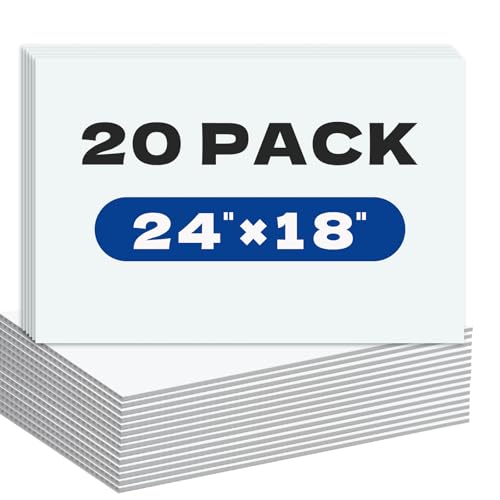
WENWELL 20 Pack Blank Yard Signs 18 x 24 Corrugated Plastic

Patelai 12 Pcs Corrugated Plastic Sheets 4mm (White)

Somime 12 Pack Black Backing Boards 18×24

Vencer VAB-002 Artist Sketch Tote Board
More Details On Our Top Picks
This is the biggest sheet in the lineup at 24 x 36 inches with a 3/16-inch (5mm) core, which gives you room to trim down several 18×24 pieces from a single panel. The polystyrene foam core sits between two acid-free paper faces, a construction that resists yellowing over time, something worth caring about when a science-fair display needs to survive a semester in storage.
The smooth white surface takes markers, glue, paint, and screen printing without much fuss, and the brand ships the twelve-pack in protective packaging aimed at keeping edges and corners intact. For classroom use, where boards get stacked, carried, and leaned against walls, that edge protection matters more than most people expect.
Strong Points
- Oversized 24 x 36 format trims down into multiple smaller panels
- Acid-free faces help finished work resist yellowing in storage
- Surface accepts markers, paint, glue, and printing cleanly
- Twelve sheets per box keeps a busy household stocked
Things To Consider
- The larger footprint needs flat storage space; leaning stacks can bow over months
- Paper faces dent if corners take a knock during transport
Who Should Grab It
Teachers, students, and office presenters who burn through presentation boards regularly and want one large sheet to cut down as needed.
A Better Fit Elsewhere
Anyone working strictly at 18×24 will waste less with the Golden State Art white pack, which arrives pre-cut to that exact size.
Where every other pick here is a raw substrate, this one arrives ready to paint. Ampersand coats the panel in an ultra-smooth acrylic gesso, the primer layer painters use to seal a surface, so there’s no sanding or sealing step before the first brushstroke. That’s a real time saver for portrait work and fine detail, where a flawless ground shows up directly in the finish.
The cradled 1/8-inch build gives the panel structure that plain foam core can’t match, and it suits oil, acrylic, pouring, and mixed media alike. Plein air painters, who work outdoors in changing light, tend to favor rigid panels like this because they won’t flex or warp the way stretched canvas can on a windy day.
Highlights
- Pre-primed gesso surface skips all prep work before painting
- Ultra-smooth ground supports crisp brushwork and fine detail
- Rigid cradled panel holds up to oils, acrylics, pours, and collage
- Clean wipes make corrections less punishing mid-session
Minor Gripes
- You pay a premium per panel compared with multi-sheet foam packs
- Overkill for posters or school projects; the surface is built for paint, not markers
Made For
Serious hobbyists and working artists who want a dependable, gallery-appropriate panel without priming their own boards.
Where A Sibling Pick Shines
Hobbyists practicing pours or sketches on a budget will get more mileage from the Golden State Art white foam pack instead.
Ten sheets, true 18×24 dimensions, and a slim 1/8-inch profile make this the no-drama choice for general crafting. The thinner core cuts easily with a utility knife, which matters when kids are mounting photos or you’re trimming mats late at night; thicker 3/16 stock demands more pressure and cleaner blades.
The polystyrene foam is lightweight enough for a child to carry a finished poster unaided, yet sturdy enough to back artwork or build simple models. Acid-free construction also makes these a sensible choice behind photographs, since cheaper acidic backers can stain prints over years on a wall.
Upsides
- True 18×24 sizing fits standard frames and poster layouts
- Thin 1/8-inch core slices cleanly with basic tools
- Acid-free faces are safe for long-term photo backing
- Featherweight build suits school projects kids carry themselves
Small Caveats
- The thin core flexes more than 3/16 stock on large unsupported spans
- Indoor use only; moisture will swell the paper faces
Right Fit For
Home crafters, parents, and hobby framers who want an affordable all-purpose white board in the standard poster size.
Swap It Out When
Display work that benefits from contrast calls for the Golden State Art black version, reviewed next, rather than this white set.
Same family as the white pack above, but dressed for drama: a black face, a beefier 3/16-inch core, and the same ten-sheet count. Photographers and exhibitors often prefer black backing because it absorbs stray light around a mounted print instead of bouncing it back, giving framed pieces a cleaner edge-to-edge look.
The extra thickness adds noticeable rigidity, useful for tabletop displays, model bases, and signage that stands upright without warping. Cutting takes slightly more effort than the 1/8-inch white version, so a fresh blade helps; owners commonly report ragged edges once a knife starts dulling.
Bright Spots
- Black face creates striking contrast for photos and exhibits
- Thicker 3/16 core resists bowing on upright displays
- Acid-free stock protects mounted artwork over time
- Easy-cut foam keeps DIY mounting approachable
Points To Note
- Black dust from cut edges can smudge hands and white surfaces
- Heavier feel than the thin white pack when carrying stacks
Whose Shelf It Belongs On
Photographers, art students, and event decorators building dark-themed displays or gallery-style mounts.
Consider Something Else When
Kid-friendly craft sessions go smoother with the lighter 1/8-inch Golden State Art white pack, which cuts with far less force.
Twenty-five uncut backing boards in one box is serious quantity, and that’s the whole point here. Anyone who frames prints regularly knows how fast backing stock disappears, and restocking sheet by sheet gets old fast. These sit behind your print and mat inside the frame, adding stiffness and shielding the artwork from deterioration.
The thick cardboard construction provides firm support without the bulk of foam core, so frames close flush. Somime ships the set boxed rather than shrink-wrapped, a packaging choice aimed at preventing corner damage in transit, which is the most common complaint with flat board shipments.
Plus Points
- 25-sheet supply covers a long run of framing projects
- Uncut format lets you trim each board to the frame opening
- Boxed packaging reduces bent-corner arrivals
- Adds protective rigidity behind mats and prints
Softer Spots
- Cardboard stock offers less moisture resistance than foam or plastic options
- No thickness figure published, so verify fit against deep rabbet frames
Quick Facts
Who Will Love This
Home framers and Etsy sellers processing prints in batches who value volume over premium materials.
Not Your Match When
Archival-minded framers wanting a stated ply thickness may prefer the Mat Board Center pack, which publishes its 4-ply spec.
This is the Somime pack’s closest rival, matching its 25-sheet count and 18×24 footprint while adding one thing the other doesn’t publish: a defined thickness. Each board measures 4-ply, about 1/16 inch or 1.4mm, which tells you precisely how it will sit inside a frame before you order.
Beyond framing, that firm card stock doubles as a drafting surface or display board for crafts needing strong rear support. In our view, having a stated spec is quietly valuable; guesswork about board thickness is how people end up with backs that rattle loose inside shallow frames.
Reasons To Buy
- Published 4-ply (1/16 inch) thickness removes fit guesswork
- 25 boards support ongoing framing or studio use
- Versatile enough for drafting, backing, and display builds
Worth Noting
- Thinner than foam-core alternatives, so very large prints may need extra stiffening
- Plain white face shows handling marks over time
At A Glance
Best Suited To
Detail-oriented framers and drafters who want documented specs and steady supply in one purchase.
Look Elsewhere When
Black-backed framing jobs suit the Somime 12-pack black boards better, since this set comes in white only.
Everything up to now lives indoors. These don’t. The 4mm corrugated plastic, essentially twin-wall polypropylene with hollow flutes running through it, shrugs off rain and wind, making it the natural pick for garage sales, estate signs, campaign messages, and birthday announcements planted in the front yard.
The blank white face takes paint, spray, and markers, and the material scores and snaps easily into custom shapes. Twenty blanks is enough to outfit a whole neighborhood sale or a season of events. One practical note: the flutes run in one direction, so sign stakes slide in along the grain only.
What We Like
- Waterproof corrugated plastic survives outdoor weather
- Wind-resistant rigidity keeps signs standing in gusts
- Cuts cleanly into custom shapes and lengths
- Twenty blanks cover multi-event or multi-property use
Honest Caveats
- Permanent marker fades in direct sun over weeks, so paint or vinyl lasts longer
- Flute direction limits stake insertion to one axis
Feature Rundown
The Right Fit
Realtors, campaign volunteers, and families running recurring garage sales who need signs that outlast the weather.
Another Choice May Suit
Smaller one-off events may find the Patelai 12-sheet set more proportionate, since twenty blanks can linger unused.
Patelai plays in the same waterproof corrugated category as WENWELL but trims the count to twelve, which suits occasional users better. Rent signs, a single estate sale, one birthday announcement: twelve blanks handle those without leaving half a case in the garage for two years.
The 4mm thickness matches its rival, and the listing spans multiple sizes beyond 18×24, including 12×17 up to 24×48, handy when a project needs an oversized panel. Scissors or a knife handle the cutting, and the surface accepts paint and spray for custom lettering.
Standout Traits
- Waterproof 4mm build works indoors and out
- Listing offers five size options for varied projects
- Twelve-sheet count right-sizes occasional signage needs
- Cuts with ordinary household tools
Areas To Watch
- Fewer sheets per dollar than the WENWELL 20-pack for heavy users
- Blank surfaces need stakes or frames purchased separately
Who It Suits Best
Homeowners and small-event hosts who need reliable outdoor signage a few times a year, not weekly.
Reach For A Different Pick When
Volume users running seasonal campaigns should step up to the WENWELL 20-pack for better per-sheet economics.
Black backing does quiet work in a frame: it deepens contrast, hides show-through from the wall, and makes white mats pop. Somime’s twelve-pack brings that look to the same thick cardboard construction as its white 25-sheet sibling earlier in this list, just in a darker dress and a smaller count.
Like the white version, the boards arrive boxed to guard against transit damage, and the uncut format lets you trim each sheet to your frame’s opening. Framers mounting dark-toned photography often reach for black backs specifically because they stop light from reflecting through glossy papers.
Positives
- Black face boosts contrast behind dark or moody prints
- Thick cardboard adds sturdy frame support
- Boxed shipping protects corners en route
Trade Offs
- Twelve sheets runs out faster than the 25-count white pack for busy framers
- Cardboard can warp with humidity, so store flats in dry rooms
Built With In Mind
Framers finishing black-and-white photography, charcoal drawings, and dramatic color prints.
Where Another Pick Suits Better
High-volume white-back framing goes to the Somime 25-pack, which doubles the sheet count for sustained output.
The last pick isn’t a consumable at all; it’s a tool. Vencer’s tote board is a rigid MDF drawing surface sized for 18×24 paper, fitted with a sturdy clip, a rubber band for securing loose sheets, and a carry handle. Art students juggling pads between classrooms and field sketchers working outdoors both rely on setups like this.
The smooth MDF face gives pencils and pens an even glide, and the clip holds pages flat against wind, the classic plein air headache. Because it’s reusable indefinitely, it changes the math entirely: one purchase replaces stacks of disposable boards for anyone whose main need is simply a portable drawing surface.
Best Bits
- Clip plus rubber band secures paper against wind and movement
- Smooth MDF surface supports even pencil and pen strokes
- Comfortable handle makes campus and field carries easy
- Reusable design outlasts any stack of single-use boards
Room For Improvement
- Not a display or mounting board; it serves drawing only
- MDF edges can chip if dropped on hard floors
Core Details
Perfect Match For
Art students, urban sketchers, and teachers who need a dependable portable drawing board for daily use.
Skip It When
Anyone needing consumable sheets for mounting or signage should stick with the Golden State Art foam packs instead.
What Matters Most Before Choosing 18×24 Foam Boards
Match Material To Environment
Paper-faced foam core belongs indoors, period. Humidity swells the paper and the core eventually bows, a fate owners commonly report with boards stored in garages or basements. Corrugated plastic handles patios, lawns, and damp workshops without complaint. Cardboard backing boards sit somewhere between: fine inside a sealed frame, risky anywhere moist.
Thickness Drives Rigidity
At 1/8 inch, sheets cut effortlessly and suit kid projects and photo backing. Step up to 3/16 inch or 4mm plastic and you gain stiffness for upright displays and outdoor signs. Thinner still, 4-ply matboard backs sit flush inside frames where bulk would prevent the backing from seating properly.
Count Versus Commitment
Bulk packs lower the per-sheet cost but demand storage space and a genuine pipeline of projects. A 25-pack makes sense for someone framing monthly; it becomes clutter for a household with one school poster due in spring. Honest self-assessment here saves money and closet space alike.
Surface Finish And Longevity
Acid-free faces matter most whenever artwork or photographs touch the board, since acidity slowly stains paper goods. Pre-primed artist panels skip prep work entirely but cost more per piece. Plain white faces accept nearly any medium; black faces add display contrast at the cost of visible dust on cut edges.
Key Considerations Across These Picks
Traps First Timers Fall Into
The classic error is buying paper-faced foam core for outdoor use, then watching it warp after the first dewy morning. Another frequent slip: ordering thin 1/8-inch stock for freestanding displays that need 3/16-inch rigidity. Check flute direction on corrugated plastic too, since stakes only slide in one way.
The Case For Spending Up
Higher-tier items earn their price through durability and finish quality. A pre-primed Ampersand panel costs several times a foam sheet but arrives ready for gallery-grade paint work. Likewise, a reusable Vencer tote board replaces dozens of disposable sheets over a student’s career, paying for itself quietly.
Frequently Asked Questions
Can 18×24 foam boards be cut to smaller sizes?
Yes, and that’s half their appeal. A sharp utility knife against a straightedge gives clean edges on foam core, while corrugated plastic cuts with scissors or a knife.
Are these boards safe for mounting photographs?
Acid-free options such as the Golden State Art and Somime boards are designed for long-term contact with prints. Avoid unknown acidic cardstocks behind valued photos, as they can cause staining over time.
Will corrugated plastic yard signs survive rain?
The 4mm polypropylene construction is waterproof and wind resistant, so the sheet itself holds up well outdoors. Lettering done in permanent marker may fade in sun, so paint or vinyl lasts longer.
What’s the difference between foam core and matboard backing?
Foam core sandwiches polystyrene foam between paper faces, giving thickness and lightness. Matboard backing is dense layered cardstock, thinner overall, made to sit flush inside picture frames.
How should I store leftover boards?
Keep them flat under light weight in a dry, temperature-stable room. Leaning stacks against walls for months invites bowing, especially with paper-faced foam core.
Wrap Up
Your job description decides the winner here. Classroom presenters get the most from Navy Penguin’s oversized trimmable sheets, everyday crafters from the Golden State Art packs, and framers from either Somime set depending on color preference. Outdoor messaging belongs to WENWELL or Patelai, while painters and sketchers should look straight at Ampersand and Vencer. Match the material to where the board will actually live, and any of these ten will serve you well.