
A 3D pen turns a flat doodle into something you can hold, and the learning curve is shorter than most people expect. The catch is that first-time shoppers face a wall of similar-looking pens, refill packs, and accessories that don’t all work together. This guide sorts through ten beginner-friendly options, from complete pen bundles to mats and stencils that make tracing easier, so you can match a pick to your skill level and budget without guesswork.
The Shortlist At A Glance

3Dmate Starter Transparent 3D Pen Mat 9 x 7 Inches

3Doodler Flow 3D Printing Pen (Black)

SCRIB3D P1 3D Printing Pen with PLA Refill Pack
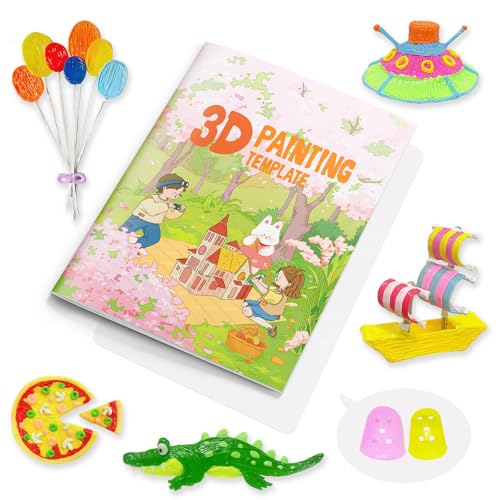
Dayker 3D Pen Printing Drawing Book, 40 Patterns

Diteryy 110 Pcs 3D Pen Filament Refill

amokia 32 Colors 3D Pen Refills Pack for 3Doodler Start+

SCRIB3D Advanced 3D Printing Pen with PLA Refill Pack

LinkSpoX 1.75mm 3D Pen Filament Refill, 20 Color PLA (328 Ft)

AULCTR 3D Magic Popcorn Pens with 6 Colors
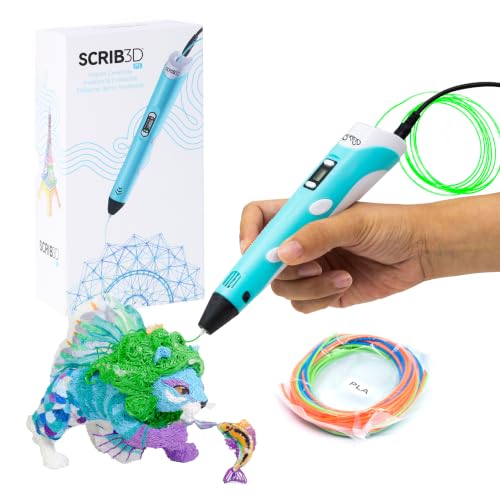
SCRIB3D P1 3D Printing Pen with Display
More Details On Our Top Picks
Molten plastic and wooden dining tables are not friends, which is why a mat like this earns its spot on the list before any pen does. The 3Dmate Starter is a flexible silicone sheet measuring 9 by 7 inches, sized to sit under your work area on a desk or kitchen table.
Because the surface is see-through, you can slide a printed template underneath and trace directly over it, which is how most beginners learn control in their first week. The two-sided design doubles its working life, and the included stencil book gives you patterns to start with right away.
Strong Points
- Heat-resistant silicone shrugs off hot extruded plastic, so spills peel away instead of bonding to furniture
- The transparent build lets you trace templates placed beneath it, shortening the learning curve noticeably
- Two usable sides mean one scuffed surface doesn’t end the mat’s usefulness
- Flexible material rolls up for storage in a drawer between sessions
Things To Consider
- At 9 x 7 inches, larger multi-part projects may spill past the edges onto unprotected surfaces
- It’s an accessory only, so you’ll still need a compatible pen and filament separately
Who It Suits Best
Households setting up a first crafting station for kids or classroom use benefit most from this protective base layer.
Where Another Pick Suits Better
Shoppers wanting a complete out-of-box experience should look at the SCRIB3D P1 bundle instead, since it pairs a pen with filament and guides.
3Doodler built the original 3D printing pen, and the Flow carries that lineage into a package aimed at teens and grown-up creators rather than small children. It runs standard 1.75mm plastic filament, including PLA, ABS, and even wood blends, which opens up more material experimentation than kid-oriented low-temp pens allow.
An integrated LCD shows live temperature readings, so you can confirm the nozzle is ready before touching plastic to paper. There’s no software or app setup involved; you plug in, wait for heat, and draw. The box ships with starter filaments, a stencil book, and a guide, though you may find yourself buying refills sooner than expected once projects get ambitious.
What We Like
- Broad filament compatibility covers PLA, ABS, and wood-based plastics for varied textures and finishes
- The LCD temperature readout removes guesswork about when the pen is ready to extrude
- No software or hardware configuration means the first drawing session can happen minutes after unboxing
- Optional protection plans covering drops and breakdowns are available at checkout
Worth Noting
- Hot-end pens like this run warm enough that younger children need close supervision
- Included filament runs out quickly for anyone practicing daily, so budget for refill packs
Key Specs
Made For
Teenagers and adults who want real material flexibility and precise temperature feedback from day one.
Consider Something Else When
Families with children under ten will find the SCRIB3D P1’s simpler controls and lower learning barrier a gentler entry point.
Most beginner kits give you a pen and a taste of filament; this SCRIB3D bundle hands over roughly 358 feet of plastic across more than twenty colors. That volume matters because early attempts fail often, and running dry mid-practice kills momentum faster than anything else.
The P1 itself uses a stepless speed slider, meaning you adjust flow continuously rather than clicking between fixed settings, which helps when transitioning from slow outlines to fast fills. A ceramic nozzle and anti-clogging feed design address the jam complaints common to cheaper pens, and the manual walks you from plug-in to first doodle. Compared with the pricier 3Doodler Flow above, you trade the LCD readout for sheer supply volume.
Highlights
- Nearly 358 feet of assorted PLA filament keeps practice sessions going for months
- Stepless speed slider lets beginners dial flow precisely instead of jumping between presets
- Ceramic nozzle construction resists clogging, reducing frustrating mid-project stoppages
- Detailed manual covers setup through first creations without assuming prior experience
Trade Offs
- No display screen means you rely on indicator lights rather than exact temperature numbers
- PLA requires a hot nozzle, so unsupervised young kids aren’t the target user here
Quick Facts
Right Fit For
First-time doodlers who’d rather have abundant filament than advanced display features.
Not Your Match When
Anyone wanting live temperature data will prefer the 3Doodler Flow’s integrated LCD readout.
Blank paper paralyzes a lot of newcomers, and that’s the specific problem this Dayker template book solves. Forty original designs span architecture, animals, and other subjects, giving you a clear line to follow while your hand learns how plastic behaves.
Tracing builds muscle memory the same way coloring books do for pencils, and finishing a recognizable shape early does wonders for confidence. The designs ramp in complexity, so the same book stays useful after the first week. Pair it with the 3Dmate mat from earlier in this list and you have a complete tracing station for under the cost of most pens alone.
Upsides
- Forty varied original patterns keep practice fresh well beyond the first sessions
- Subject mix of animals and architecture appeals to different interests within one household
- Graduated difficulty supports progress from simple outlines to detailed builds
Minor Gripes
- Paper pages can scorch under a hot nozzle held too long in one spot, so keep the pen moving
- It contains no pen or filament, despite product photos sometimes suggesting otherwise
Best Suited To
Beginners who freeze at a blank page and want structured, confidence-building practice from day one.
Look Elsewhere When
Experienced doodlers seeking complex engineering-style templates will outgrow this quickly and may prefer freehand work instead.
This refill pack exists for one specific pen family, and knowing that upfront saves a costly mistake. The sticks measure around 2.5mm in diameter and fit only the 3Doodler Start and Start+ pens, not the standard 1.75mm models covered elsewhere in this roundup.
The material is PCL, a low-temperature plastic that softens at levels safe for children’s hands, which is exactly why 3Doodler chose it for the Start line. One hundred ten pieces go further than they sound, since each stick draws a surprising amount of line. Households mixing a Start+ with a standard PLA pen will need separate supplies for each, so check your model before ordering.
Bright Spots
- Low-temp PCL formulation suits young children handling the pen themselves
- 110-piece quantity covers many weeks of regular creative sessions
- Priced accessibly compared with brand-name Start refills
Points To Note
- Strictly incompatible with every pen outside the 3Doodler Start family, a mismatch that ruins the purchase
- Third-party sticks occasionally vary slightly in diameter, which some owners report causes occasional feeding hiccups
Who Should Grab It
Parents of 3Doodler Start+ owners who want affordable restocks without switching to hot-end pens.
A Better Fit Elsewhere
Owners of standard 1.75mm pens should reach for the LinkSpoX PLA refill pack later in this list instead.
Where the Diteryy pack above wins on raw piece count, this amokia set competes on color breadth: thirty-two distinct shades, five sticks each, totaling 160 pieces of 2.5mm PCL. For kids building rainbows, flowers, or character art, having the right hue on hand beats improvising with whatever’s left in the bin.
Like its competitor, this filament works exclusively with the 3Doodler Start+ pen and melts at low temperatures appropriate for children. The trade-off versus Diteryy comes down to priorities: fewer total sticks but far more variety per purchase. Storage is worth planning for too, since 160 loose sticks benefit from a divided container to keep colors sorted.
Reasons To Buy
- Thirty-two colors enable detailed multicolor artwork impossible with smaller palettes
- Five sticks per shade provide enough of each color to finish coordinated projects
- Low-melt PCL keeps the pen comfortable and safe for kids’ independent use
Softer Spots
- Only five sticks per color may run short on large single-color builds
- Loose sticks tangle easily without a storage organizer, a common owner complaint
Who Will Love This
Young artists obsessed with color accuracy and variety will get the most mileage from this palette.
Another Choice May Suit
Volume-focused users should compare the Diteryy 110-piece pack, which trades color range for higher quantity.
Think of this as the P1’s older sibling: same ceramic nozzle and anti-clog philosophy, but with variable speed control, a large LCD screen, and an ergonomic body shaped for longer drawing sessions. Where the basic P1 bundle targets absolute newcomers, the Advanced suits someone who has outgrown tracing and wants finer command over line width and flow.
The bundle still includes everything needed to start, including 348 feet of 1.75mm PLA across twenty colors, a stencil book, and a project guide. That filament volume matches the P1 kit, so upgrading costs little extra supply-wise. In our view, this is the sensible second pen for a household whose first pen sparked a genuine hobby.
Plus Points
- Large LCD screen displays settings clearly, removing guesswork during temperature changes
- Variable speed control enables thin detail lines and fast fills with one tool
- Ergonomic grip reduces hand fatigue during extended weekend building sessions
- 348 feet of included PLA across twenty colors rivals dedicated refill purchases
Small Caveats
- Extra controls add a short learning curve that total novices may find unnecessary at first
- Hot PLA operation still demands adult supervision around younger children
Feature Snapshot
Built With In Mind
Hobbyists moving beyond beginner templates who want display feedback and finer speed authority.
Skip It When
True first-timers will be better served by the simpler SCRIB3D P1 bundle, which costs less and teaches the basics just as well.
Universal compatibility is this pack’s whole pitch. Manufactured to the 1.75mm standard, it feeds SCRIB3D, MYNT3D, PIKA3D, and most other mainstream 3D pens, making it the safest refill choice for households that own multiple brands or plan to upgrade pens later.
You get 328 feet split into twenty colors at 16.4 feet apiece, arriving spool-free and pre-cut for direct loading. Consistent diameter matters more than people expect: uneven filament causes uneven lines and jams, and precision manufacturing here aims to prevent both. Unlike the Start-only packs earlier in this list, one order covers nearly any standard pen in the house.
Standout Traits
- Standard 1.75mm sizing fits the widest range of consumer 3D pens
- Tangle-free, spool-free sticks load straight into the pen with no prep
- Precision-controlled diameter supports smooth, clog-resistant feeding
- Twenty colors at 16.4 feet each balance variety against usable length
Areas To Watch
- PLA needs a heated nozzle, so it won’t work in low-temp kids’ pens like the 3Doodler Start+
- Individual color lengths are modest for large monochrome sculptures
Technical Sheet
The Right Fit
Multi-brand households and anyone with a standard hot-end pen who wants one reliable refill source.
Swap It Out When
Start+ owners must skip this entirely and choose either the Diteryy or amokia PCL packs instead.
Not every child is ready for molten plastic, and these popcorn pens offer a heat-free middle ground. Draw a line and the special ink puffs up as it dries or with gentle heating, creating raised three-dimensional texture on ordinary paper. Six colors come in the set, each with a fine tip for controlled lettering and outlines.
The washable formula cleans off skin, walls, and fabric, which parents will appreciate more than the kids ever will. They suit greeting cards, school projects, and holiday crafts rather than structural builds, so expectations matter. As a first birthday gift for a crafty five-year-old, they’re hard to beat; as a stepping stone to real 3D pens, they’re a fun detour rather than training.
Best Bits
- No hot nozzle makes these safe for young children working independently
- Washable ink lifts off skin, walls, and clothing after inevitable accidents
- Fine tips support precise writing and detailed card decoration
- Puffing effect delivers a satisfying 3D result without any equipment
Honest Caveats
- Ink creations stay flat and fragile, unlike true fused-plastic 3D pen output
- Six colors limit ambitious multicolor artwork compared with refill-based systems
Perfect Match For
Preschool and early-elementary kids who want 3D-style fun years before handling a heated pen.
Where A Sibling Pick Shines
Older kids ready for real plastic modeling will get far more from the SCRIB3D P1 bundle reviewed earlier.
This is the classic version of the P1 that made SCRIB3D a household name in beginner circles, and it remains a strong all-arounder. The stepless speed function adjusts extrusion smoothly, and the bundled power adapter, three starter PLA colors, stencil book, and project guide mean nothing else sits between you and a first creation.
Compared with the newer P1 bundle at number three, this kit includes less filament but adds the display-equipped pen body and a fuller instructional package. Families report it holds up well to shared use across siblings, and replacement parts stay easy to source. For a household buying one pen to share, this balanced kit covers the widest range of ages and skill levels.
Positives
- Complete kit contents cover pen, adapter, filament, stencils, and guidance in one purchase
- Stepless speed control grows with the user from slow tracing to confident freehand
- Onboard display provides clear status feedback during heating and drawing
- Sturdy build quality stands up to frequent family sharing, based on widely reported owner experience
Room For Improvement
- Only three starter filament colors ship in the box, so a refill pack becomes necessary fast
- Heated PLA operation requires table supervision with children under roughly eight
Details At A Glance
Whose Shelf It Belongs On
Families wanting one dependable, well-documented pen that multiple ages can share comfortably.
Reach For A Different Pick When
Shoppers prioritizing maximum filament value over documentation should grab the newer SCRIB3D P1 refill bundle at number three.
What Matters Most Before Choosing 3d Pens For Beginners
Match The Pen To The Artist’s Age
Temperature divides this category cleanly. Low-temp PCL pens like the 3Doodler Start+ melt plastic at levels comfortable for small hands, while standard PLA pens run hotter and demand supervision. A seven-year-old and a fifteen-year-old need genuinely different tools, so age should narrow your list before features do.
Count The Filament You’re Really Getting
Kits advertise impressive footage, but starter amounts vanish quickly once practice begins. A pen bundled with 300-plus feet, like either SCRIB3D kit here, delays your first refill purchase by months. Check compatibility too: 1.75mm PLA and 2.5mm PCL are not interchangeable, and ordering the wrong diameter is the most common beginner mistake.
Look Past The Pen Itself
Accessories shape the experience more than spec sheets suggest. A silicone mat protects furniture and enables template tracing, while a pattern book gives structure to early sessions. Budgeting thirty percent of your total for mats, stencils, and refills typically produces a far better first month than spending everything on the pen.
Key Considerations Across These Picks
Traps First Timers Fall Into
The biggest error is buying filament before confirming your pen’s diameter and material type. PCL sticks won’t feed through a PLA pen and vice versa. Second, skipping the mat seems thrifty until melted plastic bonds to a tabletop. Third, choosing a feature-heavy pen for a young child backfires when extra buttons create confusion instead of control.
What Separates Premium From Basic
Higher-tier pens earn their cost through displays, variable speed, and ergonomic bodies that reduce fatigue in long sessions. Those upgrades matter once drawing becomes a weekly habit rather than a rainy-day novelty. Starting basic remains the smarter move for uncertain interest; upgrade only after the first pen proves the hobby sticks.
Frequently Asked Questions
Are 3D pens safe for young children?
Low-temperature PCL pens are designed for supervised kid use, since their nozzles stay cooler than standard models. Hot-end PLA pens require adult oversight regardless of age.
What’s the difference between PLA and PCL filament?
PLA is a standard plastic that melts at higher temperatures and creates rigid, durable shapes. PCL softens at much lower heat, making it the safer choice for children’s pens.
How long does a starter filament supply last?
Casual users stretching 300 feet across small projects often report several months of use. Daily practice or larger sculptures can exhaust the same supply in weeks.
Do I need a mat and stencil book to start?
Neither is mandatory, but both shorten the learning curve considerably. A mat protects surfaces and enables tracing, while templates give structure to early attempts.
Can 3D pen creations actually hold together as objects?
Yes, drawn layers fuse as the plastic cools, producing solid items like frames, toys, and decorative pieces. Structural strength depends on layer thickness and design.
Closing Thoughts
The right choice depends less on specs and more on who’s holding the pen. Young kids do best with low-temp PCL systems or even the popcorn pens, while teens and adults get more from the 3Doodler Flow or an SCRIB3D kit with generous filament. Add a mat and a template book, and the first week goes smoother than you’d expect. Whichever direction you lean, starting simple and upgrading later rarely disappoints.