
Hobby printing has come a long way from the fiddly, hand-leveled machines of a few years ago. Today’s models handle calibration, bed adhesion, and even color changes on their own, which means you spend your evenings making things instead of troubleshooting them. This roundup covers ten machines and one accessory that fit different stages of the hobby: a kid-friendly starter, compact resin units for detail work, fast CoreXY machines for bigger builds, and multicolor setups for makers who want their prints to pop. Whatever your desk space, budget range, or patience level looks like right now, there’s a sensible match below.
The Shortlist At A Glance
FLASHFORGE AD5X Multi-Material 3D Printer 4-Color

ANYCUBIC Photon Mono 4 Resin 3D Printer

FLASHFORGE AD5M 3D Printer Fully Auto Calibration

Entina Tina2C 3D Printer for Kids & Beginners

Creality SPARKX i7 3D Printer Multi Color

Creality PVP Solid Glue Sticks for 3D Printing

Anycubic Kobra X Multicolor 3D Printer
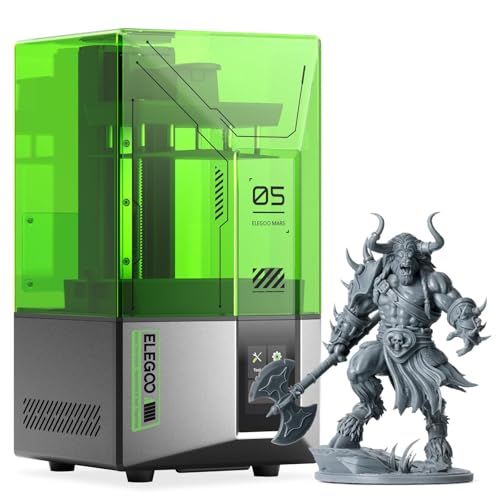
ELEGOO Mars 5 Resin 3D Printer

Portable Compact FDM 3D Printer with Removable Build Plate

Creality SPARKX i7 3D Printer with AI Camera Monitoring
More Details On Our Top Picks
Most hobby printers ask you to choose between speed and color. The AD5X refuses that trade-off, pairing a four-color filament system with headline speeds up to 600mm/s and aggressive acceleration figures that keep detail intact at pace. In a busy maker space where you’re churning out cosplay props or classroom demos, that combination saves real hours.
The DIY IFS (Integrated Filament System) handles swaps between spools automatically, and there’s a backup mode that switches material mid-print when one runs dry. That matters more than it sounds: an overnight print failing at hour seven because the spool emptied is the kind of heartbreak this machine is designed to prevent.
Bright Spots
- Four-color output opens up signage, toys, and two-tone functional parts without manual swap sessions.
- Full-auto calibration measures the bed at multiple points, so first layers stick consistently across the plate.
- Filament backup keeps long jobs alive when a spool runs out overnight.
- High acceleration ratings mean tall prints finish noticeably sooner than on entry-level bedslingers.
Things To Consider
- Multicolor systems generate purge waste during color transitions, so expect higher filament consumption on mixed-color jobs.
- The added hardware adds bulk compared with single-color machines like the AD5M later in this list.
Who Will Love This
Hobbyists producing colorful, high-volume output who want automation doing the boring parts.
A Better Fit Elsewhere
Anyone prioritizing raw value over color should look at the FLASHFORGE AD5M, which shares the same speed pedigree in a simpler package.
Resin printing works differently from filament: liquid resin is cured layer by layer by a light source, which is why tiny details come out so crisp. The Photon Mono 4 leans into that strength with a 7-inch 10K mono LCD, where each pixel measures just 17×17 microns on the X and Y axes. For tabletop miniatures, jewelry masters, or display pieces, that resolution is the whole point.
Anycubic’s LighTurbo matrix light source aims for uniform exposure across the plate, which owners commonly report translates into consistent cure quality from corner to corner. Compared with the FDM machines elsewhere here, you’ll trade ease of cleanup for surface fidelity, and that’s a fair deal for detail-focused makers.
Reasons To Buy
- 17×17 micron pixel size captures features filament nozzles simply cannot reproduce.
- The large 10K screen lets you batch multiple small models per run, boosting throughput for painters.
- Uniform matrix lighting reduces failed layers caused by uneven exposure.
Small Caveats
- Resin handling requires gloves, ventilation, and IPA washing, a messier routine than any filament pick here.
- Print volumes are smaller than FDM alternatives, so helmets and large props are off the table.
Right Fit For
Miniature painters, sculptors, and anyone whose projects live or die by fine surface detail.
Swap It Out When
First-timers who want resin results with less fuss may prefer the ELEGOO Mars 5’s one-click leveling approach further down.
CoreXY describes a motion system where both motors move the print head along fixed rails, letting the machine print fast without shaking itself apart. The AD5M uses exactly that layout inside an all-metal frame, hitting up to 600mm/s while keeping a 220x220x220mm build volume, enough room for a week’s worth of household fixes or a decent-sized prop section.
Where the pricier AD5X adds color, this one doubles down on simplicity. A quick-swap nozzle means clogs become a two-minute fix instead of an evening teardown, and fully automatic calibration removes the leveling ritual entirely. For a garage workshop running daily jobs, that maintenance story is arguably worth more than rainbow output.
Strong Points
- All-metal CoreXY construction stays stable during high-speed moves, protecting dimensional accuracy.
- Quick-swap nozzle design turns the most common failure into a fast, tool-light repair.
- One-click operation plus auto calibration suits anyone who’d rather print than tinker.
- The 220mm cube volume covers most practical hobby parts comfortably.
Points To Note
- Single-color only; creative multicolor work needs the AD5X or Kobra X instead.
- Enclosed-frame designs like this benefit from occasional rail cleaning to keep motion smooth over months of use.
Made For
Intermediate hobbyists who print often and want speed and reliability without babysitting.
Where A Sibling Pick Shines
Total beginners on tight budgets will find the Entina Tina2C gentler to learn on, despite its smaller ambitions.
Getting a child from “what is 3D printing?” to holding their own printed toy usually takes an afternoon of frustration. The Tina2C compresses that journey to roughly eight minutes, arriving fully assembled with guided setup through the Poloprint Cloud app. You tap a model, the printer levels its own bed, and printing starts.
The app side is where this little machine earns its keep for families. A library of over 3,000 ready-to-print models removes the need to learn slicing software, and more than 20 creative DIY modules give kids structured projects rather than a blank screen. Compared with the AD5M above, it’s slower and smaller, but for a bedroom desk or classroom cart, that’s beside the point.
What We Like
- Guided app setup means no manual bed leveling, the step that trips up most newcomers.
- The 3,000+ model library skips slicer software entirely for instant gratification.
- WiFi control lets parents queue prints from a phone across the house.
- STEM-oriented project modules turn idle weekends into structured learning.
Worth Noting
- Build volume is modest, so larger models need scaling down or splitting.
- App dependence means a stable WiFi connection matters more than on PC-driven machines.
Who Should Grab It
Families, teachers, and complete beginners buying a first printer for ages roughly eight and up.
Consider Something Else When
Grown-up hobbyists chasing speed should step up to the Creality SPARKX i7 covered next.
Some printers want to be appliances; the SPARKX i7 wants to be a gadget. Creality’s CubeMe AI can turn a portrait photo into a printable 3D model, which makes personalized gifts almost trivially easy. An onboard camera watches every job in real time, flagging the classic failures like spaghetti extrusion and filament tangles before they waste a full spool.
Auto-leveling, quiet operation, and RGB lighting round out a feature set aimed squarely at people who enjoy the tech as much as the output. Multicolor capability requires adding the CFS Lite unit separately, worth budgeting for upfront. Against the AD5X, you give up integrated four-color hardware but gain smarter monitoring and a friendlier price of admission.
Plus Points
- AI photo-to-model conversion turns snapshots into custom figurines and gifts.
- Real-time camera alerts catch failed prints early, saving filament and overnight disappointment.
- Low-noise operation makes living-room placement realistic.
- Auto-leveling plus streamlined setup gets you printing on day one.
Softer Spots
- Multicolor printing depends on the separate CFS Lite accessory, an extra purchase many listings don’t make obvious.
- Camera-dependent monitoring adds a learning curve around alert settings.
Who It Suits Best
Tech-curious hobbyists who want intelligent monitoring and creative AI tools alongside solid core printing.
Not Your Match When
Pure pragmatists who find AI extras gimmicky will prefer the straightforward AD5M’s no-nonsense workflow.
Warped corners have ruined more hobby prints than any mechanical fault. This two-pack of PVP glue sticks exists purely to fight that: swipe a thin film onto the build plate, and the first layer grips instead of lifting. PVP is water-soluble, so cleanup is a damp cloth rather than scraping, and odor during printing stays low according to the manufacturer.
It’s listed for PLA, ABS, PETG, PC, PA, and TPU, covering essentially every filament a hobbyist touches. ABS and nylon are the real beneficiaries since those materials shrink as they cool and peel off bare plates constantly. Every printer in this roundup benefits from having one of these in a drawer, which is exactly why it earned a slot among the machines.
Highlights
- Improved first-layer grip directly reduces warping and mid-print model release.
- Works across six common filament families, from beginner PLA to demanding PA.
- Water-soluble residue wipes away easily, keeping plates clean between jobs.
Minor Gripes
- Application takes a few seconds per print, a small ritual some owners skip until a failure reminds them.
- Sticks deplete with use, so heavy printers will cycle through the pack faster than casual users.
Whose Shelf It Belongs On
Anyone printing ABS, PETG, or nylon, or battling lifted corners on any machine in this list.
Reach For A Different Pick When
You already have reliable adhesion on textured PEI plates; then spend the money on filament instead.
Four colors out of the box is generous; nineteen is showing off. The Kobra X ships with native four-color capability and scales to nineteen shades when you add up to four ACE 2 Pro units, giving it the widest palette ceiling of anything here. Anycubic also targets purge reduction, claiming the system cuts the filament wasted during color changes roughly in half compared with conventional approaches.
That last part deserves attention because purging is the hidden tax of multicolor printing: every transition flushes old filament through the nozzle, and inefficient systems burn through spools. Setup is pitched as easy, and the platform positions itself as a long-term base you grow into. Note the compatibility caveat: only ACE 2 Pro units work, not the earlier ACE Pro.
Standout Traits
- Native four-color printing works immediately, no add-on required for basic multicolor work.
- Nineteen-color expansion supports genuinely complex, gradient-style projects.
- Reduced purge waste lowers the running cost that usually makes multicolor expensive.
Honest Caveats
- Full expansion means buying multiple ACE 2 Pro units, a meaningful additional investment.
- Accessory compatibility is strict: older ACE Pro units won’t pair, so check what you already own.
Built With In Mind
Committed makers planning a serious multicolor setup who want headroom beyond four colors.
Another Choice May Suit
Hobbyists content with four colors will find the FLASHFORGE AD5X delivers similar capability in one box.
Leveling a resin vat used to be the scariest step for newcomers, involving paper sheets and hope. The Mars 5 automates it with a single click, using a mechanical sensor to set the build plate height precisely. Unbox, power on, press the button, print: that’s the intended flow, and it removes the main reason beginners avoided resin.
ELEGOO also includes a smart mechanical sensor that watches for problems during the print itself, pausing things before a failed layer ruins the whole batch. Where the Photon Mono 4 chases maximum resolution, the Mars 5 plays the approachable card, and in our view that makes it the gentler on-ramp to liquid resin for most first-timers.
Upsides
- One-click automatic leveling eliminates the trickiest setup step in resin printing.
- Smart sensing catches issues mid-job, protecting multi-hour batches from total loss.
- Streamlined unbox-to-print experience suits people who’ve never touched resin before.
Room For Improvement
- Standard resin workflow still demands gloves, ventilation, and post-cure washing regardless of the printer’s smarts.
- Resolution-focused users may find the Photon Mono 4’s finer pixel pitch better suited to micro-detail work.
The Right Fit
Curious first-timers entering resin printing who value guidance and safety nets over maximum spec sheets.
Look Elsewhere When
Experienced resin artists chasing ultra-fine miniature detail will get more from the ANYCUBIC Photon Mono 4.
Not everyone has a dedicated workshop bench. This unnamed-brand compact FDM unit squeezes into a 100x100x100mm footprint of build space, powered by a 12V Type-C adapter like a laptop charger. That makes dorm rooms, office desks, and RV trips realistic venues for printing, something none of the larger machines here can claim.
The kit arrives thoughtfully: 10 meters of PLA filament, a TF card with files, tools, and step-by-step video tutorials covering assembly through your first print. A removable build plate simplifies getting finished parts off cleanly. It accepts PLA and flexible TPU through its 0.4mm nozzle, covering the two filament types beginners actually use. Manage expectations on scale, though; this prints keychains and brackets, not helmets.
Positives
- Type-C power and small size make it genuinely portable between rooms or locations.
- Included filament, tools, and video guides mean nothing extra to buy before printing.
- Removable plate pops finished parts off without prying tools.
- TPU support adds flexible-print options rare at this size.
Trade Offs
- The 100mm cube volume rules out anything larger than palm-sized objects.
- Modular assembly is required, so plan on following the videos carefully before the first job.
Perfect Match For
Students, travelers, and desk-bound tinkerers who need printing to fit around a small space.
Where Another Pick Suits Better
Anyone printing props or replacement parts at household scale should choose the FLASHFORGE AD5M’s 220mm volume instead.
This variant of the SPARKX i7 trades the RGB flair of the earlier listing for a bigger canvas: a 260x260x255mm build volume, comfortably the largest FDM capacity in this roundup. That’s enough height for lamp bases, cosplay components, and batch-printed organizers without splitting models. A direct-drive extruder feeds filament straight into the hotend, which handles flexible TPU far better than bowden setups.
Like its sibling at number five, it carries auto-leveling, WiFi control, quiet high-speed motion, and smart camera monitoring that flags failed prints remotely. The honest read is that these two Creality machines serve slightly different shoppers: pick this one for volume and flexibility, the other for AI creativity tools. Both reward daily use.
Key Specs
Best Bits
- Oversized build volume handles full-size household replacements and prop sections.
- Direct-drive feeding unlocks flexible filament projects.
- Camera monitoring sends alerts on failures, useful for unattended overnight runs.
- Quiet operation keeps it welcome in shared living spaces.
Areas To Watch
- Larger frames demand more desk real estate than the compact portable option above.
- Owners of camera-equipped printers occasionally report tuning notification sensitivity to avoid false alarms.
Who Should Grab It
Home hobbyists printing daily at meaningful sizes who want monitoring and quiet performance bundled together.
Skip It When
Shoppers focused on AI photo-to-model creativity will get more joy from the Creality SPARKX i7 Multi Color version.
What Matters Most Before Choosing 3d Printers For Hobbyists
Match The Technology To Your Projects
FDM machines melt plastic filament and suit functional parts, props, and household fixes. Resin printers cure liquid polymer and win on fine detail, ideal for miniatures and jewelry. Buying the wrong type for your actual projects is the costliest mistake in this category, so list three things you want to make before comparing specs.
Build Volume Sets Your Ceiling
A 100mm cube limits you to palm-sized items, while 220mm-plus volumes handle lamp bases and helmet sections. Measure the largest object you realistically want, then add margin. Oversized machines also demand desk space and ventilation, so balance ambition against the room you actually have.
Automation Determines Your Learning Curve
Auto-leveling, one-click calibration, and camera monitoring remove the failure points that discourage newcomers. Manual machines teach you more but cost you weekends. First-time users benefit enormously from guided apps and self-calibrating beds, while experienced makers often prefer open, tweakable platforms.
Budget For Consumables, Not Just Hardware
Filament, resin, glue sticks, spare nozzles, and IPA all recur monthly. Multicolor systems add purge waste, sometimes dramatically. A sensible rule of thumb: reserve roughly a third of your first-year budget for consumables and spares, because a printer without material is a very expensive paperweight.
Key Considerations Across These Picks
Traps First Timers Fall Into
Chasing maximum speed numbers is the classic error; a 600mm/s rating means little if your first layers fail. Skipping the adhesion conversation is another, since warped corners frustrate more beginners than any spec shortfall. Buy for reliability features first, headline numbers second.
The Case For Spending Up
Higher-tier machines buy enclosed frames, direct-drive extruders, and multicolor systems, all of which expand what you can make rather than how fast. Paying more pays off once you print weekly and want flexible filaments or color. Casual users get genuine satisfaction from budget picks.
Frequently Asked Questions
Are resin printers harder to maintain than FDM?
Yes, somewhat. Resin requires gloves, ventilation, washing, and curing steps that FDM avoids. The payoff is dramatically finer detail on small models.
Do I need a computer to use these printers?
Not always. Several picks here operate through phone apps or onboard screens with model libraries. Computer-based slicing still offers the most control for advanced work.
How much desk space does a hobbyist printer need?
Compact models fit a dorm desk, while 260mm-volume machines want a sturdy table with clearance around them. Add room for filament storage and ventilation either way.
Is multicolor printing worth the extra cost?
For decorative and gift items, absolutely. Functional parts rarely need it. Remember that color changes consume extra filament through purging, raising running costs.
Can kids safely use these printers?
Supervised, yes, especially app-guided models designed for families. Heated parts and moving gantries warrant adult oversight, and resin printing should stay an adult activity.
Closing Thoughts
The right choice comes down to what you actually want to make. Detail lovers should shortlist the resin options, families will smile at the Tina2C, and anyone printing daily at size belongs with the AD5M or the big SPARKX i7. Start with your projects, match the machine to them, and let everything else follow.