
Resin and filament printers quietly fill a room with ultrafine particles and chemical vapors you can’t see but can often smell. Anyone printing ABS or ASA in a home office knows that plasticky odor lingering hours after a job finishes. The right filtration setup pulls those emissions out of the chamber air before they reach your lungs, your furniture, or the rails of your printer itself. Below are ten options worth a close look, from tiny carbon pucks to full three-stage systems.
The Shortlist At A Glance
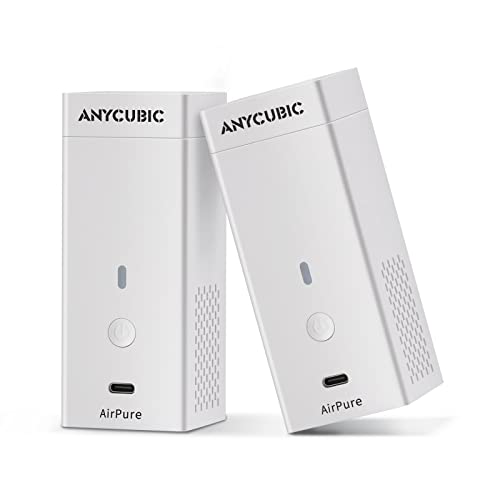
ANYCUBIC Mini Purifier for LCD DLP Printers (Pack of 2)
Mintion Filter System for Bambu Lab P1S/X1C
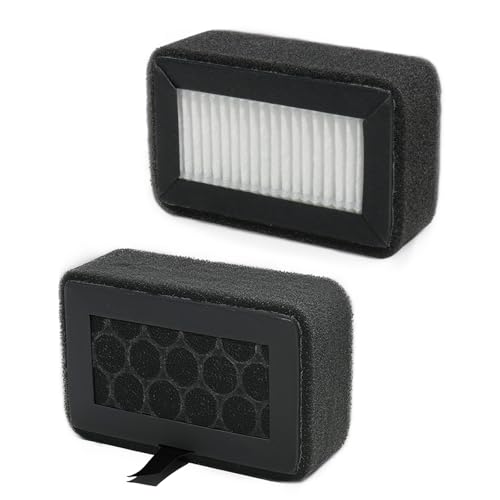
SAHVAIM HEPA 13 Carbon Filter for Bambu Lab X1/P1 (2 Pack)

KhotIlong 10-Pack Carbon Filters for ANYCUBIC & ELEGOO

Wefuit HEPA 13 Carbon Filters for Elegoo Centauri Carbon (3PC)

Upiyan Blurolls All-In-One HEPA 13 Combo Filter for Bambu Lab (2PCS)

Wefuit Air Filter for Creality K1 Max/K2 Series (3PK)
Mintion V1 Filter System for Enclosed 3D Printers

Mintion 3D Printer Filter System HEPA H13 & Activated Carbon

BlueDate 3D Printer Air Purifier for Bambu Lab & ELEGOO
More Details On Our Top Picks
This little unit measures roughly 4.5 by 1.8 by 1.8 inches, so it tucks onto an LCD or DLP resin printer without stealing desk space. One button starts it, and the high-density activated carbon media goes after the resin odors that make small rooms unpleasant.
Because it’s carbon-only rather than a HEPA system, it’s aimed at smell control more than particle capture. Resin printers running in a spare bedroom or shared office tend to benefit most from that trade-off.
Strong Points
- Fits nearly anywhere on or beside the printer frame
- One-button operation means zero setup friction
- Two units per pack lets you run one while the other rests
- Owners commonly report it runs quietly enough for overnight prints
Things To Consider
- No HEPA stage, so ultrafine particles pass through untreated
- Carbon saturates over time, and replacement scheduling falls on you
Key Specs
Who It Suits Best
Hobbyists running ANYCUBIC or similar LCD resin printers in bedrooms, dorms, or shared living spaces where odor matters most.
Where Another Pick Suits Better
Filament users chasing particle capture should look at the Mintion V1 Filter System, which layers true HEPA H13 filtration on top of carbon.
Generic room purifiers dilute their effort across an entire house. This Mintion unit sits right at the emission source, pulling chamber air through a pre-filter, a True HEPA H13 stage rated to catch 99.97% of particles down to 0.3 microns, then a chemically activated carbon bed for vapors.
The sequencing matters: the pre-filter catches lint and debris first, which slows how fast the expensive HEPA and carbon stages clog. PLA, PETG, ABS, and ASA all fall within its intended workload, making it a strong match for anyone who swaps filaments often.
What We Like
- Three-stage path protects downstream media from early clogging
- HEPA H13 captures ultrafine particles carbon alone misses
- Purpose-built for printer exhaust rather than whole-room duty
- Handles the styrene-heavy output of ABS and ASA jobs
Worth Noting
- Media replacement adds recurring upkeep compared with passive pads
- Footprint exceeds clip-on filters like the SAHVAIM pack below
Made For
Bambu Lab P1S or X1C owners printing engineering filaments regularly in occupied rooms.
Consider Something Else When
Light PLA-only users may find the simpler SAHVAIM HEPA 13 drop-in cartridge covers their needs with less hardware.
Swapping cartridges beats installing hardware, and this two-pack slides straight into the stock slot on Bambu Lab X1, X1C, P1P, and P1S machines. Each pad pairs a HEPA 13 layer with an activated carbon bed, so particles and vapors get addressed in one insert.
The precision sizing, listed around 82mm by 50mm by 27mm, means no rattling or gaps for unfiltered air to sneak past. In our view, that snug fit is the difference between a filter that works and one that mostly looks busy.
Highlights
- Dual-layer media upgrades basic carbon-only stock filters
- Two-pack roughly halves how often you reorder
- Drop-in fit requires no tools or brackets
Trade Offs
- Passive cartridge airflow depends entirely on the printer’s own fan
- HEPA media loads up faster when you print abrasive or dusty materials
At A Glance
Right Fit For
Bambu owners who want better-than-stock air handling without adding an external box beside the printer.
Not Your Match When
Heavy ABS users will get more headroom from the Mintion system built for Bambu Lab P1S/X1C, whose dedicated fan moves far more air than a cartridge can.
Small purifiers eat through pads quickly, and buying them one at a time gets old fast. This ten-pack of 1.5 x 1.5 x 0.63-inch active carbon squares covers months of swaps for ANYCUBIC and ELEGOO mini purifiers, which is why frequent resin printers keep a stack like this on hand.
A fresh pad also restores suction, since saturated carbon chokes airflow and makes the little fan work harder. Owners commonly report that swapping on schedule keeps the purifier pulling like new, which indirectly helps the machine run cooler during long cure-and-print cycles.
Upsides
- Ten pads mean a year or more of routine changes for many users
- Restores suction and performance as soon as a fresh square goes in
- Fits both ANYCUBIC and ELEGOO mini purifier housings
- Low commitment for trying upgraded media in an existing unit
Minor Gripes
- Carbon only, so no particulate filtration whatsoever
- Exact pad life varies with humidity and print frequency
- Store spares sealed, since open carbon absorbs room odors prematurely
Who Should Grab It
Anyone already owning an ANYCUBIC or ELEGOO mini purifier who wants bulk replacements instead of repeated single-pad orders.
Look Elsewhere When
First-time buyers without a compatible purifier body should start with the complete ANYCUBIC Mini Purifier pack instead of pads alone.
The Centauri Carbon earns its name by happily printing ABS, PETG, PC, and other demanding filaments, and those materials release the heaviest vapor loads in hobby printing. This three-pack of composite pads combines a HEPA 13 layer with activated carbon specifically sized for that machine’s filter bay.
The manufacturer cites formaldehyde reduction of at least 90% alongside volatile organic compound capture, figures that matter most when a print session runs eight hours or more. Compared with the Creality-focused Wefuit pack later in this list, this one targets a different chassis entirely, so check your model before ordering.
Bright Spots
- Composite media addresses both nanoparticles and chemical odors
- Three pads extend the interval between reorders considerably
- Matched to high-emission filaments like ABS and polycarbonate
Points To Note
- Fitment is exclusive to the Centauri Carbon, not other Elegoo models
- Passive design relies on the printer’s internal fan for throughput
Best Suited To
Centauri Carbon owners who push engineering filaments and want OEM-slot filtration with real particle capture.
A Better Fit Elsewhere
Elegoo users with different chassis models will find broader coverage in the BlueDate air purifier, which supports multiple FDM machines.
Where the SAHVAIM pack covers four Bambu models, this combo extends further, listing fitment across X1, X1C, P1S, and even the X1E workshop machine. Each cartridge merges HEPA 13 media with activated carbon into a single insert, so one swap handles both particles and fumes.
The claimed capture rate reaches 99.95% of nanoparticles along with formaldehyde and general VOCs, numbers in line with what you’d expect from H13-class media. Multi-printer households appreciate that one part number covers several machines, simplifying the spare-parts drawer.
Reasons To Buy
- Broader model list than most Bambu-specific cartridges
- All-in-one construction means a single insert per service cycle
- Two-pack suits households running more than one printer
- Compact shape installs without tools in seconds
Softer Spots
- Third-party fit, so verify your exact chassis revision before purchase
- Throughput still limited by the printer’s stock fan arrangement
Quick Facts
Who Will Love This
Workshop operators juggling multiple Bambu Lab printers who want one cartridge SKU across the fleet.
Swap It Out When
X1C-only owners prioritizing maximum airflow should step up to the Mintion external system designed for that exact pairing.
Creality’s stock K2 filtration leans on carbon alone, which tames smells but lets ultrafine particles and PM2.5 nanoplastics slip through untouched. This three-pack fills that gap by adding a HEPA 13 layer alongside the carbon bed, in pads shaped for the K1 Max, K2, K2 Pro, and K2 Plus bays.
The upgrade logic mirrors what the SAHVAIM pack does for Bambu machines: same slot, better media. Dust capture also helps the printer itself, since less particulate settling on rails and electronics means fewer maintenance sessions down the road.
Plus Points
- Adds genuine particle capture over carbon-only stock media
- Three-pack stretches replacement intervals across seasons
- Tool-free swap into the existing filter compartment
- Reduced dust buildup benefits rails and boards over time
Small Caveats
- Denser media can slightly restrict airflow versus thin stock pads
- Only fits the listed Creality chassis, nothing else
The Right Fit
K-series owners printing ABS or ASA indoors who want stock-slot convenience with H13-grade particle removal.
Reach For A Different Pick When
K1 Max users wanting forced-air extraction beyond the stock fan should consider the Mintion V1 Filter System with its dedicated 60 m³/h blower.
Most filtration products lock you to one printer brand. The V1 takes the opposite approach, pairing a pre-filter, HEPA H13 stage, and activated carbon bed with a 60 m³/h blower that works across enclosed machines from several manufacturers.
The carbon bed targets specific nasties by name: styrene from ABS and ASA, caprolactam from nylon. Those compounds are exactly what make engineering-filament printing unpleasant indoors, and a dedicated fan moving 60 cubic meters per hour clears them far faster than any passive cartridge. Setup stays simple, and the housing tucks beside most enclosures without drama.
Standout Traits
- Three-stage path handles dust, particles, and heavy VOCs
- 60 m³/h airflow suits large-chamber enclosed printers
- Named chemical targets show the media was chosen deliberately
- Works across brands rather than one ecosystem
Areas To Watch
- Larger footprint than any cartridge-style option here
- Enclosed printers only, per the stated design intent
Feature Snapshot
Built With In Mind
Owners of larger enclosed printers, especially nylon and ASA users, who want brand-independent extraction power.
Another Choice May Suit
Bambu-exclusive setups get a tailored connector experience from the Mintion system made for the P1S/X1C pairing.
This sibling to the V1 pushes the same three-stage architecture harder, with a centrifugal fan holding stable pressure through every filter layer and outlet velocities around 10 m/s. It ships plug-and-play for Bambu Lab P1S and X1C, and printable adapter files extend it to H2S/H2D, P2S, Creality K1/K2, Prusa enclosures, Elegoo, and Anycubic machines.
Published charts indicate meaningful drops in ultrafine particles and VOC levels inside and outside the chamber during ABS, ASA, PLA, and PETG runs. A side benefit owners mention: less contaminant film settling on rails and electronics, which tends to lengthen the printer’s working life.
Best Bits
- Centrifugal fan sustains airflow even as media loads up
- Default Bambu connector, no adapter hunting required
- Printable adapters cover a wide range of other brands
- Reduces grime accumulation on motion components
- Compact enough to sit inside some enclosures
Honest Caveats
- Not recommended for open-frame printers lacking an enclosure
- Adapter printing adds a small DIY step for non-Bambu machines
Core Details
Perfect Match For
Serious ABS and nylon printers with enclosed machines who want the strongest extraction in this lineup.
Where A Sibling Pick Shines
Open-frame users should skip this category entirely and look at the ANYCUBIC Mini Purifier for odor-only duty near resin machines.
The BD-60B desktop unit takes a slightly different angle: its DC brushless motor pulls hard enough to capture smoke and solid particulates at the source while also drawing heat out of the printer interior. Long marathons on Bambu Lab or ELEGOO FDM machines are where that combination pays off.
Brushless motors generally run cooler and quieter than brushed equivalents, which suits overnight sessions in a home office. You may find the dual role, filtering plus cooling, useful in warm rooms where chamber temperatures creep upward during back-to-back jobs.
What We Like
- DC brushless motor suits continuous, quiet operation
- Suction doubles as heat extraction during long prints
- Catches odors and solid particulates before they reach the room
- Cross-brand support spans Bambu Lab and ELEGOO FDM models
Room For Improvement
- Desktop placement consumes bench space beside the printer
- Filter media servicing adds a recurring task to your routine
Whose Shelf It Belongs On
Enthusiasts running extended multi-day print queues in warm, occupied spaces who value combined filtration and cooling.
Skip It When
Desk-space-tight setups are better served by the slim Mintion filter system, which mounts beside or inside an enclosure instead.
What Matters Most Before Choosing 3d Printer Hepa Filters
Match The Media To Your Filament
PLA runs cool and emits modestly, so a carbon pad often suffices. ABS, ASA, and nylon release styrene, caprolactam, and heavier VOC loads, and those demand true HEPA H13 media paired with a thick carbon bed. Buying light filtration for heavy filaments is the most common mismatch in this category.
Passive Cartridge Or Active System
Cartridges like the SAHVAIM and Wefuit packs reuse your printer’s own fan, costing nothing extra in space or noise but capping throughput. Active systems such as the Mintion units add a dedicated blower, moving 60 m³/h regardless of the printer’s internals. Heavy users notice the difference within the first long ABS job.
Fitment And Replacement Reality
Verify your exact model against the compatibility list before ordering, since third-party cartridges vary slightly between chassis revisions. Also budget for ongoing media swaps: carbon saturates in weeks of regular use, and storing spares sealed keeps them effective until needed.
Key Considerations Across These Picks
Traps First Timers Fall Into
The classic error is buying a generic room purifier and expecting it to handle printer exhaust; distance dilutes everything. Another slip is ignoring enclosure requirements, since active extractors need contained air to work against. Check dimensions twice, because a cartridge a millimeter off will leak unfiltered air around the edges.
The Case For Spending Up
Higher-tier systems justify their cost with staged filtration, stronger fans, and broader compatibility. Pre-filters shield expensive HEPA media, extending its life, while centrifugal blowers maintain pressure as media loads. Casual PLA hobbyists won’t recoup that premium; ABS and nylon printers usually will.
Frequently Asked Questions
Do I need a HEPA filter for PLA printing?
PLA emits fewer harmful compounds than engineering filaments, so carbon-only filtration often manages the odor adequately. Adding HEPA still helps with ultrafine particles in poorly ventilated rooms.
How often should I replace my 3D printer filter?
Carbon media typically saturates within weeks of regular printing, depending on filament type and humidity. Swap sooner whenever smells return or suction visibly drops.
Will a filter affect my print quality?
Passive cartridges and well-designed active systems leave chamber temperature and drafts essentially untouched. Poorly fitted units that leak air can cause warping on temperature-sensitive filaments.
Can one filter serve multiple printers?
Active systems like the Mintion units can be repositioned between machines using printable adapters. Cartridges are cut to a single chassis and won’t transfer.
Are these filters safe to run overnight?
All the picks here are designed for unattended operation alongside your printer’s own electronics. Place the unit on a stable surface away from loose debris for best results.
Closing Remarks
Your filament choice should drive this decision more than anything else. PLA hobbyists can start with a simple cartridge or mini purifier and stop there, while anyone pushing ABS, ASA, or nylon deserves a true HEPA H13 system with real airflow. Measure your space, confirm your printer model, and pick accordingly. Clean air is one upgrade you’ll notice every single day you print.