Going low is addictive. Once you’ve felt a properly strung baritone or seven-string push air through a small practice room, standard tuning starts to sound thin. The catch is that most players get there with the wrong setup: a six-string set stretched over a long scale, or a seven-string guitar strung so loose it flubs every low note. This roundup covers both sides of that problem, with four guitars built for extended range and six string sets matched to baritone and seven-string work. Whether you’re tracking doom riffs at home or gigging in a drop-tuned metal band, there’s a pairing here that will hold its pitch.
The Shortlist At A Glance
PickWhy We Picked ItBest ForAction

Everyday Favorite
Ernie Ball Baritone Slinky Strings 13-72
Purpose-built baritone gauges
Baritone six-string owners

Performance Leader
Jackson JS22-7 Dinky Arch Top Satin Black
Gig-ready hot-rodded build
Metal and rock players
Upgrade Pick
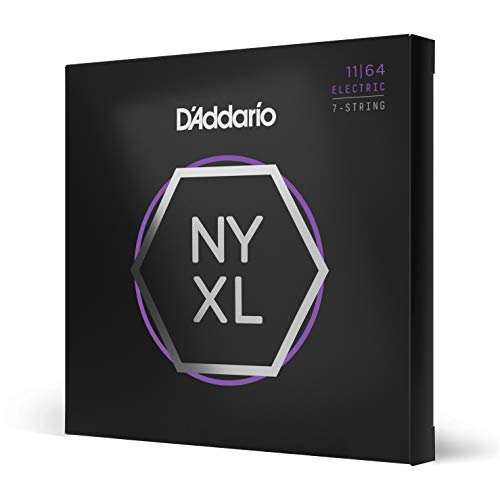
D’Addario NYXL1164 7-String Strings 11-64
Strong, stable steel core
Aggressive rhythm players

Balanced Choice
Ernie Ball Skinny Top Heavy Bottom 7-String 10-62
Bend-friendly hybrid tension
Lead-focused seven-stringers

Budget Friendly
Ibanez GRG 7-String Solid-Body White
Beginner-friendly entry point
First-time seven-string buyers

Design Standout
Ibanez GRG7221 Metallic Light Blue
Maple board, striking finish
Style-conscious home players

Feature Rich
Ibanez GRG7221QA Transparent Black Sunburst
Quilted top, tremolo bridge
Players wanting visual flair

Reliable Runner Up
D’Addario XL Nickel EXL110-7 10-59
Versatile classic tone
All-round seven-string use

Top Pick
D’Addario XL Nickel EXL157 Baritone 14-68
Tight, defined low end
Serious baritone tunings
Premium Pick
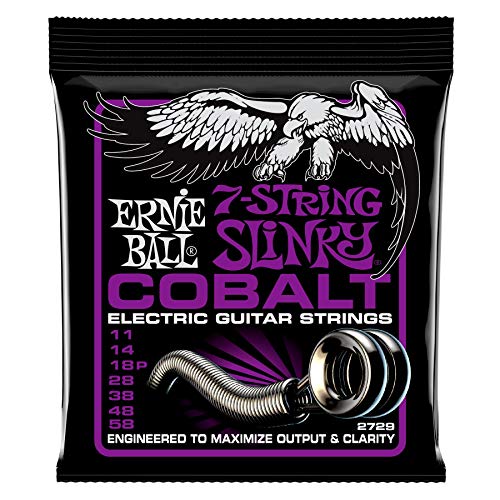
Ernie Ball Power Slinky Cobalt 11-58
Enhanced output and clarity
High-gain recording setups
More Details On Our Top Picks
Most baritone frustration comes from string choice, not the guitar itself. A standard set goes floppy below B, which is why this dedicated 13-72 nickel-wound set exists: it keeps tension where a long-scale instrument needs it.
The nickel wrap over a steel core gives a balanced voice that sits well under distortion without turning muddy. Owners commonly report these lasting through months of regular practice before tone dulls, and the small ball ends seat cleanly at most bridges.
Strong Points
- ✓Gauges designed specifically for baritone scale lengths, so the low strings stay tight instead of flubby
- ✓Nickel-wound construction delivers an even response across clean and driven tones
- ✓Made in California with fresh materials, which many players link to consistent batches
- ✓Small ball ends make restringing quicker on hardtail and tremolo bridges alike
Things To Consider
- •The heavy bottom end can feel stiff under the fingers during your first week of adjustment
- •Wound third-style thickness means bending the upper strings takes more effort than lighter sets
Who It Suits Best
Rhythm-first baritone players who tune to B standard or lower and rarely bend above the twelfth fret.
A Better Fit Elsewhere
Lead players who need easier bends should look at the Ernie Ball Skinny Top Heavy Bottom 7-String instead.
Check on Amazon
Jackson’s JS series has long been the sensible doorway into serious metal hardware, and the JS22-7 carries that reputation onto seven strings. You get a lightweight poplar body, two high-output humbuckers, and a compound-radius amaranth fingerboard that flattens out higher up for fast lead runs.
In a band mix, that pickup pairing pushes enough mids to cut through a dense rhythm section. The satin-finished maple neck also resists the sticky feel gloss finishes develop mid-set, something gigging players tend to notice first.
What We Like
- ✓Compound-radius fingerboard makes chord work comfortable low down and shredding easy up high
- ✓High-output humbuckers handle drop tunings without losing note definition
- ✓Satin neck finish stays smooth during long rehearsals
- ✓Arch-top body styling looks far pricier than the JS line suggests
- ✓Lightweight poplar keeps shoulder fatigue down on long gigs
Worth Noting
- •The stock strings are usually the first thing owners swap, so budget for a proper seven-string set
- •A hardtail design means no whammy expression for players who rely on tremolo tricks
At A Glance
| | Feature | Specification | Why It Matters |
|---|
| Body wood | Poplar | Keeps weight low for standing sets |
| Fingerboard | Amaranth, 12-16 inch radius | Comfortable for both chords and leads |
| Pickups | Dual high-output humbuckers | Full output for high-gain styles |
| Neck finish | Satin maple | Fast, non-sticky playing feel |
Made For
Intermediate rock and metal players who need a dependable gigging seven-string without boutique pricing.
Where A Sibling Pick Shines
Total beginners may find the Ibanez GRG 7-String more forgiving as a first extended-range instrument.
View Latest Price
NYXL is D’Addario’s premium electric line, built around a reformulated high-carbon steel core that stretches further before breaking. On a seven-string, that matters most on the low B, where ordinary cores give up intonation first.
The 11-64 spread suits players who want real tension under aggressive riffing. Compared with the classic EXL110-7 later in this list, you’re paying more for noticeably stronger tuning stability and a slightly punchier attack, which studio players often describe as strings that snap into focus.
Highlights
- ✓Break-resistant core survives hard picking and frequent retuning
- ✓Holds pitch through long sessions better than standard nickel sets
- ✓11-64 gauges give the low B enough mass to stay articulate
- ✓Plain steels resist corrosion longer in humid practice rooms
Small Caveats
- •Costs more per set than the XL line, which adds up for daily players
- •The firmer feel may take a few practices to adjust to coming from lighter gauges
Right Fit For
Recording-focused players whose downtuned riffs demand rock-solid pitch from the first take to the last.
Swap It Out When
Casual home players get excellent value from the D’Addario XL Nickel EXL110-7 at a friendlier cost.
Check Latest Price
Hybrid sets solve a specific tug-of-war: light enough tops for expressive bends, heavy enough bottoms to keep dropped tunings tight. This seven-string version runs 10 through 62, extending a combination six-string players have trusted for decades.
Where the pure baritone set at number one leans entirely toward rhythm, this one splits the difference. Solo-heavy players in progressive or djent-leaning bands are the natural audience, since the thin trebles make wide bends and fast legato far less punishing over a full set.
Plus Points
- ✓Thin treble strings make bends and vibrato noticeably easier during long solos
- ✓Heavy bass strings anchor drop tunings without flab
- ✓Nickel winding gives a familiar, balanced voice under gain
- ✓Suits both standard seven-string and lowered tunings with minor setup tweaks
Points To Note
- •The tension jump between plain and wound strings feels uneven until your hands adapt
- •Intonation may need a truss rod check after switching from a uniform set
Quick Facts
| | Feature | Specification | Why It Matters |
|---|
| Gauge range | 10-13-17-30-42-52-62 | Light tops for leads, heavy bottoms for rhythm |
| Wrap material | Nickel wound | Even tone across clean and distorted settings |
| Set type | Hybrid (skinny top, heavy bottom) | One set covers solo and riff duties |
Who Will Love This
Seven-string lead players who alternate between soaring bends and palm-muted low chugs in one song.
Consider Something Else When
Pure rhythm players get tighter lows from the D’Addario XL Nickel EXL157 baritone set.
View on Amazon
Ibanez built the Gio line for one job: getting new players onto a real instrument without a painful price tag. This white GRG pairs a poplar body with a bolt-on maple neck and a smooth New Zealand pine fingerboard, plus a pair of Infinity R humbuckers voiced for high-output styles.
The slim Gio neck profile is genuinely beginner-friendly, since smaller hands reach the low B without stretching. In our view it’s the least intimidating entry point of the three Ibanez options here, though the finish options are plainer than the metallic blue sibling below.
Bright Spots
- ✓Thin, fast neck profile shortens the learning curve for new seven-string players
- ✓Infinity R pickups deliver enough output for metal tones straight away
- ✓Lightweight body keeps practice sessions comfortable
- ✓Clean white finish hides less dust than darker gloss bodies
Softer Spots
- •Stock setup commonly benefits from a professional once-over before serious downtuning
- •Basic hardware means upgrades become tempting as skills grow
Who Should Grab It
First-time seven-string players and intermediate guitarists who want a low-risk way into extended range.
Reach For A Different Pick When
Gigging musicians needing tougher hardware should step up to the Jackson JS22-7 Dinky Arch Top.
Check on Amazon
Same Gio bones as the white GRG above, but this GRG7221 trades the plain look for a metallic light blue finish and a maple fingerboard. That wood choice brightens the attack slightly compared with darker boards, which some players hear as extra snap on picked notes.
Two humbuckers handle the amplification, keeping the signal quiet enough for bedroom practice through a small combo. The honest read is that you’re choosing between siblings here: identical playability, different personality, so let the finish and fingerboard decide.
Standout Traits
- ✓Maple fingerboard adds a touch of brightness to cleans and arpeggios
- ✓Metallic finish stands out on camera for content creators and livestreamers
- ✓Dual humbucker layout keeps noise low at practice volumes
- ✓Same approachable Gio neck as the rest of the family
Minor Gripes
- •Gloss metallic finishes show fingerprints and pick scratches more readily
- •No tremolo option limits expressive playing styles
Feature Snapshot
| | Feature | Specification | Why It Matters |
|---|
| Fingerboard | Maple | Slightly brighter, snappier note attack |
| Body | Poplar | Light and balanced for long sessions |
| Pickup config | Two humbuckers | Quiet, full output for high-gain tones |
Whose Shelf It Belongs On
Home players and streamers who want their gear to look as bold as their riffs sound.
Not Your Match When
Players chasing a quilted top and tremolo will prefer the Ibanez GRG7221QA sunburst model.
View Latest Price
This is the dressed-up member of the Gio seven-string trio. A quilted maple art-grain top sits over the poplar body, black hardware ties the look together, and unlike its two siblings it ships with a synchronized tremolo for dive bombs and subtle vibrato.
The Infinity R pickups match the output of the other GRG models, so tonally you’re in familiar territory. What you gain is expressiveness: the tremolo opens up pitch effects the hardtail versions simply can’t do, though it does add one maintenance habit worth knowing about.
Reasons To Buy
- ✓Quilted art-grain top gives the transparent sunburst genuine stage presence
- ✓Synchronized tremolo adds whammy expression unavailable on the other Gio picks here
- ✓Black hardware completes a cohesive, modern aesthetic
- ✓Stable tuning holds up well for a floating-style bridge at this level
Honest Caveats
- •Tremolo bridges need occasional spring adjustments and careful string changes
- •Retuning across wide ranges takes longer than on a fixed bridge
Details At A Glance
| | Feature | Specification | Why It Matters |
|---|
| Top | Quilted maple art grain | Striking visual depth under transparent finish |
| Bridge | Synchronized tremolo | Adds pitch-bend expression while playing |
| Pickups | High-output Infinity R pair | Strong signal for distorted styles |
| Hardware | Black | Unified modern look |
Built With In Mind
Beginner-to-intermediate players who want visual flair plus tremolo tricks in one affordable package.
Another Choice May Suit
Set-it-and-forget-it types will find the fixed-bridge Ibanez GRG7221 Metallic Light Blue simpler to maintain.
Check Latest Price
Some products earn their reputation by simply refusing to disappoint, and D’Addario’s XL Nickel line has done that since the mid-seventies. The seven-string version scales the familiar formula to a 10-59 spread using a hex-shaped steel core wrapped in nickel-plated steel.
That hex core is worth understanding: it locks the wrap wire in place, which is why these strings hold intonation consistently as they age. Against the NYXL set earlier, you trade some stability and break resistance for a lower cost and a slightly softer, rounder feel that many players find more comfortable day to day.
Upsides
- ✓Bright, versatile tone that works across rock, metal, funk, and everything between
- ✓Hex-core construction keeps intonation steady through weeks of play
- ✓Widely available, so finding spares before a gig is never a scramble
- ✓Comfortable tension for players transitioning from six-string sets
Trade Offs
- •Less break resistance than the NYXL line under very aggressive playing
- •Plains can dull faster in humid climates without regular wiping after sessions
Core Details
| | Feature | Specification | Why It Matters |
|---|
| Gauge range | 10-59 | Balanced tension across all seven strings |
| Core | Hexagonal high-carbon steel | Locks wraps for consistent intonation |
| Wrap wire | Nickel-plated steel | Bright tone suited to many genres |
The Right Fit
Generalist seven-string players who want one dependable set for practice, jamming, and casual recording.
Look Elsewhere When
Studio players needing maximum pitch stability should spend up on the D’Addario NYXL1164 set.
View on Amazon
For true baritone territory, the 14-68 EXL157 is the set serious low-tuners reach for. Those thick gauges put real tension behind notes tuned to A or below, turning what would be mud on a normal set into defined, piano-like low end.
Compared with the Ernie Ball baritone set opening this list, the D’Addario runs slightly heavier overall and leans on the hex-core design for intonation consistency. Doom, sludge, and film-score players who live below B standard will feel the difference immediately, especially through high-headroom amps.
Positives
- ✓Heavy gauges keep extreme low tunings tight and articulate
- ✓Hex-core build delivers reliable intonation even as the set ages
- ✓Nickel-plated wrap gives a bright edge that stops low notes blurring together
- ✓Consistent feel from string to string helps chord voicings stay even
- ✓Durable enough for the heavy pick attacks common in doom and sludge
Areas To Watch
- •May require nut slot filing on guitars not originally set up for baritone gauges
- •Very stiff feel makes wide bends impractical for most hands
Spec Overview
| | Feature | Specification | Why It Matters |
|---|
| Gauge range | 14-68 | Real tension for baritone-scale instruments |
| Core design | Proprietary hex-core | Consistent intonation and durability |
| Tone profile | Bright, versatile nickel | Clarity across genres at low pitches |
Best Suited To
Downtuned specialists playing baritone guitars in A standard or lower, especially in heavy genres.
Skip It When
Standard-tuning seven-string players will find the lighter D’Addario EXL110-7 far more playable.
Check on Amazon
Cobalt changes the physics slightly: the alloy forms a stronger magnetic bond with your pickups, which translates into hotter output, wider dynamics, and a low end that stays crisp under heavy gain. The 11-58 Power Slinky gauges suit players who split time between chunky rhythms and melodic leads.
Against the nickel-wound Ernie Ball hybrids earlier in this list, the cobalt set sounds noticeably more present through a dimed amp, almost like lifting a blanket off the speaker. The trade-off is cost, and cobalt wraps can feel a touch rougher under the fingers for the first few days.
Best Bits
- ✓Stronger magnetic pull with pickups boosts output and harmonic detail
- ✓Extended dynamic range responds to pick attack, from whisper-soft to aggressive
- ✓Increased low-end definition keeps seven-string chugs separated
- ✓Crisp highs cut through dense band mixes
Room For Improvement
- •Higher cost per set than nickel alternatives
- •The cobalt wrap texture can feel grippy until broken in
Feature Card
| | Feature | Specification | Why It Matters |
|---|
| Gauge range | 11-58 | Powerful tension for rhythm-forward playing |
| Alloy | Cobalt | Stronger magnetic response with pickups |
| Set size | 7-string | Complete coverage for extended-range guitars |
Perfect Match For
High-gain players recording downtuned material who want maximum clarity and output from their strings.
Where Another Pick Suits Better
Budget-conscious players will be happy with the versatile D’Addario XL Nickel EXL110-7 instead.
View Latest Price
Choosing Between These Extended-Range Options
Match The Scale To The Strings
Scale length, the distance from nut to bridge, decides how much tension a given gauge produces. A 27-inch baritone handles 13-72 sets comfortably, while a standard 25.5-inch seven-string usually wants something closer to 10-59. Pairing the wrong set with the wrong scale is the fastest route to floppy, unplayable lows.
Before ordering strings, measure your scale or check the manufacturer listing. Then pick a set whose heaviest string matches your lowest tuning.
Know Your Tuning Destination
B standard, drop A, and F sharp all demand different tools. Seven-string guitars cover B standard and drop A naturally, while true baritones shine a fourth or fifth lower. Buying a guitar for a tuning it wasn’t designed for leads to constant setup battles.
Decide your target tuning first, then let it dictate whether you shop the guitar half of this list or the string half.
Setup Budgets Matter More Upgrades
Budget extended-range guitars benefit enormously from a professional setup: nut slots filed for thicker strings, action lowered, intonation dialed. Setting aside a modest amount for that service transforms a starter instrument into a player.
Strings are cheaper still, but switching gauge families always warrants a truss rod check afterward.
Key Considerations Across These Picks
Traps First Timers Fall Into
The most common mistake is buying baritone strings for a standard-scale guitar, then wondering why the action sits a mile high. Nut slots and truss rods need adjusting whenever gauge jumps significantly. Skipping that step causes buzzing, dead spots, and unnecessary frustration.
When Paying More Pays Off
Premium strings like NYXL and Cobalt justify their cost through stability and output, which matters most for recording and gigging. At home, mid-priced XL sets deliver ninety percent of the experience. Spend up when your music leaves the bedroom, not before.
Frequently Asked Questions
QCan I put baritone strings on a regular guitar?
You can, but the thicker gauges will likely require nut filing and truss rod adjustment to play correctly. Without those changes, expect high action and intonation problems.
QWhat tuning is a 7-string guitar designed for?
Most seven-strings ship set up for B standard, with the low B sitting a fourth below a standard guitar’s low E. Drop A is also common with a slightly heavier bottom string.
QHow often should I change downtuned strings?
Heavy-gauge strings tend to last longer than light ones, often several months of regular play. Change them when tone dulls or the windings show visible wear near the frets.
QDo I need a special amp for a baritone or 7-string?
No special amp is required, though speakers with fuller low-end response reproduce downtuned notes more accurately. Most modern practice and gigging amps handle extended range fine.
QAre 7-string guitars harder to learn?
The extra string widens the neck slightly, but the adjustment period is usually a few weeks for players already comfortable on six strings. Chord shapes transfer directly once muscle memory adapts.
Bottom Line
Getting low the right way comes down to matching tool to tuning. Pick one of the three Ibanez or the Jackson if you need a guitar, grab the EXL157 or the Baritone Slinky set for a true baritone, and choose the NYXL, EXL110-7, hybrid, or Cobalt sets based on how hard you play. Whichever direction you go, a proper setup will matter as much as the purchase itself. Start with your target tuning, and the rest falls into place.