
Seven-string players live in a specific world: low tunings, dense chords, and gear that has to keep up without turning muddy. Whether you’re upgrading a pickup, restringing before a gig, or picking your first seven-string guitar, the wrong choice shows up fast as flubby lows or thin, brittle highs. This roundup covers ten options across pickups, strings, and complete guitars, matched to real playing situations rather than spec sheets alone.
The Shortlist At A Glance
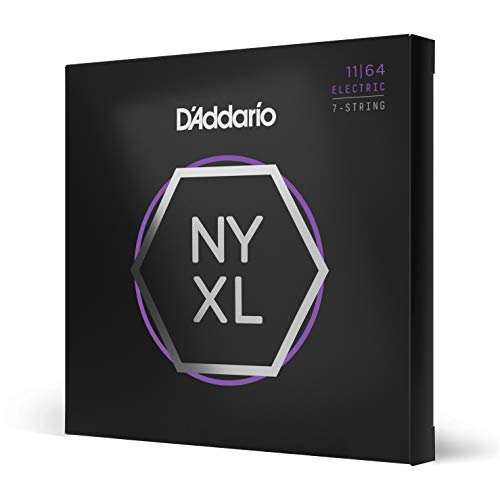
D’Addario NYXL1164 Electric Guitar Strings 11-64

Ernie Ball Skinny Top Heavy Bottom Slinky 10-62

Ibanez Gio GRG7221QA 7-String Transparent Black Sunburst

Ibanez GRG7221 Metallic Light Blue

Ibanez GRG 7-String Solid-Body Electric Guitar White

D’Addario XL Nickel EXL110-7 Electric Guitar Strings 10-59

SAPHUE Dual Blade High Output Humbucker Pickup Black
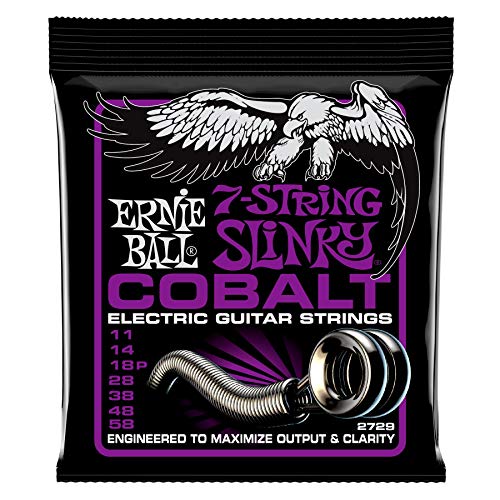
Ernie Ball Power Slinky Cobalt 11-58

Seymour Duncan SH-6b Distortion Bridge Pickup Zebra

SAPHUE Adjustable Double Coil Humbucker Pickup Red
More Details On Our Top Picks
Drop-tuned rhythm parts live or die by string tension, and this 11-64 set gives you plenty of it. The heavier bottom end keeps low B notes tight instead of floppy, which matters most when your amp gain is already pushing things around.
The NYXL line uses a reinforced high-carbon steel core, an approach D’Addario engineered at its New York facility. In practice, that construction is widely credited with resisting breakage during aggressive bends and holding pitch through long rehearsals.
Strong Points
- Thick 11-64 gauges stabilize drop tunings without constant retuning between songs.
- The reinforced core handles hard bends and heavy strumming better than standard sets tend to.
- Nickel-plated wrap wire delivers a punchy midrange that cuts through a dense band mix.
- Made in the USA by a manufacturer with decades of string-making consistency behind it.
Things To Consider
- Heavier gauges demand more finger strength, so newer players may find bends tiring at first.
- Your nut slots may need widening for the low strings to seat properly on some guitars.
Who It Suits Best
Rhythm-focused seven-string players who tune down and want their low end to stay disciplined night after night.
Where Another Pick Suits Better
Lead players who bend constantly will get a more comfortable feel from the Ernie Ball Skinny Top Heavy Bottom Slinky set later in this list.
Hybrid string sets solve a genuine problem: bending solos wants light strings, chugging riffs want heavy ones. This set splits the difference with a 10-13-17 top three and a 30-42-52-62 bottom four, extending Ernie Ball’s popular six-string hybrid formula to seven strings.
In a band setting, that split reads clearly. Your lead lines stay supple under the fingers while palm-muted low B notes hold their shape against distortion. Nickel-plated steel winding keeps the overall voice familiar rather than exotic.
What We Like
- The hybrid taper lets you solo comfortably without sacrificing low-end tension.
- A 62-gauge seventh string anchors dropped tunings with less flop than lighter sets show.
- Nickel windings suit nearly every genre, from clean funk chords to saturated metal.
Worth Noting
- The jump from a 17-gauge third string to a 30-gauge fourth can feel uneven until your hands adapt.
- Like any nickel set, tone dulls gradually with sweat exposure, so regular wiping extends string life.
Made For
Players who split their time between riff-driven rhythm work and expressive single-note leads.
Consider Something Else When
Maximum tuning stability under extreme down-tuning points toward the D’Addario NYXL1164’s heavier, reinforced build instead.
Most entry-level seven-strings look utilitarian. This one doesn’t, thanks to a quilted maple art-grain top under a transparent black sunburst finish that photographs well and looks better under stage lights.
Underneath the finish sits the familiar Gio recipe: two high-output Infinity R humbuckers in an H-H layout, a synchronized tremolo, and black hardware. Ibanez positions the Gio series squarely at beginners and intermediates, and the slim neck profile reflects that intent. Compared with the plainer GRG models below, this variant trades nothing functionally and adds visual appeal.
Highlights
- The quilted art-grain top gives budget buyers a genuinely striking instrument.
- Infinity R humbuckers push enough output for modern rock and metal voicings.
- Ibanez’s fast, flat neck profile suits players moving up from six-string shred-style guitars.
- An H-H configuration plus tremolo covers both thick rhythms and expressive dives.
Trade Offs
- Entry-level hardware means the tremolo arm may need occasional tightening to stay stable.
- A factory setup check is wise; budget guitars commonly arrive needing intonation tweaks.
Key Specs
Right Fit For
Beginners and intermediate players who want their first seven-string to look as serious as it sounds.
Not Your Match When
Shoppers prioritizing maximum value over appearance will find the white Ibanez GRG further down delivers similar playability for less.
Where the sunburst GRG7221QA above leans on looks, this metallic light blue version keeps things simple: two humbuckers, a poplar body, maple neck, and maple fingerboard. That straightforward layout is exactly why it works as a daily practice instrument.
The maple fingerboard tends to give notes a slightly snappier attack than darker woods, which helps chord definition when you’re running high gain. Owners commonly report the Gio neck feeling comfortable even for smaller hands, a real advantage on a wider seven-string nut.
Upsides
- Two-humbucker simplicity means fewer controls to learn while you’re still finding your sound.
- The maple fingerboard and maple neck combination supports clear note separation in dense tunings.
- Poplar bodies keep overall weight manageable for long practice sessions.
Minor Gripes
- No tremolo here, so players who use pitch effects will miss that option.
- Gloss finishes on budget instruments can show fingerprints quickly during frequent handling.
At A Glance
Who Will Love This
Students and home players who want a dependable seven-string for practice without paying for extras they won’t use yet.
Look Elsewhere When
A whammy bar belongs in your playing, the sunburst GRG7221QA with its synchronized tremolo fits that brief better.
This white GRG is the no-frills member of the Gio family, pairing a poplar body with a bolt-on maple neck and a New Zealand pine fingerboard chosen for smooth, easy playability. Ibanez describes the series as built for beginners and intermediates, and the spec sheet backs that up.
High-output Infinity R pickups carry over from its siblings, so the amplified voice stays aggressive despite the lower price point. Against the metallic blue GRG7221 reviewed earlier, the main differences are cosmetic and the fingerboard material, not capability.
Bright Spots
- The pine fingerboard surface plays smoothly, which shortens the adjustment period for new players.
- Infinity R humbuckers deliver enough gain-friendly output for rock and metal practice.
- A bolt-on neck simplifies future repairs compared with glued constructions.
Points To Note
- White gloss finishes tend to reveal wear and yellowing over years of heavy use.
- Expect a setup pass on arrival; budget bolts-on frequently benefit from a truss rod check.
Quick Facts
Who Should Grab It
First-time seven-string players on a tight budget who care about feel and tone more than finish flourishes.
A Better Fit Elsewhere
Anyone wanting a flashier instrument for the same platform should step up to the quilted-top GRG7221QA covered earlier.
Some products earn their reputation slowly, and D’Addario’s XL Nickel line has been a studio and stage staple since the mid-1970s. This seven-string adaptation runs 10 through 59, a slightly lighter footprint than the NYXL1164 set at the top of this list.
The voice is bright and adaptable, built on a high-carbon steel core wrapped in nickel-plated steel. For players splitting time between clean passages and driven sections, that balance is the whole appeal. You give up some of the NYXL’s reinforced durability in exchange for a more traditional feel and easier bending.
Reasons To Buy
- A decades-long track record makes tone expectations predictable set after set.
- The 10-59 spread suits standard seven-string tunings without demanding heavy fretting force.
- Nickel plating responds well to both vintage-flavored and modern high-gain amps.
Softer Spots
- Under extreme drop tunings, the lighter bottom end allows more floppiness than thicker sets do.
- Standard cores are less break-resistant than the NYXL construction when bends get violent.
The Right Fit
Generalists who play varied styles on a seven-string and want one dependable, familiar-feeling set.
Swap It Out When
Detuning well below standard is your norm, the heavier D’Addario NYXL1164 holds tension more convincingly.
Blade-style humbuckers trade individual pole pieces for a continuous rail, which keeps every string’s output even across the width of the pickup. This SAPHUE unit goes further with a four-coil design and a ceramic bar magnet, both aimed squarely at metal players chasing aggressive saturation.
The manufacturer specifies plastic bobbins and includes connecting wires, and lists bridge position as the intended home on solid-body guitars, though neck and middle placement remain possible. In a dense mix, that extra output pushes an amp into compression sooner, which suits chugging rhythms.
Plus Points
- The blade rail evens out string-to-string volume on wide seven-string spacing.
- Four coils and a ceramic magnet deliver the strong output metal voicings ask for.
- Connection wires included means a simpler swap for anyone comfortable with a soldering iron.
Small Caveats
- Ceramic-magnet designs can sound harsher on the top end than alnico alternatives, depending on your amp.
- Installation requires pickup-routing knowledge; measure your cavity before ordering.
Whose Shelf It Belongs On
DIY-minded metal guitarists upgrading a solid-body guitar for heavier rhythm work.
Reach For A Different Pick When
You’d rather buy a proven name-brand voicing, the Seymour Duncan SH-6b later in this list carries a longer pedigree.
Cobalt is the interesting variable here. Because cobalt interacts more strongly with a pickup’s magnets than conventional nickel plating does, these strings push a stronger signal into the same hardware. Ernie Ball pairs that alloy with an 11-58 Power Slinky gauge spread for added low-end tension.
The practical result, based on how the alloy behaves, is extended dynamic range with fuller lows and clearer highs. Players running high-gain rigs often notice improved harmonic detail, since the stronger magnetic relationship feeds the preamp a healthier signal before distortion piles on.
Standout Traits
- Cobalt windings drive pickups harder, adding perceived output without changing your amp settings.
- The 11-58 gauge keeps drop tunings controlled while staying bendable on the top strings.
- Wider dynamics reward players who vary picking attack between clean and heavy sections.
Honest Caveats
- Cobalt typically costs more than equivalent nickel sets, which adds up for frequent restringers.
- The stronger magnetic pull can exaggerate fret buzz on guitars with already-low action.
Feature Snapshot
Built With In Mind
High-gain players who want more clarity and punch from their existing pickups without swapping hardware.
Another Choice May Suit
Budget-conscious players sticking to standard tunings will find the D’Addario XL Nickel EXL110-7 covers the same ground for less.
The SH-6b, better known as the Distortion bridge model, has anchored countless hard-rock and metal builds over the years. Its ceramic-magnet, high-output design targets exactly what a bridge position needs: tight, aggressive mids that survive heavy gain without dissolving into noise.
The zebra cover, cream coils framed by black bobbins, gives upgraded guitars a classic hot-rodded look. A four-conductor lead is included, which opens up coil-splitting and other wiring options for players who want versatility alongside the raw output. Compared with the SAPHUE blade unit earlier, this one brings brand pedigree and refined voicing rather than sheer output alone.
Best Bits
- A decades-proven high-output voicing trusted across rock and metal recordings.
- Four-conductor wiring supports coil splits for cleaner rhythm and lead flexibility.
- The zebra finish upgrades a guitar’s appearance along with its tone.
- Ceramic construction keeps compressed, saturated tones defined at volume.
Areas To Watch
- Output this hot can overwhelm low-wattage clean amps, thinning out pristine tones.
- Soldering skills or a tech visit are required, adding cost beyond the pickup itself.
Feature Rundown
Perfect Match For
Committed players upgrading a favorite guitar’s bridge with a respected, battle-tested replacement.
Skip It When
The goal is a first cheap experiment, the red SAPHUE humbucker below costs far less to learn on.
Open-coil humbuckers expose their windings, and this red-capped SAPHUE wears that look proudly. The open design also serves a stated tonal purpose, with the manufacturer describing clearer, brighter output than covered equivalents often deliver.
Adjustable umbrella-head screws sit above each coil, letting you raise or lower individual poles to balance string loudness, a handy feature on wider seven-string spacing where outer strings can fade. Ceramic magnets and high output aim the voicing at punk and metal styles. It’s listed for both neck and bridge positions, which adds flexibility for multi-pickup projects.
Positives
- Adjustable pole screws let you fine-tune string balance without shimming the pickup.
- Open-coil construction supports a brighter, more articulate output character.
- Neck or bridge mounting suits project builds needing multiple units.
Room For Improvement
- Exposed coils collect dust and finger grime, so occasional gentle cleaning keeps them tidy.
- Fitment varies by guitar, so confirming cavity dimensions before purchase avoids returns.
Core Details
Best Suited To
Tinkerers building or refreshing a project guitar who want adjustable, aggressive tone on a small budget.
Where A Sibling Pick Shines
Players wanting a finished, name-brand upgrade instead of a project part will be happier with the Seymour Duncan SH-6b above.
What Matters Most Before Choosing 7 String Guitar Pickups
Match The Tool To The Job
Pickups, strings, and guitars solve different problems, so start with what’s actually limiting your tone. A muddy low B usually traces back to string gauge or pickup output before anything else. Players chasing tighter rhythm sounds benefit from heavier bottom strings or a higher-output bridge pickup, while those fighting harshness often need warmer windings instead.
Gauge And Tension Go Together
String gauge determines tension, and tension decides whether drop tunings feel controlled or sloppy. Heavier sets like an 11-64 stabilize low tunings but demand stronger hands and possibly wider nut slots. Lighter hybrids bend easily yet allow more floppiness below standard pitch. Be honest about your tuning habits before choosing.
Know Your Magnet Types
Ceramic magnets generally push harder, more compressed output suited to metal, while alnico designs lean warmer and more dynamic. Neither is objectively better; the right call depends on your amp and genre. Budget ceramic options like the SAPHUE units work well for experimentation, whereas established names such as Seymour Duncan justify their cost through refined voicing and consistent quality control.
Factor In Installation Reality
Swapping a pickup involves soldering, cavity measurements, and sometimes routing. Strings take minutes to change; pickups take planning. Newer players should weigh whether a complete budget guitar like an Ibanez Gio delivers more immediate improvement than a component upgrade.
Key Considerations Across These Picks
Traps First Timers Fall Into
The most common mistake is buying a high-output pickup to fix a problem caused by old strings or a poor setup. Fresh strings and a proper truss rod adjustment cost little and often transform tone on their own. Another trap: ordering a pickup without measuring the pickup cavity or checking string spacing, which leads to fitment surprises.
What Separates Premium From Basic
Higher-priced pickups pay for voicing refinement, consistent winding, and wiring options like four-conductor leads. That matters most once you’ve settled on a sound and want to reproduce it reliably. Early on, inexpensive components teach you what you actually prefer, making the eventual premium purchase smarter.
Frequently Asked Questions
Do seven-string guitars need special pickups?
Yes, in most cases. Seven-string pickups use wider pole spacing to match the broader string span, so standard six-string replacements won’t align properly with every string.
What string gauge works best for drop tunings?
Heavier bottoms like 59 to 64 on the lowest string keep tension stable when tuned down. Lighter tops preserve comfortable bending for lead work.
Can I install a humbucker myself?
You can, with basic soldering skills and correct measurements. Many players hand the job to a guitar tech to avoid wiring errors.
Are expensive strings really different?
Alloy and construction do affect tone and longevity. Cobalt sets push pickups harder, while reinforced cores resist breakage, so the upgrade has a real basis.
Is a budget seven-string guitar a good start?
Entry-level models like the Ibanez Gio series offer legitimate playability for learning. A setup check after purchase makes them far more enjoyable.
Closing Thoughts
Seven-string tone comes from the whole chain, not one magic component. Start with strings matched to your tunings, add a pickup upgrade once you know what’s missing, and let a solid guitar like a Gio carry the rest. Whatever direction you take, choose for the way you actually play, and the gear will disappear into the music.