Dyeing wool at home is one of those crafts that looks intimidating until you do it once. The right powdered dye dissolves in hot water, bonds to protein fibers with nothing fancier than vinegar or citric acid, and leaves you with color that survives washing and light. Whether you’re refreshing a faded sweater, tinting spinning fiber, or coloring a cosplay wig, this shortlist covers single jars in every shade family plus two starter sets worth a look.
The Shortlist At A Glance

Jacquard Acid Dyes .5oz Olive (102855)

Jacquard Acid Dyes .5oz Chestnut (102853)

Jacquard Acid Dyes .5oz Vermillion (102832)

Jacquard Acid Dye 4 Color Set with Citric Acid

Jacquard Acid Dye 1/2oz Jar Brilliant Blue


Jacquard Acid Dye 1/2oz Jar Crimson
Jacquard Acid Dye 1/2oz Jar Deep Orange

Basic Dye Set .5oz 8/Pkg
More Details On Our Top Picks
Olive sits in that sweet spot between green and brown, which makes it one of the most forgiving shades in the Jacquard lineup. A half-ounce of this concentrated powder can color up to two pounds of fiber depending on how deep you want the shade to go, so one jar stretches across several skeins of yarn or a couple of garments.
In practice, you dissolve it in hot water, add vinegar as your acid source, and simmer the fiber until the bath exhausts. Spinners and knitters working with undyed fleece tend to reach for olive because it reads natural rather than artificial.
Strong Points
- Concentrated powder covers up to two pounds of fiber per jar, so a little goes far.
- Works on wool, silk, cashmere, alpaca, feathers, and nylon from one bottle.
- Colorfast results hold up through washing better than food-coloring methods.
- The muted earthy tone flatters handspun and rustic yarns especially well.
Things To Consider
- You supply the acid yourself, usually white vinegar from your kitchen.
- Powdered dye is dusty, so measure carefully and wipe jars clean before storing.
Key Specs
Who It Suits Best
Spinners, knitters, and menders who want an earthy, wearable green-brown on natural fibers without mixing their own shade.
Where Another Pick Suits Better
If warm browns fit your palette more than greens, the Jacquard Acid Dyes .5oz Chestnut (102853) delivers a similar rustic feel in a coffee-toned hue.
Chestnut is the shade you want when a garment needs rescuing rather than reinventing. Faded brown sweaters, stained baby alpaca, or cream wool that has yellowed over the years all take this warm mid-brown beautifully, and the concentrated powder formula means a half-ounce jar handles up to two pounds of fiber at full depth.
Because darker shades hide unevenness, chestnut tends to be forgiving on first attempts. You may find it easier to get a uniform result here than with brighter hues like vermillion, where streaks show more readily.
What We Like
- A dark, forgiving shade that masks minor application unevenness.
- Same versatile fiber list as the rest of the line: wool, silk, nylon, feathers, and more.
- Hot-water application needs no special equipment beyond a pot and vinegar.
Worth Noting
- Deep browns are hard to overdye later, so commit before you pour.
- Results vary slightly between fiber types, so test a swatch first.
Made For
Anyone restoring secondhand wool or dyeing fleece in natural, wardrobe-friendly tones.
Consider Something Else When
For richer, redder depth on dressier pieces, the Jacquard Acid Dye Burgundy 610 gives you a wine-dark alternative with the same jar format.
Vermillion leans hotter than scarlet, sitting closer to a red-orange that pops against gray winter coats and neutral knitwear. Like its siblings, this is a hot-water dye: the only acid involved is whatever vinegar you add, which keeps the process kitchen-safe and beginner friendly.
Beyond immersion dyeing, this powder also works for painting or printing directly onto fabric, which opens up tie-dye-style and brushwork projects. One thing worth considering: bright oranges show every dip line, so keep the fiber moving in the bath for an even finish.
Highlights
- Brilliant, saturated red-orange that stays vivid after fixing.
- Suitable for both immersion baths and direct painting or printing techniques.
- Only household vinegar needed as the acid, no specialty chemicals.
- Half-ounce jar colors up to two pounds of fiber at lighter depths.
Trade Offs
- Loud shades demand confident styling; they don’t disappear into a wardrobe.
- Uneven agitation shows as blotching on bright tones more than dark ones.
Right Fit For
Crafters making statement pieces, costume accents, or gifts for people who love bold color.
Not Your Match When
For a classic true red instead of orange-leaning heat, the Jacquard Acid Dye 1/2oz Jar Scarlet is the safer wardrobe choice.
This set solves the biggest beginner problem: buying four separate jars, hunting down acid, and guessing at mixing ratios. Inside you get half-ounce jars of sun yellow, hot fuchsia, turquoise, and jet black, plus a one-pound bottle of citric acid and a color-wheel-style mixing chart. That’s a complete primary palette, since black deepens any blend and the chart takes guesswork out of custom shades.
The manufacturer notes these dyes produce intense color including fluorescent effects, and dilution controls everything: more water gives pastels, less water gives bolds. Compared with buying single jars like the olive above, this kit costs more upfront but saves three separate purchases and a trip for acid.
Upsides
- Four primaries plus black lets you mix nearly any custom shade.
- Included citric acid means the kit is genuinely ready to use out of the box.
- Mixing chart removes the trial-and-error phase most beginners dread.
- Dilution flexibility spans pastel to fluorescent-intense results.
Minor Gripes
- Heavier upfront cost than a single jar if you only need one color.
- One pound of citric acid is more than casual dyers will burn through quickly.
Quick Facts
Best Suited To
First-time dyers and anyone planning multiple projects who wants a self-contained setup rather than piecing supplies together.
Look Elsewhere When
Shoppers who already know their exact shade should grab a single jar such as the Jacquard Acid Dye 1/2oz Jar Brilliant Blue instead of paying for a palette.
Blues are notoriously tricky in home dyeing, often drifting toward purple or teal depending on water chemistry. Brilliant Blue holds a clear, cool blue that cosplay wig dyers in particular rely on, since synthetic wig fiber responds well to this formula alongside wool, silk, alpaca, and feathers.
The half-ounce jar follows the standard two-pound coverage figure at lighter depths, and the powder dissolves cleanly in hot water for full-coverage immersion work. In our view, this is the single-jar pick most likely to satisfy someone chasing a specific cool tone, though hard water can nudge the result greener, so distilled water helps.
Bright Spots
- Clear, cool blue that resists drifting muddy on protein fibers.
- A go-to shade for synthetic cosplay wigs as well as natural fiber.
- Concentrated formula stretches across multiple small batches.
Small Caveats
- Hard tap water may shift the hue toward green; distilled water keeps it true.
- Blue stains pots and sinks stubbornly, so dedicate old cookware.
Who Will Love This
Cosplayers, doll customizers, and knitters after a dependable cool blue for wool and blends.
A Better Fit Elsewhere
Warm-palette fans will get more mileage from the Jacquard Acid Dye 1/2oz Jar Deep Orange, which suits autumn knits and cozy accessories.
Burgundy 610 is the shade for reviving a good sweater that life has dulled. Deep wine reds cover wear, sun fade, and off-colors better than almost anything else, and this concentrated powder produces even, colorfast results on wool, silk, and other protein fibers when used as a hot-water bath.
The half-ounce jar carries the usual two-pound coverage ceiling depending on desired depth, and owners commonly report rich, uniform takes on both yarn and finished garments. Where it differs from the brighter reds in this list, like crimson, is mood: burgundy reads grown-up and tailored rather than playful.
Reasons To Buy
- Deep wine tone hides fading and wear on older garments effectively.
- Highly concentrated powder yields brilliant, colorfast color.
- Works across silk, wool, and other protein fibers in one jar.
- Reads sophisticated enough for office and evening wear.
Points To Note
- Dark dyes make future overdyeing nearly impossible, so plan ahead.
- Requires thorough rinsing to avoid crocking onto lighter layers worn nearby.
At A Glance
Who Should Grab It
Thrift-flippers and wardrobe menders giving quality wool garments a second, darker life.
Skip It When
Anyone wanting a brighter, cheerier red for kids’ items or festive pieces will prefer the Jacquard Acid Dye 1/2oz Jar Crimson.
Scarlet is what most people picture when they hear “red,” and that familiarity makes it the safest red in this lineup. Holiday stockings, Valentine’s knits, sports-team accessories: this is the jar that gets pulled out season after season, and the concentrated powder format means leftovers stay viable in the sealed jar for future batches.
Coverage matches the rest of the family at up to two pounds of fiber per half-ounce jar, with full compatibility across wool, silk, alpaca, feathers, nylon, and wig fiber. The honest read is that scarlet rarely surprises you, and in dyeing, predictability is a virtue.
Plus Points
- True classic red with no orange or pink drift for most users.
- Sealed powder stores well between seasonal crafting sessions.
- Handles full-coverage immersion dyeing on all listed fiber types.
Softer Spots
- Reds are among the hardest shades to strip back out later.
- Bright red can bleed during early washes, so wash dyed items separately at first.
The Right Fit
Holiday crafters and gift-makers who want a dependable, crowd-pleasing red year after year.
Swap It Out When
For a hotter, more fashion-forward red-orange, the Jacquard Acid Dyes .5oz Vermillion (102832) brings more edge to the same jar format.
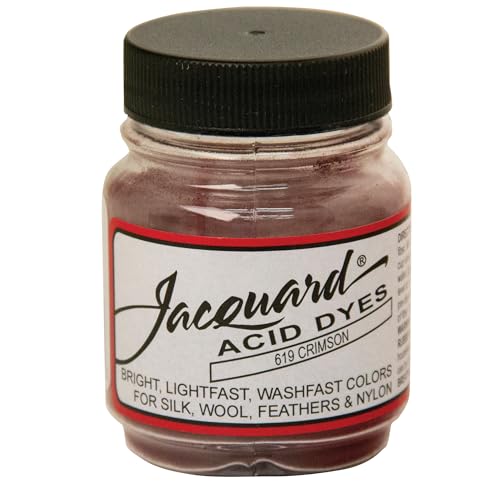
Crimson splits the difference between scarlet’s brightness and burgundy’s depth, landing on a slightly blue-leaning red that flatters most skin tones. For mixed-fiber batches, say a wool-blend scarf or a nylon-and-feather costume piece, this jar handles the whole load in one bath without shade mismatch.
The standard half-ounce concentration covers up to two pounds of fiber depending on how deep you push the shade, and the powder mixes into hot water without clumping when stirred properly. Depending on your water hardness, you may see slight variation batch to batch, which is normal for this category.
Standout Traits
- Blue-leaning red that suits a wide range of complexions and styles.
- Consistent performance across wool, silk, nylon, feathers, and wig fiber.
- Flexible dosing spans pastel pink at low doses to deep crimson at full strength.
Areas To Watch
- Sits close enough to scarlet that owning both may be redundant for some stashes.
- Powder handling calls for gloves and a mask to avoid inhaling dust.
Perfect Match For
Intermediate dyers building a red wardrobe who want one versatile middle-ground shade.
Another Choice May Suit
Total beginners still exploring the hobby will get more value from the Jacquard Acid Dye 4 Color Set with Citric Acid, which bundles four shades plus acid.
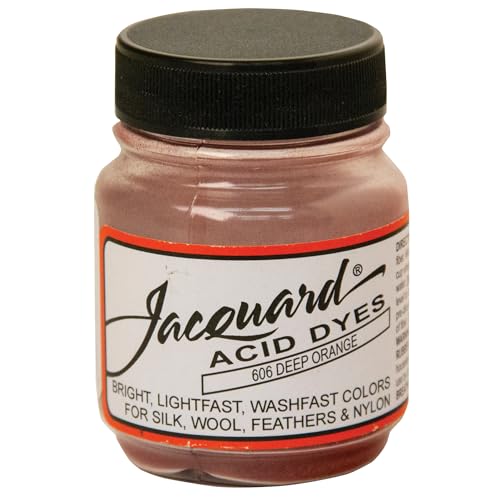
Deep Orange earns its spot every autumn, when pumpkin-season knitting and Halloween costumes send crafters hunting for exactly this shade. Unlike vermillion’s fiery lean, this one sits warmer and earthier, closer to terracotta, which pairs naturally with brown and cream yarns already in most stashes.
Application follows the familiar routine: dissolve the concentrated powder in hot water, add vinegar, and simmer until the fiber absorbs the color. Coverage runs up to two pounds of fiber per jar at lighter depths. One practical note from long-time users: orange pigments tend to rinse out slightly faster than blues, so extend the simmer time a touch.
Best Bits
- Warm terracotta-leaning orange that complements natural fiber palettes.
- Ideal seasonal match for fall knits and costume work.
- Same broad fiber compatibility as the rest of the Jacquard acid line.
Honest Caveats
- Oranges may exhaust faster than other hues, requiring a longer bath.
- Narrower year-round appeal than core shades like blue or black.
Feature Snapshot
Built With In Mind
Seasonal crafters and costume makers who want a reliable warm orange without mixing reds and yellows themselves.
Where A Sibling Pick Shines
Year-round dyers will find the Jacquard Acid Dye 1/2oz Jar Brilliant Blue more broadly useful across seasons and project types.
Not every fiber in your craft bin is wool, and that’s where this eight-jar basic dye set earns its place. Basic dyes are formulated for materials that resist conventional dye classes, including some acrylics and other synthetics, delivering bright, easy-to-use color in powder form where acid dyes would simply rinse away.
Eight half-ounce jars give you a ready rainbow for mixed-media projects, doll hair, feathers, and experimental pieces. The trade-off shows up on pure protein fibers: for wool sweaters and silk scarves, stick with the acid dyes higher in this list, since they bond properly where basics won’t hold as well.
Positives
- Eight colors in one package covers a full spectrum for mixed projects.
- Tackles hard-to-dye fabrics that defeat standard fiber-reactive options.
- Powder form stores compactly and measures easily in small doses.
Room For Improvement
- Not the right chemistry for wool and silk; pair it with an acid dye for protein fibers.
- Lightfastness on some synthetics varies, so keep finished pieces out of harsh sun.
Core Details
Whose Shelf It Belongs On
Mixed-media artists and doll or model customizers working with acrylics and tricky synthetics alongside their wool stash.
Reach For A Different Pick When
Pure wool and silk projects belong with the Jacquard Acid Dyes .5oz Olive (102855), whose chemistry bonds directly to protein fibers.
What Matters Most Before Choosing Acid Dyes For Wool
Match The Chemistry To Your Fiber
Acid dyes bond to protein fibers, meaning anything derived from animals: wool, silk, cashmere, alpaca, and feathers. Nylon, a synthetic but protein-like polymer, also takes them well. Cotton and linen won’t hold these dyes, so check your label before buying. A quick swatch test on scrap yarn saves a ruined garment.
Understand Concentration And Coverage
Most jars here are half-ounce concentrates capable of coloring up to two pounds of fiber, though that figure assumes a light shade. Going dark cuts coverage significantly. Estimate your fiber weight honestly, then buy one extra jar for deep shades rather than running out mid-bath.
Plan Your Acid Source
The “acid” in acid dye usually comes from ordinary white vinegar or citric acid added to the hot bath. Single jars leave this to you, while the four-color set includes citric acid. Neither option is complicated, but having the acid on hand before dye day prevents stalled projects.
Think About Your Workspace
Hot-water dyeing means dedicated or disposable pots, gloves, and good ventilation. Powdered dye is dusty, and pigment stains linger on porous surfaces. A basement utility sink or outdoor burner setup makes cleanup far less painful than a shared kitchen.
Key Considerations Across These Picks
Traps First Timers Fall Into
The most common mistake is buying a single bright jar before checking fiber content, then wondering why cotton ignores the bath entirely. Another frequent slip is underestimating how much dye deep shades consume; a “two-pound” claim assumes pale results. Skip both problems by testing a swatch and weighing your fiber first.
The Case For Spending Up
Sets cost more upfront but bundle the acid and mixing guidance that beginners otherwise piece together separately. For anyone planning three or more projects, the bundled route typically works out cheaper per jar and removes the guesswork that ruins early batches.
Frequently Asked Questions
Do acid dyes work on cotton?
No, acid dyes bond to protein fibers like wool, silk, and nylon. Cotton requires a fiber-reactive dye instead.
Is vinegar really necessary?
Yes, the acid helps the dye bond to the fiber during the hot-water bath. White vinegar or citric acid both work fine.
Can I dye wool in my kitchen pots?
Technically yes, but most dyers dedicate old pots exclusively to dyeing. Pigment residue is very difficult to remove completely.
How long does dyed wool stay colorfast?
Properly fixed acid dye holds color through years of normal washing and wear. Early washes may release slight excess, so launder separately at first.
Can I mix these dyes to create custom colors?
Absolutely, and the four-color set even includes a mixing chart. Yellow, fuchsia, turquoise, and black combine to produce nearly any shade.
Bottom Line
Your best starting point depends on what’s already in your fiber stash. Single jars like the olive, burgundy, and scarlet options suit dyers who know their palette, while the four-color set with citric acid gives newcomers everything needed for a first successful bath. Whichever route you take, weigh your fiber, test a swatch, and keep vinegar stocked. Happy dyeing.