
Plugging an acoustic guitar straight into a PA usually sounds thin, harsh, or prone to feedback. A good preamp pedal fixes that: it shapes your pickup’s raw signal, tames problem frequencies, and gives you a clean line to the mixer. Whether you play coffeehouse gigs, church services, or open mics, the right pedal is often the difference between sounding like a record and sounding like a rehearsal. This list covers ten options across different budgets and needs, from simple tone shapers to all-in-one vocal-and-guitar rigs.
The Shortlist At A Glance
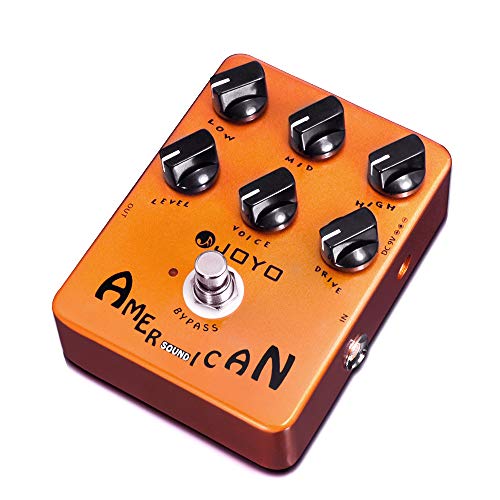
JOYO American Sound JF-14 Amp Simulator Pedal

SONICAKE Sonic Wood Acoustic Multi-Effects Preamp

BOSS AC-3 Acoustic Simulator Pedal

BOSS VE-8 Acoustic Singer Preamp & Effects

TC Electronic BodyRez Pickup Enhancer Pedal
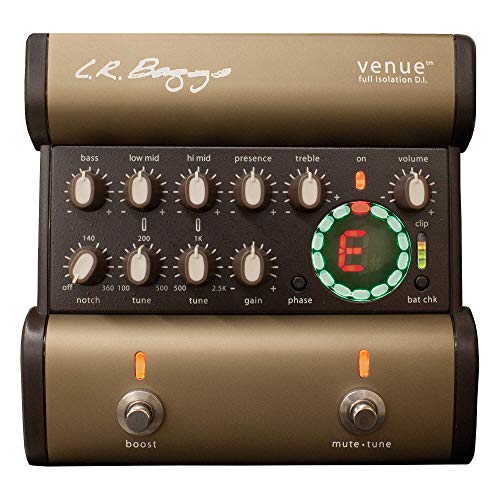
L.R. Baggs Venue DI Acoustic Preamp and DI

LR Baggs Para Acoustic D.I.

Fishman Platinum Pro EQ/DI Analog Preamp Pedal

NUX Optima Air Acoustic Simulator with IR Loader

Fishman ToneDEQ AFX Preamp EQ and DI Box
More Details On Our Top Picks
The JOYO JF-14 sits in an interesting spot here: it’s technically an electric-guitar amp simulator rather than a dedicated acoustic preamp, which is exactly why some players own both categories in one pedalboard. Its six knobs model classic American tube amp voicings, from scooped clean tones to mid-forward breakup, and a built-in cabinet simulation lets you run straight into a mixer or PA without a physical amp behind you.
In practice, that makes it a strong fit for electric players who double on acoustic sets at small venues. You may find the overdrive character leans toward vintage rock rather than modern gain, so metal-leaning players should look elsewhere.
Strong Points
- Six-knob control covers gain, EQ, level, and presence-style shaping in one compact footprint
- Cabinet simulation means you can skip hauling an amp to coffeehouse-sized gigs
- Costs far less than most modeling units while covering core amp tones
- True bypass keeps your signal untouched when the effect is off
Things To Consider
- It shapes electric tone, not acoustic pickup signals, so it won’t replace a dedicated acoustic DI
- Plastic-enclosure JOYO pedals benefit from careful handling in crowded gig bags
Who Should Grab It
Beginners and budget-conscious electric players who need credible direct-to-PA amp tones without spending much.
Where Another Pick Suits Better
Acoustic-focused performers will get more mileage from the SONICAKE Sonic Wood, which was designed around piezo pickups from the ground up.
Where the JOYO models amps, the Sonic Wood is built specifically for acoustic guitars, and it bundles nearly everything a solo performer needs into one chassis. An analog preamp section with two-band EQ recreates the warmth of a classic acoustic amplifier, then chorus, delay, and reverb sit downstream for atmosphere. The XLR output matters most: it connects directly to a PA, mixer, or audio interface without extra adapters.
Tap tempo and a tail on/off switch give you control over how delay repeats decay between songs, which seasoned buskers tend to appreciate more than beginners realize. For the price bracket, few competitors pack this much into one pedal.
Highlights
- Analog preamp with 2-band EQ warms up thin piezo pickups naturally
- XLR out plugs straight into house systems at open mics and weddings
- Chorus, delay, and reverb eliminate three separate pedal purchases
- Tap tempo keeps delay timing locked to your song tempo
- Effect tails can be switched off for tight transitions between tunes
Worth Noting
- Two EQ bands offer less surgical control than the five-band layouts on pricier picks below
- Owners commonly report the small footprint means knob spacing gets fiddly on dark stages
At A Glance
Made For
Solo acoustic performers who want one pedal instead of a four-piece board for small-venue gigs.
Consider Something Else When
Players needing deeper tone surgery should step up to the L.R. Baggs Venue DI and its five-band EQ.
The AC-3 solves a different problem than everything else on this list: it turns an electric guitar into something that approximates an acoustic one. BOSS built it around COSM modeling, their long-running digital tone-capture technology, and the result has been a staple on pedalboards for years because it works reliably night after night.
Think of the scenario every working guitarist knows: the setlist calls for one acoustic number and lugging a second guitar isn’t worth it. Stomp this pedal, roll back your tone knob, and you’re close enough for most audiences. The honest caveat is that modeling never fully matches a real dreadnought’s resonance, especially on aggressive strumming.
Upsides
- COSM modeling produces believable acoustic character from standard electric pickups
- Legendary BOSS build quality survives years of road abuse
- Single-footswitch operation works mid-song without menu diving
Small Caveats
- It simulates acoustics rather than amplifying them, so real acoustic players gain little here
- Hard strumming can expose the digital edge of the model, depending on your pickup type
The Right Fit
Guitarists in cover bands who need occasional acoustic textures without carrying a second instrument.
Swap It Out When
Anyone already playing a true acoustic guitar live should choose the TC Electronic BodyRez instead, since it enhances real pickups rather than faking them.
Singer-songwriters are the obvious audience for the VE-8, because it processes voice and guitar together in one compact unit. The guitar side delivers BOSS’s studio-grade acoustic processing, while the vocal channel adds real-time harmonies generated from your guitar chords, plus several ambience types that keep a dry bedroom voice from sounding flat over a PA.
A built-in looper rounds out the package, letting you layer rhythm parts before singing over them. Controls stay intuitive rather than menu-driven, which matters when you’re adjusting levels between songs in front of a room. Compared with the single-purpose pedals elsewhere here, this is closer to a personal PA brain than a stompbox.
Bright Spots
- Real-time harmony generation follows your guitar chords automatically
- Vocal ambience options add polish without external effects gear
- Looper supports layered arrangements for solo shows
- One unit replaces separate vocal processor, guitar preamp, and looper
Honest Caveats
- More controls mean a longer setup learning curve than simple preamps like the Para DI
- Harmony tracking responds best to clean, steady chord playing
Who Will Love This
Performing songwriters who sing and play simultaneously and want professional vocal polish from a single floor unit.
Another Choice May Suit
Instrumental-only players don’t need the vocal engine, and the Fishman Platinum Pro EQ/DI offers cleaner value for guitar alone.
Under-saddle piezo pickups have a well-known flaw: they capture string vibration but miss the wooden body resonance that makes an acoustic sound like an acoustic. Players often describe the result as “quacky.” The BodyRez exists purely to fix that, restoring natural body character and adding built-in feedback suppression in an ultra-compact housing.
Its narrow focus is also its strength. There’s no deep EQ to learn, no menus, no second guessing. Plug in, engage, and your plugged-in tone moves noticeably closer to the guitar’s unplugged voice. In our view, it’s the easiest first upgrade any piezo-equipped player can make.
Plus Points
- Restores body resonance that under-saddle pickups lose
- Built-in feedback suppression helps on loud stages
- Ultra-compact size fits even crowded pedalboards
- Studio-quality tone shaping with minimal setup effort
Points To Note
- No EQ bands or DI output, so it complements rather than replaces a full preamp
- Results vary somewhat depending on your specific pickup model
Quick Facts
Right Fit For
Acoustic players with under-saddle pickups who want a fast, affordable tone fix before investing in bigger gear.
Reach For A Different Pick When
Full EQ control and a balanced output are priorities, and the L.R. Baggs Venue DI handles both in one box.
L.R. Baggs built the Venue DI around a simple promise: travel light, set up fast, sound good anywhere. The feature list backs that up. A five-band EQ with adjustable low and hi-mid bands gives you genuine surgical control, a variable clean boost lifts solos above the mix, and a chromatic tuner sits onboard so you can tune silently between songs.
The signal path uses discrete components and audiophile-grade parts, which translates into the quiet, transparent sound engineers tend to compliment. Unlike the BodyRez’s single-purpose approach, this is the complete stage toolkit, and it’s the pick many working musicians settle on after outgrowing cheaper options.
What We Like
- Five-band EQ with tunable mid sections handles feedback-prone rooms precisely
- Full isolation DI output feeds house systems cleanly
- Variable clean boost adds volume for solos without coloration
- Chromatic tuner eliminates a separate pedal
- Discrete, high-grade signal path stays quiet at high gain settings
Softer Spots
- Higher cost than entry multi-effects options like the Sonic Wood
- No onboard time-based effects, so reverb still requires another unit
Details At A Glance
Who It Suits Best
Gigging acoustic musicians who play varied venues weekly and want one dependable box for tone, volume, and tuning.
Not Your Match When
Occasional home players on tight budgets will find the LR Baggs Para DI covers essentials at a friendlier cost.
The Para DI has earned its reputation the slow way: decades on stages worldwide, in the hands of musicians who can’t afford gear failures. It pairs a five-band EQ with a tuneable midrange and notch filter, the latter being your main weapon against the squeal that erupts when a mic’d-up acoustic faces a loud monitor wedge.
Variable gain control accommodates passive pickups that need extra help, and the roadworthy metal housing shrugs off the knocks that come with bar gigs. Where the Venue DI adds a tuner and boost, the Para DI sticks to proven fundamentals, and plenty of players prefer that simplicity.
Reasons To Buy
- Five-band EQ with sweepable mids carves out problem frequencies precisely
- Notch filter targets feedback before it starts
- Gain control brings low-output passive pickups up to proper level
- Rugged construction holds up to constant transport
Minor Gripes
- No built-in tuner or booster, unlike its Venue sibling
- Knob-heavy layout takes a few gigs to adjust quickly in the dark
Built With In Mind
Working musicians playing bars, churches, and festivals who want battle-tested reliability over extra features.
Look Elsewhere When
Compressor fans get more tone-shaping tools from the Fishman Platinum Pro EQ/DI, which adds one-knob compression to a similar feature set.
Fishman knows acoustic pickups better than almost anyone, and the Platinum Pro EQ reflects that depth. The all-analog design keeps your signal pristine, while a five-band equalizer with sweepable mids and filtering lets you contour tone quickly. The standout for many players is the one-knob compressor: turn it up and uneven fingerstyle dynamics smooth out without touching a single extra control.
Feedback resistance comes built in, so loud stages stop being a gamble. Compared with the Para DI’s straightforward layout, this adds compression and filtering while keeping operation refreshingly simple. It’s the kind of pedal sound engineers rarely complain about.
Standout Traits
- All-analog path preserves the natural character of quality pickups
- One-knob compressor evens out dynamics instantly
- Sweepable mids allow targeted feedback and tone fixes
- Filtering section tames boominess in reflective rooms
Trade Offs
- No digital effects, so reverb and delay remain separate purchases
- Analog purists aside, some players may miss preset storage for multiple guitars
Core Details
Whose Shelf It Belongs On
Serious intermediate and pro players who value pure analog tone and effortless dynamic control on stage.
Where A Sibling Pick Shines
Players wanting onboard effects alongside their preamp should look at the Fishman ToneDEQ instead.
The Optima Air takes the BOSS AC-3’s concept and pushes it further with modern tech. An impulse response, or IR, is a digital snapshot of how an instrument or space sounds, and this pedal ships with fifteen acoustic guitar profiles matched to different body styles and pickup types. Better yet, a capturing mode records your own guitar’s acoustic character via a condenser microphone and builds a custom IR from it.
A dual-switch layout lets you run the preamp and simulation separately or stacked, with three-band EQ, gain control, built-in reverb, and USB audio rounding things out. For hybrid players, that flexibility is hard to match at this tier.
Positives
- Fifteen onboard profiles suit different guitars and pickup types
- User IR capture preserves your own instrument’s unique voice
- Dual-mode switching combines preamp and simulation freely
- USB audio simplifies home recording setups
Areas To Watch
- IR capture requires access to a condenser microphone and a quiet room
- Digital workflow may feel involved next to plug-and-play analog boxes
Perfect Match For
Home-studio electric players who want convincing acoustic tones and enjoy tweaking digital tools.
Skip It When
Set-and-forget traditionalists will be happier with the straightforward TC Electronic BodyRez.
At the top of this list sits the ToneDEQ, Fishman’s flagship answer to players who refuse to compromise. A crystal-clear Class A preamp, meaning a design prized for low distortion and detail, pulls the fullest sound from your pickup. Around it: a three-band EQ with low-cut filter, a phase switch for fighting feedback, and a pre/post-EQ balanced DI with auto gain for consistent levels song to song.
Dual onboard effects add reverb and modulation without extra pedals. Next to the Platinum Pro EQ, this trades some simplicity for a genuinely complete rig, and touring players tend to consider that trade worthwhile.
Best Bits
- Class A preamp extracts maximum detail from any pickup
- Dual effects cover reverb and modulation onboard
- Phase switch and low-cut filter handle feedback-prone venues
- Auto-gain balanced DI keeps levels consistent all night
- Pre/post-EQ DI choice suits both front-of-house and recording needs
Room For Improvement
- Premium pricing puts it beyond casual players’ reach
- Larger footprint demands more pedalboard real estate
Feature Snapshot
Whose Shelf It Belongs On
Touring professionals and studio regulars who want one premium unit covering preamp, EQ, effects, and DI duties.
Swap It Out When
Value-focused players get remarkably close with the SONICAKE Sonic Wood at a fraction of the investment.
What Matters Most Before Choosing Acoustic Preamp Pedals
Match The Tool To Your Pickup
Under-saddle piezo pickups, magnetic soundhole pickups, and internal microphones all behave differently, and not every preamp plays nicely with each. Piezo signals are typically high-impedance and benefit from a buffer input, which most dedicated acoustic preamps provide. Check compatibility before committing, because a mismatched pairing wastes money no matter how good the pedal is.
Count Your Outputs
A balanced XLR or DI output lets you connect directly to a mixing console with a long cable run and minimal noise. Pedals offering only a quarter-inch jack force you through adapters or a separate DI box. Regular giggers should treat a proper DI output as non-negotiable.
Feedback Control Deserves Attention
Notch filters, phase switches, and feedback suppression circuits each attack the problem differently. Loud bands and resonant bodies generate trouble faster than solo acts, so weigh your typical stage volume honestly.
Simplicity Versus Flexibility
More knobs mean more control but slower adjustments mid-set. Home recorders tolerate complexity happily; bar giggers usually thank themselves for choosing fewer, well-placed controls.
Key Considerations Across These Picks
Traps First Timers Fall Into
Many first purchases chase feature counts instead of matching the pedal to an actual pickup type, then wonder why tone stays thin. Others skip checking whether a DI output exists and end up buying a second box anyway. Read the input requirements first, features second.
What Separates Premium From Basic
Higher-tier units spend their cost on analog component quality, quieter signal paths, and flexible outputs like pre/post-EQ DI taps. Casual players rarely hear the difference in a noisy café; touring professionals relying on consistent front-of-house sound absolutely do.
Frequently Asked Questions
Do acoustic preamp pedals work with any acoustic guitar?
They work with any guitar that has a pickup installed. Guitars without onboard electronics need a pickup added first, since the pedal shapes an electrical signal rather than creating one.
Can a preamp pedal remove feedback completely?
No pedal guarantees total feedback elimination. Notch filters, phase switches, and suppression circuits reduce it substantially, though stage position and volume still matter greatly.
Is an XLR output really necessary?
For anyone plugging into a PA regularly, yes. Balanced XLR connections resist noise over long cable runs and interface cleanly with mixing consoles.
What does a DI box do compared to a preamp?
A DI box converts your instrument signal to a balanced, mic-level output for mixers. Many acoustic preamp pedals include DI functionality built in, combining both jobs in one unit.
Can electric guitar players use these pedals?
Simulator models like the BOSS AC-3 and NUX Optima Air are designed exactly for that purpose. Standard preamps meant for acoustic pickups generally won’t improve a raw electric signal.
Closing Thoughts
The right acoustic preamp depends less on specs and more on where you play and what your pickup needs. Solo performers juggling vocals should lean toward the BOSS VE-8, while tone-first instrumentalists will love the Fishman Platinum Pro EQ/DI. Budget-conscious starters can do worse than the TC Electronic BodyRez as a first step. Whichever direction fits your gigs, matching the pedal to your actual setup beats chasing the longest feature list every time.