
Whether you’re hemming school uniforms, quilting on weekends, or feeding a serger through long sewing sessions, the right machine and thread make everything smoother. This roundup covers seven capable sewing machines plus three bulk thread cones that keep your bobbin and looper supplied without constant rethreading. The goal is simple: help you match a machine to your actual projects instead of guessing from spec sheets alone.
Quick Look At Our Top Picks
Quick Look At Our Top Picks

Brother XM3700 Sewing Machine with 37 Stitches
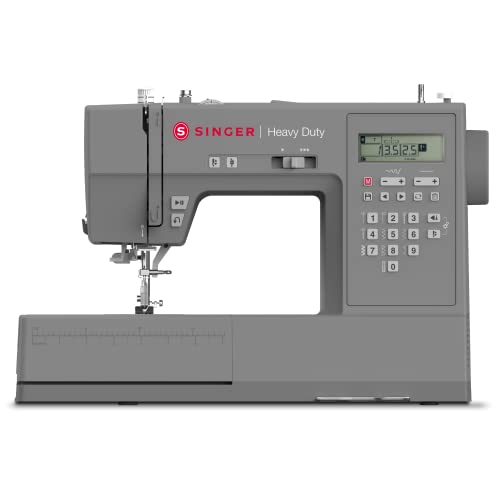
SINGER 6700C Heavy Duty Computerized Machine

Janome JW8100 Computerized Sewing Machine with Hard Cover

Brother CS7205 Computerized Machine, 150 Stitches

Brother FB1757X Mechanical Sewing Machine

StiVerse 1800 Yards Serger Thread, Black
StiVerse 1800 Yards Light Purple Thread

StiVerse 1800 Yards Blue Thread

SINGER 6380 Heavy Duty Sewing Machine

SINGER Heavy Duty 500 Classic Sewing Machine
More Details On Our Top Picks
The XM3700 sits in that sweet spot where a beginner stops feeling like one. Thirty-seven built-in stitches cover garment construction, decorative work, heirloom sewing, and light quilting, which means you won’t outgrow it after your first pillowcase. Compared to the mechanical Brother FB1757X further down this list, you get roughly double the stitch variety for a modest step up in complexity.
In a real sewing room, the five included presser feet matter more than raw numbers. A zigzag foot handles everyday seams, while the zipper, blind stitch, buttonhole, and button-sewing feet let you finish an entire garment without shopping for extras. There’s also built-in storage for bobbins and needles, so small parts stop wandering off your desk.
Strong Points
- 37 stitches give you room to grow past basic straight seams into decorative and utility work.
- Five presser feet arrive in the box, saving a separate accessory purchase.
- Integrated storage compartment keeps feet and bobbins organized between sessions.
- Lightweight body makes it easy to move to a class or clear off the dining table afterward.
Things To Consider
- Owners commonly report the plastic housing needs gentle handling during transport to stay trouble-free.
- No extension table is bundled, so large quilts can feel cramped at the needle.
Who It Suits Best
Beginners ready to move beyond a bare-bones starter machine will get years of use here.
Where A Sibling Pick Shines
Quilters working on bed-size projects may prefer the Brother CS7205, whose wide table gives bulky fabric somewhere to rest.
Four hundred eleven stitch applications is not a typo, and it changes how you plan projects. Basic, stretch, and decorative stitches sit alongside a lettering font, so monogramming a tote or labeling a quilt label happens on the same machine that hems jeans. Where the Brother XM3700 covers the fundamentals, the HD6700C is built for sewists who want options they haven’t thought of yet.
The heavy-duty framing matters too. Garment makers juggling denim, canvas, and stretch knits in one week will appreciate not swapping machines mid-project. An included accessory kit rounds out the package, though expect a learning curve navigating menus that deep.
Highlights
- 411 stitch applications span utility, stretch, decorative, and lettering work in one unit.
- Heavy-duty construction holds up to dense fabrics like denim and layered canvas.
- Bundled accessory kit means most everyday tasks are covered out of the box.
- Computerized selection keeps stitch choice consistent from seam to seam.
- Lettering font opens up simple monogramming without extra equipment.
Worth Noting
- The sheer menu depth can overwhelm brand-new sewists during their first few sessions.
- Some owners note the machine runs louder than lighter household models under load.
At A Glance
Made For
Intermediate sewists who bounce between garments, home décor, and personalization projects.
Consider Something Else When
Total beginners may find the Janome JW8100’s simpler navigation less intimidating day to day.
Few machines in this price neighborhood ship this complete. The JW8100 brings 100 stitches, seven buttonhole styles, a hard cover, an extension table, and 22 accessories, which is the kind of bundle that usually costs extra elsewhere. For anyone setting up a dedicated sewing corner, that hard cover alone protects your investment between sessions.
Day-to-day, the details add up: a built-in needle threader saves squinting, auto-declutch bobbin winding removes a fiddly manual step, and the backlit LCD screen keeps stitch selection legible in evening light. The 7mm stitch width gives decorative work a bit more presence than narrower entry models manage.
Upsides
- 100 stitches plus seven one-step buttonhole styles handle garments and quilting alike.
- Hard cover and extension table are both included, protecting and supporting bigger projects.
- Built-in needle threader cuts setup time noticeably for tired eyes.
- Auto-declutch bobbin winder prevents overwinding mishaps.
Small Caveats
- At 100 stitches it offers fewer decorative options than the SINGER 6700C’s much larger library.
- The LCD screen is functional rather than flashy, so icon-heavy navigation takes a session to learn.
Quick Facts
Right Fit For
Home sewists who want one complete setup, cover and all, without piecing together accessories later.
Swap It Out When
Shoppers chasing maximum stitch variety should look at the SINGER 6700C instead.
Quilters tend to judge machines by two things: workspace and stitch memory. The CS7205 answers both with its wide table and 150 built-in stitches spanning utility, quilting, and decorative categories. Unlike the compact Brother XM3700, this one gives a queen-size quilt somewhere to go besides your lap.
A flip chart displays every available stitch at a glance, so you’re not scrolling menus mid-project. Eight automatic buttonhole styles size themselves, and a lettering font with 55 alphanumeric characters handles basic monogramming. Eleven sewing feet come standard, covering zippers, blind hems, walking-foot-style tasks, and more.
Reasons To Buy
- Wide table supports bulky quilting projects at the needle.
- 150 stitches with a flip chart make selection fast and visual.
- Eight auto-size buttonholes adapt to different button diameters automatically.
- Eleven included feet cover most garment and quilting techniques without extra spending.
Points To Note
- The white finish shows dust and lint quickly, so a soft brush after each session keeps it tidy.
- It lacks a hard cover, unlike the Janome JW8100, so storage protection is on you.
Who Will Love This
Quilting hobbyists and garment makers who value workspace and visual stitch selection.
Not Your Match When
Sewists wanting a protective cover bundled in will find the Janome JW8100 a better-rounded package.
Not everyone wants a screen. The FB1757X is a mechanical machine, meaning dials and levers select your 17 built-in stitches directly, with nothing to navigate and little to malfunction electronically. First-time owners often find that simplicity reassuring; there’s a visible cause and effect to every adjustment.
The feature set stays honest: a four-step buttonhole, reverse lever for securing seams, free arm for cuffs and sleeves, and LED lighting over the work area. Compared to the computerized picks above, you trade stitch variety for ease, and for mending, alterations, and kids’ first lessons, that trade often works in your favor.
Best Bits
- Dial-based controls make operation intuitive for absolute beginners.
- Free arm simplifies sewing cuffs, sleeves, and other tubular pieces.
- LED work light improves visibility on dark fabrics.
- Reverse lever secures seams without switching stitch modes.
Softer Spots
- 17 stitches and a four-step buttonhole feel limiting once skills advance.
- Threading by hand takes practice since there’s no automatic needle threader here.
Core Details
Built With In Mind
New sewists, occasional menders, and households teaching kids their first seams.
Another Choice May Suit
Growing hobbyists will hit the stitch ceiling fast and may prefer the Brother XM3700’s 37-stitch range.
Sergers eat thread. A four-thread overlock can consume a standard spool in a handful of garments, which is why cones like this 1,800-yard black option exist. One cone feeds a looper far longer than retail spools, cutting down on mid-project rethreading, the least fun part of serging.
This is a 40/2 polyester thread, a common all-purpose weight that balances strength with smoothness. Polyester resists shrinking and handles machine tension well, making it suitable for garment seams, home décor, and general construction. Black is the workhorse color here, disappearing into most dark fabrics.
Plus Points
- 1,800 yards per cone means far fewer thread changes during long serging runs.
- 40/2 polyester construction offers dependable strength for everyday seams.
- Smooth, consistent feed helps maintain even stitch tension.
- Black suits the widest range of dark fabrics in a typical wardrobe.
Trade Offs
- A single-color cone only helps projects in that shade, so multi-color wardrobes need companions.
- Cone threading differs from spool pin setups, so some domestic machines need a thread stand.
Whose Shelf It Belongs On
Serger owners and frequent garment sewists who burn through black thread fastest.
Reach For A Different Pick When
Pastel and children’s clothing projects call for the StiVerse Light Purple cone instead.
Color-matched thread is what separates homemade-looking seams from polished ones, and light purple fills a gap most basic kits ignore. At 1,800 yards per cone, roughly 1,640 meters, there’s enough here for dozens of garments or a full serger looper refill without running dry halfway through a dress.
Like its black sibling earlier in this list, it’s a 40/2 all-purpose polyester built for machine sewing. The soft hand and steady color consistency matter when topstitching, where every inch of thread is visible. Beginners benefit too, since forgiving polyester tolerates imperfect tension better than cotton alternatives.
Bright Spots
- Generous yardage supports multiple garments or full serger refills per cone.
- Consistent dye lot keeps topstitching even across a whole project.
- Polyester build resists shrinkage through washing cycles.
Honest Caveats
- Light shades show tension flaws more readily than dark colors, so test on scraps first.
- You’ll still want neutral basics like the black cone for mixed-fabric wardrobes.
The Right Fit
Garment sewists working with lavender, spring, and children’s palettes who want matching thread on hand.
Look Elsewhere When
Everyday denim and dark-fabric mending is better served by the StiVerse black cone.
Sky blue earns its place in a thread stash more often than you’d expect. Chambray shirts, summer dresses, scrubs, and children’s play clothes all lean blue, and having 1,800 yards of a matching 40/2 polyester cone means those projects never stall waiting for a store run.
The construction matches the other StiVerse cones in this roundup: 100% polyester, smooth and strong, with color that holds steady from start to end of cone. Home sewists and small commercial users both put this weight to work, and it behaves predictably at standard machine tensions in most setups.
Positives
- Long cone length minimizes interruptions on multi-garment runs.
- All-purpose 40/2 weight suits both delicate and midweight fabrics.
- Sky blue pairs naturally with denim, chambray, and warm-weather wardrobes.
Minor Gripes
- One cone per order means building a full color library takes several purchases.
- Very lightweight sheers may call for a finer thread than this weight provides.
Who Should Grab It
Sewists regularly working blues, denims, and casual wear who want matching thread always stocked.
Where Another Pick Suits Better
Dark wardrobe staples are better matched by the StiVerse black cone from earlier in the list.
Denim hems and canvas bags break lesser machines. The 6380 pairs a motor rated notably stronger than standard household units with a 1,100 stitches-per-minute top speed, so thick seams pass through without stalling. Adjustable presser foot pressure is the quiet hero here, letting the same machine float over lightweight sheers instead of chewing them.
An extension table comes bundled, along with a non-stick foot for leather-like materials and a clearance plate for dense spots like flat-felled jean seams. Against the computerized SINGER 6700C, this one leans mechanical muscle over menu depth, and for repair-and-alteration work that’s usually the right emphasis.
Standout Traits
- High-torque motor powers through denim, canvas, and layered seams.
- Adjustable presser foot pressure adapts from heavy twill down to sheers.
- Extension table expands workspace for larger panels and quilting.
- Non-stick foot glides over sticky or coated fabrics.
Areas To Watch
- Fast top speed takes a light foot on the pedal until your control catches up.
- Owners commonly mention routine oiling and lint clearing keep it running smoothly long term.
Details At A Glance
Perfect Match For
Menders, upcyclers, and home décor sewists who regularly face denim, canvas, and upholstery-weight cloth.
Skip It When
Decorative stitch collectors will find far more variety in the SINGER 6700C.
Some machines earn their desk space by looking good doing the work. The HD500 Classic wraps vintage-inspired styling around genuinely modern conveniences: a built-in needle threader, one-step buttonhole, and drop feed for free-motion work. It’s the rare pick that satisfies both the sewist and whoever shares the room.
Functionally it sits near the SINGER 6380 in spirit, favoring straightforward capability over sprawling stitch menus. Drop feed deserves a highlight, since lowering the feed dogs opens up free-motion quilting and darning that fixed-feed machines simply can’t attempt. An accessory kit arrives alongside, rounding out the first-year toolkit.
Reasons To Buy
- Vintage-inspired design looks at home in styled craft rooms and living spaces.
- Drop feed enables free-motion quilting and mending techniques.
- One-step buttonhole produces consistent results without manual measuring.
- Built-in needle threader trims setup time on every session.
Room For Improvement
- Style-forward builds sometimes prioritize form, so check clearance under the arm for bulky quilts.
- Stitch count trails the computerized models in this lineup.
Feature Snapshot
Best Suited To
Sewists who want dependable heavy-duty function wrapped in a machine they enjoy displaying.
A Better Fit Elsewhere
Pure pragmatists focused on thick-fabric throughput may prefer the plainer SINGER 6380.
Factors To Weigh Before Choosing Your Next Sewing Machine
Match The Machine To Your Fabric Habits
Be honest about what you actually sew. Denim, canvas, and upholstery demand a heavy-duty motor and adjustable presser foot pressure, as on the SINGER 6380. Lightweight apparel and crafts run happily on lighter computerized bodies. Buying for the fabric you own today beats buying for a fantasy project list.
Count What’s In The Box
Accessories change the real cost of ownership. The Janome JW8100 ships with a hard cover, extension table, and 22 accessories, while others leave you sourcing feet separately. Tally the extras before comparing headline prices, because a missing walking foot or extension table adds up fast.
Mechanical Versus Computerized
Mechanical machines like the Brother FB1757X use dials, which means fewer failure points and a gentler learning curve. Computerized models offer hundreds of stitches, fonts, and automatic buttonholes. Choose mechanical for mending and simplicity, computerized for creative range.
Don’t Forget Consumables
Thread is the ongoing expense nobody budgets. Bulk cones such as the StiVerse 1,800-yard options cut cost per garment dramatically for serger owners, though domestic machines may need a thread stand to feed from a cone smoothly.
Key Considerations Across These Picks
Traps First Timers Fall Into
The classic mistake is buying maximum stitch count for a machine that will spend its life doing straight seams. Another is ignoring accessories: a cheap-feeling bundle often costs more once you add the feet and tables a complete kit includes. Check arm clearance too, since bulky quilts need physical room, not just features.
When Paying More Pays Off
Higher-tier machines justify their price through motor strength, metal internals, and automation. Auto-size buttonholes, needle threaders, and drop feed save real minutes on every project. Spend up when you sew weekly; stay modest when the machine comes out monthly for hemming.
Frequently Asked Questions
Can I use serger thread cones on a regular sewing machine?
Yes, with a thread stand or by placing the cone behind the machine and guiding thread upward. Direct spool-pin use causes uneven tension because the thread pulls at the wrong angle.
How many stitches does a beginner actually need?
Around 15 to 20 covers straight, zigzag, stretch, and buttonhole work comfortably. Extra decorative stitches are nice but rarely used in the first year.
What does 40/2 thread mean?
It’s a standard polyester thread weight notation indicating medium thickness and two-ply construction. It suits most garment and home sewing on domestic machines.
Is a heavy-duty machine harder for beginners to control?
The main adjustment is speed, since powerful motors reach high stitch rates quickly. Starting with a light pedal touch solves most early frustration.
Do I really need an extension table?
For quilting, bags, or anything larger than a shirt, yes. It supports fabric weight so seams stay even instead of dragging off the machine edge.
Closing Thoughts
There’s a clear path through these ten picks. Start with the Brother XM3700 if you’re building skills, step up to the Janome JW8100 or SINGER 6700C for creative range, and lean on the SINGER 6380 when denim and canvas dominate your pile. Pair whichever machine you choose with a bulk thread cone, and you’ll spend more time sewing and less time restocking. Happy stitching.