
A good epoxy primer is the layer nobody sees but everybody depends on. It seals bare metal, blocks corrosion, and gives your topcoat something to grip, whether you’re restoring a fender on the weekend or repainting a pontoon before summer. The catch is that two-part systems vary wildly in mix ratio, dry time, and surface compatibility, so grabbing the wrong one costs you sanding time and adhesion headaches later. This shortlist covers aerosol convenience, gallon-kit value, and marine-grade barrier coats so you can match the chemistry to your actual project.
The Shortlist At A Glance
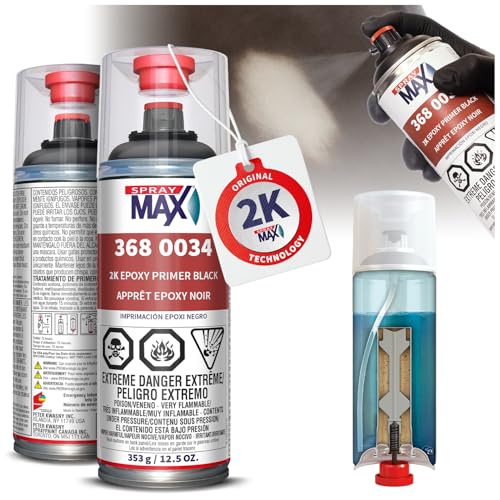
SprayMax 2K Epoxy Primer Black 12.5 oz

SprayMax 3680034 Matte Black 2K Epoxy Primer Aerosol (2 Pack)

TotalBoat Marine Topside Boat Paint Primer – Gray Quart

Custom Shop Gray DTM Epoxy Primer/Sealer 1 Gallon Kit
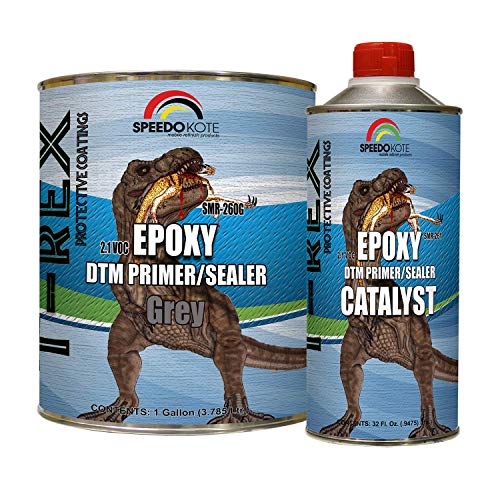
Speedokote Epoxy Fast Dry DTM Primer & Sealer Gray Gallon Kit

Custom Shop Gray DTM Epoxy Primer/Sealer 1 Quart Kit

TotalBoat Aluminum Boat Barrier Coat Marine Epoxy Primer

Custom Shop White DTM Epoxy Primer/Sealer 1/2 Gallon Kit

TotalBoat Epoxy Primer Thinner 200 Solvent Quart

Custom Shop Gray DTM Epoxy Primer/Sealer 1/2 Gallon Kit
More Details On Our Top Picks
Most home garages don’t have a compressor, and that’s exactly where this can earns its keep. It’s a true two-component epoxy, meaning resin and hardener live separately until you activate them, then mix inside the can for professional-grade bonding strength.
The variable nozzle gives you decent control over pattern width, which matters when you’re feathering around trim or door jambs. Dust-dry in roughly 15 minutes means you can move through a small panel job in an afternoon rather than losing a weekend.
Strong Points
- Activates without tools, compressors, or mixing cups, so setup takes seconds instead of an hour
- Dust-dry in about 15 minutes keeps small repair sessions moving at a real pace
- Bonds to steel, aluminum, and galvanized surfaces, covering most automotive substrates in one product
- Corrosion-resistant film gives bare patches genuine rust protection before topcoating
- Sandable within hours, so you can block it flat the same day
Things To Consider
- A single 12.5 oz can covers limited area, so larger panels will eat through cans quickly
- Once activated, the pot life clock starts, and unused mixed material can’t be stored
Key Specs
Who It Suits Best
Weekend restorers and motorcycle owners who want shop-quality adhesion without buying a compressor.
Where A Sibling Pick Shines
For bigger bare-metal areas, the Custom Shop Gray DTM 1 Gallon Kit delivers far more coverage per dollar.
Aluminum is the surface that humbles cheap primers, and this matte black version from SprayMax is built specifically for those problem substrates. Think anodized parts, non-ferrous castings, galvanized sheet, the stuff that peels ordinary paint within a season.
It also doubles as an insulating sealer, which helps when old finishes underneath might bleed through. Compared to the black SprayMax above, this one comes as a two-pack in a slightly larger 13.5 oz format, handy when a job spans several small parts.
What We Like
- Grips critical surfaces like aluminum where lesser primers lift or flake over time
- Sealing properties block stains and old coatings from bleeding into fresh topcoats
- Recoatable with solvent-borne, waterborne, and single-stage topcoats, so it fits nearly any paint plan
- Two-can pack suits multi-part projects like brackets, wheels, or engine accessories
Minor Gripes
- Surface prep is non-negotiable: cleaned and sanded substrate only, or adhesion suffers
- Aerosol format still limits you on large panels compared to gun-applied kits
Made For
Detailers and DIYers refinishing aluminum wheels, castings, or galvanized hardware in small batches.
Swap It Out When
Marine aluminum hulls need the TotalBoat Aluminum Boat Barrier Coat instead, since it’s formulated for below-deck corrosion exposure.
Not every boat job needs two-part chemistry, and this one-part undercoat proves it. It’s designed for topside use above the waterline on fiberglass, wood, gelcoat, and sound previously painted surfaces, feeding directly into both one-part and two-part polyurethane or enamel topside paints.
The high-solids formula flows out smoothly and typically needs just one coat, which halves your taping-and-waiting cycle on a hull refresh. Flexibility is the quiet benefit here: the cured film moves with the substrate instead of cracking along stress lines.
Bright Spots
- Single-coat application saves a full pass on decks and hull sides
- Compatible with all standard polyurethane and enamel topside paints, no matching headaches
- Flexible film resists the lifting and peeling that plagues rigid primers on flexing hulls
- Sands down easily between coats for a fair, smooth finish
Small Caveats
- Above-the-waterline use only, so it’s wrong for bottoms and running gear
- Requires surfaces already in good condition; failing old paint needs stripping first
Quick Facts
Who Will Love This
Trailer-boat owners repainting decks, cockpits, and hull sides who want simple brush-or-roll application.
Another Choice May Suit
Aluminum hull owners should step up to the TotalBoat Aluminum Boat Barrier Coat for its dedicated corrosion protection.
DTM stands for direct to metal, and this gallon kit embraces that role fully: no etch coat required before spraying onto bare steel or aluminum. The KEP Series resin system also grabs fiberglass, gelcoat, body filler, sanded OEM paint, and many rigid plastics, making it a genuine one-can-does-all foundation for a full vehicle build.
The simple 1:1 mix ratio, equal parts primer and hardener, removes the math errors that ruin lesser kits. You get two quarts of primer plus two quarts of hardener, enough volume for a complete panel-off restoration.
Reasons To Buy
- Adheres straight to bare metal, skipping the extra etch-primer step and its cost
- Anti-corrosive formulation protects exposed steel through the length of a long rebuild
- 1:1 ratio makes measuring foolproof even for first-time sprayers
- Works as both primer and sealer, consolidating two products into one purchase
- Gallon scale handles doors, fenders, hood, and trunk lid with room to spare
Points To Note
- You’ll need proper spray equipment and respirator protection; this isn’t a rattle-can product
- Mixed material has finite pot life, so plan batches carefully to avoid waste
Best Suited To
Serious hobbyists and small shops tackling multi-panel restorations who want industrial-grade adhesion.
Not Your Match When
Smaller touch-up jobs fit the Custom Shop Gray Quart Kit better, with half the committed volume.
Where the Custom Shop kit leans on versatility, this Speedokote gallon competes on speed and finish quality. The SMR-260G gray base mixes 4:1 with its quart of catalyst, and it’s rated at 2.1 lbs/gallon VOC, compliant in regulated regions where older high-solvent epoxies aren’t welcome.
Fast dry and easy sanding are the headline traits, and the formula holds color and gloss well once topcoated. Owners commonly report it lays down glass-smooth straight from the gun, though you can add 5-10% zero-VOC reducer for even finer flow.
Plus Points
- Fast-dry chemistry shortens the wait between priming and sanding sessions
- 2.1 VOC rating meets strict air-quality rules in regulated states
- Sticks to steel, aluminum, fiberglass, body filler, and existing finishes alike
- Excellent corrosion resistance protects bare patches during long builds
- Optional reducer lets you dial in flow for show-level surfaces
Softer Spots
- The 4:1 ratio demands accurate measuring; guessing invites cure problems
- Prep calls for wax-and-grease remover plus 180-220 grit sanding, adding upfront labor
At A Glance
The Right Fit
Budget-conscious builders in VOC-regulated areas who still want fast turnaround and easy block sanding.
Reach For A Different Pick When
Beginners intimidated by ratios may prefer the SprayMax 2K Epoxy Primer’s self-mixing aerosol format.
This is the same KEP Series chemistry as the gallon kit earlier in the list, just portioned for smaller work. One pint of primer meets one pint of hardener, giving you roughly a quart of mixed material, which suits a bumper cover, a mirror repair, or a motorcycle tank without leaving half a gallon aging on a shelf.
That’s the honest advantage here: epoxy hardeners have a shelf life once opened, and buying more than a project needs often ends in waste. The anti-corrosive, direct-to-metal performance carries over unchanged.
Standout Traits
- Right-sized volume prevents leftover hardener from going stale between projects
- Full DTM adhesion to steel, aluminum, fiberglass, filler, and sanded OEM finishes
- Simple 1:1 mixing keeps small-batch accuracy easy
Trade Offs
- Per-volume cost runs higher than the gallon kit, so big jobs cost more this way
- Still requires spray gear and ventilation like any two-part epoxy
Whose Shelf It Belongs On
Occasional DIYers handling spot panels and single-component repairs a few times a year.
Look Elsewhere When
Whole-car projects justify stepping up to the Custom Shop Gray 1 Gallon Kit for better economics.
Aluminum hulls live in a hostile world: constant water contact, galvanic corrosion risk, and bottom paint that won’t stick without a tie-coat. This two-component barrier coat answers all three, building a waterproof layer between bare aluminum and whatever goes over it.
The high-build formula fills minor imperfections while it primes, saving fairing time on older pontoons. Once cured, it accepts bottom paints or other one- and two-part finishes, so it slots into almost any repaint sequence.
Highlights
- High-build thickness fills small pits and scratches in one application cycle
- Waterproof barrier shields aluminum hulls and pontoons against ongoing corrosion
- Overcoatable with bottom paints and standard marine finishes for flexible scheduling
- Strong mechanical bond to properly prepped aluminum holds through seasons of trailering
Room For Improvement
- Demands meticulous surface prep; contamination shows up as adhesion failures later
- Two-part mixing means working within pot life windows, especially in warm weather
Details At A Glance
Perfect Match For
Pontoon and aluminum fishing boat owners prepping hulls for bottom paint ahead of launch season.
Consider Something Else When
Fiberglass topside refreshes are simpler with the TotalBoat Marine Topside Primer’s one-part formula.
Color choice in a primer sounds cosmetic until you’re shooting white or pearl topcoat over gray. This white version of the KEP Series solves that, giving light-colored paints a neutral base so they reach full hide in fewer coats.
Everything else matches its gray siblings: 1:1 mixing, direct-to-metal adhesion, anti-corrosive protection, and compatibility with fiberglass, gelcoat, filler, plastics, and sanded OEM finishes. The half-gallon split, one quart of primer plus one quart of hardener, lands between the quart and gallon kits for mid-sized work.
Upsides
- White base cuts the number of topcoat passes needed on pale colors
- Same trusted 1:1 ratio and broad substrate adhesion as the gray kits
- Half-gallon volume fits hoods, roofs, and multi-panel partial repaints
Worth Noting
- White shows prep flaws and sanding scratches more readily than darker primers
- Less useful under dark topcoats, where gray hides better
Right Fit For
Painters finishing white, cream, silver, or pearl vehicles who want fewer color coats.
Skip It When
Dark-color projects get better value from the Custom Shop Gray Half-Gallon Kit.
This one isn’t a primer at all, and that’s the point. Thinner 200 is the companion solvent engineered for TotalBoat’s epoxy family, including TotalProtect, the Aluminum Boat Barrier Coat, and the brand’s surfacing, high-build, and clear primers.
Its job is flow: a splash of thinner relaxes brush marks and roller stipple, and spray users rely on it to hit proper atomization viscosity. It pulls double duty as a wipe-down solvent for rubberized inflatable materials before inflatable boat paint, and it cleans brushes and equipment afterward too.
Positives
- Formulated specifically for TotalBoat epoxy systems, avoiding compatibility guesswork
- Works across brush, roller, and spray application styles
- Doubles as a prep wipe for rubberized inflatables before painting
- Cleans tools and gear after epoxy work in the same session
Honest Caveats
- Only relevant if you own TotalBoat epoxy products; standalone buyers gain little
- Solvent storage requires cool, ventilated space away from ignition sources
Core Details
Built With In Mind
TotalBoat epoxy users spraying barrier coats who need consistent viscosity and clean cleanup.
Where Another Pick Suits Better
Automotive painters needing reduction should look at the Speedokote kit’s matched zero-VOC reducer instead.
Rounding out the Custom Shop trio, this half-gallon gray kit splits the difference between the quart and gallon versions: one quart of primer, one quart of hardener, roughly two quarts of mixed material. That’s a sweet spot for a hood, roof, or bedliner-adjacent truck work where a quart feels tight and a gallon feels indulgent.
The KEP Series formula stays identical throughout the range, so whichever size you choose, you’re getting the same direct-to-metal grip and anti-corrosive sealing.
Reasons To Buy
- Mid-size volume matches common single-assembly projects without excess leftovers
- Identical 1:1 mixing and DTM adhesion as the larger Custom Shop kits
- Seals and primes in one step, streamlining the refinish sequence
Areas To Watch
- Gray tone isn’t ideal under very light topcoats; consider the white variant
- Requires spray equipment, mixing containers, and PPE like any catalyzed epoxy
Who Should Grab It
Hobby garage painters doing one or two assemblies per project who want kit-scale flexibility.
A Better Fit Elsewhere
Full restorations with many bare panels suit the Custom Shop Gray 1 Gallon Kit’s economy.
What Matters Most Before Choosing 2 Part Epoxy Primers
Match The Chemistry To Your Surface
Epoxy primers earn their reputation on difficult substrates. Bare steel, aluminum, and galvanized sheet all demand a catalyzed two-part film for lasting adhesion, while fiberglass and gelcoat give you more latitude. Check the manufacturer’s substrate list before committing, because a primer that excels on a car fender may be wrong for a pontoon hull sitting in lake water.
Respect Mix Ratios And Pot Life
Every two-part system pairs resin with hardener, and the ratio, whether 1:1 or 4:1, must be measured accurately. Once mixed, pot life starts ticking, and catalyzed material left in the cup cures into solid waste. Buy the kit size that matches your session, not the biggest discount on the shelf.
Mind VOC Rules In Your Region
VOC stands for volatile organic compounds, and some states cap how much a coating may contain. Products like the Speedokote at 2.1 lbs/gallon exist precisely for regulated markets. Verify local limits before ordering a high-solvent formula.
Factor In Application Method
Aerosol 2K cans skip the compressor entirely but cover less area per dollar. Gun-applied kits need equipment and respirators yet deliver smoother, faster coverage on panels. Choose based on project scale, not habit.
Key Considerations Across These Picks
Traps First Timers Fall Into
Skipping wax-and-grease removal is the classic error; epoxy bonds to contamination, then the contamination lets go. Another frequent misstep is buying a gallon for a bumper-sized job, only to watch leftover hardener thicken in the can before the next project rolls around.
Why Top Tier Costs More
Premium kits buy tighter resin technology, lower VOC compliance, and smoother flow-out that reduces sanding labor. For show finishes or regulated regions, that upgrade pays for itself in fewer recoats. Garage projects on hidden surfaces rarely need it.
Frequently Asked Questions
Can a 2K epoxy primer go straight over bare metal?
Yes, most products here are rated DTM, meaning direct to metal with no separate etch coat. Always clean and scuff-sand the surface first for proper mechanical grip.
How long does mixed epoxy primer stay usable?
Pot life varies by formula and temperature, generally ranging from under an hour to several hours. Mix only what you can spray within the window stated on the technical sheet.
Do I still need body filler over epoxy primer?
Filler goes on before or after depending on the system’s instructions, not instead of. Epoxy seals and adheres; it doesn’t replace filling for deep dents.
Is a two-pack aerosol as durable as sprayed epoxy?
For small parts and spot repairs, yes, the cured film performs comparably. Large panels favor gun application for uniform film build and economy.
Can I topcoat epoxy primer with any paint?
Most modern epoxies accept solvent-borne, waterborne, and single-stage topcoats after the recommended flash time. Confirm recoat windows, since waiting too long may require scuff sanding.
Closing Thoughts
The right epoxy primer comes down to scale and surface more than brand loyalty. Grab a SprayMax aerosol for weekend touch-ups, a Custom Shop or Speedokote kit for panel work, and TotalBoat’s barrier coat for anything that touches water. Prep honestly, measure carefully, and your topcoat will thank you for years.