
A 3D pen turns a flat sketch into something you can hold, and that shift is why these tools keep showing up on kitchen tables and classroom desks. The catch is that the pen itself is only half the story. Mats, stencils, refills, and storage decide whether the hobby sticks or ends up in a drawer. This roundup covers both the pens and the accessories that make them easier to live with, so you can match a setup to your skill level instead of guessing.
The Shortlist At A Glance

3Dmate Starter Transparent 3D Pen Mat 9 x 7 Inches

3Doodler Flow 3D Printing Pen (Black)

SCRIB3D P1 3D Printing Pen with 3 Starter Colors and 20-Color Refill Pack
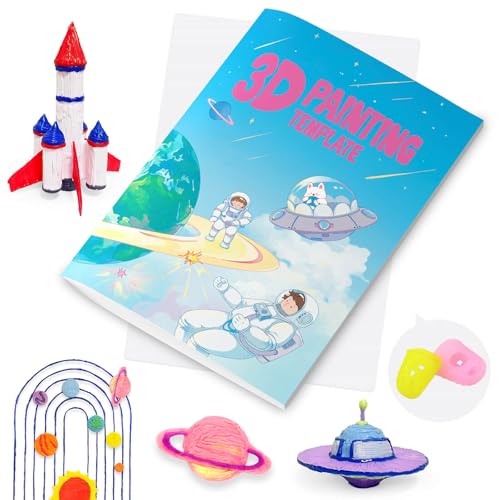
3D Pen Printing Drawing Book, Outer Space Theme

amokia 32 Colors 3D Pen Refills for 3Doodler Start+

LUMITEK Engraving Pen 67-in-1 Rotary Tool Kit

Gsiujch 3D Printer Drawing Molds Paper Stencils, 40 Patterns

ANKHOH 3D Printing Pen Case for 3Doodler Start+

SCRIB3D PRO 3D Printing Pen Set
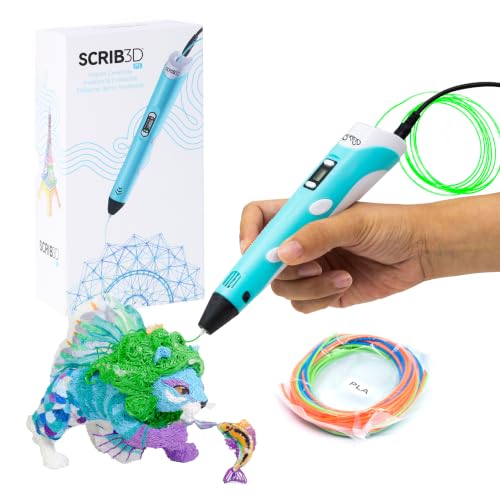
SCRIB3D P1 3D Printing Pen with Display
More Details On Our Top Picks
Hot plastic and wooden furniture do not mix, and that is the problem this mat solves before you ever draw a line. The 9 x 7 inch silicone surface is flexible, two-sided, and built to shrug off nozzle heat, so stray strands peel away instead of bonding to your table. Because it is transparent, you can slide a template underneath and trace directly through it.
That tracing trick matters most for kids, who tend to give up when freehand drawing gets frustrating. Pair it with the included stencil book and a first session turns into guided practice rather than a mess of blobs. It is a quiet, unglamorous accessory, but it is often the difference between a pen that gets used weekly and one that gathers dust.
Strong Points
- Heat-resistant silicone stands up to nozzle temperatures without warping or scorching
- Clear surface lets you trace stencils placed underneath, which builds confidence fast
- Two-sided design doubles the usable life before replacement
- Wipes clean of plastic residue with minimal effort
Things To Consider
- The 9 x 7 inch footprint suits smaller projects, so large multi-part builds may overflow the edge
Who It Suits Best
Families setting up a first 3D pen for kids who need a forgiving, trace-friendly work surface.
Where A Sibling Pick Shines
Shoppers wanting more varied designs should look at the Gsiujch 40-pattern stencil set, which covers architecture and cartoon themes this mat’s book does not.
The 3Doodler name carries weight here because the brand built the original 3D pen, and the Flow feels like a mature version of that idea. It runs standard 1.75mm plastic filament, which means PLA, ABS, and even wood blends are all on the menu. An integrated LCD shows temperature in real time, so you are never guessing whether the nozzle is ready.
Setup is deliberately simple: plug in, heat, draw. There is no software and no app to fight with, which keeps the focus on the project in front of you. The kit ships with refill filament, a stencil book, and a guide, so a teen or adult can start the same afternoon it arrives. For most hobbyists, that combination of material flexibility and a live readout is worth the step up from entry-level pens.
Highlights
- Accepts 1.75mm PLA, ABS, and wood filament for varied project textures
- Built-in LCD displays live temperature so extrusion stays consistent
- No software or hardware setup required, just plug in and draw
- Refill filament, stencils, and a guide come in the box
Worth Noting
- PLA and ABS run hot, so adult supervision is sensible around younger teens
- Nozzle maintenance matters more with wood-blend filaments, which owners report can clog if left to cool inside the tip
At A Glance
Made For
Teens and adults who want one pen that handles multiple plastic types without a steep learning curve.
Swap It Out When
Younger children belong on the SCRIB3D P1 bundle instead, whose slower learning curve and bigger color pack suit small hands better.
Most starter pens run dry after an afternoon, and that is exactly what this bundle fixes. You get the P1 pen, 30 feet of filament across three colors, and a separate pack adding 328 more feet in twenty shades. In practice that is months of doodling before anyone has to reorder, which makes the math easy for gift-givers.
The pen itself leans beginner-friendly. A stepless speed slider, meaning you can dial extrusion anywhere along a continuous range rather than fixed steps, gives new users fine control without menus or buttons. A ceramic nozzle and anti-clogging feed design keep the experience smooth, and the manual walks through the plug-heat-draw routine clearly. Compared with the 3Doodler Flow above, you trade the temperature display for sheer filament volume, and for a first pen that is usually the right trade.
Reasons To Buy
- Over 350 feet of assorted filament means fewer refill purchases in year one
- Stepless speed slider lets beginners slow extrusion way down while learning
- Ceramic nozzle and anti-clog design reduce the frustration of stalled lines
- Detailed manual shortens the first-session learning curve
Small Caveats
- No temperature display, so you rely on the ready indicator rather than exact numbers
- Thin PLA strands store best in a sealed bag, since moisture makes extrusion sputter over time
Quick Facts
Who Should Grab It
First-time doodlers and gift shoppers who want a complete, colorful kit without buying accessories separately.
Reach For A Different Pick When
Creators needing material versatility beyond PLA should step up to the SCRIB3D PRO set later in this list.
A pen with nothing to trace is a pen that frustrates kids, so a themed stencil book earns its place on this list. The Vomika drawing book packs 40 templates spanning animals, vehicles, and cosmic sky scenes, giving a child a clear target instead of a blank page. Tracing also quietly builds concentration and memory, which parents tend to appreciate more than the kids do.
The pages use thickened paper with bold ink, and the patterns hold up to repeated handling without tearing or fading quickly. One practical note: the manufacturer advises against pressing the hot nozzle directly onto the pages, so keep the tip slightly above the surface while tracing. Slid under a clear mat like the 3Dmate Starter, the designs line up nicely for direct tracing. It is a small purchase that keeps a 3D pen in rotation for weeks.
Plus Points
- 40 templates across animal, vehicle, and space themes keep sessions varied
- Thickened paper resists tearing during repeated tracing sessions
- Vibrant, sharp printing makes lines easy for young eyes to follow
Points To Note
- Keep the nozzle off the paper surface, since direct contact can scorch pages
- Theme selection is fixed, so kids wanting cartoon characters may prefer the Gsiujch set
The Right Fit
Children roughly elementary age who love space themes and need structured tracing to stay engaged.
Another Choice May Suit
Classrooms and mixed-age groups get broader mileage from the Gsiujch 40-pattern stencil pack, whose architecture and transport designs appeal to older kids too.
Compatibility is the whole story with this refill pack, so read carefully before ordering. The 2.5mm PCL strands here fit only the 3Doodler Start+ pen, and PCL is a low-temperature plastic that melts at kid-safe heat levels. That is why the Start+ family is popular with younger children, and why third-party refills like these matter: the official strands run out fast.
You get 160 strands across 32 colors, five of each shade, which is enough variety for detailed multi-color projects like flowers or pixel art. The low melting point means less wait between color changes and fewer accidental burns, a real advantage in a household with impatient kids. Just confirm your pen model first, because these strands will not feed a standard 1.75mm pen. For Start+ owners, this is the obvious bulk buy.
What We Like
- 32 distinct colors allow detailed, multi-shade artwork without mixing
- 160 strands total keep a busy household stocked for months
- Low-temperature PCL suits young users and shortens heat-up waits
Honest Caveats
- Strictly limited to the 3Doodler Start+ pen, so check your model before ordering
- Strands are short, so long continuous lines require splicing pieces together
Right Fit For
3Doodler Start+ owners, especially families whose kids burn through official refills quickly.
Look Elsewhere When
Owners of standard 1.75mm pens like the SCRIB3D P1 need PLA refills instead, since these 2.5mm strands will not fit.
Not every pen on this list draws in plastic. The LUMITEK is an engraving tool, the kind you use to sign, carve, and clean up finished 3D pen projects. Its brushless coreless motor spins from 10,000 up to 28,000 RPM across five speed settings, and unlike vibration-based engravers it cuts by rotation, which leaves cleaner edges on plastic and wood alike.
Where it earns its slot is finishing work. 3D pen builds often come off the mat with rough seams and stray whiskers of filament, and a light pass with this tool smooths them flat. The 67-piece accessory kit covers drilling, sanding, polishing, and carving, so it doubles as a general DIY kit for hobby shelves. It is more tool than toy, though, and the higher speeds demand a steady hand and eye protection.
Bright Spots
- Five-speed range from 10,000 to 28,000 RPM handles delicate detail and tough material alike
- Brushless coreless motor runs smoother and cooler than basic hobby motors
- Rotary cutting action produces cleaner results than vibration-style engravers
- 67 accessories cover engraving, sanding, polishing, and light drilling
Room For Improvement
- High RPM demands care and eye protection, so it is not a tool for unsupervised kids
- Accessory bits are small and easy to misplace without organized storage
Feature Rundown
Whose Shelf It Belongs On
Hobbyists who finish and refine their 3D pen creations, plus general DIYers who want one compact rotary kit.
Not Your Match When
Anyone shopping purely for a drawing pen should stick with the SCRIB3D P1, which extrudes plastic rather than cutting it.
Where the Vomika book leans into one theme, this Gsiujch set spreads its 40 designs across architecture, transport, animals, plants, comics, and cartoon characters. That range is its main argument: a mixed-age group or classroom can all find something at their level on the same afternoon. Twenty double-sided sheets deliver the 40 patterns, and a transparent PVC board sits on top for tracing.
The reusable design is the practical win. Because the plastic board takes the heat and the paper stays underneath, the same sheets serve project after project instead of getting scorched on first use. Colorful printing keeps the outlines easy to follow even for kids still building hand control. Compared with the 3Dmate mat, you get more design variety but less surface protection, so pairing the two is a sensible move for frequent users.
Upsides
- 40 patterns across six themes suit a wide age range
- Double-sided sheets and a PVC overlay make the set genuinely reusable
- Bold, colorful outlines are easy for beginners to trace accurately
Softer Spots
- Paper sheets need careful storage flat, or they curl and misalign under the board
- The PVC board alone does not protect the desk, so a silicone mat underneath helps
Who Will Love This
Teachers, camp counselors, and parents running craft sessions for kids of mixed ages and skill levels.
Consider Something Else When
Space-obsessed kids get deeper value from the Vomika outer space drawing book, whose themed templates match that specific enthusiasm.
Loose filament strands have a talent for ending up under the couch, which is where a dedicated case earns its keep. This ANKHOH box is cut to fit the 3Doodler Start+ and its accessories, including the blister packs of refill filament, with room for up to 72 strands alongside the pen itself. The exterior measures roughly 7 by 3.9 by 3.25 inches, small enough for a backpack or craft bin.
Construction is a rigid protective shell in green that matches the Start+ color scheme, so the whole kit looks intentional rather than cobbled together. Note that this listing covers the case only; the pen and refills shown are not included. It also fits the older original 3Doodler Start, which widens its usefulness for households upgrading pens but keeping accessories. For families who travel or tote crafts between houses, it is a tidy solution.
Standout Traits
- Custom fit holds the Start+ pen plus up to 72 refill strands in one place
- Rigid shell protects the pen nozzle from knocks in transit
- Green finish matches the 3Doodler Start+ aesthetic
- Compact footprint slides into backpacks and craft drawers
Minor Gripes
- Case only, so budget for the pen and refills separately
- Sized for the Start+ family, so larger pens like the SCRIB3D PRO will not fit
Best Suited To
3Doodler Start+ families who carry their kit between home, grandparents, and school holiday programs.
A Better Fit Elsewhere
Owners of bulkier pens should skip this case and store the SCRIB3D P1 in its original packaging or a generic organizer instead.
Think of the PRO as the P1’s serious older sibling, built for people who have outgrown tracing stencils. Adjustable temperature and speed settings let you tune extrusion to each material and project, which matters once you move past basic PLA into specialty plastics. An easy-to-read display keeps those settings visible while you work, so mid-project adjustments stay quick.
The kit is aimed at creative professionals and committed hobbyists: it ships with specialty plastic materials, an interchangeable nozzle set for different line widths, and a DoodlePad work surface. That nozzle flexibility is the quiet advantage here, since fine tips produce detail work that starter nozzles simply cannot. The trade-off is cost and complexity relative to the P1, so a casual weekend doodler is paying for headroom they may never use. For portfolio work, prototypes, or selling handmade pieces, that headroom pays for itself.
Positives
- Adjustable temperature and speed fine-tune extrusion for each material
- Interchangeable nozzles switch between fine detail and fast fills
- Display keeps settings visible during long working sessions
- Specialty plastics and DoodlePad included, no separate purchases needed
Trade Offs
- More settings mean a steeper learning curve than the one-slider P1
- Specialty filaments cost more per project than basic PLA strands
Core Details
Who It Suits Best
Designers, makers, and sellers who need precise control and material flexibility for finished, portfolio-quality pieces.
Skip It When
Beginners and kids should start with the SCRIB3D P1 bundle, which teaches the same core skills with far less fiddling.
This is the version of the P1 that adds a display, and that small screen changes the first-week experience noticeably. You can see temperature and settings at a glance instead of waiting on indicator lights, which builds trust in the tool while skills are still shaky. The stepless speed function carries over from the bundle version, giving the same smooth control over how fast plastic flows.
The kit is genuinely complete: pen, three starter PLA colors, a stencil book with project guide, and the power adapter, so nothing else sits between unboxing and the first doodle. Families use it for everything from handmade gifts to small household fixes, and the display makes it approachable for adults who find gadget setup tedious. Between this and the bundle version at number three, the choice comes down to whether a visible readout is worth it to you. For many households, it is.
Best Bits
- Display shows temperature and settings, removing guesswork for nervous beginners
- Complete kit with filament, stencils, guide, and adapter included
- Stepless speed control scales with skill as confidence grows
- Suits family projects, handmade gifts, and small repairs alike
Areas To Watch
- Only three starter colors, so a refill pack like the bundle version’s 20-color set becomes an early add-on
- PLA extrusion runs warm, so a silicone mat underneath protects tables during long sessions
Details At A Glance
Built With In Mind
Families and adult beginners who want a guided, screen-assisted introduction to 3D drawing without buying extras first.
Where Another Pick Suits Better
Shoppers prioritizing filament volume over a display will get more plastic per dollar from the SCRIB3D P1 20-color bundle at number three.
What Matters Most Before Choosing 3d Print Pens
Match The Pen To The Artist
Skill level should drive the decision more than feature lists. Kids under ten do best with low-temperature PCL pens like the 3Doodler Start+ family, where a stray touch will not cause a burn. Teens and adults can handle PLA-based pens, which run hotter but offer stiffer, more durable results.
Beginners also benefit from a stepless speed slider, since slowing extrusion is the single fastest way to draw cleaner lines. Fixed-speed pens punish new users with blobs and stringing.
Filament Is The Real Ongoing Cost
The pen is a one-time purchase, but filament never stops. Before buying, check the diameter your pen accepts, because 1.75mm PLA and 2.5mm PCL strands are not interchangeable. A pen with cheap, widely available refills costs far less to own over a year than a cheaper pen with proprietary strands.
Accessories Decide Whether It Gets Used
A mat, a stencil book, and storage turn a novelty into a habit. Tracing templates keep beginners engaged during the awkward first sessions, and a case keeps strands from scattering. Budget for these alongside the pen rather than as an afterthought.
Key Considerations Across These Picks
Traps First Timers Fall Into
The most common mistake is buying a pen without checking filament compatibility, then discovering the refill packs on hand do not fit. The amokia pack in this list, for example, only feeds a 3Doodler Start+. The second trap is skipping the work surface; hot plastic bonds to wood and fabric, and one ruined table usually ends the hobby.
What The Higher Tier Buys
Stepping up to a pen like the SCRIB3D PRO buys adjustable temperature, interchangeable nozzles, and specialty material support. That matters for detailed, sellable work. For casual doodling, those features sit unused, and a starter kit serves just as well.
Frequently Asked Questions
What filament do most beginner 3D pens use?
Beginner pens typically run either 1.75mm PLA or 2.5mm low-temperature PCL. PCL melts at lower heat, which makes it the safer choice for young children.
Are 3D pen fumes a concern indoors?
PLA produces minimal odor and is generally considered the most pleasant plastic to use indoors. ABS runs hotter and smells stronger, so ventilation helps with that material.
Can kids use a 3D pen unsupervised?
Low-temperature PCL pens like the 3Doodler Start+ are designed with children in mind. Hotter PLA pens deserve adult supervision, especially for users under twelve.
Do stencil books really help beginners?
Tracing builds hand control and teaches how plastic layers stack, which freehand drawing does not. Most new users produce noticeably better work within a few traced sessions.
How long does a pack of filament last?
It depends on project size, but the 328-foot refill bundle in this list represents months of casual use. Small figures use a few feet, while larger flat art can consume 20 feet or more.
Wrap Up
The right setup depends less on the pen than on who is holding it. Kids thrive with low-temperature pens, tracing mats, and themed stencils, while adults ready for serious work should look at the SCRIB3D PRO. Start with a complete kit, add refills as skills grow, and protect your table from day one. Whichever route you take, the first successful freehand doodle is usually the moment this hobby sticks.