
Five millimeters of EVA foam sits in a sweet spot: thick enough to hold an edge when you carve armor or seal a drafty door frame, thin enough to cut with a hobby knife in one pass. That balance is why this thickness shows up everywhere from cosplay workshops to boat decks. The ten options below cover both worlds, since the same closed-cell material that shapes a shoulder pauldron also quiets a rattling window. Whether you’re building your first prop or re-caulking a porch, there’s a sheet, roll, or tape here that fits the job.
The Shortlist At A Glance
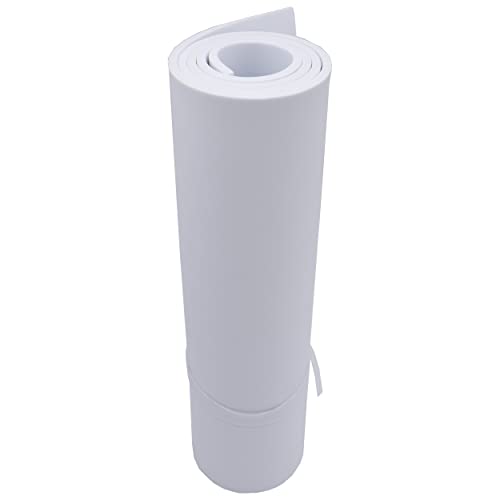
OISAKLD EVA Foam Craft Sheet 5mm 13.7″×39″

Bantie EVA Foam Weather Stripping Door Seal 33FT

biguphate EVA Foam Roll 5mm Black 15″x39″

MEARCOOH EVA Foam Cosplay Black 5mm 35.5″ x 59″ Sheet
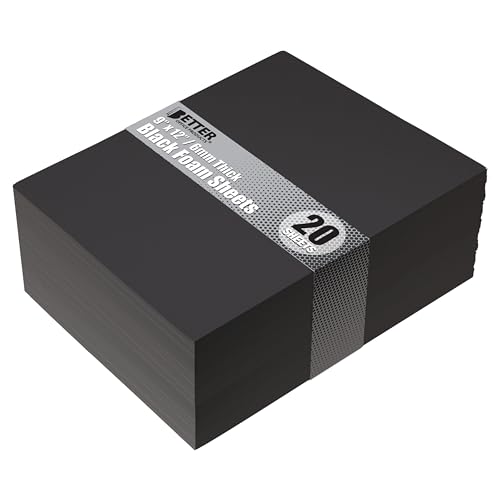
Better Office Products Black EVA Foam Sheets 20 Pack 6mm

Abahub Self-Adhesive Boat Flooring

BENECREAT Self-Adhesive EVA Foam Roll 78.7×12 inch 5mm

OISAKLD 10 Pack EVA Color Foam Sheets 9×12 inch 2mm

uxcell Sealing Foam Tape 5mm Wide 3mm Thick Pack of 2

Frienda Upholstery High Density Craft Foam 118″ x 60″
More Details On Our Top Picks
This sheet hits the classic cosplay formula: 74 kg/m³ density, which is firm enough to hold beveled edges after heat shaping but still forgiving under a sharp blade. The 13.7 by 39 inch footprint gives you room for a full bracer or helmet panel without splicing pieces together.
First-time builders will appreciate how little fighting this material puts up. It cuts clean, folds along scored lines, and takes contact cement without curling. Around the house, the same elasticity makes it handy as drawer liner padding or shock protection for stored tools.
Strong Points
- Mid-range density carves crisp detail yet stays flexible enough to wrap curved forms
- The long 39-inch span means fewer seams on gauntlets, belts, and chest plates
- Folds and scores cleanly, so beginners get professional-looking bends on the first try
- Doubles as household cushioning for toolboxes and fragile storage
Things To Consider
- One sheet per order, so larger armor sets mean placing multiple orders and matching dye lots
- Store it flat; rolled storage can leave a memory curve that needs heat to relax
Key Specs
Made For
Cosplayers building their first full prop set who want dependable, mid-density stock without overpaying.
A Better Fit Elsewhere
Anyone needing bigger single-piece coverage should step up to the MEARCOOH EVA Foam Cosplay Black 5mm sheet instead.
Thirty-three feet is enough strip to seal every exterior door in a typical house and still have leftovers for the garage entry. The mesh-reinforced adhesive backing is the headline here: grid lines printed into the backing help you cut straight lengths, and owners commonly report the bond holds through door-slam cycles better than plain adhesive strips.
In a busy hallway where the front door gets opened twenty times a day, that staying power matters more than raw thickness. The foam stays soft in cold weather too, so the seal keeps compressing against the frame instead of stiffening up come winter.
What We Like
- Mesh-backed adhesive resists peeling at the corners, the usual failure point on cheap strips
- Printed grid lines make measuring and cutting straight runs quick work
- Soft compression closes gaps without making doors hard to latch
- One roll covers multiple doors and windows in a single afternoon
Worth Noting
- Surfaces need a thorough wipe-down first; dust or old paint flakes will undermine any adhesive
- Very wide gaps may need a thicker profile than this tape provides
Right Fit For
Renters and homeowners tackling seasonal drafts across several doors at once without hiring anyone.
Where A Sibling Pick Shines
For narrow window channels where bulk would block the sash, the slimmer uxcell Sealing Foam Tape is the smarter match.
Where the OISAKLD sheet above keeps things compact, biguphate stretches the canvas to 15 inches wide, and that extra width changes how you plan a build. A sword grip wrap or shin guard often fits as one piece instead of two glued halves, which means fewer visible seams to sand and fill later.
The closed-cell surface arrives smooth on both faces with no texture or pattern pressed in, so primer and paint go down evenly. For a budget pick aimed at newer builders, that finish quality is the part worth paying attention to.
Highlights
- High-density closed-cell stock sands smooth and accepts heat shaping well
- Pattern-free faces save prep time before priming
- Extra width reduces piecing on wider armor components
Small Caveats
- Black only, so lighter costume colors need solid base coats rather than a tinted wash
- Ships rolled, and the memory curve may take a warm flat press to fully settle
Who Should Grab It
Costume makers on a budget who want generous sheet area and a paint-ready surface.
Swap It Out When
Builders chasing maximum density for fine detail work will get more from the MEARCOOH sheet’s 86 kg/m³ formulation.
At roughly three by five feet, this is the sheet you buy when a project outgrows craft-store sizes. A full chest backplate, a pair of thigh guards, or an oversized shield all fit from one piece, and the 86 kg/m³ density is noticeably firmer than the OISAKLD stock, holding thin carved edges without crumbling.
The trade-off shows up at the cutting stage: that stiffness asks for fresh blades and patient passes. Experienced builders tend to see it as a fair price for shape retention, especially on props that take repeated handling at conventions.
Reasons To Buy
- Oversized dimensions eliminate seams on large armor and prop surfaces
- Higher density supports crisp bevels and fine dremel detail
- Elastic formulation bends around body curves without cracking
- Shape retention keeps finished pieces looking sharp through repeated wear
Points To Note
- The large sheet needs serious flat storage space between projects
- Firmer stock dulls blades faster than softer craft foams
At A Glance
Who Will Love This
Intermediate and advanced cosplayers building full-body costumes who want pro-grade density in bulk.
Not Your Match When
Beginners practicing on small parts will find the biguphate roll easier to handle and store.
Twenty pre-cut 9 by 12 inch sheets change the math for group projects. A classroom Halloween craft session, scout troop badges, or a stack of costume accents all draw from one box, and nobody waits turns at the cutting mat. The 6mm thickness is a touch beefier than the 5mm standard, giving kid-safe scissors something substantial to bite into.
Color consistency matters more than people expect here. Every sheet carries an even, saturated black across its face, so a batch of twenty cutouts looks uniform on the wall instead of patchwork.
Plus Points
- Bulk quantity covers whole classrooms or family craft days
- No adhesive backing means you choose exactly where glue goes
- Pliable sheets bend easily for pop-up cards and layered art
- Consistent coloring keeps multi-sheet projects visually uniform
Softer Spots
- Fixed 9×12 sizing limits large single-piece designs
- Glue choice matters; some spray adhesives can warp thin edges
Built With In Mind
Teachers, parents, and group leaders stocking a craft bin for frequent hands-on sessions.
Reach For A Different Pick When
Prop builders wanting one continuous large sheet should look at the MEARCOOH option instead.
Boat decks punish materials. Between blazing sun, standing water, and bare feet, ordinary craft foam lasts a season at best. Abahub builds this decking sheet for that environment specifically: level 3 UV stability slows sun fading, and the closed-cell structure shrugs off water rather than soaking it up.
Underfoot, the cushioned feel takes the sting out of a long day on a jon boat deck, and the grooved teak-style pattern adds traction when the surface is wet. RV owners have adopted the same sheets for step treads and floor patches, which tells you something about versatility.
Bright Spots
- UV-stable formulation holds color through seasons of open-air exposure
- Water-resistant closed cells dry quickly after rain or washdowns
- Shock-absorbing feel eases fatigue during hours of standing
- Peel-and-stick installation skips messy marine adhesives
Honest Caveats
- Deck surfaces must be cleaned and degreased thoroughly or edges can lift over time
- Sharp fish hooks and dropped tackle can gouge the soft surface
Details At A Glance
Whose Shelf It Belongs On
Jon boat, kayak, and RV owners refreshing worn decks with a weekend peel-and-stick upgrade.
Consider Something Else When
Indoor gap sealing calls for the BENECREAT self-adhesive roll, which suits trim-level work better.
The built-in adhesive is what separates this roll from plain craft sheets like the biguphate above. Line a toolbox drawer, pad a camera shelf, or fill a rattling cabinet gap, and there’s no glue gun involved; peel, press, done. At 78.7 inches long and a foot wide, one roll handles a surprising number of small jobs.
The dense foam also insulates against sound and heat transfer, so it pulls double duty behind cabinet doors or under small appliances. Scrapbookers use offcuts for dimensional layers in card making, which stretches the value further.
Standout Traits
- Strong sticky backing eliminates separate gluing steps entirely
- Dense structure dampens vibration and fills uneven gaps neatly
- Cuts cleanly to any shape with scissors or a blade
- Works across crafts, upholstery tweaks, packing, and home fixes
Minor Gripes
- Adhesive bonds best on smooth surfaces; textured wood may need extra pressure
- Repositioning after placement is difficult, so measure twice
Quick Facts
The Right Fit
DIYers padding drawers, silencing cabinets, and filling gaps around the house in quick sessions.
Another Choice May Suit
Cosplay carvers who want bare foam for heat shaping are better served by the OISAKLD craft sheet.
Two millimeters is half the thickness of the headline picks, and that’s precisely the point. Holiday ornaments, gift tags, kids’ costume accents, and layered paper-craft hybrids all benefit from foam light enough to fold around a pencil and stiff enough to keep its shape. Ten sheets give a craft table plenty of runway.
Compared with the thicker Better Office Products pack, these sheets suit finer detail work where heavy 6mm stock would look clumsy. Younger crafters also find them far easier to cut with safety scissors.
Positives
- Thin gauge folds and curls easily for flowers, tags, and ornaments
- Ten-sheet pack keeps a craft drawer stocked for months
- Elastic material bounces back after gentle handling
Trade Offs
- Too thin for structural cosplay props or load-bearing padding
- Sheets can curl if stored under heavy objects
Best Suited To
Families and hobbyists making lightweight decorations, cards, and kids’ costume details.
Look Elsewhere When
Structural prop work demands the 5mm OISAKLD craft sheet from the top of this list.
Some gaps are simply too narrow for standard weatherstripping, and that’s the niche this slim tape owns. At just 5mm wide and 3mm thick, it slides into window sash channels and sliding-door tracks where fatter strips would jam the mechanism. Two rolls per pack stretch across a whole set of windows.
EVA outperforms polystyrene foam here in the ways that matter for seals: better shock absorption and less wind penetration. The tape also resists oil and corrosion, so it holds up near kitchen windows and garage doors where grime collects.
Upsides
- Slim profile fits channels other weatherstripping cannot enter
- Back adhesive grips tightly and rarely lifts once seated
- Oil and corrosion resistance suits kitchens and utility spaces
- Two-roll pack covers multiple rooms affordably
Areas To Watch
- Narrow width won’t close larger door-perimeter gaps on its own
- Application surface must be dry for the adhesive to bite properly
Spec Overview
Perfect Match For
Apartment dwellers and renters sealing old window sashes without altering the frames.
Skip It When
Wide door-frame gaps call for the fuller Bantie weather stripping roll instead.
Nearly ten feet long and five feet wide, this single sheet reupholsters a bench seat, a dining chair set, or a window nook cushion without a single seam. The spec sheet reads like furniture-grade stock: 2.2 density foam rated at 50 ILD, a firmness measure meaning it pushes back with real support rather than collapsing under weight.
That firmness is the honest dividing line. Sitters who like a plush sink-in feel may find it too assertive, though for seat cushions meant to survive daily use, firmer usually wears better over years.
Best Bits
- One enormous sheet covers full furniture projects seam-free
- 50 ILD firmness provides lasting support for frequently used seating
- Cuts cleanly with an electric knife for custom shapes
- High density resists flattening in high-traffic spots
Room For Improvement
- Ships compressed and needs time to expand fully before cutting
- Firm feel won’t suit anyone chasing a plush, sink-in cushion
Core Details
Whose Shelf It Belongs On
DIY upholsterers refreshing dining chairs, benches, and headboards with durable firm support.
Where Another Pick Suits Better
Cushioned drawer lining and small padding jobs cost less with the BENECREAT adhesive roll.
What Matters Most Before Choosing 5mm Eva Foams
Density Decides Everything
Density, measured in kilograms per cubic meter, determines whether foam holds a carved edge or squishes under a blade. Stock around 74 to 86 kg/m³ suits cosplay armor and props, while lower densities flex better for crafts and padding. Match the number to the job before anything else.
Adhesive Or Bare Surface
Self-adhesive backs save time on sealing and lining tasks but remove your ability to reposition or heat-shape the material. Bare sheets remain the right call for cosplay work, where contact cement and heat guns do the joining. Decide which workflow fits your project first.
Size Versus Storage
Large sheets reduce seams dramatically, yet they demand flat storage space most apartments lack. Measure your available storage honestly before ordering an oversized sheet, because a curled or creased board never lays truly flat again.
Environment And Exposure
Sunlight, moisture, and oil separate casual foam from purpose-built stock. Marine-grade sheets carry UV stabilizers that craft foam lacks, and indoor sealing tape resists grease that would degrade plain sheets. Outdoor projects deserve outdoor-rated material every time.
Key Considerations Across These Picks
Traps First Timers Fall Into
The most common mistake is buying thin decorative foam for structural projects, then wondering why armor panels flop. The reverse error happens too: paying for high-density stock to line a drawer. Read the density figure, not just the thickness, before committing.
What Separates Premium From Basic
Higher-tier sheets justify their cost through verified density ratings, larger single-piece dimensions, and additives like UV stabilizers. For a one-off kids’ craft, those extras add nothing. For a convention-worn costume or a sun-baked boat deck, they’re the difference between one season and several.
Frequently Asked Questions
Is 5mm EVA foam good for cosplay armor?
Yes, it’s the most popular thickness for bracers, belts, and medium armor plates. Larger pieces benefit from layering or stepping up to denser stock.
Can 5mm EVA foam be heat shaped?
It shapes well with a heat gun on low settings, softening enough to form curves. Work in a ventilated space and keep the gun moving to avoid scorching.
What glue works best on EVA foam?
Contact cement is the standard choice among prop makers because it bonds flexible foam without melting it. Hot glue works for quick, low-stress joins.
Does self-adhesive EVA foam tape damage surfaces?
On painted wood and finished metal it typically removes cleanly within the first year. Older paint or delicate finishes may lift, so test a hidden spot first.
How should I store EVA foam sheets?
Store them flat under nothing heavy, away from direct sunlight. Rolled storage creates memory curves that require heat treatment to flatten again.
Closing Thoughts
The right 5mm EVA foam comes down to matching density and format to the task in front of you. Carvers should lean toward the higher-density sheets, homeowners toward the adhesive tapes, and upholsterers toward the big Frienda panel. Whichever direction your project points, one of these ten will meet it without fuss.