
Extended-range guitars live or die by their strings. The low B needs enough mass to stay tight under heavy riffing, while the top strings still have to bend and sing for lead work, and a set that nails one end often fails the other. That tension is exactly what this list sorts out. Whether you play drop-tuned metal, ambient prog, or just want a fuller chord voice, you’ll find a set here matched to your tuning, your hands, and your budget.
The Shortlist At A Glance

Ernie Ball Power Slinky 7-String 11-58 (P02620)

Jim Dunlop Heavy Core 7-String 10-60
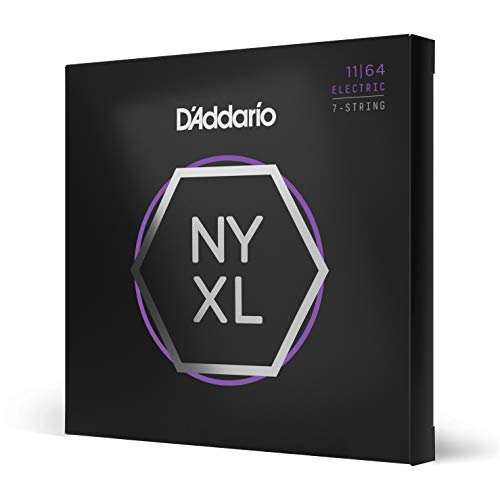
D’Addario NYXL1164 7-String 11-64

Jim Dunlop Heavy Core Korn 7-String 10-65

Dean Markley Signature 7-String Set 10-56

Ernie Ball Skinny Top Heavy Bottom 7-String 10-62

D’Addario XL Nickel EXL110-7 10-59

Ernie Ball Paradigm Skinny Top Heavy Bottom 10-62
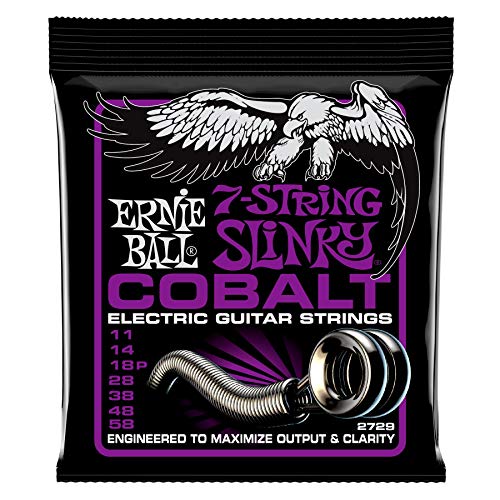
Ernie Ball Power Slinky Cobalt 11-58

Elixir NANOWEB Electric 7-String Light 10-56
More Details On Our Top Picks
The Power Slinky 7-string set is the safe bet that keeps earning its spot. An 11-58 spread gives the low B real body in standard B tuning, and the nickel-plated steel wrap over a hex-shaped core is the recipe behind the brand’s signature punchy midrange.
In practice, this is the set you hand to someone buying their first extended-range guitar. Replacement sets are easy to find everywhere, which matters more than most people expect once you’re changing strings every few weeks.
Strong Points
- Nickel winding delivers a balanced voice that sits well in a band mix without harsh top-end bite.
- The hex core grips the wrap wire tightly, which tends to keep intonation steady through hard strumming.
- An 11-58 gauge keeps the low B from flapping at standard pitch, so chords sound defined instead of muddy.
- Widely stocked replacement availability means you’re rarely stuck waiting on a restring.
Things To Consider
- Uncoated nickel winds lose brightness faster than coated rivals like the Elixir further down this list, especially with sweaty hands.
- The heavier bottom may need a truss rod check on guitars set up for lighter gauges.
Made For
Players running standard B tuning who want a dependable, mix-friendly tone without boutique pricing.
A Better Fit Elsewhere
Downtuners chasing maximum low-end tension will get more from the Jim Dunlop Heavy Core Korn set at number four.
Where the Ernie Ball set above plays it straight, Dunlop’s Heavy Core line was engineered specifically around the physics of downtuning. A thicker core wire under the same outer diameter raises string tension, which is exactly what stops a dropped B from sounding like a rubber band.
The 10-60 split keeps the treble side nimble for leads while stacking mass where it counts. Made in the United States, these sets are also known for tight quality control, so gauge-to-gauge consistency between packs is rarely an issue.
Highlights
- Heavy Core construction boosts tension at lower tunings, keeping riffs articulate instead of loose.
- A 10-60 spread leaves the plain strings comfortable for bends while anchoring the low end.
- US manufacturing supports consistent winding quality from pack to pack.
Minor Gripes
- Stiffer cores can feel less springy under the fingers than conventional sets, which some players notice on wide vibrato.
- Guitars routed for lighter strings may need nut slot adjustments before the .60 seats properly.
Quick Facts
Who Should Grab It
Rhythm-focused players living in Drop B or Drop A who want their palm-muted chugs to stay chunky and clear.
Swap It Out When
Standard-B players who prefer a softer, more traditional feel will likely gel better with the Ernie Ball Power Slinky at number one.
NYXL is D’Addario’s premium line, built around a reformulated high-carbon steel core that resists breaking under aggressive bending. On a 7-string, that matters doubly, because the low B takes a beating from drop-tuned riffing and the plain strings take one from lead work.
The 11-64 gauge leans heavy, giving the lowest string serious authority. Players commonly report these holding tune through long sessions better than standard XL sets, which cuts down on mid-song retuning during gigs.
Reasons To Buy
- The high-carbon steel core offers noticeably higher break resistance when you dig in hard.
- Improved tuning stability means fewer adjustments between songs at rehearsal or on stage.
- An 11-64 spread gives the low B substantial tension and a fuller fundamental note.
- The alloy voices with extra midrange presence, helping solos cut through a dense mix.
- Precision winding keeps the surface smooth under fast lead runs.
Small Caveats
- This tier costs more per pack than standard lines, so frequent restringers will feel the difference over a year.
Who Will Love This
Serious players who bend hard, downtune often, and treat tuning stability as non-negotiable.
Reach For A Different Pick When
Casual home players on a tighter budget get excellent results from the D’Addario XL Nickel EXL110-7 at number seven instead.
This set carries real pedigree: Dunlop developed it alongside Korn’s Head and Munky, two of the players who put 7-string guitars on the alternative metal map. Their goal was dynamic range and usable tension deep into drop tunings, and the resulting 10-65 gauge reflects that brief.
Compared with the standard Heavy Core set reviewed earlier, this one pushes the low string even heavier, suiting guitars parked in Drop A territory. The tonal character stays dark and thick, which suits downpicked riffing far more than clean arpeggios.
Upsides
- Co-developed with two of the genre’s defining 7-string players, so the design brief came straight from extreme downtuning.
- The .065 low string holds tension convincingly even a full step below standard B.
- Heavy Core technology widens the dynamic gap between soft picking and full-force attack.
- Keeps a playable 10-gauge top so lead passages don’t turn into a workout.
Honest Caveats
- That massive low string demands setup attention: nut slots, bridge saddles, and neck relief all typically need revisiting.
- Players who keep their 7-string in standard B may find the bottom end stiffer than necessary.
- The dark voicing can flatten out sparkling clean tones compared with brighter nickel sets.
Feature Rundown
Right Fit For
Nu-metal and djent players whose guitars spend most of their life below standard B pitch.
Not Your Match When
Standard-B rhythm players should step down to the regular Jim Dunlop Heavy Core 10-60 at number two for easier playability.
Not every 7-string lives in drop-tuned metal land, and this Dean Markley set acknowledges that. Its 10-56 spread is the lightest here, which makes it a natural match for players who bought an extended-range guitar for richer chords rather than lower riffs.
Nickel-plated steel wraps sit over a hexagonal core, a construction aimed at durability and sustained warmth. In my view, the honest read is that this set trades low-B authority for comfort, and for many fingerstyle and jazz-leaning players that’s a fair swap.
Plus Points
- The 10-56 gauge feels supple under the fingers, easing bends and reducing hand fatigue in long sessions.
- Nickel windings produce a warm, rounded sustain that flatters clean and lightly driven tones.
- Hex-core construction helps the wrap stay seated through repeated bending cycles.
Points To Note
- The .056 low B can go slack in drop tunings, so this set really wants standard B pitch.
- Uncoated strings will dull quicker for players with acidic sweat; wiping them down after playing extends their life noticeably.
- Availability of this specific 7-string configuration runs thinner than the big-name alternatives.
Whose Shelf It Belongs On
Chord-first players, students, and anyone wanting a gentle introduction to 7-string ownership without spending much.
Consider Something Else When
Anyone planning to downtune should look at the Ernie Ball Skinny Top Heavy Bottom 10-62 next on this list instead.
Hybrid gauges exist because most 7-string players do two jobs at once: chunky rhythms down low, expressive leads up top. This set splits the difference deliberately, pairing skinny 10-13-17 plain strings with a beefy 30-42-52-62 wound section.
That jump from a .017 to a .030 is steep, so transitions between the G and D positions feel different from a uniform set. Once adapted, though, many players find it the best of both worlds, and it’s arguably the most versatile option on this whole list.
Bright Spots
- Thin plain strings make full-step and wider bends effortless during solo passages.
- The heavy wound section keeps drop-tuned rhythm parts tight and percussive.
- Nickel winding preserves the classic Slinky midrange that records well in dense mixes.
- Extends a hybrid formula proven on millions of 6-string setups to the seventh string sensibly.
- Easy to find replacements for, wherever you travel or tour.
Softer Spots
- The large gauge gap between the third and fourth strings takes adjustment if your touch expects even spacing.
- Heavier bottoms usually call for a fresh setup the first time you install them.
At A Glance
Who It Suits Best
Players who alternate between drop-tuned riffing and melodic lead work within the same song.
Another Choice May Suit
Gigging musicians who break strings often should consider the coated Paradigm version of this same gauge at number eight.
The XL Nickel line has been a studio and stage staple since the mid-1970s, and this 7-string version simply extends that formula. A high-carbon steel core wrapped in nickel-plated steel produces the bright, flexible voice that made the series a default recommendation across genres.
Against the pricier NYXL set earlier in this list, you give up some break resistance and tuning stability but keep much of the tonal character. For most home studios and weekend jam sessions, that trade favors the XL comfortably.
What We Like
- A bright, versatile voicing that adapts cleanly to rock, funk, jazz, and metal alike.
- Decades-long production history means predictable, repeatable tone from every pack.
- The 10-59 gauge balances bendable tops with a low B that holds shape at standard pitch.
- High-carbon core construction supports solid durability for the price tier.
Worth Noting
- Uncoated winds accumulate grime visibly; a quick wipe after each session keeps them livelier longer.
- Players wanting maximum stability under heavy abuse may prefer stepping up to NYXL.
The Right Fit
Generalists who own one 7-string for multiple styles and want a reliable, affordable standby set.
Look Elsewhere When
Tone chasers after extra output and harmonic detail will hear more from the Cobalt Power Slinky at number nine.
Take the hybrid gauge from number six, then armor it. The Paradigm treatment adds a nanocoating over the windings plus reinforcement at the ball ends, targeting the two failure points that ruin a gig: corrosion and snapped strings.
You pay a premium for that insurance, and whether it’s worth it depends entirely on how often you play out. Frequent performers commonly report fewer mid-show breaks and slower tone decay, which effectively stretches each pack across more playing hours.
Standout Traits
- Everlast nanotreatment on the windings slows corrosion, extending usable tone life considerably.
- Reinforced construction at the string ends addresses the most common break point during hard playing.
- Retains the familiar Slinky feel despite the coating, avoiding the slick texture some coated strings carry.
- Same versatile 10-62 hybrid spread as the standard set, so no playing-style compromise.
Room For Improvement
- Per-pack cost runs clearly above uncoated equivalents, which adds up for weekly restringers.
- Some players detect a slightly darker initial tone versus bare nickel winds.
Core Details
Best Suited To
Gigging and touring players who log long stage hours and can’t afford a snapped string mid-set.
Where A Sibling Pick Shines
Bedroom players who restring casually save money with the identical-gauge standard Skinny Top Heavy Bottom at number six.
Cobalt changes the material conversation entirely. Because cobalt interacts more strongly with pickup magnets than nickel does, these strings push a hotter signal into your amp, with wider dynamics, deeper lows, and clearer highs than the nickel Power Slinky they’re modeled on.
Through a high-gain rig, that translates into tighter chugs and more articulate harmonics. Through a clean amp, you’ll hear extra sparkle. The catch is that some players find the output almost too hot for already-saturated pedals.
Reasons To Buy
- Cobalt’s stronger magnetic pull yields noticeably higher output into passive pickups.
- Extended dynamic range lets picking-hand nuance come through even at gain-heavy settings.
- Crisp highs and boosted low end suit modern metal production styles particularly well.
Trade Offs
- The hotter signal can overload fuzz and boost pedals faster than nickel strings, requiring gain staging tweaks.
- Cobalt sets generally cost more than their nickel counterparts at the same gauge.
Perfect Match For
High-gain players chasing maximum clarity and punch from passive humbuckers in a downtuned context.
Skip It When
Vintage-toned players preferring a warmer, rounder voice will favor the classic nickel Power Slinky at number one.
Elixir built its reputation on longevity, and the NANOWEB coating is the reason. A micro-thin polymer layer encases each winding, blocking the sweat and oxidation that normally kill string tone within weeks. Players with corrosive hands often report these lasting several times longer than bare sets.
The trade-off is feel and price. The coating smooths the surface, which some love and others describe as slightly slippery, and each pack costs meaningfully more upfront. Spread across its lifespan, though, the math often works out in its favor.
Positives
- NANOWEB coating dramatically slows tone decay, stretching weeks of playability out of one set.
- Nickel-plated steel wraps keep a bright, vibrant voice beneath the protective layer.
- The coated surface reduces finger squeak during fast position shifts.
- A 10-56 light gauge suits players who prioritize comfort over downtuned mass.
- Smooth feel stays consistent from day one until retirement.
Small Caveats
- The coating’s slickness divides opinion; players who like grippy, textured winds may not adjust.
- Upfront cost per pack sits above every uncoated option on this list.
Details At A Glance
Who Should Grab It
Players with sweaty hands, humid climates, or irregular playing schedules who hate restringing often.
Where Another Pick Suits Better
Traditionalists who restring frequently anyway and prefer raw nickel feel will be happier with the D’Addario XL Nickel EXL110-7 at number seven.
What Matters Most Before Choosing 7 String Guitar Strings
Match The Gauge To Your Tuning
Gauge decides everything on an extended-range instrument. A .056 low B works fine at standard B pitch but turns to noodles the moment you drop it a step, while a .065 stays tight down low yet feels stiff up top. Start by writing down your actual lowest tuning, then pick the heaviest bottom string that still lets you play comfortably.
Feel And Fretboard Comfort
Two sets at identical gauges can feel completely different. Coated strings glide, uncoated nickel grips, and cobalt adds a subtle magnetic stiffness under the fingers. Your picking style matters too: heavy pickers benefit from reinforced constructions, while expressive benders want thinner plains.
Tone Goals And Pickup Pairing
Nickel winds deliver the balanced classic voice most amps were voiced around. Cobalt pushes harder into pickups for modern output levels. Consider your genre honestly; a jazz fusion player and a djent guitarist need opposite things from the same instrument.
Lifespan Versus Upfront Cost
Coated sets cost more per pack but stretch across months of play. Uncoated strings demand more frequent changes yet reward you with immediate brightness. Restring monthly and coatings pay off quickly; restring rarely and bare nickel makes more sense.
Key Considerations Across These Picks
Traps First Timers Fall Into
The most common mistake is buying a light set for a heavily downtuned guitar, then blaming the guitar for floppy tone. The second is installing heavy bottoms without checking nut slots and neck relief, which causes buzzing and binding. Always plan a setup alongside a major gauge change.
The Case For Spending Up
Premium tiers buy engineering, not marketing. Reinforced cores resist breaks, coatings slow corrosion, and tighter tolerances keep every pack sounding like the last. Casual players won’t notice; anyone recording or performing regularly will hear the difference within a session.
Frequently Asked Questions
Can I use 6-string sets plus a single bass string instead?
It works in a pinch, but mismatched tension and tone usually sound uneven. Purpose-built 7-string sets balance the gauges properly across all seven strings.
How often should I change my 7-string set?
Uncoated strings typically need replacing every one to three months of regular play. Coated sets can last considerably longer before tone decays noticeably.
Do heavier strings damage my guitar?
Heavier gauges add neck tension, so a truss rod adjustment is usually wise after switching. Done correctly, the change poses no risk to a healthy instrument.
Are coated strings worth the extra cost?
For sweaty-handed players or humid climates, absolutely, since they last several times longer. Occasional players may never recoup the price difference.
What gauge suits Drop A tuning best?
Most players land between .062 and .065 on the lowest string for usable tension. Anything lighter tends to buzz and lose definition at that pitch.
Bottom Line
Your tuning should drive the decision more than any brand loyalty. Standard B players have great options across the price range, while dedicated downtuners need the heavier-core designs on this list. Match the gauge to your lowest note first, factor in how often you actually restring, and the right set becomes obvious. Whichever you choose, pair it with a proper setup and let the seventh string do what it was built for.