
A fresh coat of paint can transform a room in an afternoon, but the wrong roller cover turns that afternoon into a week of touch-ups and lint picking. The nine-inch width is the sweet spot for most walls: wide enough to cover serious square footage, light enough to control without fatigue. Nap depth matters too, since a 3/8-inch sleeve suits smooth drywall while a 1/2-inch handles texture with less effort.
This roundup covers ten options across covers-only multipacks, full kits with frames and trays, and one contractor-grade favorite. Whether you’re repainting a single bedroom or rolling out an entire house, there’s a fit here for your project size and budget.
The Shortlist At A Glance

KingOrigin 9 Inch Roller Covers, 18 Pack

KingOrigin Microfiber Roller Covers 1/2″ Nap, 5-Pack

KingOrigin Roller Covers 3/8″ Nap, 3 Pack

KingOrigin Microfiber Roller Covers 1/2″ Nap, 12-Pack

Amazon Basics Microfiber Roller Covers 9″ x 3/8″, 12-Pack

Mister Rui Paint Roller Kit, 18 Pieces

Wooster Pro/Doo-Z RR723-9 Roller Cover 3/8″

Rhibak 27-Piece Roller Kit with Extension Pole

CoatPro Twools Microfiber Roller 3/8″ Nap, 20 Pack
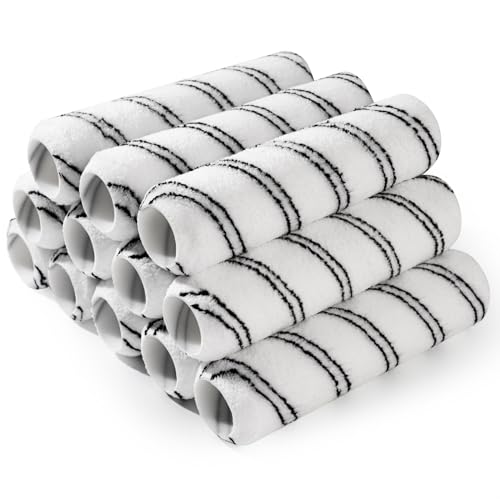
CoatPro Twools Microfiber Roller 3/8″ Nap, 12 Pack
More Details On Our Top Picks
Eighteen covers is enough to roll an entire home without washing a single sleeve between rooms. The 3/8-inch nap sits in the middle of the range, which suits smooth drywall and lightly textured surfaces alike. High-density polyester fibers hold plenty of paint per load, so you spend less time returning to the tray.
For anyone tackling a multi-room repaint over a weekend, buying in bulk like this keeps momentum going. Swap to a fresh cover when switching colors instead of rinsing, and the job moves faster.
Strong Points
- Eighteen sleeves mean you can dedicate one per color or room without cleanup pauses
- The 3/8-inch nap balances paint capacity with a reasonably smooth finish on standard walls
- Dense polyester construction resists shedding, so fewer fibers end up stuck in your paint film
- Holds more paint per dip, cutting reload trips and arm fatigue on long ceiling runs
Things To Consider
- Covers only, no frame or tray included, so you’ll need existing hardware
- Some owners report these are single-use in practice; washing polyester naps thoroughly takes patience
Key Specs
Who Should Grab It
DIYers repainting several rooms at once who want a deep bench of disposable covers.
A Better Fit Elsewhere
The Wooster Pro/Doo-Z below suits finish-obsessed painters who’d rather buy fewer, higher-grade sleeves.
Textured walls eat thin-nap rollers alive, pushing paint into every crevice while leaving peaks bare. That’s where this five-pack earns its keep: the 1/2-inch nap (the fuzzy depth of the sleeve) reaches into stucco, orange peel, and popcorn-adjacent ceilings far better than a 3/8-inch ever will. Microfiber also loads up generously, which matters when texture drinks paint fast.
Five covers is a sensible run for one or two heavily textured rooms. Compared to the 18-pack KingOrigin above, this trades volume for the right tool on rougher surfaces.
What We Like
- The deeper 1/2-inch nap pushes paint into texture instead of skimming over it
- Microfiber holds more paint per load, reducing trips back to the tray on thirsty surfaces
- Nine-inch width covers large wall sections quickly, easing fatigue on tall walls
Worth Noting
- A thicker nap leaves a slightly stippled finish, so it’s not the choice for glass-smooth drywall
- Only five covers; heavy texture work may burn through them faster than expected
The Right Fit
Homeowners refreshing textured interiors, especially older houses with rough plaster or heavy orange peel.
Swap It Out When
Smooth-wall painters will get cleaner results from the Amazon Basics 3/8-inch microfiber set further down.
Not every job needs eighteen sleeves. This three-pack from KingOrigin uses the same 100% polyester build and 3/8-inch nap as its bigger sibling, just trimmed down for smaller projects. One accent wall, a hallway refresh, or a nursery touch-up fits comfortably within three covers.
The dense fiber weave holds a solid paint load and sheds minimally, and the listing indicates compatibility with both latex and oil-based paints. That flexibility helps when you’re priming with one product and topcoating with another.
Plus Points
- Low-commitment pack size matches small projects without leftover clutter
- Works with latex and oil-based formulas, handy for primer-plus-paint sequences
- Shed-resistant dense fibers help keep drips and spatter under control
Small Caveats
- Three covers go quickly on anything larger than a couple of rooms
- No hardware included, so a frame and tray must come from elsewhere
Made For
Renters and casual painters handling one room or a quick color change on a budget.
Where A Sibling Pick Shines
Larger repaints justify stepping up to the KingOrigin 18-pack, which lowers the cost per cover considerably.
This is the volume version of the five-pack reviewed earlier, built for the same thick-nap work but scaled to whole-house scale. Twelve microfiber sleeves with a 1/2-inch nap handle textured living rooms, hallways, and ceilings across multiple days without a laundry session in between. In our view, that’s the practical difference between finishing a project and abandoning it halfway.
The nine-inch width keeps coverage brisk on big wall planes, and microfiber’s high paint retention means fewer reloads on absorbent surfaces.
Bright Spots
- Twelve deep-nap covers sustain multi-day textured repaints without washing interruptions
- Microfiber releases paint evenly, helping avoid streaks on uneven wall texture
- Wide nine-inch face speeds up large ceilings and open-plan walls
- Dedicating one sleeve per color prevents muddied edges between rooms
Points To Note
- Overkill for smooth drywall; the nap depth will leave visible texture in the finish
- Storage takes a bit of space until the project wraps
Quick Facts
Who Will Love This
Anyone repainting a textured whole floor or prepping a rental between tenants.
Consider Something Else When
Smooth-surface painters should look at the CoatPro Twools 20-pack, which pairs a finer 3/8-inch nap with even more covers.
Washability is the quiet advantage here. Unlike most budget covers that owners tend to treat as disposable, these microfiber sleeves are designed to be rinsed and reused, which changes the math for anyone who paints regularly. A dozen covers plus a sink equals a very long service life.
The 3/8-inch nap targets smooth and semi-smooth surfaces: interior walls, ceilings, even exterior siding and masonry per the manufacturer’s guidance. Shed resistance keeps stray fibers out of the finish, always the telltale sign of a cheap sleeve.
Highlights
- Washable design lets you reuse covers across many projects instead of tossing them
- Rated for all paints and stains, covering interior and exterior applications
- Shed-resistant weave supports a clean, professional-looking surface
- Ample paint hold per load trims reload time on big walls
Honest Caveats
- Repeated washing can gradually flatten the nap, so expect eventual replacement on heavy use
- Basic packaging means no storage case; a bin keeps them dust-free between jobs
Right Fit For
Serial DIYers who repaint often and want reusable covers rather than a drawer of disposables.
Another Choice May Suit
One-and-done project painters get better value from the KingOrigin 18-pack’s lower commitment per sleeve.
Starting from zero? Most first-timers discover mid-project that they’re missing a scraper, a can opener, or a second roller size. This Mister Rui kit closes those gaps in one box: 9-inch and 4-inch covers, matching frames, a 9-inch tray with liners, a 2-inch angled brush, plastic scrapers in three widths, a can opener, and a stirring rod.
The four-inch roller handles trim-adjacent areas and tight spots where a nine-inch sleeve can’t maneuver, complementing the wide covers for open walls. For a first apartment or a first house, it removes nearly every trip back to the store.
Reasons To Buy
- Genuinely complete: frames, tray, liners, brush, scrapers, opener, and stir rod all included
- Dual roller sizes cover both broad walls and detail zones like behind toilets
- Tray liners make color changes and cleanup dramatically simpler
- Angled brush tackles cutting-in along ceilings and baseboards
Softer Spots
- Kit components are entry-level; experienced painters may upgrade individual pieces later
- Fixed cover count limits how many colors you can run before reusing sleeves
At A Glance
Who It Suits Best
First-time painters furnishing an empty toolkit, students, or new homeowners starting from scratch.
Look Elsewhere When
Painters who already own frames and trays will find better value in dedicated cover multipacks like the CoatPro Twools sets.
Wooster has supplied professional painters for generations, and the Pro/Doo-Z line shows why. Its proprietary high-density white fabric, marked by a golden pinstripe, stays resilient through long sessions and resists matting, the flattening that makes bargain covers streak after a few walls. The result is the kind of uniform, professional finish that separates a crisp repaint from an obvious weekend job.
This three-pack is rated for all paints, enamels, primers, urethanes, and epoxies on semi-smooth surfaces. That breadth matters if you’re sealing a deck, coating cabinets, or rolling epoxy floors, tasks where generic polyester covers often fall apart.
Standout Traits
- High-density fabric resists matting, keeping the finish consistent wall after wall
- Compatible with demanding coatings including epoxies and urethanes, not just latex
- Shed-resistant weave minimizes lint trapped in the dried film
- Contractor-packed quality reflects decades of professional use
Minor Gripes
- Three covers cost more per sleeve than bulk budget packs
- Aimed at semi-smooth surfaces, so heavily textured walls need a deeper nap
Whose Shelf It Belongs On
Detail-driven painters finishing visible living spaces, or anyone working with specialty coatings.
Reach For A Different Pick When
Bulk coverage on a tight budget points you toward the KingOrigin 18-pack instead.
Ceilings are where painting gets miserable: ladder shuffling, neck strain, drip risk overhead. The Rhibak kit attacks that problem directly with a 2-to-4-foot extension pole threaded for its 9-inch frame, letting you roll ceilings from the floor. Twenty-seven pieces round out the rest: six 9-inch and six 4-inch covers, both frames, trays, brushes, and a scraper.
The covers accept all latex and oil paints plus stains, so the kit works for decks and furniture alongside walls. Compared to the Mister Rui kit, this one adds the pole and doubles the consumables, aimed at bigger homes.
Upsides
- Extension pole eliminates most ladder work on standard-height ceilings
- Twelve total covers support multi-color, multi-room projects
- Works with latex, oil paints, and stains for indoor and outdoor versatility
- Both roller sizes handle walls, corners, and narrow panels
Areas To Watch
- Four feet of reach still falls short of vaulted ceilings; taller spaces need a longer pole
- More pieces mean more gear to clean and store afterward
Best Suited To
Homeowners facing full interiors with ceilings, especially two-story great rooms and open plans.
Not Your Match When
Apartment dwellers with modest rooms will find the Mister Rui 18-piece kit lighter and sufficient.
Loose covers rattling around a garage drawer collect dust and debris that end up in your paint. CoatPro Twools solves that with individually packaged sleeves, each sealed until the moment you need it. Across twenty covers, that’s real protection for a product whose performance depends on staying clean.
The soft microfiber pile adsorbs and releases paint evenly, and the 3/8-inch nap suits the smooth drywall found in most modern homes. Frequent painters, landlords, and anyone who paints seasonally will appreciate pulling a factory-fresh sleeve every time.
Positives
- Individual wrapping keeps every sleeve dust-free until use
- Twenty covers suit recurring painters and property maintenance routines
- Soft microfiber lays paint down uniformly with minimal spatter
- Easy to organize and stash between projects
Trade Offs
- Wrapping adds minor waste once covers are used
- 3/8-inch nap struggles on coarse or heavily textured surfaces
Details At A Glance
Perfect Match For
Landlords, serial redecorators, and frequent DIY painters who stock up ahead of need.
Where Another Pick Suits Better
Occasional painters doing one room will prefer the smaller CoatPro Twools 12-pack reviewed next.
Same DNA as the 20-pack above, dialed down to twelve sleeves for weekend-scale projects. You still get the individually wrapped, dust-free storage and the fine 3/8-inch microfiber nap that performs well on typical interior drywall. Each nine-inch cover spans a generous swath of wall, so a dozen goes further than the number suggests.
You may find this the Goldilocks quantity: enough covers to rotate through colors and coats without committing to contractor-volume storage. The honest read is that most household painters never exhaust twenty sleeves anyway.
Best Bits
- Individually sealed covers stay pristine between projects
- Twelve sleeves balance supply against storage reality
- Wide nine-inch face finishes rooms faster than narrower rollers
Room For Improvement
- Large whole-house jobs may still require a second purchase
- Like all 3/8-inch naps, it’s the wrong depth for rough textures
Built With In Mind
Weekend warriors refreshing one or two rooms per season with quality-conscious habits.
Skip It When
Heavy-texture surfaces call for the KingOrigin 1/2-inch microfiber packs instead.
What Matters Most Before Choosing 9 Inch Paint Rollers
Nap Depth Decides Your Finish
Nap is the thickness of the fabric pile on a roller cover, and it determines where paint lands. A 3/8-inch nap suits smooth drywall and plaster, laying down an even film with minimal texture transfer. Deeper 1/2-inch naps push paint into stucco, brick, and heavy orange peel, where shallow naps skip and leave bare spots.
Match the nap to your wall, not your ambition. The smoothest finish always comes from the shallowest nap your surface allows.
Material And Shed Resistance
Polyester covers dominate the budget tier and handle latex well, while microfiber holds more paint and releases it more evenly, cutting reload frequency noticeably on large walls. Shed resistance matters more than either label: loose fibers embedding themselves in drying paint ruin an otherwise careful job. Denser weaves generally shed less and last longer through washing.
Covers Only Versus Full Kits
Already own frames and a tray? Buy covers in bulk, where the per-sleeve cost drops sharply. Starting fresh, a kit like the Mister Rui or Rhibak bundles everything, saving you from discovering mid-project that a scraper or stir rod is missing.
Quantity Versus Reusability
Disposable-in-practice bulk packs favor one-shot convenience, while washable covers reward painters who rinse and reuse. Count your rooms, count your colors, then choose the pack size that matches honestly.
Key Considerations Across These Picks
Traps First Timers Fall Into
The classic error is buying a deep nap for smooth walls, then wondering why the finish looks stippled. The reverse mistake is skimping on quantity, forcing a mid-project rinse that stalls momentum. Check frame compatibility too: standard 9-inch covers fit most frames, but odd sizes don’t interchange.
The Case For Spending Up
Higher-tier covers like the Wooster Pro/Doo-Z use denser proprietary fabrics that resist matting and shedding. That translates directly into fewer visible flaws and less rework. For visible living spaces, the upgrade pays for itself in saved touch-up time.
Frequently Asked Questions
What does 3/8-inch nap actually mean?
It measures the length of the fabric fibers on the roller cover. Shorter naps suit smooth surfaces, while longer ones reach into texture.
Can I wash and reuse paint roller covers?
Many microfiber covers are washable, though repeated cleaning gradually wears the nap. Budget polyester covers are usually treated as disposable.
Do all 9-inch covers fit any 9-inch frame?
Standard 9-inch covers fit standard 9-inch frames in almost all cases. Always confirm the core size listed by the manufacturer.
How many roller covers do I need for a room?
One or two covers typically handle an average bedroom, with extras for color changes. Heavily textured walls consume covers faster.
Why does my roller leave lint in the paint?
Loose fibers from low-density fabrics shed during rolling. Pre-rolling the cover and choosing shed-resistant weaves reduces the problem.
Wrap Up
Your walls will tell you what they need: smooth drywall wants a 3/8-inch microfiber or polyester sleeve, textured surfaces want half an inch of nap, and empty toolboxes want a kit. Start there, match the pack size to your actual project, and the painting itself becomes the easy part. Any of these ten will serve you well; the right one simply depends on the rooms waiting for their second life.