
The accordion has a reputation problem: people think it’s heavy, complicated, and expensive. It isn’t anymore. Today’s entry-level models weigh a few pounds, cost less than a nice dinner out, and teach real musicianship from day one. This guide sorts ten accordion piano instruments by who they actually serve, whether that’s a curious toddler, a teen picking up a first instrument, or an adult chasing polka and Irish folk tones at an open jam.
The Shortlist At A Glance
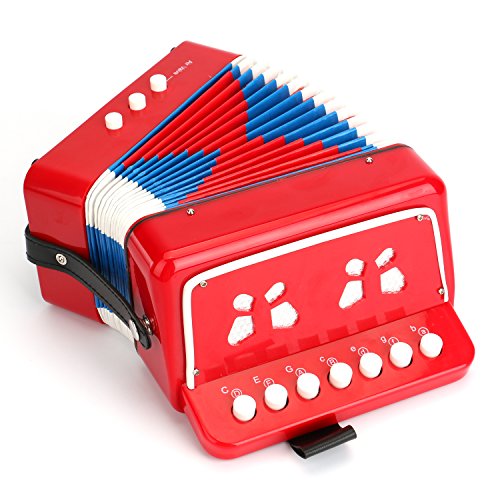
Tosnail Small Accordion 10 Keys (Red)

Horse Kids Accordion 7 Key 3 Bass Mini (Black)

Hohner Panther G/C/F 3-Row Diatonic Accordion – Black

AZEAM Kids Accordion for Ages 3+ (Black)

Lotkey 17 Key Piano Accordion 8 Bass (Sapphire Blue)

Hohner Accordions 1305-RED 72 Bass Piano Accordion

Hohner Accordions 1303-RED 12 Bass Piano Accordion

Rowadtim 22 Key 8 Bass Button Accordion (Red)

Rowadtim 31 Key 12 Bass Diatonic F/B/E Accordion Kit

Chehery 31 Key 12 Bass Diatonic G/C/F Accordion
More Details On Our Top Picks
Tiny hands need tiny instruments, and this one measures just 7.5 by 6.75 by 4 inches while weighing under two pounds. That footprint means a teenager can hold it comfortably through a whole practice session without the arm fatigue that full-size accordions cause early on.
The body uses food-grade ABS plastic, so there’s no paint or finish to worry about during handling. Sound comes from kraft-paper bellows driving brass reeds, which is the same basic principle behind much larger instruments.
Bright Spots
- At 1.8 lb, kids can practice longer before arms tire
- Brass reeds give a clearer tone than toy-grade alternatives
- ABS plastic body wipes clean with a damp cloth after sticky-finger sessions
- Small enough to toss in a backpack for lessons
Things To Consider
- Rated for ages 14 and up, so younger children may struggle with the pull resistance
- Kraft bellows are the wear point; store it dry to keep them crisp
Quick Facts
Who Should Grab It
A teen or adult beginner who wants a genuine, playable instrument in a grab-and-go size rather than a bulky first purchase.
Swap It Out When
For children under ten, the Horse Kids Accordion offers a lighter seven-key layout built specifically for small players.
Where the Tosnail targets teens, this mini model drops the key count to seven buttons plus three bass notes, which is about all a five-year-old can track anyway. Belt buckles on both sides let a child clip it on like a little backpack, so it stays put instead of sliding off mid-song.
The included song set and guide give parents something structured to work through together, which matters more than any spec at this age. Bellows are described as sturdy and made from safe materials, and owners commonly report they survive enthusiastic squeezing better than expected.
Reasons To Buy
- Belt buckles keep the instrument secure during wiggly play
- Seven buttons cover general melodies without overwhelming a child
- Comes with a learning guide and fun song collection
- Lightweight enough for toddlers to lift independently
Softer Spots
- Limited range means musically curious kids will outgrow it within a year or two
- It’s a learning toy first; don’t expect concert-hall projection from the soundhole
Made For
Preschoolers and early elementary kids taking their very first steps into music, ideally with a parent joining in.
Where A Sibling Pick Shines
Older kids ready for more notes will get longer mileage from the AZEAM beginner accordion with its added bass and chord keys.
Hohner has built reed instruments in Germany since the 1800s, and the Panther is its most affordable three-row diatonic. A diatonic accordion plays different notes pushing versus pulling the bellows, a system that suits conjunto, Tex-Mex, and Cajun styles beautifully once your fingers learn the pattern by heart.
This is the step up from every toy on this list. The G/C/F tuning covers the keys most folk repertoire lives in, and the build quality carries the kind of reputation that holds resale value. For most hobbyists, it’s the last accordion they’ll need to buy for years.
Standout Traits
- Three-row button layout handles a wide folk repertoire
- G/C/F tuning matches the most common dance-music keys
- Hohner’s long-standing reed quality shows in tone consistency
- Intuitive push-pull design gets you playing songs quickly
- Holds value well if you ever upgrade
Worth Noting
- Diatonic layout confuses players coming from piano keyboards
- Heavier than the kid models here, so plan on shoulder straps
At A Glance
Right Fit For
An adult committed to folk, conjunto, or Cajun playing who wants a dependable instrument from a heritage maker.
Another Choice May Suit
Players wanting piano-style keys should look at the Hohner 1303-RED instead, which keeps the brand pedigree in a keyboard format.
This one splits the difference between the Horse mini and the Lotkey below: easy-play buttons up top, plus dedicated bass and chord keys underneath. That extra layer lets a child hear harmony for the first time, which is a genuinely exciting moment in early music education.
The compact, lightweight frame is aimed at kids aged three and up, and features like an air valve help manage airflow so little lungs aren’t fighting the bellows. In our view, it works best as a gift instrument, something that sparks interest before formal lessons begin.
Plus Points
- Bass and chord keys introduce harmony alongside melody
- Air valve eases bellows resistance for small players
- Suits both total beginners and kids with some experience
- Compact size fits car seats and toy shelves alike
Small Caveats
- Button feel is simpler than a real keyboard, so transitions later take adjustment
- Plastic construction needs gentle handling around hard floors
Who Will Love This
Parents of preschoolers and early graders who want a first instrument with more musical depth than a pure toy.
Look Elsewhere When
For a child already showing piano interest, the Lotkey 17 Key model’s real keyboard layout is the smarter investment.
Most kid accordions use buttons; this one gives you actual piano keys, seventeen of them, spaced generously for small fingers. That layout quietly does double duty, building note familiarity that transfers directly to a keyboard later, which is why we rate it above the AZEAM for families thinking ahead.
The body is celluloid with a mother-of-pearl pattern rather than plain plastic, and metal covers replace the usual plastic trim. Celluloid is the traditional accordion facing material, so you’re getting a taste of how full-size instruments are finished. The sapphire blue finish photographs well too, not that a kid will care.
Highlights
- Piano keys lay groundwork for future keyboard study
- Celluloid body with mother-of-pearl pattern looks far pricier than it is
- Metal covers add durability over all-plastic rivals
- Spacious key spacing reduces fumbled notes for beginners
- Eight bass buttons round out simple accompaniments
Points To Note
- Celluloid can scratch; a soft cloth after play keeps the shine
- Seventeen keys limit advanced repertoire, as expected at this tier
Feature Snapshot
Who It Suits Best
Elementary-age children whose families want one instrument that teaches both accordion and keyboard fundamentals.
Not Your Match When
Adults seeking a serious student instrument will find the Hohner 1303-RED’s 26 keys and tremolo reeds far more capable.
Seventy-two bass buttons is where accordions stop being starter instruments and start being band-ready ones. Compared to the 1303’s twelve bass, this Hohnica gives you a full chord vocabulary across every major and minor key, so nothing in a songbook forces a workaround.
The 26 treble keys span a G-to-E range, generous enough for most intermediate arrangements. It’s still labeled entry-level, which tells you something about how deep this category goes, but realistically this is the ceiling of the beginner tier. Weight climbs accordingly, so expect to build some shoulder strength during the first month.
Strong Points
- 72 bass buttons cover full chord progressions in any key
- 26 treble keys handle most intermediate sheet music
- Red finish with classic Hohnica styling looks stage-ready
- Room to grow without an immediate second purchase
Trade Offs
- Noticeably heavier than the 12-bass sibling; smaller players may struggle
- Overkill for casual hobbyists who play a few songs at home
Whose Shelf It Belongs On
A committed student past the first year who wants one instrument to carry them into local ensembles and open mics.
Reach For A Different Pick When
Newer players should start with the lighter Hohner 1303-RED and graduate here once twelve bass buttons genuinely feel limiting.
This is the sensible middle of the whole list: a true piano accordion, made by a name brand, sized for learners. Twenty-six keys run G to G, and tremolo tuning means each note uses two slightly detuned reeds, producing that warm, shimmering sound people associate with French café and folk recordings.
Hohner includes a gig bag and straps, which saves a separate accessory hunt. The improved key mechanism delivers firmer tactile response than cheaper boards, something teachers tend to notice immediately. For most students, this hits the sweet spot between the toys and the 72-bass commitment above.
What We Like
- Tremolo-tuned reeds create a rich, vibrant classic tone
- 26 keys span a practical G-to-G learning range
- Gig bag and straps come in the box
- Sturdier key mechanism supports proper technique from lesson one
Minor Gripes
- Twelve bass limits complex chord work compared to the 1305
- Bellows benefit from occasional conditioning to stay airtight over years
Details At A Glance
Best Suited To
Teen and adult beginners enrolled in lessons who want authentic accordion tone without professional-tier weight or cost.
Consider Something Else When
Folk players set on button-style playing will connect more with the Hohner Panther’s diatonic layout.
Button accordions reward daily repetition, and this Rowadtim is built around exactly that habit. The 22 keys use smooth, sensitive buttons shaped ergonomically, with the stated goal of cutting hand strain during long sessions. Anyone who has practiced an hour straight knows how much that matters.
An airtight windbox keeps pitch stable as you pump the bellows, so notes stay consistent instead of wavering mid-phrase. It sits comfortably between the kid models and the 31-key diatonics further down, making it a natural bridge for hobbyists moving toward real repertoire.
Upsides
- Ergonomic buttons reduce fatigue during hour-long practices
- Airtight windbox holds pitch steady through fast passages
- Lightweight frame suits daily home routines
- 22 keys offer more range than typical beginner buttons
Areas To Watch
- Eight bass buttons cap your harmonic options fairly quickly
- Straps need adjusting to distribute weight evenly on smaller frames
The Right Fit
Self-taught hobbyists practicing at home several times a week who value comfort over maximum range.
Skip It When
Players targeting Irish and polka repertoires will find the Rowadtim 31 Key F/B/E kit far better matched to those traditions.
Tuning is everything on a diatonic box, and F/B/E is the configuration Irish session players reach for. Thirty-one keys and twelve bass buttons deliver a warm, layered folk tone suited to jigs, reels, polkas, and country numbers, whether that’s a kitchen session or a street corner gig.
The kit framing matters too: a carry case means protection between venues, which cheap bare-bones boxes force you to solve separately. Airtight bellows keep intonation accurate through long sets. Compared to the Chehery below, this one trades the G/C/F tuning for the F/B/E tradition, so choose based on the music you actually play.
Positives
- F/B/E tuning fits Irish, polka, and bluegrass standards
- Carry case protects the instrument between gigs
- Airtight bellows maintain stable pitch through full sets
- Warm timbre avoids the thin, harsh edge of budget boxes
- 31 keys cover substantial folk repertoire
Honest Caveats
- Diatonic push-pull logic takes weeks to internalize for pianists
- Case adds bulk to what you’re hauling to sessions
Who Should Consider It
Adult folk musicians playing Irish or polka circles who need a portable, protected instrument tuned to their genre.
A Better Fit Elsewhere
Players working in G/C/F keys, common in many continental folk styles, should pick the Chehery diatonic instead.
The Chehery closes the list with the most complete package here: a 31-key, 12-bass diatonic in G/C/F, shipped with a case, straps, gloves, and a cleaning cloth. Gloves sound gimmicky until you realize polished keys collect skin oils, and the cloth exists because bellows dust is a real maintenance chore.
Leather-sealed bellows aim for airtight performance, and the ergonomic keys are cut to reduce finger fatigue across long ensemble nights. Push-pull G/C/F tuning serves both learners and experienced folk hands, spanning practice rooms to live stages. You may find the accessory bundle alone justifies choosing this over the Rowadtim kit.
Best Bits
- Full bundle: case, straps, gloves, and cleaning cloth included
- Leather-sealed bellows support stable, accurate pitch
- Polished ergonomic keys ease long playing sessions
- G/C/F tuning spans beginner practice through stage performance
Room For Improvement
- Leather bellows need occasional care to keep their seal over time
- Bundle items are functional rather than premium grade
Core Details
Perfect Match For
A gigging beginner or returning player who wants one purchase covering transport, maintenance, and performance needs.
Where Another Pick Suits Better
Irish-tradition players should favor the Rowadtim F/B/E kit, whose tuning aligns with that repertoire.
What Matters Most Before Choosing Accordion Piano Instruments
Match The Layout To Your Music
Piano-key accordions suit anyone reading standard notation or planning to cross over to keyboards. Button and diatonic models suit folk traditions, where the push-pull system becomes second nature fast. Neither is harder overall; they’re just different languages.
Weight Is A Real Commitment
A two-pound toy and a 72-bass Hohnica demand completely different shoulders. Be honest about who’s carrying it. Kids under ten do best under three pounds, while adults can grow into heavier instruments over a few months of regular play.
Count Keys Against Repertoire
Seven to ten keys covers nursery rhymes and discovery play. Seventeen to twenty-six keys handles most student method books. Thirty-one diatonic keys cover full folk sets. Buy one tier ahead of current ability, but not three.
Think About Accessories Early
Straps, cases, and cleaning cloths add up when bought separately. Bundled kits like the Chehery save that errand, and a case pays for itself the first time an instrument rides in a crowded car.
Key Considerations Across These Picks
Traps First Timers Fall Into
The biggest mistake is buying a full-size instrument for a small child, then watching it gather dust because it’s unwieldy. The reverse error also happens: adults purchasing toy-grade models and quitting when the tone disappoints. Match size and quality to the actual player.
The Case For Spending Up
Higher tiers buy better reeds, airtight bellows, and sturdier mechanisms. Those three things determine whether an instrument sounds rich or thin, and whether it stays in tune through a year of practice. Past the beginner phase, that difference is worth every dollar.
Frequently Asked Questions
Are accordions hard for beginners to learn?
The bellows coordination feels odd for the first week or two, then clicks surprisingly fast. Simple melodies are reachable within days on any model listed here.
What’s the difference between diatonic and piano accordions?
Diatonic models play different notes depending on bellows direction, which suits folk styles. Piano accordions use a familiar keyboard and play the same note both ways.
What age is right for a first accordion?
Ages three to six do well with mini models like the Horse. Most kids handle ten-plus key instruments confidently by eight or nine.
How heavy are beginner accordions?
Kid models run one to three pounds, while entry-level full-size piano accordions climb considerably higher. Check listed weight before buying for a child.
Do accordions need regular maintenance?
Keep them dry, wipe keys after playing, and store them in a case. Leather bellows occasionally benefit from conditioning to preserve their seal.
Bottom Line
Your choice really comes down to the player in front of you. Toddlers thrive with the Horse mini, school-age kids get the most mileage from the Lotkey’s piano keys, and serious students land on a Hohner. Folk players should shortlist the diatonic trio at the end. Pick the one that matches the music you love, and the practice hours will follow naturally.